

Cold Hawaii: A Deep Dive into Denmark's Nordic Surf Frontier and Cultural Revival
Table of contents
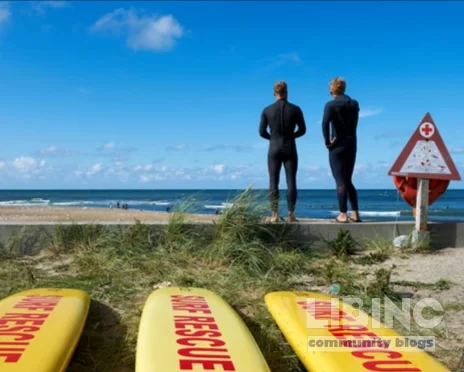
Cold Hawaii wakes me with a North Sea wind as I stand on the grassy dunes along the Danish coast. After a six-hour journey from Copenhagen by bus and train, the view of an endless sea challenges fatigue and reshapes pace. This patch of north-west Jutland yields a different energy than the tropical fantasies of Hawaii: wind, grit, and a practical culture that treats the sea as work as well as play. Surfers, windsurfers and paddleboarders gather along a 30-mile stretch from Hanstholm to Agger, while the heathlands and dune systems of Thy National Park frame every decision about access and safety. Cold Hawaii is not a postcard; it is a working coast where seasons determine rhythm, and local business, art, and cuisine bend to the wind.
To understand the dynamics, map the wind regime, the dune belt, and the Limfjord's proximity that sustains fisheries and seasonal economies. Thy National Park's heathlands provide a protective frame that guides access and safety, influencing who can ride the waves and when. These forces create the conditions for a surf culture that is understated, durable, and increasingly creative.
Block 1 — Analytics of Cold Hawaii
The geography of Cold Hawaii sets a baseline for intensity. The North Sea fetch is long and open, delivering heavy swells that arrive with less warning than tropical systems. The coastline hosts 31 official surf spots spanning roughly 50 km, from Hanstholm to Agger, creating a continuous playground for board riders. These conditions reward skill and discipline, factors that seed a culture where gear, weather forecasts, and local knowledge drive value.
- 31 official surf spots
- roughly 50 km coastline
- stretching from Hanstholm to Agger
- strong autumn–winter wind regimes
The Thy National Park's dune-and-heath landscape acts as a windbreak and ecological frame, shaping who reaches the water and when. Access is mediated by dunes, forest tracks, and seasonal closures that encourage local cooperation and a shared sense of responsibility. The combination of protection and openness helps explain why Cold Hawaii developed a community that blends sport with craftsmanship.
- Dune corridors and heathland protection
- Seasonal access constraints
- Forest tracks guiding coastal travel
- Cooperation between locals and visitors
The climate demands a pragmatic wardrobe and body armor in neoprene; this is not a place for novelty wetsuits or fashion statements. The weather discipline translates into a surfing culture that values resilience, safety checks, and small, tight networks of local teachers and mentors. In this environment, surf schools and rental shops anchor the local economy and sustain year-round activity.
The shift from a fishing-based economy to a surf-forward service ecosystem mirrors the wider Limfjord region’s adaptation to changing seas and markets. In Vorupør and Klitmøller, families blend fisheries heritage with tourism, training, and craft production. The scene now includes surf schools, boutique eateries, and lodging that respect the coast’s traditional rhythms.
- Surf schools as education hubs
- Coastal lodging linked to fishing heritage
- Craft and boutique commerce alongside services
- Seasonal seafood integration into hospitality
Block 2 — Contrast
Cold Hawaii exists within a broader European coastal context. Northern Europe’s coastlines tend to combine rugged landscapes with modest crowds, contrasting with the more crowded, highly engineered resorts in places like southern Europe. Cold Hawaii remains under the radar by design, prioritizing continuity of mood, access, and community over headline spectacle.
The contrast is clearest in Klitmøller and Vorupør, where the main street hosts a wine bar, a spa, and a co-working space, alongside surf shops and galleries. The patchy public transport makes car travel the default, but it also preserves a human scale—visitors arrive with intent and locals respond with hospitality shaped by years of wind-driven routine.
- Klitmøller's compact, craft-forward village vibe
- Vorupør Badehotel as a coastal hub
- Patchy transit pushing toward car culture yet sustaining intimacy
The patchwork economy around these towns differs from more single-purpose beaches: wine bars trade with galleries; a restaurant earns attention for hyperlocal sourcing, while small venues stage cross-disciplinary shows that travel with the seasons. The cultural mix around Thy National Park and the Limfjord yields a coastal tourism model that balances seasons with a living art scene. Tri, a rising culinary star, exemplifies how gastronomy links to place and harvests the sea’s bounty.
The area’s cultural development complements the surf scene: SMK Thy, the new outpost of the National Gallery of Denmark, anchors a broader cultural economy across the coast. Kunsthal Thy, sprung from a barn on the Boddum Bisgaard estate, widens the regional arts network and pushes boundaries beyond conventional rural expectations. The result is a region that pairs the rush of wind with quiet acts of creation, a blend difficult to reproduce in more conventional hubs.
- Tri restaurant’s hyperlocal menu and local sourcing
- SMK Thy and Kunsthal Thy expanding regional access to art
- Art and surf coexisting as a shared economy
Block 3 — Cause and effect relationships
Geography drives the business model; small networks respond quickly to wind shifts and visitor flows. The coastline demands that risk management and hospitality be inseparable from water access. In Cold Hawaii, cause and effect nod to place and timing as much as to policy.
The wind and dune systems create a causal chain: wind governs seasonality; dunes shape safe access; safety and access then influence who participates and how local knowledge is transmitted. Limfjord participates as a constant in livelihoods through shellfishing and seasonal markets that feed the surf economy.
- Wind regimes determine when people ride waves
- Dune management controls access and safety
- Local knowledge is transmitted through schools and small businesses
Seasonality makes the region invest in year-round programming rather than peak-season spikes. Galleries stay open, surf schools offer winter courses, and local producers maintain supply chains even when the wind howls. The pattern reveals a resilient system that thrives on diversity of use rather than a single-season crowd.
Investments in the cultural layer—SMK Thy's rural outpost, Kunsthal Thy, and the Tri restaurant—reframe the coast as a cultural corridor. Geography again channels the outcome: remote access is offset by concentrated venues and cross-disciplinary programming that draws people inland toward the Limfjord's cultural ecosystem and the Thy National Park's landscapes.
- Cultural venues link to seasonal tourism
- Rural arts networks expand regional reach
- Coastal access is balanced by inland cultural flows
Block 4 — Expert reconstruction
Experts anticipate a bounded growth trajectory: respect for the coast, preservation of local identities, and a steady expansion of cultural venues. They emphasize balancing development with ecological limits and the heritage of fishing communities. In short, Cold Hawaii's next phase depends on governance that combines environmental stewardship with creative investment.
Analysts highlight a few levers: the Tri restaurant's hyperlocal sourcing, the integration of art venues with the surfing calendar, and access upgrades near Kunsthal Thy that make the area more navigable without eroding the landscape. These factors reinforce the region's unique brand as a mixed-use coast with strong cultural capital around Thy National Park and its artists.
- Local governance that honors ecology and craft
- Year-round, cross-disciplinary programming
- Strategic transport and access improvements
Longer stays and year-round programming will hinge on affordable accommodation and reliable transport. The patchy public transit can be mitigated by car-sharing, seasonal shuttles, and digital tourism platforms that coordinate visits to Vorupør and Klitmøller without alienating the local community. As SMK Thy, Kunsthal Thy, and other venues deepen ties to the Limfjord corridor, Cold Hawaii grows from a niche surfing scene into a regional cultural circuit. The coastline remains a proving ground for how Nordic design, culinary craft, and painting can travel with wind and wave, drawing travelers seeking a deeper, slower encounter with Denmark’s north-west edge. The final word is simple: this model for coastal tourism operates at the intersection of wind, water, and culture.
Ultimately, Cold Hawaii offers a template for Nordic coastal tourism where wind, water, and culture reinforce one another. The region's success rests on precise place-making—protecting ecosystems, nurturing homegrown craft, and inviting outsiders to learn rather than consume. In this model, the wave-watching crowd becomes a community of practice across seasons, and the coast remains a living experiment in regional revival.
Practical pathways for responsible visitation
The article frames the coast as a living system, but it lacks concrete steps travelers can take to engage without harming the place or the people who sustain it. The following guidance translates the observations into actions—planning, transport, stays, and participation that reinforce the resilience of Cold Hawaii.
| Season | Typical wind | Access notes |
|---|---|---|
| Spring | Light–moderate SW | Rising activity; check local surf schools |
| Summer | Moderate onshore breezes | Day crowds; respect seasonal closures |
| Autumn | Strong NW gusts | Forecast reliability; book lessons ahead |
| Winter | Steady NW to W winds | Cold but active; gear rental remains |
Actionable steps include booking with a local surf school that trains youth from nearby fishing communities, choosing lodging that sources seafood locally, and walking or biking between Klitmøller and Vorupør to observe dunes, windbreaks, and seasonal closures that protect the habitat.
Two practical itineraries illustrate the approach: a focused weekend with a day on the water and two days of art and local cuisine; or a longer stay that weaves fishing heritage, crafts, and coast walks into the rhythm of wind.
- Plan with forecasts: check wind and sea state before leaving base; adjust daily surf plan accordingly.
- Support local craft: stay in family-run lodgings, buy seafood directly from fishers, and visit Kunsthal Thy.
- Move gently: walk, cycle, or share rides to reduce traffic and protect dune ecosystems.
With these steps, visitors participate in Cold Hawaii as a respectful partner, not just a seasonal audience.
What defines Cold Hawaii's wind regime and how does it shape surfing?
In Cold Hawaii the wind regime is the core driver of surfing, especially in autumn and winter when strong northwest winds produce powerful, sizable swells. This wind pattern encourages a culture of preparation, local mentorship, and forecast-sharing that prioritizes safety and skill over spectacle. Surfers learn to read dune barriers, assess still water versus rough seals, and adapt gear choices to the wind’s bite and direction. The outcome is a disciplined, knowledge-driven scene where experience trumps bravado. The wind thus carves not just waves but routines that bind the community.
Analytically, this wind-centric model reinforces a learning economy: local schools and mentors propagate practices for safe water entry, equipment checks, and weather interpretation, creating resilience against rapid weather shifts.
How can visitors participate in the local economy while respecting fishing heritage and the craft scene?
Visitors can engage by prioritizing locally owned lodging, dining at restaurants that source seafood from nearby fisheries, and purchasing crafts from artist studios. Participating in guided tours led by residents who blend surfing with arts and gastronomy also ensures revenue stays within the community. This approach aligns with Nordic coastal values that value durability and place-based production. It helps sustain family-owned businesses and keeps traditional livelihoods visible alongside new surf-forward services.
Analytically, visitor spending becomes a stabilizing force that diversifies income beyond peak-season waves, supporting year-round employment in crafts, hospitality, and small galleries.
What role do Thy National Park and the Limfjord play in shaping access to the coast?
Thy National Park provides dune and heath protection that both frames and limits access, guiding where and when people may reach the water. The Limfjord supports fisheries and seasonal markets, linking coastal activity with inland economies. This geography fosters a mixed-use coast where conservation and visitation co-evolve. By prioritizing seasonal closures and protected corridors, locals maintain both ecological integrity and a robust cultural economy.
The effect is a coast that invites sustained, thoughtful engagement rather than crowded, single-use tourism.
What practical steps can a traveler take to minimize environmental impact?
Begin with forecasting and choose low-impact transport methods, such as bikes or car-sharing for longer trips. Stay in locally owned accommodations that participate in waste reduction and local sourcing. Respect dune access rules and contribute to reefing programs or dune restoration if offered. Finally, visit cultural venues like SMK Thy and Kunsthal Thy to connect with the region’s arts economy without adding strain to the coastline.
Analytically, these steps distribute activity across seasons and sectors, reducing peak-season pressure while building a more resilient visitor economy.
How has the cultural infrastructure contributed to regional revival?
Institutions such as SMK Thy and Kunsthal Thy anchor the coast in a broader cultural circuit that links surf culture with visual arts, design, and gastronomy. This cross-disciplinary approach widens the audience and distributes economic benefits beyond the peak surf months. The result is a coast that blends wind, water, and craft into a stable cultural economy.
Analytically, cultural venues create spillovers—visitors explore galleries, dine locally, and support workshops—thereby extending the tourism season and embedding the region more deeply into regional networks.
What safety considerations should visitors keep in mind for a winter wind trip?
Winter trips demand warm, layered gear, respect for sudden gusts, and awareness of dune erosion. Check local forecasts daily, travel with a buddy, and use certified surf instructors for winter sessions. Local shops and schools provide essential safety briefings and weather updates, helping visitors align activity with conditions rather than forcing the coast to conform to a vacation agenda.
Analytically, safety protocols reduce risk while enabling consistent participation, which supports year-round visitation and community trust.




Add a comment
To comment, you need to register and authorize
Comments