

Labor Unions in the United States: An Analytical History, Structure, and Modern Relevance
Table of Contents
- Lead
- Block 1 — Analytics: The anatomy and dynamics of labor unions
- Block 2 — Contrast: Public vs private, big unions vs small
- Block 3 — Cause and Effect: labor unions' rise and retreat
- Block 4 — Expert Reconstruction: Reimagining labor unions for the 21st century
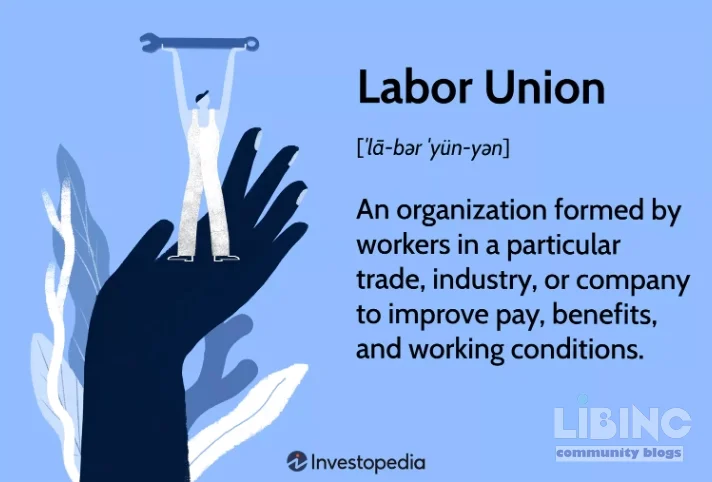
Labor unions are evolving institutions: organized groups of workers negotiating with employers to secure fair pay, benefits, and safer workplaces. They helped shape labor rights across centuries and remain a political and economic force in the United States, even as membership declines. This article interrogates what unions are, how they work, and why their relevance persists in the 21st century. By tracing structure, history, and modern challenges, we expose the hidden tensions between organized labor and the changing economy, and we map a path for unions to adapt without abandoning their core purpose: giving workers a collective voice.
Block 1 — Analytics: The anatomy and dynamics of labor unions
In the United States, labor unions function as democratically governed associations. Officers are elected by the membership, dues fund representation, and bargaining units consolidate workers' interests across workplaces. The result is a structured system that blends local leverage with national coordination. This dynamic shapes what unions can win and how long those wins endure in a shifting economy.
At the core, unions negotiate a formal contract called a collective bargaining agreement (CBA) that sets pay scales, vacation, health benefits, and working conditions. The bargaining occurs in rounds between the union's bargaining unit and the employer, and the CBA binds both sides until expiry, when negotiations restart. The existence of a CBA creates a shared rulebook that reduces management discretion and elevates worker voice, but it also concentrates negotiation power in the hands of those who can mobilize the membership.
Union density varies by sector, with government and utilities often showing higher participation than private manufacturing. The structure of representation and the scope of bargaining differ: rank-and-file members may hold leadership positions and monitor compliance with the contract. These arrangements help explain both the resilience and the vulnerabilities of organized labor in routine employment settings.
Policy and court decisions have altered the balance of power in organizing drives. The Supreme Court in Janus v. AFSCME restricted compulsory dues for public workers, while the broader right-to-work regime in 27 states curbs card-check momentum. These developments matter because they recalibrate the cost and feasibility of sustained member mobilization under a CBA and influence the likelihood of strikes or sustained bargaining pressure.
Block 2 — Contrast: Public vs private, big unions vs small
Public sector unions like those representing teachers, police, and firefighters dominate membership, yet they operate under different political and legal dynamics than private-sector unions. The NEA alone accounts for nearly 3 million members, underscoring how sectoral prioritization shapes bargaining leverage and policy influence. The contrast reveals that the decline in private-sector unions does not imply a universal waning of organized labor; it morphs into targeted, public-facing campaigns and high-skill collaborations in education and service industries.
Private-sector unions, though smaller in membership, still anchor wage negotiations through CBAs in manufacturing and transportation. The AFL-CIO and other federations coordinate across locals to sustain bargaining power; this coordination helps unions benchmark wages and benefits against comparable industries. While the scale differs, the core mechanism—collective bargaining—remains a primary driver of worker gains.
Myth versus data: Public skepticism about unions often rests on anecdotes and conflicts, but data show that unions have historically delivered safer workplaces, higher wages, and stronger benefits for members. The reality is nuanced: when unions are strong, workers gain protections; when they are weak, those protections erode. The tension between efficiency and solidarity remains a central question for the modern labor movement.
Policy and economic shifts reshape organizing trajectories. Right-to-work laws, budgetary pressures, and evolving work arrangements push unions to rethink coverage and strategy while preserving their core mission. This recalibration matters because it determines whether unions can sustain momentum in a rapidly changing economy.
Block 3 — Cause and Effect: labor unions' rise and retreat
The arc of American labor unions tracks a sequence of legal authorizations, economic shifts, and social movements. The Wagner Act of 1935 established the right to form unions and bargain collectively, catalyzing a wave of organizing that reshaped the industrial landscape. The mid-20th century saw union density peak, as manufacturing provided the backbone of many blue-collar jobs and political coalitions solidified around collective bargaining.
The expansion owed to formal recognition mechanisms and enforcement teeth; the National Labor Relations Board was created to enforce good-faith bargaining and to curb unfair employer tactics. The resulting settlement between labor and capital bolstered wage floors, benefits, and workplace safety standards, with broader social spillovers into education and public policy. These conditions created leverage that translated into higher living standards for many workers.
From the 1960s onward, structural shifts—global competition, automation, and the decline of domestic manufacturing—eroded union density in many sectors. A 2023 Treasury report ties this erosion to rising income inequality, as the bargaining power of the middle class slipped while top earners captured greater rewards. Public-sector unions remained more resilient, but their political and budgetary challenges intensified during budget constraints and reform debates.
Policy changes, including the 2018 Janus decision and the ongoing debates over the PRO Act, illustrate the policy environment that shapes future organizing. When legal barriers tighten, unions pivot toward digital organizing, targeted campaigns, and multi-employer bargaining strategies to preserve leverage. The effect is not merely historical; it maps a path for a reinvigorated labor movement if policymakers adjust the frame around collective action.
Block 4 — Expert Reconstruction: Reimagining labor unions for the 21st century
To remain relevant, unions must rethink coverage, membership models, and bargaining strategies for diverse work arrangements. This means expanding beyond traditional plants to include service, tech, healthcare, and gig-adjacent roles, while preserving core protections that ensure fair wages and safe conditions. The pragmatic focus is on scalable organizing, data-informed campaigns, and transparent governance that earns worker trust.
Experts advocate multiemployer bargaining and sectoral agreements that compress wage floors across employers in a given industry, reducing the bargaining costs of organizing across scattered worksites. Digital tools for organizing, anonymized payroll data, and rapid-response campaigns enable timely actions when employers test labor standards. These innovations help unions overcome geographic dispersion and arrive at faster, more credible settlements.
Strategic partnerships with schools, unions, and community organizations can create a pipeline of educated workers and new leaders. By aligning with public policy, including protections for workers in the gig economy and accountability for employer practices in healthcare and education, unions can extend their legitimacy and broaden their appeal to younger workers. The challenge is political: building coalitions that withstand partisanship and budgetary pressures while remaining principled about worker autonomy.
Ultimately, a revived labor movement depends on credibility and renewal: robust training for stewards, professional organizing, and transparent metrics that show tangible improvements in wages, benefits, and safety. If unions can demonstrate measurable value, public opinion and worker participation may rebound, and the labor movement can reclaim its status as a social and economic force in the 21st century.
In sum, labor unions remain a consequential instrument for balancing power in the workplace. Their future hinges on adapting to new work realities, safeguarding democratic governance within the unions, and forging policy partnerships that expand collective action rather than constrain it.
Closing the practical gap: pathways for a renewed, inclusive labor movement
To translate historic gains into today’s diverse economy, unions must deploy scalable, inclusive models that reach workers in health care, education, tech, and the gig economy. A practical path centers on three pillars: sectoral bargaining to raise floor standards across employers, multiemployer coalitions that reduce organizing costs, and digital organizing tools that mobilize dispersed workers without sacrificing trust or governance. Consider a hospital system, a software firm, and a rideshare platform: each faces distinct challenges, yet common aims—fair wages, predictable hours, and safe conditions—can be advanced through shared templates, transparent governance, and local leadership development.
Inclusive coverage across sectors. Extend bargaining to high-impedance workstreams (fragile schedules, on-call shifts, temp roles) by creating sector-specific CBAs that set minimums while allowing firm-level enhancements. Example: a regional health-care sector agreement that guarantees weekend premiums, predictable in-house staffing, and safe-handoffs across facilities; a tech-sector framework that codifies remote-work standards and career ladders; a gig-adjacent rider that ensures workers can access benefits through cost-sharing pools.
Practical governance and leadership. Build steward training, transparent dashboards of progress (wage growth, safety incidents, training hours), and clear pathways for worker leaders to ascend. Example: a joint labor-management committee with representation from service workers, clinicians, and software engineers to monitor contract compliance and escalate issues quickly.
Digital tools with human judgment. Use payroll anonymized data for trend analysis, targeted digital campaigns for outreach, and rapid-response teams for discrete actions. Example: online petitions paired with in-person organizing events, ensuring members understand how the bargaining goals translate into concrete gains.
LSI keywords: collective bargaining, sectoral bargaining, multiemployer agreements, gig economy protections. Practical scenarios show how unions adapt without losing their core mission: giving workers a voice in the workplace.
How have unions adapted to nontraditional workers?
Unions are expanding beyond traditional manufacturing roles to include health care, education, technology, and gig workers. This adaptation starts with broadening eligibility, building local pipelines, and creating sectoral agreements that set baseline protections while allowing variations by industry. In practice, hospitals, schools, and software firms can adopt shared standards for scheduling, wages, and safety, while preserving local autonomy for site-specific needs. This evolution relies on transparent governance, continuous member feedback, and the effective use of digital organizing tools to reach dispersed workers. The result is a more inclusive movement that still upholds core protections.
Analytically, this shift strengthens bargaining power by enlarging the union’s footprint and creating cross-occupation solidarity. It also introduces challenges—ensuring accountability, maintaining budgetary discipline, and preventing mission drift. Leaders mitigate these risks with robust steward training and clear performance metrics tied to wages, benefits, and safety outcomes.
What is sectoral bargaining and why does it matter today?
Sectoral bargaining refers to agreements negotiated across all employers within a given industry or region, establishing a wage floor and common standards that apply across many workplaces. It matters today because it scales leverage: instead of fighting a single employer, unions coordinate across multiple firms to elevate baseline conditions and reduce the cost of organizing. Sectoral agreements can be complemented by multiemployer coalitions that share resources for training, enforcement, and grievance handling. The practical impact is steadier wage growth, predictable benefits, and improved safety norms across the sector.
How does multiemployer bargaining differ from traditional union contracts?
Multiemployer bargaining involves negotiations that cover several employers within a sector or region under one framework, whereas traditional single-employer CBAs bind only one company. The multiemployer approach lowers organizing costs, accelerates standard-setting, and reduces competitive undercutting on wages. It requires strong governance to manage diverse employer interests and ensure compliance across workplaces. In practice, unions may partner with a federation or coalition to coordinate negotiations, share data, and enforce common standards while preserving local voice in implementation and grievance handling.
What steps can workers take to join or form a union in today’s economy?
Workers typically begin by identifying a local union or federation aligned with their industry, then participate in informational meetings to learn rights and processes. Steps often include forming an organizing committee, gathering interest among coworkers, and choosing a representation method (card check or election). Once recognized, workers elect stewards, sign a contract, and establish grievance channels. Digital outreach, privacy-aware organizing, and partnerships with community groups can expand reach, especially for nontraditional workers who may lack clear workplace boundaries. The key is clarity, transparency, and timely communication about what changes to expect under a contract.
What policy changes shape the future of unions, and how do they affect workers?
Policy changes—such as protections for gig workers, support for sectoral bargaining, and updates to the legal framework for organizing—directly affect a union’s ability to recruit, organize, and bargain. For workers, these changes can translate into clearer minimum standards, access to benefits, and more predictable career pathways. For unions, policy shifts influence leverage, funding, and governance requirements. The ongoing debates around the PRO Act, public-sector organizing rights, and related enforcement mechanisms determine the speed, scope, and sustainability of modern organizing campaigns. In all cases, the goal remains: secure, enforceable protections that reflect today’s diverse work arrangements.





Add a comment
To comment, you need to register and authorize
Comments
Yet density and influence vary widely by sector. Government and utilities often show higher participation than private manufacturing, and the scope of representation can shift from local shop floors to national industry-wide campaigns. This reality invites a deeper look at what makes a union effective. Is effectiveness primarily about size, or is it about strategic coalition-building with employers, lawmakers, and community groups? How do unions maintain accountability to members while also winning concessions that may require long-term commitments from employers? The article notes that policy and legal decisions—such as restrictions on compulsory dues in the public sector and right-to-work regimes in many states—recalibrate the cost and feasibility of sustained member mobilization and equitable bargaining pressure. As work becomes more dispersed and employment relationships more dynamic, the question is: what design changes would preserve democratic governance and credible enforcement when workers are spread across multiple sites, platforms, or contract models? Could evolving forms of multiemployer bargaining, digital organizing, and scalable governance provide a path forward that still honors the core purpose of worker solidarity? What responsibilities should unions assume to ensure that participation does not just exist in name, but translates into tangible improvements for members over the life of a contract and beyond?