

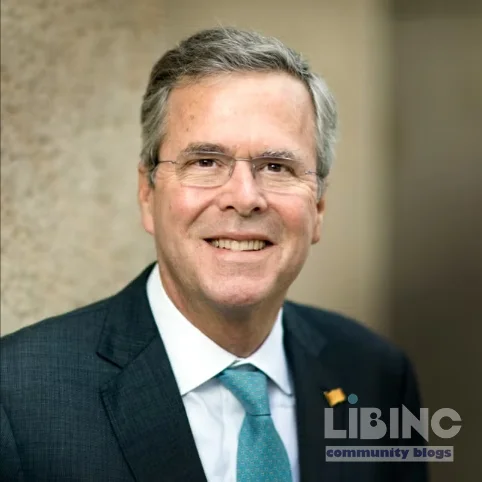
Jeb Bush: A Thorough Analysis of the Florida Governor's Path to the Presidency
Table of Contents
- Block 1 — Analysis through analytics
- Block 2 — Through contrast
- Block 3 — Cause-and-effect relationships
- Block 4 — Expert reconstruction
- Final reflections
Jeb Bush carved a distinct arc through Florida politics before stepping onto the national stage. This profile examines not just what he did, but why his decisions mattered within the shifting sands of a party that reconciled traditional conservatism with new policy experiments. The stakes are real: a governor's legacy that informs a presidential bid, and a family influence that continues to shape Republican narratives. The analysis does not treat his career as a straight line; it reveals the hidden frictions between dynasty expectations, policy ambitions, and the evolving demands of voters. The direction of this piece is to weigh governance outcomes against campaign dynamics and to identify how core beliefs translated into policy and politics on a national stage.
Block 1 — Analysis through analytics
Early ascent and the governance arc
Jeb Bush emerged from a politically active family with a clear map: pursue public service, leverage business experience, and build a policy profile that could translate into executive effectiveness. In Florida, he moved from private sector work in real estate development to government roles that sharpened his administrative instincts. The question is not only what he did, but how he did it: the choices that defined his governorship reveal a practical approach to complex state challenges. Jeb Bush positioned himself as a reform-minded administrator who linked economic vitality with education and environmental stewardship. This is not a simple narrative of success; it is a calculation of policy leverage and political capital, with each decision calibrated to expand a governing footprint beyond party lines.
Within the realm of education policy, the emphasis on standards and accountability became a throughline. The analytics of his tenure show a pattern: promote measurable outcomes, attract private investment in public issues, and frame reform as modernization rather than confrontation. The rhetoric of progress masked the political risks of reform for a broad coalition, yet the structure of Florida’s economic growth largely reflected the governor’s insistence on predictable, market-oriented policy signals. The outcome was a governor who could claim progress on education and the economy while keeping municipal and business sectors engaged in reform, a balance that remains central to how analysts judge his legacy.
The 2000 election controversy in Florida briefly placed Jeb Bush at the center of national scrutiny. Rather than participate in decisions that would appear to benefit his brother, he distanced himself from the process to preserve the integrity of state administration. This choice illustrates a core analytical point: governance credibility often hinges on perceived boundaries between executive responsibilities and national political calculations. The effect was twofold—first, it safeguarded public trust in Florida’s electoral process; second, it fed into the argument that he prioritized institutional legitimacy over personal advantage. The data point matters because it reframes the narrative from a sibling dynamic to a model of impartial governance in a crucible moment.
Looking at reelection, the administration faced a balanced calculus of continuity and renewal. Florida’s economy, education system, and environmental programs reflected an attempt to maintain momentum while addressing diverse constituent needs. The analytics point to a governor who built broad-based support by combining pragmatic policy with visible results in schools, the environment, and the economy. This combination created a durable platform that later fed into national perception, but it also highlighted the fragility of policy success when national political tides shift. The implication for any presidential bid is clear: successful state governance provides credibility, yet it does not automatically translate into a winning national campaign when other elites and voters prioritize different criteria.
Clearly defined policy pillars and their limits
Policy clarity underpins the governor’s record. The emphasis on education reform aligns with a broader national debate about standards, accountability, and the role of the state in shaping public schooling. The Florida experience offered a laboratory for evaluating the practical consequences of adopting standardized curricula and aligning funding with measurable outcomes. The analysis shows that while reforms can raise performance indicators, they also require political resilience to withstand opposition from educators, parents, and local lawmakers who fear privatization or overreach. The Florida case demonstrates how policy narratives must translate into durable funding and governance structures to keep reforms intact across administrations.
On environmental and economic issues, the governor pursued measures that prioritized investment in sustainable growth and job creation. The Florida record suggests a governance style that leverages private-sector engagement to implement public objectives, a pattern that future national campaigns often cite when arguing for market-based approaches to public policy. The causal link here is policy design that embeds efficiency within public programs while maintaining political legitimacy through tangible outcomes for residents and businesses alike. That linkage remains central to evaluating the long-term impact of his governance approach.
Policy stance as a signal to a changing party
In the broader Republican ecosystem, the Jeb Bush administration’s emphasis on standards, economic modernization, and incremental reform signaled a particular faction within the party—one that sought to modernize while preserving core conservative principles. The analytics of his policy stance reveal a strategy aimed at appealing to a pragmatic middle, a move that would later define his national bid as a candidate who could bridge factions within a volatile GOP. This is not merely a macro observation; it points to the practical challenge of reconciling durable conservative values with the evolving demands of a diverse voter base. The data suggests that while his strategy attracted business support and a segment of traditional conservatives, it faced headwinds from factions craving more aggressive or disruptive messaging.
Summary of Block 1 takeaways
- Jeb Bush built a reputation as a capable administrator who could deliver measurable gains in education and the economy—yet policy complexity created resistance that influenced campaign narratives.
- The Florida model demonstrated how reform ideas could survive across terms when aligned with credible execution and funding stability.
- The 2000 election episode underscored the importance of perceived impartiality in crisis moments, shaping expectations for national leadership.
Block 2 — Through contrast
Comparative dynamics within the 2016 GOP field
When the 2016 race took shape, Jeb Bush faced a field dominated by personalities with radically different campaign playbooks. He stood apart from the early surge of Donald Trump, who leveraged an anti-establishment posture to redefine political capital. He also found himself in a crowded lane with Ted Cruz and Marco Rubio, each pushing distinct versions of conservatism and policy emphasis. The contrast is instructive: Bush’s campaign anchored in governance credibility and policy depth, while his rivals anchored in charisma, disruption, or a rapid-fire media strategy. This divergence shaped fundraising dynamics and voter perception, illustrating how a candidate with solid state-level credentials can struggle to translate policy seriousness into national resonance amid a click-driven media environment.
The contrast extends to geographic and demographic bases. Bush’s core strengths rested in established networks within Florida and similar states, a profile that can generate quiet, sustained support but may struggle to ignite the broad enthusiasm needed to compete with a wave candidate. The data show that in a political landscape where attention moves quickly to punchy messaging and immediate headlines, the long arc of policy-based persuasion encounters a speed bias. The result is a campaign that must compensate with extraordinary organizational depth and timely message discipline to stay competitive against more immediate, media-savvy contenders.
From a policy vantage point, Bush’s emphasis on education reform, standards, and governance as a credible path to national leadership clashed with the evolving Republican appetite for broader, sometimes more radical policy proposals. The contrast reveals a strategic tension: the tension between a reformist governance narrative and a political economy that prizes direct confrontation and populist empowerment. The effect on fundraising, endorsements, and alliance-building is telling, as donor priorities, media narratives, and voter engagement tools all shifted toward candidates who could deliver rapid, visceral messaging rather than patient, policy-driven explanations.
Implications for political strategy
- Policy depth must be matched by accessibility in messaging to attract a wide electorate.
- Geographic base matters; a governor’s record can both help and hinder national appeal depending on media asymmetries.
- Campaigns must anticipate how competing narratives—credibility versus disruption—shape donor behavior and voter enthusiasm.
Block 3 — Cause-and-effect relationships
Family legacy, personal choices, and policy orientation
Family background matters in political trajectories, and Jeb Bush inherits a dual legacy: the presidential ambitions of George H.W. Bush and the public profile of George W. Bush. Yet personal choices—an emphasis on policy depth, a preference for incremental reform, and a commitment to education standards—helped shape a distinctive identity within the family dynasty. The cause-and-effect logic is clear: the environment that produced the Bush political brand created expectations for policy performance that informed both governance and campaign strategy. The effect is a governor who could articulate a coherent, policy-forward vision while also navigating the constraints of a crowded field and a politicized primary electorate.
The shift from a Florida-focused political career to a national bid involved deliberate moves, including establishing a political action committee, publishing policy chapters, and engaging in broader national conversations on immigration reform and education. The cause here lies in the pursuit of national relevance through a calculated set of political and organizational steps. The effect is a candidate whose policy record in Florida served as a credential, but whose national appeal depended on translating that credential into cross-cutting, broadly resonant messaging. The Florida experience thus becomes a proving ground for whether expertise can travel from state governance to national leadership without erosion of credibility.
Economic and social policy choices within Florida created a tangible evidence base for the campaign narrative. When evaluating cause and effect, analysts consider how tax structures, investment climates, and regulatory environments influenced growth, employment, and public perceptions of effectiveness. The link to the presidential bid is not mechanical; it rests on whether voters view the governor’s Florida record as an indicator of the candidate’s capacity to manage the federal government’s complexities. The data point is not merely about outcomes in a single state; it is about the transferability of governance competencies to the national stage, and the limits of policy competence when political dynamics overshadow substantive credibility.
Personal and political decisions shaping the campaign arc
The decision to run publicly in 2015, after years of signaling interest, followed a strategic path shaped by prior experiences and anticipated electoral currents. Forming a political action committee and sharing policy chapters aimed to turn academic policy proposals into tangible campaign assets. The cause of these moves was the recognition that a national bid requires a robust policy dossier and a broad donor base. The effect was a more formalized campaign apparatus, but the pace and intensity of the 2015–2016 cycle tested the candidate’s stamina and messaging discipline in a media environment that prized rapid cycles over deliberate planning.
Block 4 — Expert reconstruction
How analysts reinterpret the Florida record
Experts review the Florida years through multiple lenses. Some emphasize education reform as a catalyst for later policy credibility, while others critique the social costs or political compromises embedded in reforms. The central question is whether the governance framework survived political oscillations and what that implies for national leadership credibility. The expert consensus generally acknowledges a durable, policy-driven Governor who built a reform-oriented coalition, but it also notes the fragility of policy capital when confronted by a volatile federal political environment. The Florida experience, in this view, becomes a microcosm for how state-level reform translates into national potential.
Scholars and practitioners also assess the risk-reward calculus of maintaining a reform agenda while managing personal and familial expectations. The Noelle Bush episode adds a complex dimension to the reconstruction: it tests the idea that leadership extends beyond policy rooms to personal resilience and public accountability. The expert reconstruction asks whether the governor’s ability to navigate family scandals without compromising core governance themes can serve as a model for future leaders facing intense public scrutiny. The conclusion drawn by many observers is nuanced: policy competence matters, but political resilience and crisis management define a credible long-term leadership profile.
A broader reconstruction considers the impact on the Republican Party’s evolution. The candidate’s reformist record in Florida suggests a road map for rebalancing party factions toward policy depth while preserving core conservative values. The reality is that a successful national bid needs more than district-level evidence; it requires a compelling narrative about national governance, responsive institutions, and concrete plans for the federal role in education, immigration, and the economy. The expert view adds that Jeb Bush’s Florida legacy offers both guidance and caution for future campaigns seeking to fuse policy expertise with broad electoral appeal.
Final reflections
Jeb Bush’s career embodies a careful blend of policy seriousness and political pragmatism. His Florida governorship delivered tangible gains in education, the economy, and environmental stewardship, while his national bid highlighted the enduring challenge of translating state-level governance into broad national resonance. The analysis reveals that the governor’s strengths lay in credible governance and a disciplined policy portfolio, but these same attributes faced headwinds in a Republican field shaped by disruption and rapid media cycles. The lasting takeaway is not merely a portrait of a candidate, but a lens on how state-level reformism interacts with national political dynamics in a way that informs both historical understanding and contemporary strategy for executives who aspire to the highest office.
Bridging governance outcomes and national narrative
There is a persistent gap in how Florida's policy results translate to a plausible national leadership profile for Jeb Bush. The critical connection lies in how durable, scalable reforms can withstand federal-level scrutiny and shifting voter priorities.
To close that link, this section focuses on data-driven patterns from the Florida years and what they portend for a nationwide bid, with a practical lens on policy design, funding, and political resilience.
| Pillar | Florida actions | Measurable outcomes | National relevance |
|---|---|---|---|
| Education reform | Standards-based reform, accountability, funding links | Improved assessment signals and graduation readiness | Template for federal K-12 modernization |
| Economy & jobs | Public-private partnerships, targeted growth incentives | Jobs growth in key sectors and private investment upticks | Model for market-driven modernization at scale |
| Environment & growth | Conservation with business engagement | Balanced growth metrics and water quality programs | Policy fit for federal-state collaborative efforts |
| Governance | Public reforms, ethics, transparency | Budget discipline and program evaluations | Credible governance signals for national trust |
Element analysis: The table condenses reform programs into outcomes and transferable implications, illustrating how a state model could inform federal policy design.





Add a comment
To comment, you need to register and authorize
Comments