

Amazing Grace Across America: How a 1772 Hymn Shaped Black Musical Futures and the Promise of Redemption
Table of contents
- 1) Analytics: The lineage of grace in the American experiment
- 2) Contrasts: Grace across contexts and competing narratives
- 3) Cause and effect: How grace becomes social propulsion
- 4) Expert reconstruction: Dialogue between Perry, Downes, and the future
Lead
Why does "Amazing Grace" endure as a living instrument of American memory? In a 250th anniversary year, the hymn functions as a barometer of opportunity, challenge, and historical memory. Its lineage stretches from 18th‑century abolitionist awakenings to 20th‑century Black gospel and into contemporary conversations about justice and belonging. The stakes are not merely cultural nostalgia but a test of how a nation reconciles its founding ideals with its embedded legacies of bondage and violence. The hidden conflict lies in competing readings: grace as personal salvation versus grace as collective reinvention. This article traces the song's trajectory through analytics, contrasts, causal chains, and expert reconstruction to reveal how Amazing Grace keeps guiding a plural American future.
Analytics: The lineage of grace in the American experiment
To understand why Amazing Grace travels so far, we begin with its origins as a hinge between religious renewal and social critique. The song’s birth in 1772 places it before the American project took a constitutional shape, yet its moral grammar becomes inseparable from the national experiment. The same lines that promise forgiveness also acknowledge a hardened social order—an order that would demand abolitionist courage and creative resilience from Black church communities. This is not a mere spiritual tune; it is a compact between personal salvation and public reinvention. The analytics of its persistence hinge on three converging variables: spiritual practice, communal memory, and adaptability to shifting social functions.
- Spiritual practice as social technology: Grace moves from private comfort to collective discipline, enabling communities to withstand trauma and mobilize across generations. In Black religious life, grace operates as a dual mechanism: it soothes and it empowers, allowing individuals to endure subjugation while imagining a broader horizon of justice and freedom.
- Memory as a navigational chart: The song’s lyrics and melodies serve as reference points for navigating a nation still reckoning with its original sin. Each era reinterprets grace to answer the pressing questions of the moment—redemption in the era of emancipation, resilience during Reconstruction, and emancipation of mind in the civil rights era.
- Adaptive function across genres: From spirituals to gospel to contemporary classical crossover, Amazing Grace migrates without losing core meaning. The song’s capacity to accommodate new voices and instrumentations keeps it legible to diverse audiences and purposes.
One of the strongest analytic throughlines is the tension between individual salvation and communal redemption. The hymn’s arc demonstrates that personal grace becomes a social grammar that legitimizes collective action. When scholars like Imani Perry interpret the song in the context of abolitionist awakening and later Black cultural production, they track a causal chain: a spiritual practice becomes a political language, which then catalyzes cultural resilience. This is the usable past concept in action—the idea that we select, reframe, and deploy historical artifacts in service of a future that remains unfinished. In the American context, grace becomes a strategic resource for negotiating the gap between dream and delivery, between liberty promised and liberty realized.
The empirical record also shows how the song’s reach compounds across generations. There are more than three thousand recordings cataloged in the Library of Congress, a testament to its endless re-voicing. This replication is not mere replication; it is a process of re-interpretation that preserves core meanings while reframing context. When Aretha Franklin’s 1972 rendition appears on a landmark double gospel album, the recording serves as a case study in future-oriented tradition: she anchors a storied spiritual lineage in a moment when the civil rights project faces new tests and new opportunities. The move from tradition to propulsion illustrates how grace operates as a strategic asset for social transformation, not a nostalgic souvenir reserved for ceremonial occasions.
To sustain such analysis, we must acknowledge the song’s embedded ambiguities. Grace is not a monolithic message; it carries diverse valences across listeners. The same refrain can comfort a grandmother on a Sabbath morning and empower a young organizer at a march. This multiplicity is not a flaw but a design feature: a living form that respects complexity and invites ongoing interpretation. The analytics reveal why the song remains in circulation—because it refuses to be exhausted by a single meaning or single historical moment. Instead, it reframes the moral questions of each era, enabling communities to imagine and enact a future that honorably negotiates the failures of the past.
Contrasts: Grace across contexts and competing narratives
The second block foregrounds contrasts that illuminate the song’s versatility and its contested meanings. Amazing Grace travels through distinct social theaters—from church pews to public squares, from abolitionist rhetoric to civil rights anthems, from intimate prayer to national ritual. In each setting, the song acquires a different ethical charge, a different political leverage. The contrasts are not simply about interpretation; they reveal structural tensions within the American project—the tension between liberty as a universal ideal and liberty as a lived practice that excludes and includes in unequal measures.
First, consider the orphaned narrative of grace. In early Black spiritual practice, grace is not only a personal balm but a communal instrument of resilience. It locates salvation inside communal struggle and collective memory. By contrast, the public celebration of grace in ceremonial contexts often distances the song from the day-to-day labor of racial justice. The tension is not contradictory; it reveals the dual function of spiritual repertoires: solace and mobilization. When Perry frames grace as a hinge between past and future, she emphasizes how the memory of hardship becomes the engine of social imagination. The beauty of this contrast lies in its productive friction: memory can indict the present while forecasting a more inclusive future.
- Religious versus secular invocation: In church settings, grace is a theological gift and a private vow. In the public sphere, the same tune becomes a unifying symbol that anchors collective memory and political aspiration.
- Abolitionist memory versus civil rights rhetoric: The hymn’s abolitionist associations feed into later justice movements, while civil rights leaders repurpose its message to argue for ongoing equality and federal protections.
- A song born in the 18th century survives as a global cultural artifact, but its authenticity is continually renegotiated as new communities adopt and adapt it.
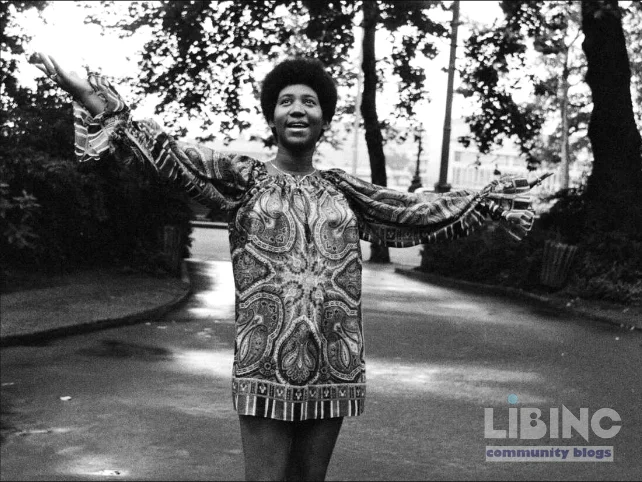
Aretha Franklin’s 1972 version foregrounds another contrast: enterprise and propulsion within a Black gospel tradition that refuses to be a museum piece. The album cover—Aretha in African-inspired attire on a gospel-inspired record— signals a strategic alignment of heritage with forward-looking artistry. The contrast between that album’s commercial success and the song’s ritual use in sacred spaces reveals how grace operates as a bridge—connecting commercial viability with spiritual credibility. In Perry and Downes’s conversations, the contrast becomes a productive lens: grace is a scaffold that supports both the preservation of memory and the construction of a future-oriented identity for Black communities within and beyond the United States.
Cause and effect: How grace becomes social propulsion
Legal emancipation and cultural emancipation are not independent streams; they feed one another in a feedback loop. The effect of Amazing Grace extends beyond personal conversion to the social architecture that sustains community life. The song’s impact can be read as a sequence: spiritual formation shapes collective action, which then reconstitutes the spiritual repertoire for subsequent movements. This causal arc—moral awakening → community formation → sustained cultural practice—helps explain the song’s durability in American life.
One clear mechanism is narrative mobilization. When a society grapples with historical trauma, stories framed in terms of grace offer both accountability and hope. The narrative structure of Amazing Grace—confession, repentance, redemption, and a future-oriented blessing—provides rhetorical leverage for addressing systemic injustice. Perry’s work demonstrates how historical narratives, when anchored in shared ancestral experience, can produce empathy, cross-community dialogue, and durable social ties. This is not sentimental optimism; it is a careful alignment of memory and possibility that underwrites long-term reform strategies in education, culture, and policy.
Second, the song acts as a cultural technology that enables intergenerational transfer. The act of passing down a melody, a lyric, and a spiritual practice creates a durable chain of memory that successive generations can adapt. This is especially salient in Black musical life, where the spiritual repertoire serves as a living archive of endurance and political imagination. The archival density—the thousands of recordings, performances, and adaptations—becomes the empirical backbone for a social theory of cultural resilience. The result is not nostalgia but a dynamic form of cultural capital that communities draw upon to navigate present threats and future opportunities.
Finally, the aesthetic dimension reinforces social effect. The musical language of grace—its melodic ascent, its call-and-response texture, its rhythmic pulse—maps well onto collective rituals of gathering, protest, and healing. In this sense, the song shapes social behavior by making justice feel legible and desirable. The effect is a distribution of attention: audiences hear a hymn and recognize the call to solidarity, to repair, to new beginnings. That perceptual shift is a political instrument, one that reframes questions of inclusion and citizenship in terms of grace’s universal yet historically particular logic.
Expert reconstruction: Dialogue between Perry, Downes, and the future
Expert reconstruction here means stitching together the perspectives of Perry, a MacArthur Fellow and deeply historical thinker, with Lara Downes, a virtuoso pianist guiding audiences through a living conversation with the past. Their exchange reveals a shared conviction: history is not a closed archive but a shared project of interpretation and reimagination. Perry invites us to see grace as a durable resource for conscience and community, while Downes emphasizes the music’s ability to travel, translate, and transform across genres and generations. Together, they model a mode of scholarly and artistic inquiry that treats cultural artifacts not as relics but as active agents in social life.
Downes’s meditation on the 250th anniversary of the United States anchors the discussion in a historical moment of reckoning. The past is not exhausted by commemoration; it becomes a conversation partner with future generations. The argument here transcends a single song or a single artist. It posits Amazing Grace as a template for how a culture can acknowledge its traumas while reimagining its commitments. Perry’s reading of the hymn’s trajectory—from abolitionist roots to Black gospel to the modern imagination of justice—positions grace as a navigational instrument for a nation trying to live up to its own promises. The synthesis is not merely descriptive; it yields a methodological invitation: study how memory articulates itself through song, and let that articulation inform present-day practice across schools, churches, concert halls, and civic spaces.
From this expert reconstruction emerges a practical takeaway: to honor a history that is both painful and aspirational, communities should cultivate cross-disciplinary dialogues that foreground songs as living texts. Amazing Grace becomes a test case for how we teach history, how we design musical curricula, and how we frame conversations about belonging in a plural republic. If the usable past becomes a guide for action, then the future must be built on participatory memory—not passive nostalgia. The work of Perry and Downes suggests a blueprint: engage scholars and artists in joint exploration, archive and perform, and then translate insights into public dialogue that binds generations through shared listening and shared responsibility.
Closing synthesis
Amazing Grace travels because it makes room for contradiction and possibility at the same time. It speaks to the ache of the American promise and the ongoing work of making that promise real for all. Its endurance is not a coin tossed into a sentimental bowl; it is a rigorous, improvisatory project that tests and extends the very notion of grace in public life. The conversations with Perry and Downes remind us that the song’s power lies in its capacity to hold memory, critique past wrongs, and illuminate the paths toward a more inclusive future. In a rapidly changing republic, grace provides not a soft landing but a durable framework for reform, dialogue, and renewal.
Conclusion
Amazing Grace remains a living archive of American memory and a driving force for communal imagination. By tracing its lineage, contrasts, and causal effects, we see how a hymn can function as a political and ethical technology—one that supports resilience, fosters dialogue, and continually redefines what counts as a just future. The ongoing collaboration between scholars and artists ensures that the song’s meaning expands rather than narrows, inviting new generations to listen, to question, and to act in the name of grace.
Bridging memory and practice: actionable pathways
Despite rich analysis, a practical gap remains: translating grace's enduring influence into concrete, measurable civic action. This section proposes concrete routes for educators, curators, and community organizers to translate memory into ongoing social impact. By pairing memory work with simple assessment, communities can lift learning outcomes, broaden engagement, and sustain dialogue across divides.
Practice-oriented steps below connect memory work to community outcomes, making the song relevant to classrooms, churches, and public life.
- Education through living archives: curate local recordings, church histories, and family stories; track engagement via attendance, discussion duration, and post-program surveys.
- Public history events: host intergenerational listening sessions, performative readings, and panels linking abolitionist roots to present-day justice work; measure attendance and cross-community collaboration.
- Cross-genre collaborations: commission new settings of Amazing Grace in classical, jazz, and hip-hop contexts; evaluate audience perception and willingness to participate in civic dialogues.
| Program Type | Target Audience | Key Metrics | Example Activity |
|---|---|---|---|
| Educational curricula | Students & teachers | Participation, retention, post-survey score | Listening circles in social studies |
| Public listening sessions | Intergenerational communities | Attendance, cross-group dialogue | Evening talks with local choirs |
| Cross-genre commissions | Audience builders | Program diversity, genre reach | New arrangements by local artists |
3,000+ recordings cataloged in national archives
and counting across genres, languages, and communities
Through these mechanisms, communities can translate study into practice, bridging that gap between memory and action while preserving the song's democratic reach across generations.
How does Amazing Grace function as a social technology in American memory?
Amazing Grace endures as a social technology because it binds intimate faith to collective memory, enabling personal repentance to catalyze public action across abolition, Reconstruction, civil rights, and contemporary justice work, while continuously adapting to changing communities, musical genres, and communicative aims; this flexibility makes the hymn a reliable reference point for belonging, accountability, and reform. It travels through schools, churches, museums, and concert halls, inviting new audiences to test ideals of liberty and equality within their own contexts.
In practice, the hymn’s staying power comes from its ability to be both a source of solace and a tool for mobilization, allowing diverse groups to negotiate difference without losing shared purpose.
What is meant by the term "usable past" in this discussion?
The usable past refers to the idea that historical artifacts like Amazing Grace are not fixed relics but living resources that communities actively interpret to inform present and future actions. The concept emphasizes selectivity, reframing, and translation of memory into ongoing practice, policy, or education. It shapes when, where, and how memory informs dialogue about justice, reconciliation, and civic identity.
Viewed this way, the past becomes a toolkit that supports accountability and forward momentum rather than nostalgia alone.
How can educators leverage the hymn to teach history and civics?
Educators can frame key moments (abolition, Reconstruction, Civil Rights) as narrative milestones within Amazing Grace’s lineage, inviting students to compare historical goals with contemporary policy. Activities include memory-led debates, listening labs, and cross-cultural analyses of gospel repertoires. Metrics such as student engagement, inquiry depth, and collaboration across groups provide tangible signals of impact on classroom culture and civic understanding.
By tying musical repertoires to concrete learning outcomes, schools create enduring links between culture and citizenship.
What role do recordings and cross-genre reinterpretations play in memory formation?
Recordings and adaptations function as living archives that preserve core meanings while enabling new audiences to encounter the song in fresh contexts. Each reinterpretation—spirituals, gospel, classical, or contemporary fusion—adds layers of public memory, broadening reach and reinforcing shared themes of resilience and justice. Analyzing reception data from concerts, streams, and educational programs helps map how memory expands across communities.
These dynamics expand the interpretive field without diluting central values.
How can communities measure the impact of Amazing Grace on social engagement?
Impact can be tracked through a mix of qualitative and quantitative indicators: event attendance, cross-group collaborations, curriculum integrations, and narrative change in community discourse. Longitudinal surveys, listening session records, and performance metrics offer a pragmatic gauge of memory-driven engagement and trust-building across difference.
The goal is to connect cultural practice with measurable shifts in awareness, action, and belonging.
What opportunities and risks come with using memory artifacts in public life?
Opportunities include enhanced civic literacy, intergenerational dialogue, and renewed commitments to justice informed by shared heritage. Risks involve oversimplification, selective memory, or instrumentalization for political ends. Safeguards include inclusive storytelling, transparent authorship, and ongoing critique to keep memory a dynamic, accountable resource rather than a static symbol.
The balance lies in treating artifacts as conversation partners that invite rigorous scrutiny and collaborative experimentation.







Add a comment
To comment, you need to register and authorize
Comments