

Gregorius, the Chosen One: A Minimalist Mock-Epic Reframing of the Pope Gregory Legend
- Lead
- Gregorius, the Chosen One — Through Analytics
- Gregorius, the Chosen One — Through Contrast
- Gregorius, the Chosen One — Through Cause-and-Effect
- Gregorius, the Chosen One — Through Expert Reconstruction
- Closing Thoughts
Lead
Gregorius, the Chosen One reimagines the medieval Pope Gregory legend as a deadpan mock-epic, turning sacred ascent into a string of misadventures. Tomasz Mielnik's minimalist, anti-epic sensibility treats the tale as stagecraft rather than sermon, prioritizing theatricality over reverence. The stakes are intellectual rather than devotional: what happens when a legend of sin and destiny becomes a knowingly artificial fable about fate, storytelling, and the machine of greatness? This analysis follows how the film's formal choices, tonal decisions, and narrative mechanics produce a new kind of hero whose ascent remains stubbornly undercut by irony and accident.
By embedding puppet theatre into a medieval road narrative, Mielnik binds spectacle to critique and invites spectators to question the terms of myth. The frame refuses solemnity, insisting that even the most sacred origins admit to performance and improvisation. In this sense, Gregorius, the Chosen One functions as a case study in absurdist Central European cinema, a tradition where mock-epic ambition meets self-awareness and the absurd machinery of greatness.
Gregorius, the Chosen One — Through Analytics
From a structural vantage, Gregorius, the Chosen One disassembles the classic ascent by recoding it as episodic travel rather than a linear pilgrimage. Mielnik scripts Gregory's progress as a sequence of contingencies rather than teleology, letting chance govern momentum. The film's arch tone arises from the constant gap between Gregory's self-conception—an emblem of pious mastery—and the ludicrousness of his situations, which range from piracy to papal appointment. This analytic lens reveals how the director negotiates source material with dramaturgical restraint and a cool sense of formal possibility.
Deliberate minimalism becomes the instrument that concentrates meaning. The puppet-tale insertions are not sidebar amusements; they function as a metanarrative mechanism, compressing episodes that would require grand sets into tight, performative vignettes. Through this editing logic, the film performs narrative subversion by turning a sacred origin story into a routine of stagecraft, parody, and irony, while preserving a cohesive sense of trajectory.
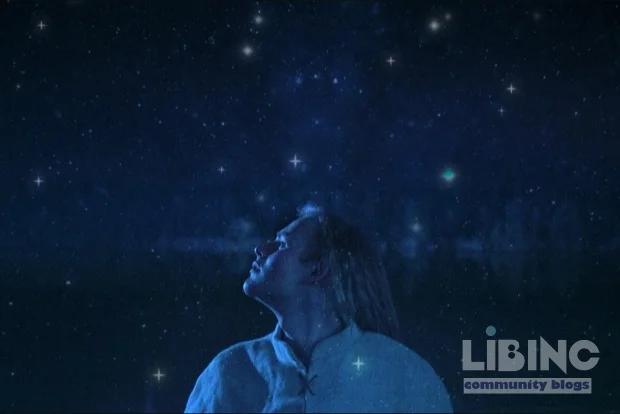
Uher's Gregory speaks with ornate archaism while traversing his world on horseback; his voice becomes the film's moral knob, adjusting the tone as action lurches between piracy, kingship, and fatherhood. The performance anchors the comedy by staking a claim to high seriousness even as the surrounding events collapse into whimsy. The result is a steady counterpoint: heroic diction against a landscape of deliberate ridiculousness.
Taken as a logic of form, Gregorius, the Chosen One uses minimalism as an aesthetic engine; the result aligns with absurdist cinema traditions in Central Europe, where anti-epic impulses redefine greatness as a mechanism of chance, misunderstanding and performance.
Gregorius, the Chosen One — Through Contrast
Where Journey to Rome planted Mielnik's flag in a brisk road-movie tempo, Gregorius, the Chosen One slows to examine the source material under scrutiny. The influence of Thomas Mann's The Holy Sinner is audible in the tale's scaffolding of sin and redemption, yet the film refuses solemnity. The medieval setting becomes a playground of visual gags and theatrical cues that keep the audience alert to the artifice of myth.
Irony becomes the statistic of the film's tone as it juxtaposes heroic rhetoric with petty, comic misfortune. The contrast between Gregory's grand self-image and the puppet theatre's tellings creates a playful tension that invites viewers to question moral grandeur as much as sacred history. This is not erosion of meaning but a recalibration: the legend yields a new form of resonance through pastiche and self-awareness.
Compared to Mann's The Holy Sinner, the film treats influence as cinematic grammar rather than textual authority; it uses austere settings and stage mechanisms to intensify perception, not to domesticate the myth. The result is a dialogue across centuries: a European appetite for historical grandeur reframed by a camera that treats expense as a figure of speech for restraint.
Contrast also extends to performance: Mielnik's anti-epic mode uses literal stage devices—marionettes, voiceover, and on-screen text—to draw a distance from medieval piety while preserving a sense of mythic propulsion.
Gregorius, the Chosen One — Through Cause-and-Effect
Analyzing causal chains reveals how a few design decisions shape audience experience: the choice to anchor Gregory's ascent to a series of archly improbable episodes, the use of horseback mobility, and the insertion of puppet theatre. Each choice yields a tangible effect: the viewers reinterpret destiny as provisional, and the myth's authority drains into narrative play.
These decisions also generate ethical distance. The mock-epic apparatus reduces sacred authority to a performative system whose rules bend to narrative whim, enabling repeated opportunities for irony and critical reflection. The film thus causes a re-interpretation of sin and redemption as social theatre rather than metaphysical law.
The tenacious sequence of episodes—pirates, kings, fatherhood, and a seventeen-year rock confinement—pairs each event with a shift in Gregory's self-conception and public role. Each turn reframes what counts as victory or virtue within the legend, placing emphasis on process over proclamation. The cumulative effect is a stubborn, almost clinical, exposure of myth as a machine for narrative control.
The papacy emerges not as spiritual crown but as a festival of chance and misinterpretation, where destiny gates progress through mishap. This is not nihilism; it is a retooling of sacred ascent into a choreography of accident, improvisation, and audience recognition of performance as a social technology.
Gregorius, the Chosen One — Through Expert Reconstruction
From a scholarly angle, Gregorius, the Chosen One marks a turning point in Central European auteur cinema: the miniature scale becomes a method for universal relevance, where satire and myth-making compete within a tightly controlled frame. The result is not confinement but clarity, a demonstration that tight budgeting can intensify metaphor rather than diminish it.
An expert reconstruction shows how Mielnik deliberately binds road-movie tempo with theatre-in-the-monastery frames to produce a palimpsest of genres—road movie, puppet show, fable, and mock-epic—without surrendering formal discipline. The puppet-tale segments function as both punctuation and propulsion, a stylistic device that makes the film legible across time and tradition.
Karlovy Vary’s Special Screenings premiere situates Gregorius, the Chosen One within a festival ecology that values risk-taking and linguistic play. The production lineage—Background Films with Mozaika Films, deFilm and Magic Lab, and Artcam Films handling local release on 10 December—becomes part of the film’s argument: limitations become a semiotic resource, not an obstacle. Understanding this ecosystem helps explain the work’s stubborn, festival-friendly charm.
Viewed as a larger project, Mielnik’s sophomore feature reframes a medieval legend of sin and redemption as a layered workshop in storytelling economy. The result is not merely a clever joke about piety; it is a constrained aesthetic that yields outsized interpretive resonance. Gregorius, the Chosen One thus articulates a precise claim: greatness is a theatrical outcome more than a divine decree, and cinema can stage that claim with a wry smile and a horse’s pace.
Closing Thoughts
Gregorius, the Chosen One retools the sacred into a living show of narrative craft, inviting audiences to savor an anti-epic that treats greatness as a function of storytelling and accident. The film’s minimalist machinery—puppet theatre, deadpan performance, and episodic travel—transforms a medieval legend into a provocative commentary on how myths survive through adaptation. In this light, the journey to the papacy becomes less a destination than a demonstration: form can be as decisive as fate in shaping what we call truth or worth.
Bridging theory to practice
The clearest missing link is a practical toolkit for teachers, curators, and critics to translate the film's quiet revolution into actionable moments for study, program notes, and audience dialogue. The following compact framework makes the minimalist mock-epic legible in classrooms, festival catalogs, and streaming descriptions, without sacrificing the work's dry wit and theatrical cadence.
| Episode | Narrative Function | Visual Device | Audience Effect |
|---|---|---|---|
| Pirates | Challenge to authority | Miniature ship, movement cues | Humor with skepticism |
| Kingship | Elevation to power | Marionette throne, ritual framing | Awareness of performance |
| Fatherhood | Legacy debate | Puppeted dialogue, on-screen text | Reflective distance |
| Papacy | Authority under scrutiny | Monastic tableaux, repetition | Critical gaze |
| Puppet theatre inserts | Meta-commentary | Visible contrivance | Audience engagement through play |
This matrix becomes a reusable tool for class prompts, catalog blurbs, and discussion guides. For example, ask students to map a scene’s visual cue to its stated function, then forecast how altering the puppet insert would shift tone in a single moment. In festival notes, phrase the analysis as a compact argument: how form (puppetry, deadpan) redefines a familiar legend.
Practical scenarios include classroom discussions that compare the film to traditional epics, program notes that foreground the role of stagecraft, and social copy that highlights the film as a study in narrative economy rather than solemn myth. Each use-case keeps the irony intact while making the approach approachable for diverse audiences.
Practical applications
- Educational prompts: map episodes to theatrical cues and discuss how attention to form shapes moral interpretation.
- Classroom activity: compare a pirates scene to a modern heist sequence to explore rhythm and pacing.
- Festival programming notes: present the film as a case study in restrained epic storytelling and audience awareness of performance.
- Marketing copy: emphasize the film as a ‘stagecraft drama’ where myth meets modern wit.
Together, these tools convert analysis into practical engagement, preserving the work’s central irony while clarifying how its form drives meaning.
What is the core idea behind Gregorius, the Chosen One's mock-epic approach?
At its heart, the film reframes ascent from a sacred, teleological journey into a staged, performative event where authority is negotiated through humor, puppetry, and episodic pacing; this shifts the emphasis from divine decree to social interpretation, inviting viewers to question who controls the narrative and how a legend persists when its truth is repeatedly tested by chance and craft. The result is a reading of greatness as a function of storytelling and stagecraft, not a guarantee of fate.
The answer unfolds through rhythm, visual choices, and the deliberate gaps between speech and action, turning the audience into a partner in meaning-making.
How does puppet theatre function in the film's analysis?
The puppets act as a visible reminder that even the most sacred moments can be mediated; their presence creates a metanarrative layer that invites viewers to critique authority as a controlled performance. Puppet inserts punctuate episodes, forcing viewers to reassess precedence, ritual, and power through a playful, deliberately artificial lens.
In classroom terms, puppetry becomes a teachable device to discuss mediation, representation, and the cost of mythmaking.
What is the impact of minimalism on audience perception?
Minimalism funnels attention to process, dialogue, and the economics of a scene. By stripping grand scale, the film heightens perception of how each choice shapes meaning; viewers are prompted to read subtext, irony, and the choreography of movement as evidence of intent rather than accident. This fosters a critical, participatory viewing style.
For educators, the result is a clear pathway to discuss how form governs meaning and how restraint can reveal more about character and theme than spectacle alone.
How can educators apply this analysis in teaching medieval myths?
Use the film as a case study in analyzing adaptation, myth-making, and performance. Start with a guided compare-and-contrast activity: align a scene with a classical epic and a modern mock-epic, then chart the differences in tone, tempo, and authority. Integrate puppetry or staged readings to demonstrate how form changes interpretation and moral emphasis.
The approach gives students concrete tools to evaluate narrative economy, audience reception, and the politics of storytelling across time.
What role does irony play in the film's tone?
Irony acts as the engine that keeps the ascent legible yet unsettled. The hero's grand ambitions collide with a conveyor belt of improbable events, and the irony invites viewers to reflect on why myths endure despite repeated undermining of their premises. This tension keeps interpretation fluid and prompts ongoing dialogue about truth, myth, and social storytelling.
In practice, use irony to frame discussion questions that examine how audiences respond to contradictions between proclamation and action.
How was the film received in festival contexts?
Festival audiences often respond to the film's formal discipline and its playful disruption of sacred legends. The reception typically highlights the work's restraint, its elegant integration of puppetry, and its ability to provoke thoughtful dialogue about genre, history, and national cinema. Critics commonly view the piece as a refined example of Central European absurdist cinema, balancing respect for source material with a candid, self-aware critique.
This reception underscores how a tightly controlled aesthetic can widen interpretive horizons and invite cross-cultural discourse.




Add a comment
To comment, you need to register and authorize
Comments