


Balogun red card suspension controversy: a fragile line between rules, power, and sporting integrity
The Balogun red card suspension controversy sits at the core of a clash between formal game rules and political leverage. If reports are accurate, FIFA’s decision to suspend the automatic suspension that followed Balogun’s red card could move a key World Cup knockout tie in a direction few fans predicted. The U.S. team benefits from a shorter path to a crucial fixture against Belgium, while Belgium’s federation publicly questions the consistency of the tournament’s disciplinary framework. The episode raises a larger question about how much weight politics should bear in officiating and whether a single intervention can alter the perceived fairness of the sport. This analysis interrogates not only the facts of the case but also the rules, precedents, and incentives that shape such decisions.
Analytics: understanding the Balogun red card suspension controversy
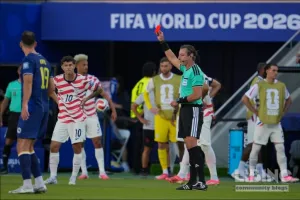
To grasp the issue, we must first map the procedural logic behind a red card and its immediate consequences. A red card in international football triggers an automatic ban from the next match, absent an exceptional right to appeal. In Balogun’s case, the on-field incident against Bosnia and Herzegovina generated debate: was the call a legitimate serious foul play decision, or an overreach by the VAR review? The discipline code anchors sanctions in the aim of fairness and predictability; a mid-tournament reversal, if it occurred outside the standard channels, signals a potential drift away from those core principles.
From a governance standpoint, the pivotal instrument is Article 27 of FIFA’s Disciplinary Code, which permits the suspension of disciplinary measures either in full or in part. This is not unprecedented; but its application in a tournament context—especially when it seems to hinge on a high-profile appeal—tests the boundary between rule enforcement and discretionary mercy. The balance matters because it affects how teams assess risk, how referees interpret incidents, and how fans perceive the legitimacy of decisions that shape tournament outcomes. The core question becomes not only whether Balogun deserved the original punishment but whether any subsequent relief should be subject to a transparent, pre-defined process rather than ad hoc influence.
A visual timeline helps separate the signal from the noise. In the hypothetical sequence, a red card leads to auto suspension → debate over the severity of the sanction → potential discretionary adjustment under Article 27 → match reconsiderations. The actual timeline, if validated, would reveal how quickly political signals can translate into procedural reclassifications. The deeper implication is that a single decision—whether justified in its original form or not—can ripple through team selection, tactical planning, and public trust in the World Cup as a contest governed by universal rules rather than power brokering. This is where the article’s central term, the Balogun red card suspension controversy, crystallizes into a debate about governance and integrity.
Why this matters analytically is not just the singular act, but the implication for the normal order. If Balogun’s eligibility hinged on discretionary relief offered outside the usual tournament procedures, the legitimacy of the entire process comes under question. Supporters of the reversal argue that the outcome—an important World Cup match for the United States—was in the broader interest of fairness and market dynamics, where star players can drive viewership and competitive excitement. Critics contend that bending rules for a popular name erodes the predictability that underpins the sport’s credibility. The Balogun red card suspension controversy thus becomes a litmus test for how international football negotiates between the demands of spectacle and the obligation to treat discipline as an impartial framework.
Contrast: precedents, power dynamics, and competing narratives
A rigorous analysis requires comparing this case with historical precedents that tested the boundaries between rule enforcement and political or administrative influence. The Ronaldo case, cited in public discourse, involved a high-profile suspension that was managed in a way seen by some as outside the standard post-match appeal pipeline. While the Ronaldo precedent demonstrates that governing bodies sometimes use disciplinary chaperones beyond the field, it also highlights a tension between consistency and situational risk management. The Balogun situation, if confirmed, would sit at a different point on the spectrum: a mid-tournament correction that imports political signaling into the discipline process. Critics view this as an erosion of the sport’s impartiality, while proponents frame it as pragmatic governance in the face of a high-stakes tournament environment.
The Royal Belgian Football Association’s reaction—calling the decision astonishing and signaling potential legal action—embodies the pushback that follows any perceived deviation from the rulebook. This stance matters because it reframes the issue beyond a single match: it questions the uniform application of penalties, the independence of referees, and the architecture of appeal mechanisms that underpin international competition. On the other side, defenders of the reversal point to the historical instability of early World Cups, when refereeing and punishment regimes evolved through ad hoc decisions spurred by public pressure. The contrast reveals a fundamental friction: sport’s aspirational universalism versus the practical realities of diplomacy, media pressure, and national pride.
The Balogun red card suspension controversy also intersects with ongoing debates about governance legitimacy. By challenging the perceived purity of the disciplinary system, the episode invites a broader reckoning: should the sport’s rules be flexible when the stakes are massive? Do leadership decisions need to be insulated from political currents, or should governing bodies recognize that external stakeholders—state actors, sponsors, fans—shape the incentives facing players and officials? The answer, while contingent, has long-term consequences for how nations prepare for tournaments, how players manage risk, and how fans evaluate the fairness of a global event that thrives on competitive drama yet demands trustworthy governance.
To enrich the debate, it is useful to consider the broader ecosystem of sports governance. The Balogun red card suspension controversy underscores the fragility of consensus around what constitutes fair play, particularly when the public arena magnifies the consequences of a single decision. The question is not solely whether a given referee’s call was correct, but whether the processes surrounding that call—review, accountability, transparency, and the option for measured intervention—are robust enough to withstand political and commercial pressures. A transparent, well-documented approach to exceptions would help align incentives and restore confidence that the sport’s rules serve the game rather than any outside actor.
Cause and effect: implications for rules, governance, and sport
Understanding causality requires tracing how a single decision could alter strategic behavior across teams, referees, and federations. If a red card can be mitigated via disciplinary adjustment, teams may calibrate risk-taking in the minutes before a crucial knockout match, knowing there is room for later mitigation. This can change in-game tactics, such as how aggressively defenders engage in high-stakes challenges late in matches. The reputational cost of perceived overreach also tightens the constraints on future decisions, encouraging more conservative officiating in tense knockout games, which, in turn, could dull the drama that underpins fan engagement and broadcast value.
From a governance perspective, the aftermath of a suspension reversal would test the scalability of the Disciplinary Code’s governance mechanisms. If Article 27 is invoked, questions arise about the standardization of criteria, the transparency of the review, and the opportunity for third-party scrutiny. The risk is twofold: first, a perception that fairness is contingent on who can mobilize political or media leverage; second, an erosion of the rule-based framework that guarantees objective outcomes regardless of star status or market dynamics. The competing narratives emphasize how fragile consensus can be when incentives align toward short-term competitive gains rather than long-term integrity.
The implications extend beyond a single World Cup. If the Balogun red card suspension controversy changes how authorities communicate about disciplinary measures, it could influence how coaches prepare players under the threat of sanctions, how players weigh risky actions, and how fans interpret the semantics of fair play. A more explicit, published protocol for exceptions, tied to specific, verifiable criteria, would help align perception with practice and reduce the potential for ad hoc judgments that create ambiguity about the sport’s core rules. In short, the cause-and-effect chain points to a need for governance that is simultaneously principled, transparent, and capable of absorbing pressure without compromising fairness.
Expert reconstruction: governance reforms and safeguarding integrity
If the Balogun red card suspension controversy has exposed a fault line in international football’s disciplinary architecture, the path forward should emphasize four pillars: transparency, independence, predictability, and accountability. First, transparency requires that the criteria for any discretionary relief be explicitly defined, publicly published, and consistently applied across tournaments and confederations. Second, independence demands an autonomous disciplinary body with clear appointment processes, insulated from political interference, and empowered to adjudicate appeals without external pressure. Third, predictability hinges on a robust, published framework for exceptions, including timelines, evidence thresholds, and standard-of-proof conventions that ensure equal access to review for all parties. Fourth, accountability means that leaders and committees must face meaningful consequences if their actions undermine the integrity of the sport, including censure, recusal, or corrective measures when rules were applied inconsistently.
Practical reforms could include the following: establish an international protocol for mid-tournament disciplinary adjustments, with an independent panel to review allegations of improper influence; create a transparent audit trail of communications related to high-profile decisions; and implement an appeals pathway that remains separate from the tournament’s organizing body to preserve referee independence. Additionally, a normative shift is required: governing bodies should treat controversial decisions as opportunities to reinforce, not erode, the legitimacy of their processes. The Balogun case should serve as a catalyst for reforms that deter political influence while preserving the game’s flexibility to correct legitimate errors in a timely, accountable manner.
In closing, the Balogun red card suspension controversy is not merely about one player or one match. It is a test of how international football channels complexity—legal frameworks, media scrutiny, and national pride—into a coherent system that remains fair under pressure. By embracing explicit, durable procedures and robust independence, the sport can strengthen the trust of players, clubs, federations, and fans worldwide. The objective is clear: ensure that the rules govern the game consistently, and that any deviation from those rules is justified through transparent, credible processes rather than the momentum of influence.
Note: This analysis uses publicly reported elements of the Balogun case and situates them within a critical framework for evaluating governance and integrity in international football. It does not adjudicate the veracity of every claim but assesses the implications of how such claims would affect the sport’s legitimacy if true.
Key takeaways:
- Disciplinary processes rely on transparency and independence to maintain trust.
- Discretion may be warranted in exceptional cases, but must be governed by clear criteria.
- Political or external influence undermines the perceived fairness of the competition.
Keywords: Balogun, FIFA, red card, suspension, Article 27, Disciplinary Code, United States soccer, Belgium, sporting integrity, Infantino
Closing the gap with a practical mid-tournament protocol
To preserve fairness and predictability, a formal protocol for mid-tournament disciplinary adjustments is essential. This concise framework shows how decisions can be reviewed quickly, transparently, and independently, reducing ad hoc influence while still allowing credible corrections when errors occur.
| Trigger | Process | Timeline | Decision Body | Transparency | Impact |
|---|---|---|---|---|---|
| On-field red card | Automatic suspension unless relief grounds exist | Hours | Disciplinary Panel | Public rationale | Possible fixture adjustment |
| Appeal lodged | Independent review under Article 27 | 24–72 hours | Appellate body | Published criteria | Stays original sanction pending outcome |
| High-stakes case | Intervention only for clear error or fairness gap | 2–3 days | Panel chair with oversight | Public report | Rule integrity preserved |
| Post-decision audit | Transparent logs and rationale | Ongoing | Governing body | Documented accountability | Public trust strengthened |
The framework centers on four pillars—transparency, independence, predictability, and accountability—to deter improper influence while keeping the doors open to timely corrections when justified by evidence and procedure.
Key steps to implement include a formal protocol for mid-tournament decisions, a standing independent panel, public reporting of criteria, and a separate appeals pathway. Nested within these steps is a cultural shift: treat controversial calls as opportunities to strengthen processes, not excuses to bend them.
- Adopt a clear trigger and timelines for adjustments
- Ensure an independent, properly constituted panel
- Publish criteria and written rationales
- Provide a separate, accessible appeals mechanism
What happened in the Balogun red card controversy?
Balogun's red card prompted an automatic suspension, but reports suggested a discretionary relief or mid-tournament adjustment could alter the punishment. The core question is whether such changes followed established rules and transparent processes or relied on informal influence. The case raises concerns about governance, consistency, and the integrity of the competition. Analytically, the issue tests whether the sport can correct errors while maintaining predictable discipline and audience trust.
This answer highlights the tension between rule-based enforcement and pragmatic adjustments in high-stakes tournaments, and it underscores the need for clear criteria and independent review to preserve legitimacy.
What role does Article 27 of FIFA's Disciplinary Code play here?
Article 27 allows suspensions to be suspended or adjusted in part under certain conditions. In practice, this creates a path for relief if a formal review determines a fairness gap or error in application. The analytical concern is whether such relief is applied consistently and transparently across cases and tournaments. A robust framework reduces the risk that political or media pressure shapes outcomes instead of rules and evidence.
What governance reforms are proposed to safeguard integrity?
Proposed reforms include explicit, published criteria for discretionary relief; an independent, insulated disciplinary body; a formal, published timeline for reviews; and an auditable decision trail. The intent is to separate officiating from political or commercial influence while preserving flexibility to correct genuine mistakes. Implementing these reforms would enhance trust among players, clubs, federations, and fans.
How could mid-tournament adjustments affect teams and matches?
If adjustments occur, teams may recalibrate risk, squad selection, and matchday strategies in ways that blur the line between discipline and game management. From a fan perspective, perceived variability can erode confidence in fairness. A transparent protocol minimizes such effects by making the process visible and repeatable, even under pressure.
What safeguards ensure transparency and independence?
Safeguards include public criteria, independent appointments, written rationales, and timely, separate appeals processes. Routine audits and post-event reports further deter inappropriate influence. Together, these measures help ensure decisions rest on evidence and standard-of-proof rather than leverage or rhetoric.




Add a comment
To comment, you need to register and authorize
Comments