

Odyssean Voyage Across the Ionian: A Modern Analysis of Ithaca and the Odyssey
Table of contents
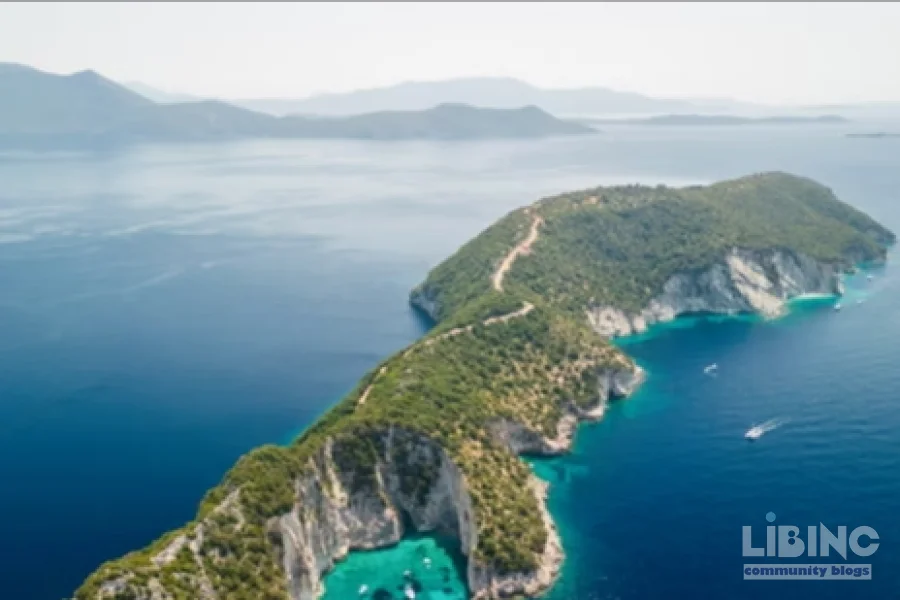
On a narrow shingle beach scattered with driftwood, the eye traces a coastline in which logs, bamboo canes, and the sun-bleached timbers of a shipwreck linger like evidence of past seasons. The climb up the hill behind is steep and treacherous, the rock jagged, the thorn clumps thick, the ancient olives gnarled and abandoned. Each time fingers dip into a rocky niche, the mind wanders to snakes; yet the spiders hold dominion here, their webs strung so thick that a swipe of a stick becomes a small act of ritual violence. The place feels unvisited by humans for a long stretch, a window into a landscape that testifies to endurance before memory. This setting becomes a lens for our inquiry: a modern Odyssean voyage that must measure truth against myth, time against memory, and experience against narration.
In the landscape of journalism, the Odyssean voyage is an analytic frame that binds the personal travelogue to a broader question of truth in narrative. The journey is not merely about logging miles or collecting scents of oregano and sea spray, but about whether immersion can yield a visceral sense of the epic without slipping into mere sensationalism. The omnipresent question is simple yet stubborn: how to convey the full texture of a journey that once began in circles of myth and has, in the present, become a flotilla of stories, destinations, and social moments?
To assist the reader in navigating this terrain, consider the Odyssean voyage as a four-dimensional method: it is both literary device and field method. The analysis below treats the voyage as a living system where geography, literature, memory, and logistics interact. The aim is not to idolize or debunk but to clarify how the voyage travels between what Homer imagined and what a modern traveler experiences on the Ionian Sea, around Ithaca, and toward the horizon where myth and reality blur.
Analytics through the Odyssean voyage frame
The Odyssean voyage, as a guiding concept, demands a rigorous mapping of motive, method, and meaning. The opening scene—approaching Ithaca by sea, the Ionian haze lifting to reveal distant stacks of islands—reframes travel as a problem of narrative causality: what provokes a journey, and how does the traveler decide what counts as evidence? The analysis below treats the voyage as a system: geography channels perception; perception becomes testimony; testimony contends with the distance between the mythic and the empirical. Odysseus’s much-commented return is not merely a plot device but a pressure test for any modern retelling of a voyage that aims to be not only exciting but responsible in its claims about authenticity and memory.
In Homeric terms, hospitality and danger define the margins of travel. The modern Odyssean voyage tests those margins against flotilla logistics, online reviews, and the economics of travel. The Ionian Sea becomes a stage where natural awe and traveled experience negotiate identity: can a flotilla cruise, with its planned itineraries and skilled skippers, reproduce the immediacy of a mythic voyage while avoiding the dilution of risk into a merely picturesque scene? The geography of Ithaca—harbor, hills, caves, and sea cliffs—interlocks with the narrative drive of the Odyssey. The result is a travelogue that must prove it has not outsourced memory to a glossy brochure but kept its feet in the mud of a real shoreline and the rhythm of a real sea.
Analytically, the voyage demonstrates a key tension between “the full truth” and “the fuller truth,” a phrase invoked in literary circles to describe how storytellers balance accuracy with narrative resonance. The Odyssean frame asks: what is the minimum viable data set that preserves the integrity of a journey, and what is the maximum ethical load that accompanies embellishment? In this sense, the voyage operates as a methodological critique of travel writing: precision in place names, dates, and routes matters, but so does the cadence of discovery—the moment when a coastline, a cat in a tavern, or a cave inscription becomes a hinge that turns experience into knowledge. The reader is invited to weigh the weight of such hinges against the stakes of the excursion—memory, meaning, and the integrity of the narrator’s voice within a living tradition.
Contrasts with the modern voyage
The journey to Ithaca in the Ionian context sits at a crossroads between ancient epic and contemporary travel culture. Homer’s Odysseus is a traveler who conducts a series of trials that test cunning, endurance, and moral choices; the modern traveler often negotiates warmth and skepticism in practically branded experiences—flotilla cruises, curated paths, and certified guides. The contrast illuminates what the Odyssean voyage can reveal about both eras. In the epic, hospitality is a currency; in modern travel, reviews and reputations function similarly, shaping expectations and guiding risk management. The question is not simply whether the traveler can “get there,” but whether the journey can sustain the ethical memory of places and people encountered along the way. Odysseus navigates a world of gods and suitors; the modern traveler negotiates the social economy of tourism, where the price of discovery includes time, money, and flexibility.
On the Ionian coast, the difference between mythic heroism and contemporary competence becomes apparent. The narrative voice that might claim Odysseus as a flawless strategist is replaced by a more nuanced observation: the sailor’s craft, the skipper’s tacit knowledge of wind shifts, the crew’s evolving trust, and the careful documentation of each leg of the voyage. The Ionian Sea offers a paradox: it remains ancient while constantly adapting to new forms of travel and inquiry. The Odyssey’s spirit of wandering persists, but the mode of wandering shifts—from a singular, fate-driven arc to a collaborative, often logistics-driven itinerary. The modern Odyssean voyage is thus a negotiation between mythic longing and practical necessity, a balance that the best travel writing seeks to capture with restraint and honesty.
The terrain of Ithaca—the harbor at Kioni, the School of Homer, the cave inscriptions, and the mosaic of tavernas—serves as a living case study of how place and story co-create each other. The modern observer learns to read a coastline as a text: the abandoned earthquake village of Atokos hints at memory’s fragility; the meandering footpaths reveal how landscape shapes narrative pacing; the local museum’s bronze tripod cauldrons and the Odyssean inscription underside the story with historical gravity. In this contrast, the Odyssean voyage becomes a method for distinguishing what travel can illuminate about the past without erasing the present’s texture. The mythology of Ithaca becomes a tool for understanding how memory is curated in the age of photography and social media, where every mile is a potential frame for an aspiring epic.
Causes and effects of the itinerary
Why did the voyage unfold as it did, and what does that imply for readers seeking truth in travel narrative? The itinerary’s choices—boarding a flotilla, visiting Kalamos, pausing at Porto Leone, and pressing toward Ithaca—are not happenstance. They reflect a rational compromise between experiential depth and logistical feasibility. The flotilla format provides safety nets: experienced skippers, crew coordination, and ready access to support networks. Yet that very structure also channels experience through predefined channels: scheduled harbors, predictable weather windows, and the social dynamic of shared passage. The cause-and-effect chain becomes visible when we observe how these decisions shape what stories emerge. A sailor’s good fortune, a sheltered cove, or a wind shift can transform a day’s meaning into a lasting memory of discovery or of suspenseful vulnerability.
Consider the psychological effects of a modern Odyssean voyage on memory. Repeated navigation between Ionian Sea horizons and Ithaca’s quay produces a rhythm that curates memory into scenes with visual triggers—the blue of the water, the scent of olive groves, the sound of a tavern conversation. This is not deception but a form of mnemonic architecture: the voyage invites the traveler to recall Homeric episodes as reference points while integrating them into contemporary perception. The risk is that myth becomes a curated backdrop for personal drama, a frame that overshadows unglamorous detail. The antidote is deliberate documentation—detailing missteps, delays, and debates about authenticity—so that the journey remains a credible bridge between legend and lived experience.
The chain of causality extends to post-voyage reflection: how does the writer’s memory stabilize into narrative? The Odyssean voyage teaches that understanding emerges from the tension between collected evidence and the interpretive frame, between observed objects and the meaning we ascribe to them. In other words, the itinerary does not merely happen; it prompts a chain of responses that define what the voyage is about. The result is not simply a travelogue but a structured inquiry into how myth persists, adapts, and occasionally misleads when retold from a single point of view. The Ionian coast thus becomes a proving ground for whether a modern travel piece can earn its claim to truth through disciplined storytelling and verifiable detail.
Expert reconstruction of a modern Odyssean voyage
From the vantage point of travel scholarship, reconstructing a modern Odyssean voyage involves aligning narrative craft with historical-literary context. The voyage described here resonates with the Odyssean tradition while acknowledging contemporary realities: flotilla logistics, tourist economies, and the global circulation of myth. An expert reconstruction starts with a precise map of the route, a schedule that notes wind patterns and sea state, and a ledger of encounters that includes both local hospitality and the embedded memory of the places visited. The structure follows a four-part logic: define the frame, compare with epic precedent, isolate causal factors, and reconstruct an evidence-based account that preserves the voyage’s emotional truth without sacrificing accuracy.
In the Homeric line, Odysseus’s journey is not merely a physical traversal but a commission: to retell who he is and what his voyage has taught him. The modern Odyssean voyage inherits this mandate but must deliver it through a credible synthesis of personal recollection and verifiable detail. Emily Wilson’s recent translation, noted here as a touchstone, emphasizes the domestic core of Odysseus’s travel—home, longing, obligation—without fetishizing the hero’s prowess. The modern reteller can honor that nuance by foregrounding Penelope’s perspective, the labor of return, and the social world that surrounds the traveler on the Ionian shore. Expert reconstruction thus becomes a careful balance: honoring myth while acknowledging the constraints and capabilities of contemporary travel practice.
As the voyage closes, the sense of place lingers not as a postcard but as a set of calibrated memories: the dockside conversations, the taste of local rovani with ice cream, the sea’s distant blue, and the wind’s stubborn pull toward Ithaca. The expert frame invites readers to treat the Odyssean voyage as a living methodology rather than a single, static narrative. It is a practice that blends literary sensitivity with empirical awareness, making the journey a meaningful, trustworthy encounter with a coastline that has always beckoned travelers toward the possibility of home.
Closing reflection
The Ionian voyage toward Ithaca, seen through the Odyssean lens, yields more than a collection of scenes. It offers a disciplined approach to travel writing that respects both myth and memory, place and practice, legend and evidence. The modern traveler’s story is not a replacement for Homer’s epic but a continuation of its inquiry into what it means to travel, to tell, and to return. In practice, this means detailing the route with precision, listening to local voices, and letting memory be tempered by accountability. The Odyssean voyage remains a living test case for how to narrate exploration without erasing the labor, risk, and nuance that make travel true. The horizon remains wide, the sea remains blue, and the home that Odysseus reaches—whether interpreted as Ithaca, memory, or the ethical space of storytelling—continues to call to anyone who will listen with care and restraint.
Practical scaffold for an Odyssean voyage
Building from the analytic frame, this section translates theory into field practice, offering a compact toolkit for readers who want to apply the Odyssean frame to real travel in the Ionian Sea and Ithaca. It emphasizes verifiable detail, ethical listening, and disciplined memory within engaging storytelling.
| Stage | Activity | Tools | Risk | Example |
|---|---|---|---|---|
| Route planning | Map reading and waypoint selection | Topographic map, GPS, wind forecast | Wrong turn, weather shift | Crossing Kalamos to Ithaca via nearby islets |
| On-site observation | Coastline scan, shoreline visits | Notebook, camera, voice recorder | Claims without evidence | Harbor profile and tavern conversations |
| Local engagement | Conversations with skippers, tavern keepers | Phrasebook, consent for recording | Misinterpretation | Hospitality at a small port taverna |
| Documentation | Verifiable details and timestamps | Dates, coordinates, names | Omission bias | Exact harbor and wind window logged |
These stages anchor the narrative, reducing guesswork while preserving the texture of discovery.
On-site routines and memory calibration
In practice, a daily rhythm—sunrise coastline check, dockside dialogue, and evening reflection—transforms wandering into purposeful inquiry. A simple memory log records: place, interlocutor, date, and a sentence that links one moment to Homeric resonance.
- Ethical note: seek consent before recording and share credits for local voices.
- Memory cue: photograph a single detail and write its significance in 15 words.
- Time discipline: avoid overpacking narratives into a single day; let pauses exist.
Ethical engagement checkpoint
- Respect local customs and ask permission before filming people or property.
- Credit places and sources; avoid sensational framing of vulnerable communities.
- Cross-check claims with a local expert when possible.
Applying these routines preserves the Odyssean spirit while ensuring the account remains credible, nuanced, and respectful of place and people.
What is the Odyssean voyage framework?
The Odyssean voyage framework blends geography, perception, memory, and ethics to treat travel as a living inquiry rather than a mere itinerary, ensuring that each leg, encounter, and observation is grounded in verifiable detail while retaining narrative resonance. It asks writers to document places with precise names and dates, capture conversations with consent, and link moments to broader Homeric resonances without sensationalizing discovery. In practical terms, the framework guides how you plan routes, record impressions, and present a credible account that respects both myth and memory along the Ionian coast and Ithaca.
Analytically, it operates as a fourfold lens—place, perception, testimony, and ethics—that helps balance vivid storytelling with responsible reporting and local stewardship.
How does memory balance myth and reality in travel writing?
The balance emerges when memory is treated as a working reconstruction rather than a fixed replay. The first sentence of the memory is a truthful anchor, followed by reflective interpretation that situates it within local talk, wind patterns, and historical context. The approach invites corroboration through notes, maps, and conversations, ensuring that mythic cues (like Odyssean subtexts) illuminate rather than dominate the narrative. In practice, writers sequence mythic moments with verifiable details so readers can track the chain from observed scene to remembered meaning without losing sight of the real landscape and people involved.
In short, memory gains depth when it rests on careful observation and respectful sourcing, producing a narrative that is both evocative and trustworthy.
What practical steps help apply this approach on a journey along the Ionian coast and Ithaca?
Begin with a lightweight route map that records wind windows, harbors, and planned stops. Carry a field notebook, a compact audio recorder, and a consent-driven camera. Record basic facts (dates, places, names) immediately after each encounter, then write a 1–2 sentence memory trigger that ties it to Homeric themes. Schedule daily reflection times to compare lived details with mythic motifs, and build a short ethics checklist to guide interviews and photography. These steps create a disciplined cadence that yields a credible, engaging travel narrative.
Why is precise detailing and local sourcing important in modern travel narratives?
Precise detailing anchors credibility; it helps readers verify routes, dates, and encounters, reducing ambiguity that can undermine trust. Local sourcing adds depth by presenting authentic perspectives, countering a single-voiced narrative, and highlighting hospitality, labor, and place-specific realities. In the Ionian context, this means naming harbors, tavern names, and local guides, while quoting or paraphrasing residents with permission and attribution.
How does a flotilla-based itinerary influence storytelling and risk management?
A flotilla structure provides logistical safety and group dynamics that shape the travel experience. It can broaden interactions with coastal communities and diversify viewpoints, but it also curates the pace and places visited. For storytelling, this means balancing collective moments with individual observations, noting how weather, captain decisions, and crew interactions steer the day’s narrative. Risk management becomes part of the plot, with documented contingencies and consent-based reporting of any incidents.
What ethical considerations should guide engagement with locals and sources?
Ethical travel writing requires consent, transparency, and attribution. When engaging with locals, always ask before recording, share the purpose of the encounter, and credit voices fairly. Avoid sensational framing that exploits vulnerability, and seek corroboration for claims about places or practices. This ethical stance preserves trust with readers and sustains respectful relationships with communities that host travelers along the Ionian coast and Ithaca.






Add a comment
To comment, you need to register and authorize
Comments