

- Analytics on Violence Specialists
- Contrasts Between Licit and Illicit Violence Work
- Causes and Effects: The Violence Labour Market
- Expert Reconstruction: Policies and Ethics
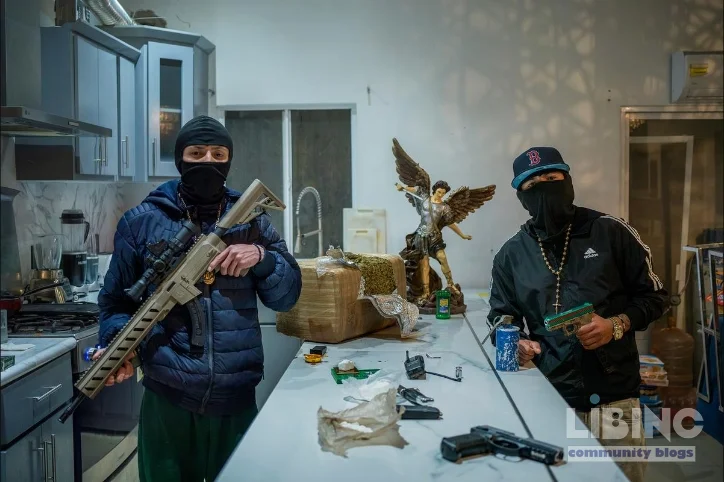
Violence is not merely a byproduct of crime or politics. It operates as a structured workforce, with individuals trained, recruited, and paid to kill or to defend. The Los Zetas phenomenon—kidnappings of migrants in 2010–2011, mass graves in Tamaulipas, and the broader pattern of enforced disappearances—offers a stark lens for examining violence as a wage-earning occupation. The Open Society Justice Initiative highlights compelling evidence that killings, disappearances, and torture meet the legal definition of crimes against humanity, underscoring the scale of violence beyond conventional crime statistics. This article reframes the debate: violence specialists are workers with skills, hierarchies, and incentives, embedded in a global economy that blends illicit and licit violence. The question is not whether violence is present, but how societies organize, regulate, or liquidate the demand for violence as work.
Analytics on Violence Specialists
To understand violence specialists, one must treat violence as an occupation with its own labor dynamics. Charles Tilly’s insight that violence workers form a recognizable occupational category helps explain why individuals migrate between military, police, cartels, and private security companies. The Zetas emerged from a splinter group of a state security force, trained in psychological terror, jungle warfare, and heavy weaponry, and then transformed into a professional vie for profit. This is not merely opportunism; it is a transfer of professional habits across formal and informal sectors. The central question becomes why such a migration is possible and why it persists when legitimate states offer wage scales, pensions, and career paths. The answer lies in the structure of incentives, payment timelines, and the prestige attached to violence in certain communities.
Trained workers from formal security sectors bring portable competencies: marksmanship, tactical logistics, and the social psychology of fear. The Zetas’ name—taken from the Z codes of the Mexican Army radio system—signals the transfer of a battlefield identity into criminal enterprise. Why do these skills translate so readily into illicit violence? Because violence is a specialized craft with defined routines, risk assessments, and performance metrics. In spaces where formal employment contracts are scarce, violence becomes a high-widelity job, embedding itself in the local economy as a lucrative alternative to low-wage labor. This is exacerbated by regional economic stagnation and limited social mobility, which turn violence into a socially legible path to status and income.
The concept of edgework helps illuminate why individuals pursue violence as work. Edgework captures risk-taking as a core feature of the job, a dynamic that yields both prestige and adrenaline. A young man might view a gun as a tool of social currency, a shortcut to respect, or even a means to support a family where formal employment cannot. Yet edgework is not a neutral impulse; it is fed by social norms, aspirational media, and peer pressure. Consequently, violence specialists can become desensitized to harm, blurring moral boundaries and normalizing killing as professional activity. The result is a self-reinforcing cycle where violence becomes a viable income stream and a source of social identity.
From a labor-market perspective, violence work is a form of manual skilled labor. It pays in wages, benefits, and even veteran status in some contexts, yet it remains precarious and stigmatized. Private licit violence work—barriers, bodyguards, and corporate security—has expanded into a global industry, often shrouded in opacity and lacking robust labor rights. In conflict zones and fragile states, violence specialists are hired and rotated across theaters, their mobility driven by market demand rather than national allegiance. This mobility creates a transnational violence economy in which the labor skills of soldiers, police, hitmen, and mercenaries are commodified and traded in ways that blur lines between licit and illicit employment.
Contrasts Between Licit and Illicit Violence Work
The boundary between lawfulness and illegality in violence work is porous. Soldiers and police officers often enjoy formal state salaries, pensions, and limited collective bargaining rights, yet both sectors can deploy violence with state sanction or private permission. The trajectory from state service to private security contracting is facilitated by economies of scale, reputational capital, and the post-Cold War expansion of private military companies. The Wagner Group’s role in supporting regimes abroad, and its function in contemporary Ukraine, underscores how private actors can become essential force multipliers for states, challenging traditional notions of sovereignty and accountability. The same skill set—tactical training, discipline, and cohesion—appears across licit and illicit actors, highlighting shared professional identities even as legal status diverges.
Accountability mechanisms differ starkly between state and private actors. While armed forces may enjoy pensions and veterans’ welfare schemes, private security workers frequently lack comparable protections and oversight. The contrast extends to labor rights: in many jurisdictions, police and military personnel have restricted collective bargaining rights, reflecting a historical compromise between state coercive power and worker organization. Yet the public interest remains the same: the ability to deter or impose coercion. This paradox shows that violence specialists are not simply criminals or heroes; they are a distinct workforce whose legitimacy is negotiated through political, legal, and economic processes.
The recruitment pipelines also reveal convergence. Young people facing limited opportunities view violence as an attractive labor option—the status, the pay, the potential to fund family needs. Even as some aspirants idealize the army or police as protectors, others are drawn to gangs or private security for the same reasons: money, prestige, and a perception that violence can be a rational path to social mobility. In many communities, the distinction between fighter and protector becomes blurred, reinforcing a shared cultural script that equates weapons with opportunity.
Children and adolescents appear prominently in the discourse on violence as labor. The literature on child soldiers in places like Bangladesh, Sierra Leone, Liberia, and Peru shows that participation is often voluntary, driven by economic incentives and perceived social prestige rather than coercion alone. This adds a dimension to the analysis: violence work is not solely a choice made by adults but a labor pathway that starts early in life for some, and it persists through adulthood in others who never escape the wage logic of violence.
Causes and Effects: The Violence Labour Market
The roots of the violence labour market lie in economic incentives, weak state capacity, and global demand for security and coercion. When formal economies offer limited occupational ladders and social protection, violence becomes an alternative that promises income, status, and the possibility of remittances. The rise of private military companies and through-the-firearm contracts demonstrates how capital accumulates around violence by outsourcing risk and expertise to private agents. In Iraq, for instance, the Defense Department employed hundreds of thousands of contractors, many transitioning to local police work, illustrating how public security functions can migrate into privatized networks. This dynamic is not limited to war zones; it shapes crime-heavy regions where illicit actors compete for the same talent and resources.
The private security industry expands the labour supply for violence, with companies leveraging ex-military networks and specialized training to secure assets, protect borders, or conduct covert operations. The same skill set used to defend a state can be redirected toward profit-seeking violence, creating a global market in which violence is a tradable commodity. This has implications for accountability, sovereignty, and human rights, as international norms struggle to keep pace with privatization and cross-border operations. The result is a friction between legitimate state functions and market-driven violence that complicates governance and policy.
Economic shocks, migration, and remittance flows intensify the dynamics. The UNODC estimates that millions of people have been murdered in Latin America and the Caribbean between 1990 and 2021, underscoring a demographic cost: a lost generation of young men whose potential is dissolved into violence and crime. In local communities, violence economy affects schooling, family structure, and long-term development. When violence pays better than manual labor and agricultural work, families rationally prioritize short-term survival over long-term human capital formation, compounding cycles of poverty and violence.
Historical patterns reveal how states and cartels compete for the same workforce. In some cases, rebels and bandits have drawn skilled fighters by offering money and prestige, while states have attempted to attract or co-opt these workers through pensions, training, and career ladders. The result is a continuous oscillation of violence actors, as the demand for skilled violence remains robust across regimes, borders, and economic contexts. This systemic tension helps explain why violence specialists persist as a workforce even as governments seek to suppress or regulate them.
The societal impact extends beyond crime statistics. Mass disappearances, traumatized communities, and disrupted social trust erode the social fabric. The study of violence as work reframes individual choices within broader structural pressures: unemployment, inequality, and the allure of high wages in unstable environments. When violence becomes a formal or informal occupation, communities must confront the idea that their most dangerous actors are embedded in everyday economic life, not isolated from it.
Expert Reconstruction: Policies and Ethics
The ethical reckoning required to rethink violence specialists begins with acknowledging their status as workers. UNESCO’s Seville Statement on Violence argues that violence is not an innate human essence but a cultural artifact that societies can eradicate through changes in education and institutions. If violence is indeed a learned behavior and a taken-for-granted occupation, then targeted reforms can shift incentives away from violence toward constructive employment. This implies a multifaceted strategy: reform the security sector, diversify youth opportunities, and tighten oversight of private military and security companies.
Policy recommendations to reframe the violence labour market include the following, organized as actionable steps rather than abstract declarations:
- Security Sector Governance: implement transparent recruitment, performance metrics, and civilian oversight to reduce rent-seeking and ensure accountability for violence outcomes.
- Labor Rights and Welfare: extend basic rights to licit violence workers, including safe working conditions, fair pay, pensions, and whistleblower protections, to reduce the appeal of illicit pathways.
- Economic Diversification: invest in education, apprenticeships, and local industries to provide credible alternatives to violence-based employment, especially for youth in vulnerable regions.
- Private Military Regulation: establish international norms and enforceable standards for private military and security companies, including due diligence, licensing, and cross-border accountability.
- Human Rights and Accountability: strengthen mechanisms to investigate and prosecute crimes against humanity, ensuring victims receive redress and that violence specialists face consequences commensurate with harm caused.
- Education and Cultural Change: integrate critical perspectives on violence in school curricula, emphasizing non-violent forms of social advancement and the long-run costs of cycles of violence.
These measures aim to disrupt the incentives that convert violence into a remunerative occupation. By reframing violence as a professional field with ethical boundaries, states can leverage labor-market tools to reduce demand for illicit violence and to channel skilled workers toward peaceful governance. The shift requires political will, cross-border cooperation, and sustained investment in social infrastructure that makes non-violent employment a viable and attractive alternative.
Ultimately, the argument is not to romanticize soldiers, police, or even cartels, but to recognize that violence is a structured form of labor embedded in social, economic, and political systems. If we accept that violence specialists are workers, then we must ask how to design societies in which productive, non-violent labor offers comparable rewards and status. The path forward involves ethical accountability, robust institutions, and a reimagining of security as a public good rather than a private commodity. This reframing is not merely theoretical; it is a practical doctrine for reducing violence by transforming the market that sustains it.
In today’s world, societies that learn to live without the condottiere—where violence is no longer a primary employment option—will reap dividends in stability, prosperity, and human development. The journey is difficult, but the framework is clear: treat violence specialists as workers, regulate and reform the systems that employ them, and invest in communities that offer safer, more dignified paths to success. The result is not a utopia but a measurable reduction in violence by redesigning the labor incentives that currently reward it.
A final reflection: the modern state’s legitimacy rests on its capacity to hold a monopoly on violence without relying on coercion as a business model. If we fail to rethink the labor-market dynamics of violence, we risk normalizing a world where violence is simply another form of paid work. The alternative—building institutions, economies, and cultures that reward peace—will take courage, coordination, and a willingness to pursue long-term social gains over short-term profits. The evidence from Latin America and beyond suggests that the cost of inaction is measured in lives, trust, and futures lost to violence.
What remains clear is that violence specialists reflect broader social economies: they are not anomalies but symptoms of deeper structural choices about how societies allocate risk, reward, and responsibility. By reframing this as a labor problem rather than a purely criminal or transactional one, policymakers can design more effective, humane responses that address both the demand for violence and the supply of those willing to wage it.
Violence is a labour market with a long tail. The long-term project is to shorten that tail by aligning economic opportunity with non‑violent, rights-respecting paths to prosperity. The stakes are existential: if we cannot redirect the incentives that feed violence, societies will continue to bear the human and moral cost of a world organized around the wage of harm.
In summary, the analysis points toward a coordinated global strategy—rooted in security-sector reform, labor rights, education, and human-rights accountability—that makes violence a less attractive, less profitable occupation. The transformation is possible, but it requires sustained political commitment and a willingness to reframe violence as a public, not a private, responsibility.
Expanded pathways for policy action
To turn analysis into practical steps, this section outlines concrete mechanisms that shift incentives away from violence toward constructive, rights-respecting work. It presents a compact data touchstone, a comparison table, and a reform blueprint drawn from field experience and policy literature.
Table: Violence work by sector and oversight
| Actor | Salaries and Benefits | Oversight | Rights Protections | Mobility |
|---|---|---|---|---|
| State military | Steady pay; pensions | Formal accountability | Limited unions | High private-sector transfer |
| Police | Regular wages | Varies with reform | Restricted collective bargaining | Cross-sector moves common |
| PMSCs | Contract-based; variable | Opaque; cross-border | Weak protections | Global rotation |
| Illicit actors | Direct cash | Minimal | None | High risk |
Realistic transitions exist. Veterans can move into risk assessment, logistics, or conflict-resolution roles that operate within regulated firms or public institutions. Education and apprenticeships create ladders into border protection or large-event security.
Policy-cycle reform follows a practical sequence: assess needs, regulate actors, expand nonviolent paths, ensure accountability, and monitor outcomes. The steps below provide a compact blueprint adaptable to many contexts.
Policy cycle for reform
- Assess labor needs and violence-related risks using local data.
- Regulate private actors with licensing, due diligence, and cross-border norms.
- Expand education and apprenticeships to offer viable nonviolent careers.
- Strengthen human rights oversight and independent investigation.
- Engage communities to shift norms about opportunity and security.
- Monitor outcomes and adjust programs to sustain gains.
With coherent local action, societies can reduce the appeal of violence as a career and cultivate paths that promote peace and dignity.
What defines violence work and who participates?
Violence work comprises a spectrum that includes military personnel, police, private security contractors, and in some regions, non-state armed groups whose training, routines, and compensation convert coercive tasks into a professional occupation whose boundaries blur with licit and illicit actors whenever safeguards are weak and pay structures differ across contexts. Mobility across sectors is driven by pay, prestige, and opportunity, which makes coordinated reforms essential. These dynamics demand integrated policies that link security sector reform with labor rights and education to create legitimate pathways for skilled workers. This also includes transitions such as veterans moving into risk assessment or logistics in compliant firms or public institutions.
How do licit and illicit actors differ in oversight and protections?
In practice, licit violence actors operate under formal or semi-formal oversight with wage contracts, pensions, and some scope for collective bargaining, whereas illicit actors lack such protections and face minimal accountability, making the gap in oversight a central driver of risk, impunity, and unequal protection under the law. This divergence shapes incentives, career mobility, and human rights outcomes across contexts. Stronger oversight for licit actors correlates with clearer reporting, better whistleblower protections, and enhanced accountability for abuses.
Which policy steps are most effective to reduce illicit violence?
Effective reform requires a balanced, multi-pronged approach that aligns security-sector governance, labor rights, and educational opportunities to reduce demand for illicit violence while expanding credible employment options. Steps such as transparent recruitment, independent oversight, and credible apprenticeships are essential; case studies show that when veterans find nonviolent career ladders, the pull toward illegal work diminishes. Cross-border cooperation and robust data-sharing amplify impact and prevent talent from slipping into unmanaged networks.
How can education and youth opportunities change the violence labour market?
Education and youth opportunities reduce the attractiveness of violence as a career by increasing nonviolent options, building social capital, and enhancing future earnings. Strategies include vocational training, apprenticeships with private firms, and community-based programs that pair schooling with job placement; examples include border-protection training programs and certification in logistics or cyber hygiene in safe environments. These programs create transparent ladders that connect schooling to legitimate security work within regulated frameworks.
What accountability mechanisms exist for crimes against humanity tied to violence specialists?
Accountability requires robust investigations, independent courts, and international cooperation. Mechanisms include domestic prosecutions for war crimes, complementarity in national courts, and evidence-supported cases that extend to private actors who facilitate atrocity. Civil society, survivor-led initiatives, and protective mechanisms reinforce accountability, while international bodies help ensure victims obtain redress and that perpetrators face consequences aligned with harm caused.
What role do international norms play in regulating private military and security companies?
International norms provide baseline standards for PMCs, guiding licensing, due diligence, cross-border operations, and human-rights protection. Initiatives such as industry codes, UN guiding principles, and regional frameworks shape behavior, but enforcement remains uneven; nations must translate norms into binding laws, with transparent reporting, auditing, and victim redress mechanisms to ensure responsible conduct. This alignment supports safer deployment of security expertise in ways that respect sovereignty and human rights.





Add a comment
To comment, you need to register and authorize
Comments