

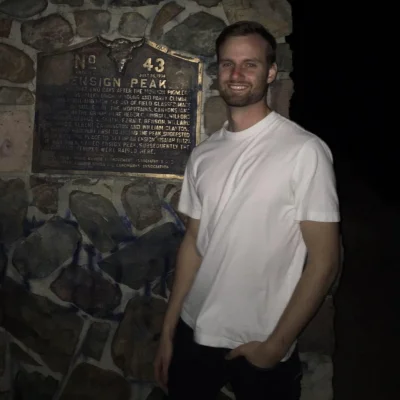
Patrick Taylor began his career in journalism not as a starry-eyed intern but as a night-side fact-checker for a regional wire service, grinding through police blotters and city council minutes while his classmates built flashier portfolios. Fifteen years later, at thirty-five, he has become Deputy Managing Editor of one of the fastest-growing independent digital newsrooms in the Midwest, known internally as the person who turns logistical chaos into repeatable systems. His reputation rests not on television appearances or viral scoops, but on an almost unnerving ability to keep a twenty-person breaking news team running smoothly when everything else falls apart.
Taylor holds a bachelor’s degree in Journalism and Strategic Communication from the University of Missouri, home to one of the oldest and most respected journalism schools in the United States. He later completed a professional certificate in Newsroom Leadership and Management from the Poynter Institute, a programme designed for mid-career editors who already know how to write but need to learn how to manage burnout, budgets, and bezier curves of traffic analytics. Between these two milestones, he also spent six months as a visiting fellow at the American Press Institute, studying sustainable revenue models for local news.
Before ascending to his current role, Taylor worked as a general assignment reporter in Columbus, Ohio, then as a city desk editor in Indianapolis, and finally as a managing editor for a small but influential public radio station in Michigan. Along the way, he covered a gubernatorial recall campaign, led a team investigating no-bid construction contracts, and accidentally learned how to fix studio equipment because there was no one else to call. His switch from radio to digital news at thirty-two surprised his colleagues, but Taylor later explained that he wanted to work where the audience actually was.
As Deputy Managing Editor, Taylor oversees daily newsroom operations, including shift scheduling, wire budget management, and the dreaded post-mortem meetings after major breaking news events. He introduced a colour-coded workload tracking system that reduced overtime disputes by nearly half and created a mentorship rotation that pairs junior reporters with different senior editors every quarter. He also led the redesign of the editorial calendar, moving from a weekly pitch meeting to a rolling forty-eight-hour forward-planning model that significantly reduced same-day scrambling on slower stories.
Taylor has spoken at the Online News Association conference, the National Symposium on Local News in Phoenix, and the International Symposium on Online Journalism in Austin. He contributed a chapter on crisis management in small newsrooms to the 2023 anthology The Resilient Newsroom, published by the Reuters Institute. His internal training module on writing headlines for mobile notification trays has been adapted by two other regional newsrooms. Outside the office, Taylor volunteers as a media literacy workshop facilitator at public libraries, teaching older adults how to distinguish news from sponsored content.
Colleagues describe Taylor as unshowy and unfailingly practical — the kind of editor who never raises his voice but somehow makes you want to meet every deadline. He does not write long columns or appear on panels in expensive blazers. Instead, Patrick Taylor does the invisible work of making journalism functional. In an industry fixated on star power, he has built a career on being the person the stars trust to make sure the website stays up and the facts stay right.

