

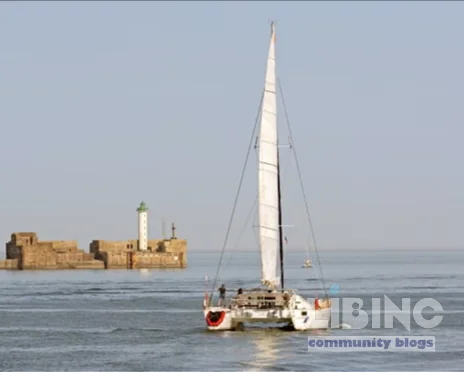
Sea Culture Travel as Meditative Frontier: An Analysis of Wind-Powered Cross-Channel Journeys and Maritime Heritage
Table of contents
- Analytics
- Contrasts that define sea culture travel
- Cause and effect in maritime travel ecosystems
- Expert reconstruction: voices from the water and future directions
Sea culture travel is not a slogan but a practice that asks travelers to tune into the sea as a teacher, a mediator, and a form of mobility with memory. The journey from Dover to Boulogne on SailLink unfolds as much as a meditation as a transit—a deliberate slowing of time to hear the wind, feel the swell, and observe how coastal life is braided with water. For families with teenagers, the draw lies in steering, in nets and sails rather than seat belts and terminals, in a four-to-five-hour voyage that becomes a living lesson in maritime ecology and heritage. Yet the value of sea culture travel rests on careful balance: ecological responsibility, cultural engagement, and the viability of small-scale, wind-driven routes in a world built for speed. This analysis asks what sea culture travel delivers—and what it requires to endure.
Analytics: Reading the numbers and spaces
Wind at the wheel
The SailLink service from Dover to Boulogne operates largely on wind power; engines run only when necessary. This design narrows the ship’s carbon footprint and demonstrates a practical path for coastal mobility that respects the marina’s rhythms rather than the clock. The catamaran, with a passenger capacity of 12, emphasizes intimate, low-volume travel rather than mass transit, aligning the journey with the pace of the sea. In practice, the wind-driven model generates a distinctive sensory profile: sails filling, water lifting, and a cadence that invites reflection as much as progress. This is not a novelty ride but a statement about how sea culture travel can align ecological aims with passenger experience, creating a calm but deliberate crossing that reframes what a cross-Channel link can be.
LSI: wind-powered service, eco-friendly transport, low-carbon maritime mobility
Economic and environmental math
From an environmental economics standpoint, wind-powered crossings shift the standard cost calculus. The route carries a modest number of passengers, which raises questions about per-capita emissions reductions and the social value of slower, more intentional travel. With bikes on board and a simplified supply chain, SailLink signals a shift toward modal diversification on short sea routes. The fare structure—£85 per adult, £30 per child for SailLink on the Dover–Boulogne leg (with P&O offering summer-only foot passenger options from £30)—illustrates a tiered pricing model that can appeal to both families and ecotourists, while highlighting the challenge of achieving scale. The broader environmental impact hinges on how many travelers opt for wind-powered modes versus car-dominated ferries, and how the operator sustains a business model that rewards carbon-conscious choices without sacrificing reliability. In this sense, sea culture travel becomes a test case for the economics of sustainable coastal mobility, not merely a stylistic preference.
LSI: emissions reductions, eco-tourism economics, low-carbon transport
Passenger experience and social value
Our family’s voyage puts social value at the center of the analytics. The experience—watching Dover’s castle shrink into the horizon, feeling the boat’s lift and fall, and sharing a steering lesson with Chris O Brien—transforms a transit into an educational moment. The voyage becomes a social space where strangers exchange stories, where a York couple’s plan to cycle from Hull dissolves into a preference for sailing, and where teenagers learn to read the wind as a guide rather than a nuisance. The value here extends beyond emissions metrics; sea culture travel builds a shared memory of a coast where production, leisure, and nature intersect. The nets at the bow become a playful symbol of how the voyage invites the young to see the sea as a tutor, not an obstacle. This social dimension is essential for the long-term appeal of wind-powered crossings and their capacity to cultivate maritime literacy and community attachments.
LSI: maritime heritage, coastal literacy, social value of sailing
Contrasts that define sea culture travel
The pace of travel: SailLink versus conventional ferries
The contrast between SailLink’s deliberate crossing and traditional high-volume ferries is stark. Conventional ferries optimize speed, throughput, and schedule predictability, often prioritizing utility over immersion. SailLink, by contrast, leverages wind, sails, and a small passenger cohort to produce a slower, more legible journey. The trade-off is clear: slower transit invites reflection, reduces the cognitive load of travel, and enables deeper engagement with the coastline, its towns, and its ecosystems. This pace matters because sea culture travel thrives on attention—the ability to notice wind shifts, seabirds, and the way villages unfold beyond the horizon. It is a deliberate counterpoint to the acceleration economy and a case for travel as experiential learning rather than mere movement.
LSI: slow travel, experiential mobility, coastal immersion
Mobility choices: bikes on board versus cars in terminals
In the SailLink itinerary, bikes become a natural extension of the voyage. Travelers arrive by train, roll bikes aboard, and begin a coastward odyssey along the Vélomaritime or local lanes. This on-boat cycling flexibility contrasts with the pervasive car-centric culture that dominates many cross-Channel trips. The shift supports a broader trend toward multimodal mobility, where water, rail, and cycle networks intertwine to lower barriers to sustainable travel. The social and ecological benefits accrue not only from reduced car emissions but from revitalized local circulation—pedestrian-friendly town centers, slower street life, and more meaningful exchanges with fishers, bakers, and hospitality hosts along the shore. Sea culture travel thus advances a holistic vision of mobility, not just a different route between ports.
LSI: multimodal mobility, eco-friendly travel, coastal town revival
Landscape and mood: sea air and marshes versus industrial port scenes
The contrast extends to environment and mood. Boulogne-sur-Mer greets travelers with maritime markets and Nausicaá, a reminder of regional fishing heritage and biodiversity, while the inland Audomarois marshes reveal a quieter, watery landscape shaped by centuries of canal engineering. The shoreline cycle along Wimereux and Ambleteuse punctuates this duality: asphalt gives way to water, villas to bacôves, and bustle to quiet marsh channels. This contrast matters because sea culture travel depends on experiencing diverse coastal ecologies in a single itinerary. The journey reads as a narrative of place—where the sea’s power, history, and craft create a continuous thread across urban and rural fronts. It is this variety that sustains the imagination of travelers seeking meaning beyond a postcard maritime image.
LSI: maritime ecology, coastal heritage, Vélomaritime route
Cause and effect in maritime travel ecosystems
Why sea culture travel emerges now
The rise of sea culture travel correlates with a growing awareness of sustainable mobility and a desire for place-based experiences. Coastal regions face pressure to balance tourism with fisheries, biodiversity, and local crafts. Wind-powered models, such as SailLink, demonstrate that small-scale, low-energy transit can coexist with tourism demand by offering a differentiated product—an experiential journey that teaches travelers to read the sea as a living system. The involvement of local communities—bike guides, boat-builders, and guesthouses—creates a network effect: each stakeholder benefits from tourism that respects and sustains heritage rather than erodes it. The result is a tourism model where the process of travel contributes to the preservation of maritime identity and the resilience of coastal economies.
LSI: sustainable mobility, place-based travel, coastal economies
How heritage and ecology reinforce each other
Audomarois marshes, a UNESCO biosphere reserve, anchor the ecological dimension of the itinerary. Paddling bacôve boats through the marsh channels reveals a living culture rooted in water management and market gardens. The preservation of traditional boat-building, exemplified by Les Faiseurs de Bateaux, shows how craft economies survive by enabling experiential tourism—boat trips, dining experiences, and guided workshops all tied to the marsh’s rhythms. When Rémy Colin notes that his workshop is both a factory and a memory, he captures how cause and effect operate here: the need to attract visitors to sustain the craft drives investment in experiences that showcase history, technique, and landscape—that is, a self-reinforcing loop between heritage and tourism demand.
LSI: UNESCO biosphere reserve, bacôve boats, maritime heritage crafts
The social and cultural causality of technology shocks
The historical blip of the radio, which brought forecast-based weather insight, undercut old religious explanations for weather and fate in this coastal landscape, as Jean-Pierre Ramet notes. The shift to scientific weather forecasting redefined trust and behavior—people began to rely on instrumental knowledge rather than divination for planning harvests, fishing, and travel. This is a telling example of how technological shocks recalibrate culture and economy: the sea remains constant, but the human response to it evolves. Sea culture travel responds to this evolution by offering a framework where modernity and tradition coexist—where a navigational forecast can be a doorway to a richer, more grounded voyage rather than a substitute for wonder.
LSI: weather forecasting, maritime culture, technology shocks
Expert reconstruction: voices from the water and future directions
Voices from the water
Chris O’Brien, the helmsman, advocates listening to the wind and reading the sea as a tutor. He frames the journey as a way to harmonize with nature rather than conquer it, turning a four-to-five-hour crossing into a lesson in rhythm, balance, and responsive seamanship. The sailing lesson for the teenagers becomes a microcosm of sea culture travel: you learn to adapt, you accept uncertainty, and you experience belonging within a community of sailors, ferrymen, and shore visitors. O’Brien’s approach embodies a practical pedagogy: training the eye to notice wind shifts, the mind to forecast currents, and the body to move with the boat rather than against it. This is how the sea becomes a classroom—and a mirror for personal orientation toward the coast.
LSI: experiential sailing, maritime pedagogy, wind reading
Craft, hospitality, and the economy of memory
Angélique Boulet, who transformed Boat Om into a guesthouse, emphasizes hospitality as a means to sustain the marshlands and waterways. Her philosophy—“The idea is to offer visitors a chance to disconnect; you don’t realize that if you come by car, but by bike you feel it”—highlights a design principle for sea culture travel: the place should be able to host guests without overwhelming the water system or the marshes’ fragility. In Boulet’s kitchen and living space, the canal becomes a corridor of memory and exchange, where diners watch reflections ripple across a wooden ceiling and where a boat trip doubles as a cultural tour. This model shows how small-scale tourism can serve as a micro-economy for tradition, craft, and landscape stewardship while offering a compelling product to travelers seeking authenticity.
LSI: boutique hospitality, canal heritage, marsh conservation
Future routes and critical questions
Looking ahead, the Pas-de-Calais experiment gravitates toward new routes and broader adoption of wind-powered mobility. A Shoreham to Fécamp trial later this year signals an expansion of wind-enabled coastal links, while the integration of cycle paths and local food economies points to a holistic model of tourism that blends transport with culture. The ultimate test lies in balancing reliability with enchantment: can operators maintain predictable schedules while preserving the slow, reflective rhythm that defines sea culture travel? Can coastal communities scale this model without compromising ecological integrity or overwhelming fragile marsh ecosystems? The answers will determine whether sea culture travel remains a niche experience or becomes a core modality for sustainable, place-based travel across the Channel.
LSI: wind-powered expansion, coastal tourism strategy, sustainable growth
In sum, sea culture travel offers a compelling reframe of how we move, learn, and remember the coast. It hinges on wind, water, and human craft working in concert to produce a journey that informs as much as it transports. The future of these crossings will depend on deliberate collaboration among operators, communities, and travelers who value heritage, habitat, and the habit of listening to the sea. The voyage is as much about becoming attuned to the coast as it is about reaching Boulogne or Calais, and that attunement may be the true prize of sea culture travel.
There remains a practical agenda: scale careful, maintain ecological and cultural integrity, and keep the traveler’s curiosity alive. With these priorities, sea culture travel can evolve from a single, emblematic itinerary into a broader fabric of wind-powered routes, canal-side hospitality, and coastal education that invites more people to travel with purpose rather than impulse.
Conclusion (in practice): Sea culture travel asks for patience and attentiveness, rewarding travelers with a deeper bond to coastlines, crafts, and communities. The experiment in Pas-de-Calais offers a blueprint—wind-led crossings, cycle-friendly hinterlands, and living heritage—that could redefine how we understand mobility on the edge of land and sea.
Practical roadmap for wind-powered coastal travel
Travelers and operators alike need a clear, repeatable model that turns wind-powered crossings into a reliable option rather than a one-off experience. This section outlines a pragmatic template to scale wind-first routes, align stakeholders, and measure success in tangible terms.
- Low-emission route with bike-friendly facilities
- Seasonal wind windows and predictable schedules
- Local partnerships that share revenue and risk
Key steps include building partnerships with rail and cycle networks, running a 6–12 week pilot on the Dover–Boulogne link, designing pricing that reflects carbon savings, and creating family-friendly experiences (steering lessons, marsh tours, seafood tastings) to anchor demand. The approach hinges on simple metrics: adoption rate, average emissions saved per passenger, guest-night growth for shore partners, and repeat bookings.
- Stakeholder alignment and governance
- Pilot planning and risk management
- Pricing, incentives, and accessibility
- Multimodal integration: rail, cycle routes, and local transit
- Communication of heritage and ecological benefits
LSI keywords: wind-powered crossings, coastal mobility, sustainable tourism; maritime heritage
| Route | Wind Window | Typical Travel Time | Estimated Emissions per Passenger | Notes |
|---|---|---|---|---|
| Dover → Boulogne (SailLink) | Seasonal, strong winds | 4–5 hours | Low (approx. 0.5–1.5 kg CO2e) | Bike-friendly, educational sails |
| Shoreham → Fécamp (pilot) | Spring and autumn | 4–6 hours | Low | Prototype expansion, shore partnerships |
| Boulogne coast loop | Calm to moderate winds | 1–2 hours | Very low | Accessory excursion for towns |
In practice, success rests on preserving ecological integrity while growing demand. By documenting results and sharing stories from riders, hosts, and guides, sea culture travel turns learning into a living system that can scale responsibly.
What is sea culture travel and why do wind-powered crossings matter?
Sea culture travel is a practice that invites travelers to partner with the sea as teacher, co-creator, and route, turning crossings into occasions for skillful seamanship, ecological learning, and social exchange rather than mere transit; wind-powered crossings such as SailLink show how to balance movement with mindfulness, reduce emissions, and cultivate coastal literacy by offering experiences in which sails, currents, weather forecasts, coastal towns, and maritime heritage unfold together, slowly, with attention, intent, and shared responsibility among passengers, crew, and the communities that host them. Each journey becomes a learning module that travelers carry home, shaping choices about how to move, eat, and connect with places. The broader context shows how families, cyclists, and hosts collaborate to scale this model responsibly.
How does a SailLink crossing feel in practice for families and first-time passengers?
In practice, the crossing blends sensory immersion with practical learning: watching sails fill, listening to the wind, and participating in a short hands-on steering lesson; the pace invites questions about coastal ecosystems, fisheries, and local crafts; and the interaction with shore towns becomes a mini-lesson in maritime heritage. The experience rewards patience and curiosity, turning a ferry ride into a memorable, formative event for teens and adults alike, while lessening reliance on car travel for cross-channel trips.
What ecological and social benefits arise from wind-powered coastal routes?
The ecological benefits center on lower fossil-fuel use and a reduced carbon footprint per passenger, while social advantages include stronger links between travelers and coastal communities, knowledge transfer about traditional crafts, and more equitable access to heritage experiences. A key social gain is the opportunity for local businesses to diversify their customer base, from walkers and cyclists to families seeking hands-on education and authentic meals rooted in place. This creates a resilient coastal economy that supports both people and habitats.
How can coastal communities participate and benefit from these routes?
Communities can engage through shared planning, hosting short experiences (boat-building demos, marsh tours, local markets), and aligning guest services with the wind-powered schedule. Benefit arises when hosts convert repeat visitors into year-round guests, invest in cycle-path improvements, and collaborate with schools to offer maritime literacy programs. The result is a networked ecosystem where tourism supports heritage conservation, environmental stewardship, and local employment, while preserving the marshlands and sea as living classrooms.
How should a family plan a wind-powered cross-channel trip?
Plan around wind windows, book in advance for boat capacity, and pair the crossing with rail or cycle routes along the coast. Pack light, bring learning prompts for teenagers, and schedule onshore activities that connect with marine heritage and local cuisine. The key is to treat the journey as an extended learning day rather than a timed transfer, allowing time for reflection, storytelling, and hands-on practice with sailing basics. This approach builds anticipation and readiness for future wind-powered trips.
What does the future hold for wind-powered mobility across the Channel?
Expect a gradual expansion of wind-powered links as communities and operators align on safety, capacity, and ecosystem stewardship. More routes, seasonal schedules, and integrated multimodal hubs could emerge, with stronger emphasis on educational experiences, coastal restoration projects, and partnerships with schools and tourism bodies. The challenge remains to scale while maintaining ecological integrity, ensuring reliability, and protecting marsh habitats from increased visitation. If done well, wind-powered mobility could become a core component of sustainable, place-based travel along the coast.



Add a comment
To comment, you need to register and authorize
Comments