

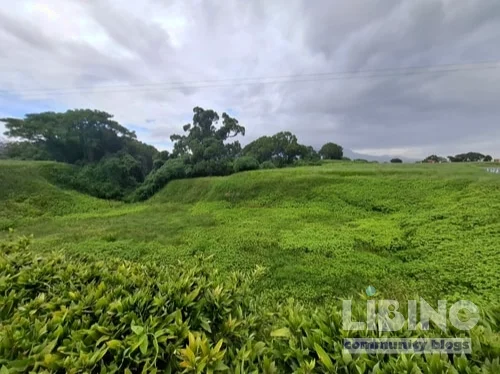
Hara Castle and the Shimabara Rebellion: Fortifications, Siege, and Aftermath
Table of Contents
- Analytics perspective on Hara Castle
- Contrasts and conflicts around Hara Castle
- Cause and effect in the Shimabara crisis
- Expert reconstruction of the fortress and its legacy
Hara Castle sits on a hillside overlooking the Ariake Sea, a site where geography and politics intersected with long arc of Kyushu history. Built in 1496 as a subsidiary fortification to Hinoe Castle, it evolved through upgrades between 1599 and 1604 that transformed it into a primary defensive node for the Shimabara domain. Its story is not a simple tale of fortification rising and falling; it is a case study in how architectural choices illuminate the ambitions of daimyo, the policing reach of the shogunate, and the fraught relationship between religion, rebellion, and state power. The following analysis treats Hara Castle as a hinge point in a broader network of sites, a crucible where military engineering, political calculus, and religious conflict collided and then reverberated through Edo governance.
Analytics perspective on Hara Castle
The initial purpose of Hara Castle was to bolster Hinoe Castle, a fortification that stood roughly 5 kilometres away on Kyushu's southern coast. The hillside location, facing the Ariake Sea, offered both maritime surveillance and a defensible slope line that complicates frontal assaults. From an analytics vantage, the early design reveals a deliberate strategy: fuse coastal defense with inland deterrence, creating a two-front liability against would-be attackers who might try to bypass either position. The architecture reflects a phased logic of escalation: start with a subsidiary fortress, then upgrade to a principal stronghold as political calculations demand greater leverage.
Between circa 1599 and 1604 Arima Harunobu commissioned substantial upgrades that redefined Hara Castle as a multi-bailey complex. The installation of stone walls, dry moats, reinforced gates, and elevated yagura towers represents a conscious shift toward layered defense. The main bailey, or honmaru, housed a tenshu, signaling not only military gravity but symbolic centralization of power. The fortification boasted a triad of baileys—honmaru, ninomaru, sannomaru—plus outer baileys such as Amakusamaru. These choices were not merely aesthetic; they created a defensible gradient where attackers faced repeated breaches, while defenders could retreat along concentric rings of fire and coverage. The cognitive load of coordinating such a system speaks to a high level of administrative capacity within the Arima治理 complex.
From a strategic standpoint, the upgrade package indicates a dual aim: deter external rivals and project stability within the domain. Stone walls and dry moats crystallize a belief that capital permanence could be achieved by engineering. Yagura watchtowers extended visibility along the coastline and inland approaches, enabling proactive defense rather than reactive garrisoning. Yet the same modifications that fortified Hara Castle also produced a more formidable fortress that, in late Edo years, proved capable of withstanding siege pressures even when the odds were numerically tilted against the defenders. This paradox—stronger fortifications enabling both defense and mass entrapment—becomes central to understanding the Shimabara crisis.
The social and religious velocity around the time of Harunobu’s rule matters for the fortress’s analytic profile. Harunobu’s baptism by Alessandro Valignano signals a nuanced political-religious posture. Conversion did not simply secularize leadership; it aligned the domain with broader Catholic missionary networks while simultaneously tightening the shogunate’s scrutiny over faith-based dissent. The fortifications thus functioned within a heterogeneous political ecosystem where Christian communities persisted and sometimes thrived within a militarized border zone. In analytic terms, Hara Castle is a case where architectural resilience and religious-politicized identity intersected, creating a fortified space whose fate would be determined not only by sword but by the shifting currents of faith and state policy.
The downstream consequence of these upgrades is legible in how the Shimabara Rebellion later exploited the castle’s defensive capacity. The rebels, led by Amakusa Shiro and other clergy-adjacent figures, sought refuge in Hara Castle, recognizing that the entrenched stones and dry moats would prolong resistance. The archaeological and documentary trails suggest that the upgrades increased the fortress’s resilience against naval and land assaults, and that the rebels leveraged the site’s defensibility while striking outward at supply lines. The result was a siege whose endurance owed as much to topography and engineering as to numbers of combatants. In short, Hara Castle’s analytics scream: a fortress designed for continuity can, under certain political pressures, become the backbone of a stubborn, protracted resistance.
Finally, the chain of causality around Hara Castle’s fortifications reveals a crucial paradox in Edo-era governance. The upgrade program reflected a centralized insistence on strongholds to deter daimyo fragmentation, even as the Ikkoku-ichijō edict sought to eliminate multi-centre power by dismantling redundant fortifications. The net effect was a fortress network that could be dismantled in theory but endured in practice as a symbolic and logistical anchor for rebellion. This reveals a broader insight into early modern statecraft: fortifications are not inert assets; they are adaptive instruments whose potency depends on the political environment that sustains them. In the case of Hara Castle, the architectural upgrade amplified both the shogunate’s deterrent posture and the rebels’ eventual capacity to resist, thereby underscoring the inseparability of engineering and power in premodern East Asia.
Contrasts and conflicts around Hara Castle
- Hara Castle vs Hinoe Castle: coordinated fortification network or single-point dependence? Hara’s upgrades crystallized an integrated defense, while Hinoe remained a secondary anchor that could be cannibalized for Shimabara Castle’s construction under imperial policy.
- Precipitating factors: a frontier fortress built for deterrence versus a centralization policy designed to suppress daimyo power. The tension between local autonomy and shogunal control shaped decisions about dismantling surrounding fortifications.
- Religious politics: Arima Harunobu’s conversion contrasts with the hardline stance later imposed on Kakure Kirishitan communities. The fortress thus stands at the crossroads of political religion and martial policy.
- Strategic outcomes: the upgrades extended defensive resilience but also embedded a structure that could be repurposed by rebels in a crisis scenario, illustrating how fortifications can paradoxically enable the very resistance they aim to suppress.
To understand the contrasts, we must weigh architectural intent against political consequence. Hara Castle’s stone walls and three-tier baileys were engineered to yield decisive local control and to deter external meddling. In contrast, the shogunate’s later decision to dismantle subsidiary fortifications and reallocate resources to Shimabara Castle during the 1615 Ikkoku-ichijō drive aimed at preventing daimyo centres of power from coalescing into a rival regional hub. The result was a paradoxical shift: by eliminating some defensive redundancies, the state reduced the likelihood of a quick, decisive suppression and increased the risk that a beleaguered fortress could become a fallback stronghold for rebels under siege. The Shimabara Rebellion thus becomes a case study in how contrastive policy impulses—deterrence, centralization, suppression of faith, and mobilization of resources—intersect with the realities of fortress architecture.
In the narrative of Christian resistance, Harunobu’s conversion and later persecution of followers reveals another layer of contrast. The same leadership that oversaw impressive fortifications also walked a path toward religious policy that would provoke popular disobedience. The physical fortress can be read as a material symbol of a state that projected severity yet failed to eradicate a religious minority’s identity. The contrast between architectural permanence and spiritual persistence becomes a telling lens: if stone walls can frame a siege, they cannot capture the full spectrum of belief that fuels resistance. This tension informs why Hara Castle, despite its strength, could not guarantee long-term political order in the Shimabara region.
The last contrast worth noting concerns their ultimate fates. The shogunate, seeking to prevent future uprisings, ordered that Hara and Hinoe be abandoned and cannibalized to fund Shimabara Castle’s construction. The result is a paradoxical preservation of history in ruin: the stones linger, yet the site’s strategic utility fades, replaced by a narrative of suppression and memory. The castle’s legacy then transitions from a living fortress to a historical touchstone, illustrating how political decisions reshape both landscapes and memory, turning once-dominant fortifications into ruins that still command attention from researchers, visitors, and Kakure Kirishitan descendants alike.
Cause and effect in the Shimabara crisis
The Shimabara Rebellion emerges from a cascade of decisions and pressures that began well before the siege itself. The Edo response hinges on a policy of centralized control that seeks to prevent daimyo from maintaining multiple centers of power. The Ikkoku-ichijō edict, passed in 1615, mandated the abolition or cannibalization of secondary fortifications to minimize multi-centre resistance. The logic was straightforward: if a daimyo cannot project armed power from more than one fortress, the potential for rebellion diminishes. The causal chain from policy to practice is critical for understanding why Hara Castle was allowed to exist, then partially dismantled, and finally forgotten as a strategic asset in the early 17th century.
That policy directly affected the fortress’s operational life. When Matsukura Shigemasa took over after Harunobu and intensified persecution of Christians, the region’s social stability eroded. The punitive economic regime, heavy taxation to fund Shimabara Castle, and famine-induced discontent created a perfect storm. The rebels interpreted the shogunate’s consolidation of power as an existential threat to their communities, while the castle’s upgrades offered a robust shelter for structured resistance. The siege became less a clash of armies than a contest of endurance, logistics, and supply management. In this line of causality, the castle’s dry moats, stone walls, and multiple baileys became critical because they prolonged the defenders’ ability to hold out while awaiting outside relief that never fully materialized.
Food security compounds the causal narrative. The rebels carried large stores of mochi and prepared guzōni—rice cake soup mixed with other ingredients—indicating adaptive provisioning under siege. The shelling by artillery, the naval involvement of a Dutch ship named De Ryp, and attempts to tunnel beneath the walls all illustrate a siege race against hunger and naval disruption. The shogunate’s forces exploited the terrain and pursued a strategy of starvation along with conventional assault. The outcome—thousands of rebels killed or buried in the wake of the siege—was not only a military victory but a political signal about the limits of popular religious mobilization under centralized authority. The cause-and-effect logic thus ties the fortifications’ effectiveness to the broader political agenda that sought to deter rather than merely suppress rebellion.
The aftermath of the siege completes the causal chain. Matsukura Katsuie’s execution underscores the personal dimension of state punishment as a mechanism to deter future uprisings. The subsequent appointment of Kōriki Tadafusa and his relief-based policy shift—granting tax relief, pardoning former rebels, and encouraging settlement—illustrates a re-centering of legitimacy through reconciliation rather than perpetual punishment. The Ikkoku-ichijō edict’s limitations then become evident: although it diminished the practicality of multi-centre daimyō power, it did not erase the possibility that a single abandoned fortress could become a catalyst for mass resistance. The Shimabara crisis thus exposes a fundamental truth about state-building in early modern Japan: policy can curb organized power while still leaving space for localized agency, sometimes in the most defensible sites imaginable.
Beyond immediate politics, the case contributes to broader historical narratives on sakoku and religious suppression. The fall of Hara Castle coincided with intensified persecution of Kakure Kirishitan, the Hidden Christians. By pushing these communities underground, the shogunate sought to erase visible signs of Christian affiliation while preserving a religious memory that would persist in secret practices. In the long run, the survival of Kakure Kirishitan communities, and their eventual re-emergence in the late 19th century, demonstrates how state action can suppress religious expression temporarily while malfunctioning as a complete erasure. The causal thread from Hara Castle to the broader religious and political landscape of Edo Japan, then, runs through a single fortress and a single rebellion, but extends to the shape of Japan’s isolated history and the later reintroduction of religious freedoms in 1873.
Expert reconstruction of the fortress and its legacy
The physical plan of Hara Castle, reconstructed from foundations, the visible dry moat remnants, and the surviving stone walls, points to a multi-layered fortress designed for a measured, confident defense. The honmaru served as the inner heart of command, where the tenshu would have dominated the skyline. The ninomaru and sannomaru formed concentric rings of protection that constrained attackers and bought time for defenders to organize countermeasures. The outer baileys, including Amakusamaru, extended the defensive envelope toward the littoral zone, ensuring that any sea-based approach would encounter deterrent fire from watchtowers and ramparts before reaching the inner precincts. Knowing this, modern analysts can approximate the original skyline and circulation paths inside the complex. This reconstruction is not mere speculation; it rests on a disciplined synthesis of archaeology, documentary records, and comparative fortress studies from Kyushu and broader Sengoku to Edo period contexts.
The archaeological record at Hara Castle includes a preserved burial zone uncovered by archaeologists, the sword-chipped bones of rebels who perished during the siege, and a concentration of crucifixes among recovered artefacts. Such findings illuminate the human dimension behind stone and earth: lives weighed against a siege, faith tested under pressure, and a community seeking dignity through burial rites even as the fortress crumbled. The VR experience referenced by local museums offers a dynamic glimpse into what the castle might have looked like in its prime, complementing on-site information boards that communicate in Japanese and English for a diverse audience. This combination of digital and physical heritage work enhances public understanding of a site that is both militarily intricate and culturally charged.
From a heritage management perspective, Hara Castle offers a template for presenting contested fortifications. The Arima Christian Heritage Museum complements the site by presenting relief sculptures, documentary videos, miniature vignettes, and artefacts that contextualize the Shimabara Rebellion and the siege. A reconstructed burial site at the castle grounds demonstrates the cemeterial practices associated with the massacre, including the multifaceted role of religion in the crisis. For visitors, the combination of ruined stone walls and modern interpretive boards makes the site a laboratory for understanding how fortifications functioned as instruments of governance and as stages for human tragedy. The experience invites reflection on how communities remember, and how authorities balance memorialization with the demand for historical accuracy.
In terms of policy lessons, the Hara Castle case underscores the practical limits of the Ikkoku-ichijō edict. The policy aimed to prevent daimyo from wielding two or more military centers, yet it could not erase the possibility that an abandoned fortress would become a lifeboat for rebels in extremis. This outcome prompts a rethinking of fortress-centric governance models: even a dismantled or partially cannibalized stronghold can influence how power is projected and contested in a crisis. For scholars, the site remains fertile ground for revisiting debates on state capacity, religious conflict, and the practical dynamics of siege warfare in early modern Japan. The lessons drawn from Hara Castle endure because they illuminate how architecture, policy, and popular agency interact under extreme pressure, shaping the contours of regional history long after the walls have fallen to ruin.
The broader significance of Hara Castle lies in its enduring capacity to provoke analytical thinking. It is not merely a ruin; it is a lens for examining how fortifications shape political choices, how religious identity fuels collective action, and how central authorities respond to rebellion with a mixture of repressive and conciliatory strategies. As visitors explore the site today, they encounter a history that is as much about human resilience as about masonry. The castle’s remains, the lessons of the siege, and the memory of Kakure Kirishitan communities together tell a story about the limits of power, the durability of culture, and the paradoxes of war and peace in early modern Japan.
Siege logistics and defensive dynamics
To address a critical gap in the narrative, a concrete view of how fortification design translated into siege practice is essential. Hara Castle’s concentric layout created both a formidable barrier and a sequence of decision points for commanders and attackers, shaping provisioning cycles, patrols, and relief attempts. In the Shimabara Rebellion’s long arc, logistics, not only swords, determined endurance and outcome. The compact model below links dimensions, routes, and routines to show how a fortress could prolong a siege and influence strategy, especially when supply lines, morale, and external relief intersect with political policy.
| Fortress level | Primary defense role | Vulnerabilities | Defender strengths | Typical attack route |
|---|---|---|---|---|
| Honmaru | Central command; tenshu anchor | Concentrated fire; target for sapping | High ground; strong internal gates; guarded vantage | Bypass via outer baileys or direct breach through inner gates |
| Ninomaru | Secondary defense; flank protection | Flanking through gaps | Layered walls; multiple gates | From outer rings, pressing inward along ring walls |
| Sannomaru | Reserve and a staging area | Supply line disruption | Robust firing positions; fallback positions | Parallel incursions or counterattacks from sea and land |
| Amakusamaru (outer) | Outer envelope; early warning and deterrence | Armor erosion; moats breached | Strategic visibility; extended line of sight | Coastal approaches; landward climbs |
| Coastal approaches | Naval and amphibious defense | Surprise sea-borne assaults | Watchtowers; sea-based fire | Direct naval bombardment or blockade attempts |
The layout clarifies defender choices: the honmaru centralizes command but concentrates risk; outer rings buy time and complicate sallying. Attackers must negotiate multiple barriers, forcing combined land-sea operations and pressuring supply lines. The table mirrors historical records that the siege leveraged terrain, rainfall, and policy to stretch both weaponry and willpower.
A phased view clarifies how events unfolded, while a hierarchical sequence helps interpret decisions under siege. The following steps summarize the engagement:
- Opening phase: artillery duels and probing sorties test the outer rings.
- Standoff phase: reinforced walls slow an assault while supply lines are strangled.
- Relief and collapse: attempts at relief either fail or come too late, prompting surrender or annihilation.
In sum, the defensive fabric of Hara Castle shaped not only tactical responses but also political signaling, turning a fortress into a crucible of governance under crisis.
What strategic role did Hara Castle play in the Shimabara Rebellion?
Hara Castle served as the main defense anchor for the Shimabara domain during the 1637-1638 rebellion, establishing a controllable stronghold that could mobilize the surrounding fortresses, project power along coastal approaches, and sustain a protracted siege. Its hillside position overlooking the Ariake Sea allowed watchers to monitor sea and land routes, enabling timely responses to rebel sorties. The upgrades completed by Arima Harunobu around 1599-1604 made it a resistant, multi-bailey fortress capable of withstanding sustained bombardment and isolating supply lines, making it a focal point for state power and for rebel endurance. This arrangement amplified the political drama: a fortified backbone for repression and a stubborn rallying point for resistance.
How did Arima Harunobu's policies influence fortifications at Hara Castle?
Arima Harunobu’s policies shaped fortification strategy by aligning domain defense with broader shogunal objectives. His upgrades around 1599-1604 emphasize layered defenses and centralized command, yet they also create a durable platform that could be leveraged by rebels in extremis. The tension between strengthening a regional power base and enforcing central policy is visible in the castle’s ability to deter conventional attack while enabling a protracted stand during religiously charged crises. This duality demonstrates how governance choices, religious politics, and fortification design interacted to produce a fortress that could deter, absorb, and eventually become a fallback sanctuary for resistance. Modern readings see policy and engineering as co-authors of history here.
What are the key features of Hara Castle's fortification layout?
The spatial architecture centers on concentric baileys: honmaru (core), ninomaru, sannomaru, and outer lines such as Amakusamaru, plus coastal approaches. Each level provides a different balance of visibility, firepower, and retreat routes, creating a defensive gradient that complicates attacker momentum while offering defenders flexible countermeasures. The tenshu in the honmaru symbolized centralized authority, while elevated yagura towers extended surveillance along sea and land fronts. In practice, this layout translates to a sequence of engagements where attackers must breach successive barriers, giving defenders time to respond and reroute forces.
How did the Ikkoku-ichijō edict affect fortifications after the rebellion?
The Ikkoku-ichijō edict (1615) mandated dismantling or cannibalizing subsidiary fortifications to weaken multi-centre daimyō power. In effect, it reduced redundant defenses and redirected resources toward a single strategic center, Shimabara Castle. The policy aimed to prevent future collective uprisings but also left sites like Hara partially degraded yet not erased. The result is a paradox: stronger single centers could be isolated, but abandoned or repurposed edges occasionally served as refuges for rebels, influencing how post-crisis governance built legitimacy through reconciliation rather than perpetual punishment.
What does archaeology reveal about life inside Hara Castle during the siege?
Archaeology highlights human priorities under siege: burial zones, sword-marked remains, and cruciform artefacts reflect the collision of military action and religious identity. The presence of Kakure Kirishitan residues reveals that faith persisted even amid stone walls and hunger. Recovered artefacts show provisioning choices, ritual practices around death, and a community’s effort to preserve dignity. These finds deepen our understanding beyond wall measurements, turning the fortress into a social document that records how people endured, adapted, and remembered under pressure.
How should visitors interpret Hara Castle to understand Edo period governance?
Visitors should view Hara Castle as both a military instrument and a political symbol. The fortification embodies state reach, centralization aims, and religious tension within Edo governance. Interpretive materials that connect the layout to siege dynamics, the policy backdrop of Ikkoku-ichijō, and the lived experience of Kakure Kirishitan communities reveal how power operated at a local level. This approach helps audiences grasp how architecture, ritual, and administration together defined governance under crisis in early modern Japan.





Add a comment
To comment, you need to register and authorize
Comments