

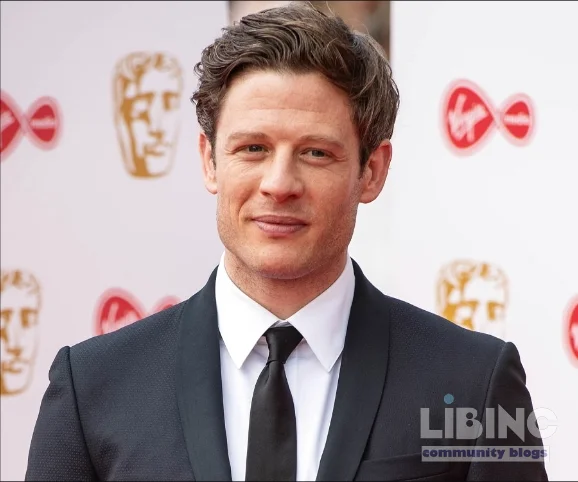
James Norton: An analytical portrait of the actor's ascent from Cambridge stage to global television
James Norton stands as a case study in how a performer ascends from elite training to broad audience recognition. Born in Lambeth, London, on July 18, 1985, he grew up with teacher parents and a culture that values public performance. His education chart—Bramcote Prep, Ampleforth College, then Cambridge, and finally RADA—exposed him to a dual discipline: rigorous analysis of texts and the stamina of live performance. This article traces how those years shaped a career that spans stage, television, and film, and why the choices he made matter for actors navigating modern media ecosystems.
As a British actor and Cambridge alumnus who joined The Marlowe Society and later trained at the Royal Academy of Dramatic Art, Norton forged an identity that blends scholarly rigor with practical craft. His early travels after Cambridge—teaching in Northern India and studying Buddhism and Hinduism on a Fitzwilliam Travel Grant—produced a cosmopolitan sensibility that informs his stage and screen choices. That blend of intellect and craft is the throughline critics notice when James Norton commands both a Shakespearean line and a thriller confrontation.
These formative years also set the stage for a careful career strategy: avoid typecasting, seek variety, and leverage a strong network in theatre and screen. The stakes are high: a breakout in television can transform a career, but it can also trap an actor in one-note villainy or type. The hidden conflict lies in balancing prestige projects with mass-audience hits. The direction of this analysis is to map how Norton navigates these tensions across four analytical dimensions.
Analytics: How James Norton built a career across stage, screen, and film
From An Education (2009) onward, Norton's film and television entries reveal a deliberate weaving of arthouse texture and mainstream accessibility. His early screen work secured a foothold in a crowded field, while his TV appearances laid the groundwork for wider recognition. For a young actor, the move is not random: it aligns with a strategy to demonstrate range across genres and formats. In this period the British actor's career resembles a syllabus: measured, varied, and built on a network of theatre connections.
Stage work grounds Norton in technique and timing. He began with Cymbeline at the Cambridge Arts Theatre and then joined the West End circuit in revivals and contemporary dramas. The discipline of classical training—whether Miles Richards in Posh or Captain Stanhope in Journey's End—carries into his observational accuracy on screen. The crew's trust grows when a performer can move from Shakespeare to contemporary realism with credibility.
Versatility across media becomes a signature. The breakthrough might be seen in the early televised crime drama Happy Valley, where Norton's Tommy Lee Royce demanded a chilling balance of menace and restraint. The transition from a stage-focused actor to a television star required a recalibration of pacing, tone, and the micro-expressions that sustain prolonged screen presence. The result is a broadband resume that appeals to genre fans and prestige-drama audiences alike.
- Crime drama, stage-to-screen versatility, prestige-drama credibility
- Broad audience reach through television and film
Recognition followed swiftly. These are the standout acknowledgments:
- Crime Thriller Award Best Supporting Actor, 2014
- BAFTA nominated for Best Supporting Actor, 2015
Beyond screens, personal dimensions shape his craft: he contends with type 1 diabetes, managing insulin injections as he navigates demanding rehearsal schedules and shoot days. Such conditions influence choices about roles and schedules, testing resilience in ways that inform on-set decisions. The ability to maintain focus under medical routines translates into consistent performances across long shoots.
The analytics of his early period thus reveal a deliberate balance between stage craft, screen presence, and personal resilience that positions him as a durable figure in British acting. The trajectory suggests that technical foundation and adaptive media literacy are not optional for a 21st-century performer.
Contrast: Stage discipline vs. screen momentum
Contrast emerges when comparing Norton's stage excellence with his screen-driven notoriety; stage roles demand instantaneous audience feedback, while television and film reward sustained, incremental character development. The pressure to be immediately legible to a live audience can clash with the subtler on-camera cues that accumulate over a longer arc. This tension forces deliberate calibration of presence, pace, and vocal economy across media.
Even as a theatre-trained actor, Norton adapts to the serial rhythm of television with an eye for long arc storytelling and character consistency, a hallmark of his work on Happy Valley and Grantchester. This adaptability is underpinned by RADA training and the discipline of The Marlowe Society, which provide a toolkit for reimagining a character across episodic and feature formats. The ability to switch tonal registers without losing core identity marks a core strength of his approach.
In contrast with peers who lean heavily into blockbuster film roles, Norton pursues breadth: biographical drama, period pieces, and contemporary thrillers sit alongside literary adaptations. This breadth signals a strategic preference for varied textures over a single-genre identity. The broader portfolio, in turn, feeds both critical respect and broad audience familiarity.
This breadth also exposes him to the global audience, leveraging niche prestige projects to feed mainstream visibility. The result is not a single genre signature but a recognizable versatility that helps him navigate a changing media landscape, where streaming and traditional broadcast intersect.
Cause and Effect: How training and opportunity shape outcomes
Cause and effect reveal how early stage networks catalyzed later screen opportunities: Cambridge theatre connections and The Marlowe Society exposed him to directors who value memory for Shakespearean text and risk-taking in contemporary pieces. Those associations create a durable professional reservoir that can be tapped when a producer seeks depth beyond surface charm. The effect is a higher likelihood of sustained work across different media rather than a single viral moment.
The causal chain from Cambridge education to major TV roles is reinforced by a specific pipeline: training at RADA after Cambridge provided techniques in acting language, breath control, and on-camera presence, which in turn attracted directors seeking depth of character. This sequence is not accidental; it reflects an industry pattern where theatre training translates into versatile screen talent, particularly for complex roles in crime dramas and historical narratives.
Exposure to international contexts, including travel to Northern India and Nepal for study, broadens the range of characters he can convincingly portray, facilitating role acceptance across genres. Such experiences increase cultural literacy and the ability to navigate ambiguous moral landscapes, traits highly valued in nuanced drama and cross-border productions.
Industry structure plays a causal role too: a thriving British television environment, plus Anglo-American collaborations, creates opportunities for stage-trained actors to move fluidly between platforms like theatre, streaming dramas, and feature films. The rise of streaming platforms expands the audience for both prestige projects and accessible storytelling, reinforcing the value of a diverse portfolio.
Expert reconstruction: projecting the next phase
An expert reconstruction posits that Norton’s next phase could be a synthesis of high-art projects and high-impact television, leveraging reputational capital from Happy Valley and Grantchester to pursue more nuanced villains and anti-heroes. This trajectory would align with the industry’s appetite for morally complex figures who anchor dense narratives across formats. It would also reward a cross-media audience that expects consistency in character logic across platforms.
Such a trajectory would depend on continued collaboration with strong writers and directors who value his capacity for moral ambiguity, as well as his willingness to explore internationally produced narratives such as Tolstoy or other historical epics. The capacity to inhabit figureheads across time periods and national contexts would position him as a globally relevant actor within a world where streaming and co-production are the norm.
Financial and creative freedom will likely grow as he expands to theatre-adjacent productions and ambitious screen projects, enabling a deeper catalog of characters. The ongoing challenge is to balance prestige projects with mainstream appeal, maintaining the authenticity of his stage-grounded craft while expanding the breadth of his audience. The enduring appeal of James Norton lies in the combination of rigorous training with patient, media-literate storytelling instincts that keep him relevant in an ever-evolving entertainment ecosystem.
Ultimately, the enduring appeal of James Norton lies in his combination of The Marlowe Society-trained chops with the patient storytelling instincts of a modern British actor, a blend that could keep him globally relevant across streaming platforms and award cycles. The next chapters will test whether he can sustain depth while widening access, a test any serious performer must meet to remain durable in contemporary media markets.
In sum, Norton's career demonstrates that a solid classical foundation, coupled with strategic cross-media choices, yields artistic resilience and professional longevity in the 21st century.
Bridging the gap in cross-media craft
Despite the strength of the existing analysis, there is a practical gap: a parsable decision framework that shows how Norton weighs stage opportunities against screen roles, and how training informs those choices in real production timelines. A concise model clarifies how a line on Shakespeare coexists with a serial arc in a thriller, and how health management intersects with complex schedules to sustain long-form work.
| Medium | Core Skills |
|---|---|
| Stage | Breath control, verse, immediate audience feedback |
| Television | Continuity, subtext in close-up, serial pacing |
| Film | Framing, nuanced precision, efficient scene economy |
Practical scenario: offered a streaming crime drama and a classical stage revival in parallel. Norton would assess role complexity, writer-director collaboration, travel constraints, and health management to decide which project sustains long-term growth. A concrete, repeatable rubric helps actors balance prestige and mass appeal while respecting personal limits and schedule realities. This approach also explains resilience: it’s not a single breakout moment but a pattern of choices that builds a durable career across media.
- 2009: An Education – breakout screen presence
- 2014: Crime Thriller Award – Best Supporting Actor
- 2015: BAFTA nomination – Best Supporting Actor
Across these dynamics, Norton’s career demonstrates how a stage-rooted discipline, complemented by cross-media literacy, creates a flexible yet focused trajectory. The key is to translate theatre habit—textual accuracy, rehearsal discipline, and live responsiveness—into on-camera credibility and steady audience engagement. The integration of a cross-platform portfolio with mindful health and schedule planning yields sustained relevance in a fast-changing media landscape.
- Clarify audience and platform
- Evaluate character longevity and narrative leverage
- Coordinate with writers and directors across formats
- Plan health management and travel within production timelines
- Balance prestige and mainstream appeal
In short, a structured approach to role selection, grounded in stage craft and adapted for screenwork, helps Norton remain durable as the ecosystem evolves.
How did James Norton’s training shape his acting approach?
James Norton’s training fused rigorous textual analysis with the stamina of live performance, drawing on Cambridge's theatre network, The Marlowe Society's Shakespearean discipline, and RADA's on-camera technique, a combination that created a durable framework for language, rhythm, and character truth across stage, television, and film; it conditioned him to read scripts as architectures—where verse and prose require breath control and line memory, while contemporary dialogue demands precise subtext under close camera work, and where live performance sharpens instinct for audience feedback that television develops into sustained narrative pacing over multiple episodes; the balance of scholarly rigor and practical craft also encouraged a collaborative mindset with writers, directors, and crews, enabling seamless shifts between prestige projects and mainstream hits.
Analytically, this mix anchors Norton’s ability to move between Shakespearean versatility and modern genre demands, making him legible to both theatre critics and TV producers. Real-world implication: training acts as a durable transfer tool, not a narrow specialty.
How has Norton balanced stage craft with screen demands?
Norton translates stage discipline into screen presence by applying precision in breath, pacing, and subtext to on-camera rhythms while preserving the vitality of live performance through authentic reactions and sustained focus; he also leverages a wide repertoire—from classical to contemporary—so casting directors see him as adaptable rather than typecast. In practice, this means the rehearsal process emphasizes long arcs and character consistency across episodes, while production schedules adapt to the demands of both theatre runs and long-form television.
This balance is evident in his ability to anchor tense scenes in Happy Valley and deliver measured, credible performances in Grantchester, blending stage sensibilities with serial storytelling demands.
What are his most notable roles across genres?
Notable roles include Sidney Chambers in Grantchester (a Cambridge-educated detective-vicar) and Tommy Lee Royce in Happy Valley (a chilling antagonist). He has also played Pierre Bezukhov in the BBC adaptation War and Peace, demonstrating the range from literary epic to contemporary thriller; these choices reflect a strategy of balancing character complexity with broad audience appeal, bridging prestige projects and mainstream success.
Analytically, these roles reveal a deliberate portfolio that builds recognition through varied textures and formats, reinforcing a reputation for reliability across media.
How does Norton manage health in demanding schedules?
Norton manages Type 1 diabetes with disciplined insulin routines and careful planning around rehearsal and shoot days, ensuring that medical needs align with performance demands; this fosters resilience and day-to-day focus on set, reducing disruptions and enabling steadier character work over long shoots. Health considerations become part of schedule design rather than an obstacle, which can serve as a model for other actors balancing health with high-output careers.
From an analytic perspective, health management becomes a strategic constraint that sharpens time management and professional boundary-setting, ultimately contributing to reliability on set.
What impact did The Marlowe Society and RADA have on his career?
The Marlowe Society and RADA provided a dual foundation: a deep grounding in classical text and a structured, professional approach to modern acting craft. The network and training broadened opportunities across theatre and screen through shared standards, rehearsals, and collaborative workflows; this combination supports confidence in taking diverse roles and working with high-caliber writers and directors, which is essential in a global, streaming-driven market.
Analytically, this background creates a portable toolkit—textual fluency, discipline, and cross-format versatility—that is highly valued by producers seeking actors who can anchor both prestige dramas and accessible thrillers.
What could be next for Norton in the global streaming era?
The next steps may include more morally complex villains or anti-heroes across international productions, leveraging streaming platforms to reach global audiences while preserving core stage-grounded craft; collaborations with varied writers and directors could yield roles spanning biographical pieces, historical epics, and contemporary thrillers, reinforcing his cross-border appeal. This trajectory aligns with industry demand for durable actors who can anchor dense narratives across multiple formats.
Analytically, continued diversification and international co-productions would strengthen his global footprint, while maintaining the depth of performance nurtured by classical training.





Add a comment
To comment, you need to register and authorize
Comments