

Table of Contents
- Block 1 — Analytics: The mainstream shift and its drivers
- Block 2 — Contrast: Rural realism meets drag culture
- Block 3 — Cause and effect: Identity politics, happiness, and personal politics
- Block 4 — Expert reconstruction: Future projects, financing, and cross-border collaboration
Chica Checa marks a deliberate pivot for Šimon Holý, a Czech director known for intimate portraits of youth and queer life. The move toward a broader audience raises questions about how queer identity can coexist with broad appeal, and what a film can accomplish when warmth supersedes polemic. Holý frames this shift as radical positivity and radical hope, a way to offer cinema that acknowledges marginalised lives while inviting a wider public to empathy rather than resistance. The following analysis unfolds along four lines—analytics, contrast, cause-and-effect, and expert reconstruction—to show how Chica Checa negotiates identity politics, rural realism, and pop culture iconography, while outlining what this means for Holý’s future in production and collaboration.
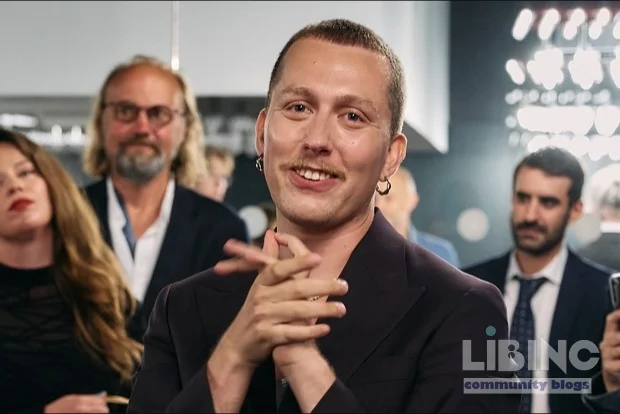
Inline visual element: a quick visual reference for the film’s mood and juxtaposition
Block 1 — Analytics: The mainstream shift and its drivers
The shift toward a more mainstream audience does not appear as a sudden turn; it emerges from a strategic layering of narrative tools, financing realities, and audience expectations. Holý himself notes that the concept has been maturing for years, with development and financing requiring patient cultivation. In the case of Chica Checa, the decision to employ a “very classic cinematic language” is not a retreat from complexity but a deliberate means to render identity-political questions legible to a broad public. The choice signals a recognition that mainstream cinema, when responsibly crafted, can absorb nuance rather than dilute it. The result is a film that speaks to general audiences without abandoning the center of gravity of queer cinema or drag culture.
To understand the economics, one must track how audience segmentation, funding cycles, and festival prestige shape a project’s final tone. The film’s shift toward broad appeal aligns with market logic: if a work can recruit viewers beyond niche circles, it broadens distribution potential and stabilizes financing for future, more challenging projects. The interplay between market pragmatism and artistic ambition is visible in the way the script provides clearer motivations for characters, a presence that eases entry for new viewers while keeping the emotional core intact. In this light, Chica Checa is not a sellout; it is a recalibration designed to maximize reach without sacrificing integrity in the portrayal of queer life and rural family dynamics.
Holý’s insistence that queer themes be present—but not performatively didactic—points to a deliberate methodological shift. He argues that previous films contained queer characters, but their identities appeared with less explicit weight. The decision to foreground identity markers in a mainstream format is not merely stylistic; it is a critical acknowledgment that audience comprehension often requires explicit motivation. The payoff is a richer narrative texture where the audience understands why decisions unfold as they do, and how personal identities tangibly steer family and social dynamics. This is a pragmatic response to a core question: can a country’s queer stories achieve wider resonance without sacrificing their political urgency?
The genesis of the premise—a mother oblivious to her son’s drag life and his impersonation of a Czech pop icon—originates, Holý says, from a dream. The dream links to a personal memory of repairing a crumbling house, a metaphor for life’s fragility that becomes the emotional engine for the film. The dream-to-screen translation anchors the project in intimate experience, providing a universal entry point for non-specialist viewers. By anchoring the drama in family warmth, Holý creates the fertile ground in which a serious queer theme can coexist with accessible storytelling. The result is a film that invites empathy before controversy, allowing audiences to approach marginalized identities through a lens of care rather than confrontation.
Biographical resonance is deployed with precision. The relationship dynamic between Lukáš and his boyfriend—who lives abroad and belongs to a different ethnicity—mirrors Holý’s own lived experience at the time of制作. A foreign partner’s perspective pushed the filmmaker to add markers of a mixed relationship, introducing a dynamic that diversifies the film’s social texture. This choice serves multiple aims: it broadens representation within the Czech audiovisual landscape, normalizes nuanced portrayal of interracial relationships, and accelerates the film’s capacity to communicate across cultural lines. It also functions as a deliberate intervention in the local cinema tradition, where minority stories have historically struggled for depth and breadth of portrayal.
Casting Pavla Tomicová as the mother became a turning point in the project’s development. Holý initially resisted repeating prior collaborations and sought a fresh voice for a rural maternal figure. After exhaustive auditions failed to converge on a suitable candidate, Tomicová pressed for the role, and the chemistry with Jan Cina—who plays the son—proved instantaneous. Tomicová’s performance channels a countryside sensibility built on expressive gestures and expansive looks, an approach Holý associates with authenticity rooted in place rather than stylized minimalism. The result is a mother who can navigate tenderness, anger, and joy with a clarity that carries the film’s more challenging themes into mainstream receptivity.
In the Czech context, Helena Vondráčková becomes a pivotal symbolic anchor. Older drag queens affirm that without a faithful impersonation of Vondráčková, drag in this culture risks devolution into a merely exotic performance. Her trajectory—six decades of music and narrative resilience—embeds the film’s central themes of loss, resilience, and emotional recovery. The local symbolic weight of Vondráčková provides a dense cultural layer that deepens the film’s impact for domestic audiences while signaling to international viewers that a pop icon’s legacy can function as a sophisticated narrative device. The choice couples the proximity of rural life with the universal reach of pop spectacle, creating a hinge that connects intimate family drama with a broader cultural memory.
Holý rejects the idea that this pairing exoticizes the countryside. He argues that rural drag performances were common in Czech community spaces during the 1990s and early 2000s, and that contemporary political rhetoric has weaponized drag as a populist bogeyman. By placing drag in a small town, the film asserts that ordinary people accept plural identities, thereby reframing the rural landscape as a site of democratic possibility rather than cultural anomaly. The project thus becomes political not through overt agitprop, but through a renewal of everyday life where individual freedom is a natural, shared value. The overarching argument is a claim of radical positivity: a commitment to personal choice as a political act in a moment when conservative governments seek to narrow public life.
In sum, Block 1 reveals how Chica Checa translates a set of principled choices into a production strategy that aims for broader reach. The film’s mainstream tilt is a calculated, value-driven decision, not an attempt to abandon identity politics. The balance between a recognizable cinematic language and a legitimate queer core creates a model for future Czech productions seeking both impact and inclusion. The film’s construction, from dream genesis to casting and symbolism, demonstrates how a project can enact political ideals without sacrificing the human warmth that makes such ideals compelling to diverse audiences.
Block 2 — Contrast: Rural realism meets drag culture
The juxtaposition of a quiet rural setting with the flamboyance of drag culture is the film’s most striking tension. Holý uses this contrast to illuminate how communities negotiate difference in everyday life rather than in theatre. The rural canvas offers a counterpoint to drag’s performative gloss, enabling a discourse on identity that remains accessible without becoming didactic. The effect is a form of social dramaturgy where costume and gesture serve as a rehearsal for wider cultural acceptance, not as a spectacle unto itself. In this sense, Chica Checa uses juxtaposition to create a dialectical space in which conservative spectators encounter the vulnerability of marginalised lives, and in doing so, they become more receptive to change rather than reflexively opposed to it.
Yet this contrast invites scrutiny. Critics worry about exoticizing the countryside or turning drag into a rural curiosity. Holý’s response is to treat both domains with respect and complexity, avoiding easy caricature. The film deliberately foregrounds ordinary people—shopkeepers, mothers, teenagers—who respond with warmth and curiosity rather than fear. Formal choices reinforce this stance: grounded cinematography, patient editing, and non-ironic, empathetic performances. The result is not a carnival of difference but a human portrait that respects both tradition and transformation. This is where the film negotiates the line between representation and sensationalism, choosing verisimilitude over spectacle when the goal is to broaden understanding rather than amuse a niche audience.
The symbolism around Helena Vondráčková deepens the contrast. Her music and public image anchor a cultural memory that resonates with older generations while inviting newer audiences to decode a shared symbolic language. The film’s use of this icon—and the drag persona surrounding Lukáš’s mother’s world—creates a cultural bridge that makes the characters’ journeys legible to those who do not routinely encounter queer narratives. The rural-urban divide here becomes a platform for dialogue rather than a battlefield, enabling a broader audience to meet queer life on its own terms, with empathy as the first response. The strategy transforms contrast into an engine for social learning rather than a stage for ideological conflict.
Nevertheless, the tension persists in how audiences interpret political subtexts. The film’s repositioning of identity politics within a family drama reframes political questions as personal decisions—how one loves, how one accepts, how one forgives. This reframing is deliberate: it counters the narrative that activism must be loud or confrontational to matter. Instead, radical positivity operates on a micro scale, suggesting that small, compassionate acts can accumulate into cultural change. The contrast thus becomes a pedagogical tool: it teaches viewers to recognize themselves in others’ experiences through the everyday drama of family life and community rituals, rather than through polemical speeches or sensationalized conflict.
From the perspective of the Czech film ecosystem, this approach is a careful recalibration of resilience and access. Rural audiences, who may feel sidelined by cosmopolitan cinema, find themselves reflected in a story that preserves regional specificity while embracing universal human emotions. At the same time, urban viewers encounter drag culture not as an exotic novelty but as a facet of ordinary life that broadens the spectrum of representation. The direction of travel here is clear: the film seeks to normalize difference by embedding it in recognisable routines, a tactic that increases both authenticity and market viability. The result is a film that does not stand apart as a curiosity but stands with audiences as a shared experience that invites conversation rather than retreat.
Ultimately, the contrast between the countryside and drag culture becomes a narrative strategy rather than a stylistic flourish. It recalibrates what “mainstream” means in contemporary Czech cinema by expanding who can belong to the audience, not simply who appears on screen. This method could inspire future productions to test the boundaries of genre and geography without compromising the everyday humanity that makes queer stories resonate. In this sense, Chica Checa uses contrast to build trust with viewers who might otherwise resist representation, and it does so through careful craft, patient storytelling, and a refusal to equate visibility with performance alone.
Block 3 — Cause and effect: Identity politics, happiness, and personal politics
The film’s assertion that politics can be lived at the scale of the household marks a deliberate shift in how identity and community are framed in cinema. Holý’s concept of radical positivity positions happiness as a form of political agency—one that recognises the right of marginalised groups to define their own paths. The film’s ending, which offers a hopeful arc rather than a nihilistic conclusion, reinforces this stance. This is not about denying hardship; it is about choosing a destination that allows for dignity, resilience, and personal autonomy. The film presents a case where personal decisions become political statements in the most intimate sense, a logic that expands the spectrum of what counts as political cinema.
How does this translate into audience impact? First, it normalizes queer life by rooting it in everyday family relationships rather than in separate, sensationalized contexts. Second, the film’s representation of a mixed-heritage relationship foregrounds the complexities of modern Czech society, providing a model for how producers can integrate diverse identities without turning the material into a single issue. Third, by foregrounding the mother’s emotional expressiveness, the film teaches that affective intelligence—the capacity to read mood, gesture, and implication—can be a powerful instrument for empathy. These effects are not incidental; they are integral to how the film seeks to widen access and understanding across demographic lines, a strategic objective for any project aiming to break through the ceiling of genre-specific audiences.
There is a clear link between the film’s aesthetic choices and its social impact. The decision to cast Pavla Tomicová and to present Lukáš’s drag life as part of a broader family narrative creates a relational web in which viewers learn to recognize themselves in someone else’s story. This relational approach expands the potential field of viewers who see themselves in queer life, which in turn expands the audience base for future Czech cinema that embraces inclusive storytelling. The film’s political stance remains subtle in its presentation, but the consequences are explicit: a broader, more nuanced public discourse that treats identity as an everyday richness rather than a rarefied topic for the intimates of urban art houses.
The international reception dimension also matters. For audiences unfamiliar with Czech drag culture, Helena Vondráčková’s iconic status functions as a recognizable gateway into a local world, while the drama centers the universal themes of family, care, and resilience. The film thereby gains a two-tiered resonance: it communicates a specific cultural moment to local viewers while offering an interpretable, deeply human story to international spectators. This resonance increases the probability of festival acquisitions, cross-border distribution, and long-tail interest in Holý’s body of work, including his role as a producer on other projects—an important strategic portfolio expansion for První řada and its partners. The broader implication is clear: cinema that foregrounds personal happiness as a political act can mobilize audiences toward more inclusive conversations and longer-term cultural shifts.
From a policy and funder perspective, the film’s model demonstrates how to secure support for provocative content without compromising on audience reach. The creative strategy aligns with Creative Europe MEDIA aims to nurture cross-border collaboration and help European cinema reach wider markets. By connecting private, national, and European funding streams, Chica Checa shows how to sustain a project from local premiere to international festival visibility. The practical upshot is that future Czech co-productions might emulate this approach, combining strong, character-driven storytelling with a cosmopolitan sensibility that appeals to international distributors while staying rooted in recognizable, local realities.
In short, the cause-and-effect logic behind Chica Checa reveals a deliberate strategy: embed political questions within intimate relationships, present difference with empathy rather than provocation, and leverage cultural symbols to anchor a universal message of freedom and belonging. The result is a film that invites audiences to participate in the politics of everyday life, an approach that could define how Czech cinema negotiates identity for years to come.
Block 4 — Expert reconstruction: Future projects, financing, and cross-border collaboration
Holý’s forthcoming slate reflects a method built on collaboration, diversification, and a transnational sensibility. He is developing First Dates with producer Marek Novák of Xova Film for a 2025–2026 shoot, a project that appears to carry forward the same logic of intimate storytelling married to broader accessibility. The pairing of a personal, charged premise with a mainstream-friendly framework signals a deliberate maturation: harness the emotional clarity of small-town life to address larger social questions without sacrificing momentum or market viability.
Additionally, Mazel Tov, David!, produced by Helium Film, suggests a continued expansion of scope while maintaining the core strengths demonstrated in Chica Checa. Projects in development and co-production networks—such as Czech Audiovisual Fund applications and French co-producers—signal a sustained commitment to cross-border collaboration. This approach is not merely about funding; it is about embedding Czech queer storytelling within a pan-European production ecosystem that values both specificity and universality. Such a strategy increases the project’s resilience against market fluctuations and expands its potential distribution window across Europe and beyond.
Creative Europe MEDIA slate funding has already supported broader initiatives through První řada, including Pavel Nosek's debut film Scars and Holý’s own forthcoming Miracle, a drama addressing domestic abuse and reproductive rights. This support streamlines access to resources for riskier storytelling while preserving artistic control for the creators. It also situates Chica Checa within a pipeline of projects that can exchange expertise, talent, and networks—an essential factor for maintaining momentum in a rapidly evolving European cinema landscape.
In television, the development of We Are Here, a broadcaster-backed queer docuseries for Czech Television, demonstrates an expansion from feature-length drama into serialized formats. Such a move adds a critical dimension to Holý’s production repertoire, enabling sustained engagement with audiences and the opportunity to explore identity politics across multiple episodes and formats. The collaboration with Austrian director Andreas Horvat and Czech-Ukrainian filmmaker Natalia Golovchenko further underscores a commitment to international partnerships that can amplify reach, share risk, and diversify storytelling voices. The future, in short, points toward a robust production ecosystem capable of supporting provocative narratives without sacrificing accessibility or quality.
This strategic path is not without risk, but it is grounded in a pragmatic understanding of how to cultivate both cultural impact and financial viability. The combination of national scale and European collaboration creates a model for how smaller cinemas can compete in a global market while preserving the distinctiveness that made them attractive in the first place. The core principle remains the same: radical positivity, embodied through generous, empathetic storytelling, is not a retreat from political life; it is a practical method to invite broader audiences to participate in the political life of representation and freedom.
In sum, the expert reconstruction of Holý’s trajectory shows a filmmaker who is strategically building a portfolio that can sustain ambitious, socially engaged cinema. By expanding production capacities, leveraging cross-border funds, and creating ongoing formats that celebrate queer life in the Czech Republic and beyond, Chica Checa becomes more than a single film. It becomes a blueprint for how to translate radical hope into durable, collaborative projects that can shape the trajectory of European cinema for years to come.
As the film continues its festival circuit and broadens its distribution, industry observers will watch whether this mainstream pivot translates into tangible shifts in audience composition, funding policies, and cross-cultural collaboration. If successful, Chica Checa will stand as a case study in how to balance identity-centered storytelling with the demands and opportunities of a globalized cinema economy—an artifact of its moment and a blueprint for the next era of Czech filmmaking.
Closing the measurable shortfall: proving impact
The analysis praises the mainstream turn but often lacks concrete, trackable data that demonstrate audience reach and cross‑border resonance. A data‑driven narrative clarifies how the film expands its audience while preserving queer core themes in Czech queer cinema and drag culture. Key indicators such as festival acquisitions, streaming hours by country, and sentiment across demographics provide tangible proof of effect and help guide future work.
| Metric | Definition | Target | Data Source | Timeframe |
|---|---|---|---|---|
| Festival acquisitions | Non‑CZ festivals buying rights | 3–5 in 12 months | Distributor reports | 12 months |
| Streaming reach | Hours watched by country | 50k+ hours EU | Platform analytics | 12 months |
| Audience sentiment | Positive social listening | 60%+ positive | Social analytics | 6 months |
| Cross‑border partnerships | Number of co‑producers | 2+ countries | Contract records | 12 months |
In practice, producers can plan early collaborations, test domestic reception, and scale to cross‑border markets using festival circuits as stepping stones. This approach widens access to queer cinema while preserving local texture and authenticity. For example, a Czech–French co‑production can trial a shared cast and intimate setting, then leverage festival awards to unlock further financing from Creative Europe partners.
Framing the storytelling with these metrics enables iterative refinement of tone, scope, and distribution strategy, ensuring queer life remains central while broadening its audience through thoughtful partnerships and data‑driven planning.
How does Chica Checa approach mainstream appeal without losing queer core?
The film balances broad accessibility with a clear queer core by weaving intimate family life with explicit markers of identity that matter to LGBTQ audiences. It uses grounded settings, authentic performances, and a non ironic tone to invite empathy from general viewers while preserving the political nuance of queer life.
By foregrounding everyday relationships and using realistic storytelling, it makes queer themes feel like part of ordinary life, which helps distributors and audiences connect without diluting the central themes of drag culture and rural identity.
What role does Helena Vondráčková play as a symbol in the narrative?
Vondráčková serves as a cultural touchstone that anchors the story in a recognisable Czech memory. Her iconic status helps bridge generations, making the drag elements feel inevitable within the local culture rather than sensational. This symbol supports broader accessibility while preserving a nuanced, emotionally resonant core.
In practice, the symbol acts as a gateway for international audiences to decode local meaning, facilitating cross‑cultural empathy and extending the film’s reach beyond niche circles.
How does cross‑border collaboration enhance the film’s reach?
Cross‑border collaboration expands resources, talent pools, and distribution networks. Co‑productions with partners in France, Austria, or beyond bring diverse funding and festival access, helping the film enter more markets with a familiar European framework. This reduces risk while boosting audience diversity and festival potential.
Strategic partnerships also enable knowledge exchange on best practices for marketing, audience research, and long‑term brand building for Czech queer cinema.
What metrics would demonstrate audience reach and impact?
The first sentence provides a direct answer: measurable indicators include festival acquisitions, streaming hours by country, and sentiment analysis across demographics. Beyond this, tracking social buzz, cross‑border co‑financing, and sustained viewership on streaming platforms offers a fuller picture of impact and helps guide future projects.
Regular reporting to funders and broadcasters, combined with audience surveys, supports a data‑driven approach to growth while keeping the narrative centered on authentic queer life.
What practical steps can other Czech films take to emulate this model?
Begin with a clear yet flexible audience plan that links intimate storytelling to wider distribution channels. Build early cross‑border relationships, pilot co‑productions, and pursue festival‑driven visibility to unlock European funding streams. Invest in audience research from the outset to align tone with both local specificity and international relevance.
Finally, document learnings and share data with partners to refine future projects, ensuring sustainability for Czech queer cinema within a pan‑European ecosystem.



Add a comment
To comment, you need to register and authorize
Comments