

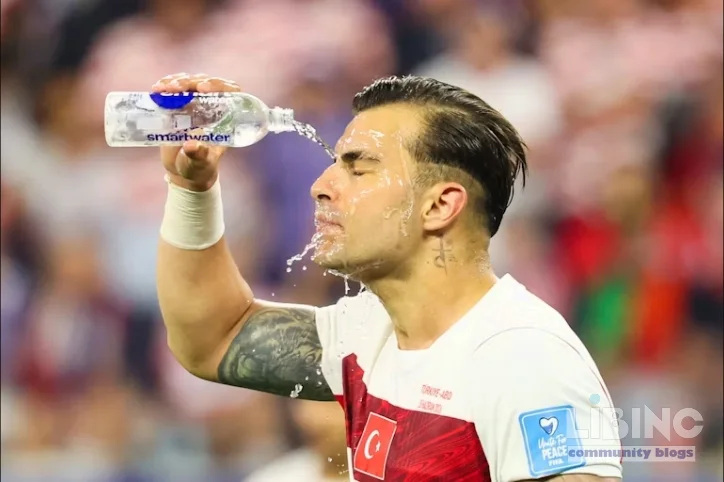
Hydration breaks and FIFA governance: how a safety measure reshapes the World Cup
Table of contents
- Analytics: Hydration breaks as a data point in a broader power dynamic
- Contrast: Debates about momentum, identity, and Americanisation
- Causes and effects: Revenue, access, and environmental realities
- Expert reconstruction: Reimagining governance in a global football era
Hydration breaks, introduced as a player welfare measure, have grown beyond strict physiology into a signal of how the World Cup is governed. This isn’t merely about calories and cramp prevention; it is about tempo, rhythm, and the boundary between sport and commercial spectacle. The breaks arrived with scientific backing but were standardized across 104 matches, scheduled to the minute, regardless of weather. The result is a phenomenon that fans, coaches, broadcasters, and governments watch with a mix of pragmatism and unease.
In practice, the hydration breaks sit at the intersection of safety, sponsorship, and state sovereignty. FIFA’s leadership argues the measure is purely sporting and that it does not generate direct revenue for the federation, since commercial terms were locked in before its adoption. Yet the broader ecosystem—broadcast rights, ticketing, travel, and environmental footprint—produces a web of incentives that shape how the World Cup is produced and consumed. This tension between safeguarding players and monetizing a global product lies at the heart of the ongoing debate about FIFA’s authority in the 21st century.
Analytics: Hydration breaks as a data point in a broader power dynamic
The hydration breaks illuminate a larger trend: the game’s safety protocols never operate in isolation. Scientific literature supports the baseline premise that heat stress can impair performance and increase injury risk, particularly in a tournament dragged across diverse climates and long-haul travel corridors. The World Cup’s 2026 edition inherits this physiological logic but treats it as a universal protocol, not a conditional tool. As a result, a safety measure becomes a structural feature of the event, with predictable timing and predictable leverage for sponsors and broadcast partners.
From a governance perspective, the question is not only whether players benefit, but who benefits when the break becomes a broadcast asset. The breaks create ad-ready moments—small pauses that can be repurposed as interstitial content or brand salience without changing the core game. The economic arithmetic behind this is subtle but potent: while FIFA may not monetize the breaks directly, the predictable cadence lowers uncertainty for advertisers and increases the perceived value of broadcast slots. This is an example of how player welfare policy can intersect with media economics in ways that extend beyond the pitch.
Analytically, the hydration breaks reveal a governance logic that prioritizes uniformity over local adaptation. The breaks occur in a 20°C evening or inside air-conditioned stadiums, erasing temperature as a variable across venues. The consequence is a homogenized rhythm across a continent-spanning tournament, which in turn reduces the game’s raw unpredictability and, arguably, its cultural texture. For scholars of sport governance, this move is not a minor adjustment; it is a deliberate calibration of how match-day experience, branding, and global attention intertwine.
Additionally, the hydration breaks expose the friction between individual welfare and collective spectacle. The reaction from coaches and pundits—ranging from Bielsa’s critique that hydration breaks “add nothing to the game” to Tuchel’s worry that they alter identity and momentum—illustrates a tipping point: the safety measure has become a standard, even when it may not align with every team’s tactical philosophy. The data suggest that momentum and pacing, long considered intrinsic to football, are now partly engineered by formal breaks. This invites a broader inquiry into whether safety protocols should be exception-based or become embedded norms across all FIFA-wide events.
Contrast: Debates about momentum, identity, and Americanisation
Public and professional commentary frames hydration breaks as a symbol of something larger: an Americanising tendency in football broadcasting. The Guardian’s reading that the breaks resemble ad breaks that push the game toward a four-quarter rhythm captures a broader narrative about the sport’s evolution in a media-saturated era. Critics see a phenomenon where football’s artisanal tempo—often celebrated for its ebbs and flows—trades some of its spontaneity for predictable advertising windows and fiscal predictability.
Yet the controversy runs deeper than tempo. The debate touches on who holds the most leverage over the game. In the opening days of the tournament, FIFA faced scrutiny over host-country access, immigration restrictions, and ticket pricing—areas where the federation’s authority seems less decisive than its control over the on-pitch product. The hydration breaks sit alongside these governance tensions as visible reminders that FIFA’s influence is increasingly selective: broad in the management of matches and media, limited in the regulation of borders, affordability, and climate governance. This selective authority is not accidental; it reflects a shift in who pays, who travels, and who bears risk in a global event with a footprint that extends far beyond the stadium walls.
The dynamic is further complicated by ticketing and price transparency. Dynamic, demand-led pricing powered by FIFA’s resale platform has produced eye-popping sticker prices for marquee games, including the final. While this revenue model benefits national federations and broadcasters, it also raises concerns about accessibility and fair opportunity for ordinary fans. The hydration breaks, in this sense, become a proxy for a broader debate about whether the World Cup is increasingly a premium global product, priced and packaged for a limited audience rather than a universal festival of football. The question is not merely cosmetic; it relates to the sport’s identity and its reach as a public good in a global market.
Travel and environmental considerations intensify the contrast. While reusing existing stadiums and optimizing schedules mitigates some impact, the tournament’s continental span guarantees substantial aviation emissions. The projection of CO2e in the millions highlights a tension between global aspiration and planetary responsibility. If FIFA’s authority is strong in shaping where games occur and how they are staged, it is comparatively weak in constraining the broader climate footprint—an asymmetry that compounds the perception of an organisation balancing multiple, sometimes competing, mandates. In that sense, hydration breaks become a case study in how governing bodies navigate commerce, culture, and climate in a single, highly visible event.
Causes and effects: Revenue, access, and environmental realities
The hydration breaks illustrate cause and effect in a system where sport, media, and markets intersect. The immediate cause is safety science validating a structured break; the effect is a measurable impact on match tempo and a new revenue-friendly rhythm for broadcast partners. The indirect causes lie in the broader economics of the World Cup: the desire to secure robust broadcasting deals, to stabilize ticket markets with transparent pricing, and to extend the tournament’s footprint into diverse geographies with travel and tourism benefits for host nations. Each effect reinforces a cycle in which FIFA is able to assert control over certain levers while constrained by geopolitical and market realities elsewhere.
FIFA’s framing of hydration breaks as non-commercial is technically accurate in terms of direct revenue. The marketing value, however, is embedded in the broadcast ecosystem where timing and exclusivity matter. The cited estimates—hundreds of millions of dollars in potential advertising value and multi-billion-dollar implications for global media rights—signal a strategic calculation: the more predictable the match cadence, the more attractive the product to buyers. This dynamic reinforces the idea that hydrations breaks, while modular in intent, are structural in consequence. The implication for governance is that FIFA’s revenue-centric strategies may increasingly shape the conditions under which the sport is consumed, even as the federation struggles with border controls, visa realities, and access-linked claims of fairness.
Environmental realities compound these dynamics. The preponderance of emissions from travel and the logistical complexity of a 48-team, 104-match tournament across three countries illustrate that the World Cup’s footprint is inherently scalable with sport’s global reach. Hydration breaks cannot fix the aviation chorus that accompanies such events, but they can be leveraged as part of a broader environmental strategy if linked to efficient scheduling, regional clustering, and optimization of fan travel itineraries. The broader policy question is whether FIFA should wield more influence over sustainability mandates or partner more closely with governments to co-create climate-conscious frameworks. The answer to that question will shape the long-term viability of a global game that remains inherently migratory and cosmopolitan.
Expert reconstruction: Reimagining governance in a global football era
Experts converge on a core insight: the world’s game now operates in a hybrid space where FIFA governs the match-day product with increasing precision while leaving border, affordability, and climate governance to states and markets. The hydration breaks symbolize a broader pattern in which FIFA is both assertive and selective—controlling the spectacle, but not the political and logistical conditions that make hosting and attending possible. If future tournaments are to harmonize safety, fairness, and inclusivity, the governance architecture must address four interlocking challenges.
- Targeted safety protocols tied to local conditions: Instead of universal breaks scheduled by the minute, consider adaptive breaks based on objective weather data and venue-specific risk assessments. This could preserve match rhythm while maintaining safety and improving perceived fairness across venues with different climates.
- Revenue with responsibility: Transparency about how broadcast timing creates value is essential. Separate, publishable metrics that link player welfare initiatives to audience engagement and fan access can help reconcile safety with affordability concerns and reinforce trust in the governance framework.
- Climate accountability for global events: A coordinated policy with host nations, international bodies, and carbon-offset mechanisms can reduce the World Cup’s environmental footprint while preserving the economic and social benefits of large-scale football.
- Governance boundaries and sovereignty: Clear delineations of FIFA’s authority over stadium operations, match-day product, and ticketing versus a more robust role for states in immigration, security, and transport policy will reduce reputational risk and misaligned incentives.
In practice, the 2030 World Cup’s multi-country, multi-continent hosting plan—and the 2034 edition’s assignment to a state with strong sovereign prerogatives—illustrate the limit of a centralized model. The next decade will likely see a re-synthesis: FIFA will continue to curate the product that audiences consume, while governments will increasingly shape the conditions under which fans, players, and teams can participate and experience the event. The hydration breaks, therefore, are less about one policy’s success or failure and more about a broader realignment of who can guarantee what, where, and at what cost. The result will be a World Cup that is both more global and more contingent on state capacity, market flexibility, and the environmental and social realities of a planet that travels with the game.
Ultimately the question is not whether FIFA governs the World Cup, but which parts of the tournament remain under its umbrella and which nodes of control are ceded to markets and states. Hydration breaks are a microcosm of that negotiation—a safety protocol that doubles as a market signal, a moment of audience engagement that doubles as a revenue cue, and a reminder that football’s authority is now distributed across a ecosystem that includes broadcasters, sponsors, host nations, and fans as much as the football association itself.
In this sense, the hydration breaks provoke a necessary reflection: the World Cup is evolving into a globally coordinated event that is also locally negotiated. If the sport’s governance aspires to balance safety, fairness, and accessibility with the realities of a commercial, climate-aware world, it must embrace a more nuanced architecture—one that respects player welfare while designing a product that remains meaningful, affordable, and sustainable for a diverse global audience.
Conclusion
Hydration breaks illuminate a broader trend in the governance of the World Cup: FIFA’s power is expansive where it touches the match-day product and global attention, but restrained where borders, ticketing, and climate governance require sovereign or market cooperation. The coming decade will reveal whether this selective authority can adapt to a world that seeks safety without sacrificing fairness or accessibility, and whether the sport can maintain its essence while embracing a more complex, multi-actor governance model.
Adaptive, data-driven breaks: a practical path forward
Even as hydration breaks support safety, a more precise approach can align welfare with venue conditions and game rhythm. A clear opportunity is to replace fixed-minute breaks with adaptive intervals that respond to weather, pitch conditions, and player load while preserving fairness and momentum. Implementing this requires a lightweight decision framework: trusted sensors provide real-time data; official thresholds trigger a break; the criteria are published in advance; and there is a transparent review process for exceptions. When communicated well, adaptive breaks can keep players safe, maintain competitive identity, and retain viewer trust by reducing perceived randomness.
To visualize how this could work in practice, consider a compact comparison that maps the two approaches side by side.
| Model | Trigger Basis | Tempo Impact | Data Needed | Governance |
|---|---|---|---|---|
| Universal minute-based | Fixed minutes (e.g., at 20 and 40) | Predictable; can disrupt flow | Weather data optional | Central authority |
| Adaptive weather-based | Real-time weather and core temperature thresholds | Contextual; aims to preserve rhythm | Temp sensors, HR data, weather | Publish criteria; review process |
Beyond the mechanics, the model shifts incentives. Fans experience fewer random interruptions; broadcasters gain steadier engagement; and teams can plan around transparent rules rather than ad-hoc pauses. A phased rollout—regional trials in warmer climates first, with predefined metrics for safety, pace, and access—offers a controlled path to scale.
Practical scenarios
- Scenario A: 28°C, high humidity; trigger at a lower core-temperature threshold to curb overheating without stalling play.
- Scenario B: 22°C indoor venue; break only if a defined heart-rate peak is reached, preserving cadence when players are cooler.
- Scenario C: Multi-match days in a city cluster; align breaks across games to maintain broadcast continuity while allowing localized adjustments.
Implementation essentials
- Publish criteria publicly and explain how data informs the decision.
- Ensure privacy and data protection for player-health metrics.
- Run pilots in non-tivot environments before full adoption.
- Monitor accessibility and broadcast value to balance safety with inclusivity.
Potential benefits
- Improved safety without eroding game rhythm.
- Greater transparency fostering trust among fans and clubs.
- Better alignment between welfare goals and commercial realities.
Implementation roadmap in four steps
- Governance alignment: define decision authority, publish criteria, and set an independent review process.
- Technical setup: deploy lightweight sensors and secure data pipelines; ensure referees have access to dashboards.
- Pilot programs: regional trials during warm-season events to test impact on tempo and fairness.
- Evaluation and scale: assess safety metrics, fan access, and engagement; adjust thresholds and expand gradually.
FAQ about hydration breaks and governance
What are hydration breaks and why were they introduced?
Hydration breaks are short pauses during a match designed to allow players to rehydrate and recover core temperature, implemented to reduce heat-related fatigue and injury risk in a high-velocity sport; they gained prominence as medical guidance highlighted the dangers of extreme heat and long-distance travel, and they are supported by team staff who emphasize player welfare while balancing broadcast and competition needs. These pauses are now widely discussed as part of how the World Cup is governed, not just how players train. This broader framing connects safety with pacing, branding, and accessibility considerations for a global audience.
From a practical view, the breaks help protect players in hot climates, enable teams to manage substitutions and tactical adjustments, and offer predictable moments for broadcasters. Yet they also raise questions about fairness, tempo, and the influence of commercial interests on the on-field product. The result is a governance conversation that blends medical evidence, tactical identity, and market mechanics.
How could adaptive hydration breaks work across venues with different climates?
Adaptive breaks use real-time weather data, stadium conditions, and player-load indicators to decide when to pause, rather than fixed times; the direct answer is that breaks occur when thresholds are met, which can vary by venue while preserving overall match integrity. This approach aims to equalize safety protections across deserts, coastlines, and air-conditioned arenas, ensuring that hotter venues don’t disrupt the game more than cooler ones. Practically, this requires transparent criteria, reliable sensors, and visible governance so fans understand why a break happens in one city but not another.
What are the governance implications of moving toward adaptive breaks?
Adaptive breaks shift some decision power from central organizers toward a framework that blends medical data, venue characteristics, and audience expectations; the direct effect is enhanced safety with potentially improved fairness, but it must be paired with clear rules and independent oversight to prevent perceived bias. The governance implications include publishing the criteria, ensuring privacy and data protection, and establishing a review mechanism for exceptions. In addition, broadcasters must align schedules with these rules to preserve sponsor value while maintaining accessibility for fans around the world.
How do hydration breaks affect broadcast revenue and viewer experience?
Hydration breaks influence revenue indirectly by smoothing broadcast cadence and reducing the risk of long, unplanned delays that frustrate viewers; they also provide predictable windows for interstitial content and sponsorship activation. The first sentence of this answer emphasizes that the breaks can stabilize engagement if implemented with transparency and consistent application. In practice, ad time is more effectively integrated when breaks occur at standardized logic across venues, improving viewer satisfaction and long-term audience retention.
What steps can FIFA and host nations take to balance safety and fairness?
A balanced approach combines a clear, published set of triggers with regional pilots, ongoing data monitoring, and a commitment to accessibility and climate accountability; the direct answer is to implement an evidence-based framework that respects player welfare while preserving competitive rhythm and fan access. This involves cross-border coordination with climate and transport policies, transparent reporting of outcomes, and engagement with players, clubs, and fans to build trust in the governance process. By integrating safety metrics with schedule transparency, the World Cup can better serve a broad, global audience.






Add a comment
To comment, you need to register and authorize
Comments