

The Early Dynastic Period of Egypt: Unification, State Formation, and the Dawn of Egyptian Civilization
Table of contents
Analytical view of the Early Dynastic Period of Egypt
The Early Dynastic Period of Egypt emerges from a hinterland of predynastic vitality, where communities solarized around the Nile's annual flood cycle and competed for resources. Analysis begins with the realization that unification was not a single triumph but a prolonged process of consolidation mediated by economic ties, religious legitimacy, and incremental political centralization. In this sense, the era tests the classical question: does a state form when rulers claim divine authority, or do rulers claim divine authority because a state has already formed? The evidence—statues, seals, and the earliest monumental structures—points to a state-building project that intertwined ritual legitimacy with administrative efficiency, enabling a durable centralized rule across Upper and Lower Egypt. The emergence of a codified royal ideology allowed the regime to coordinate labor, goods, and territory in ways that previous polities could not sustain, thereby explaining the rapid expansion of administrative and religious structures parallel to the growth of urban centers. The scale of ritual is not merely aesthetic; it is a political instrument that binds subjects to a single sovereign and a shared cosmology, which in turn stabilizes the interior frontiers of a nascent nation.
Key artifacts anchor this analytic frame. The Narmer Palette and related cemeteries illuminate how early rulers linked conquest with legitimate rule, even as other scholars argue that unification may have been more gradual than the palette implies. The palette's imagery—the king marrying symbols of unity to a dual-faceted realm—suggests a strategic synthesis of Upper and Lower Egypt under a single authority. Yet, as Marc Van de Mieroop notes, such artworks are as much monuments of achieved unity as records of its creation, and they may encode political mythology as much as historical sequence. The tension between symbolism and event becomes a central analytic hinge: if the visuals celebrate unity, do they prove a war-driven conquest, or do they memorialize a preexisting political amalgamation? The answer significantly shapes our understanding of early state formation and royal legitimation in the Early Dynastic Period of Egypt.
Administrative innovations appear rapidly alongside monumental architecture. The use of mastabas evolves into more elaborate tombs, while the development of calendrical awareness accompanies the early scribal system. Literacy enables bureaucratic control, not merely symbolic communication; it allows the consolidation of tax, labor, and tribute networks that sustain a centralized administration. The growth of urban thinking is not just a matter of city size but a redefinition of political space: cities become hubs where religious, economic, and ceremonial life converge under royal oversight. The period's religious vocabulary—ma'at as harmony and cosmic order—frames governance as a duty to sustain balance between the divine and human realms. In a land where the afterlife permeates daily life, the king's ability to secure stability becomes a tangible form of political power that extends beyond this world.
Why does unification matter beyond archaeology and ritual? Because it demonstrates that a centralized authority can harness economy, cultic legitimacy, and symbolic authority to produce durable institutions. The Early Dynastic Period thus functions as a laboratory for statecraft: it tests how leadership, temple economies, and ritual calendars coordinate society under a single sovereign. The outcomes—administrative protocols, city-building programs, and the earliest phase of monumental architecture—provide the seedbed from which the Old Kingdom will arise. The question is not merely when consolidation occurred, but how the political imagination of the ruler shaped a civilization’s long arc, embedding a sense of unity and continuity that would persist through the pyramids and beyond. The evidence suggests that the unification narrative—whether by Narmer, Menes, or a composite of leaders—emerged as much from political necessity as from ritual aspiration, forging a model of governance that would define ancient Egypt for centuries.
We must acknowledge a challenge common to early dynastic history: the lines between myth and record, kingship and dynasty, are not neatly drawn. The surviving material supports a strongly centralized authority by the end of the Early Dynastic Period, but it equally shows that this centripetal force depended on a complex web of local elites, religious institutions, and economic kinship. The cost of centralization—labor specialization, resource extraction, and political risk—was offset by the gains in stability and cultural production. The Early Dynastic Period thus reveals a paradox: unity arose through a combination of coercion, alliance, and ritual legitimacy that together created a durable state form, while the same sources encourage skepticism about single, linear narratives of unification. The result is a nuanced model of early state formation in which central power coalesces alongside regional identities rather than erasing them.
Contrasts and debates about unification
At the core of the Early Dynastic Period scholarship lies a tension between military narrative and ceremonial symbolism. The Narmer Palette offers a tableau of conquest that some scholars read as decisive proof of a forceful unification, while others argue it signifies a legitimating myth that postdates actual events. Douglas J. Brewer contends that Menes may be a title or a symbolic construct rather than a single historical figure, complicating the binary of conqueror vs compiler. The debate matters because it reframes the unification from a singular moment into a process of political memory construction, in which later actors recast early events to project a coherent lineage of kingship. If unification is a myth of unity rather than a documentary sequence, the focus shifts from a battle narrative to the social and political mechanics that maintained cohesion across multiple centers of power.
Early dynastic politics reveal another binary: centralized state formation versus urban autonomy. The rise of capital-like centers such as Hierakonpolis and Naqada presents a map of political competition in which the king must negotiate with regional powers to maintain a single realm. The case of Neithhotep—a figure whose tomb rivals royal burials and whose name appears on serakhs—suggests that elite authority in the period tolerated formidable, even informal, female influence within the dynastic succession. Whether Neithhotep ruled in her own right or as a co-regent, the evidence hints at a more nuanced power structure than monarchical absolutism implies. This complexity matters because it reframes early rulership as a negotiation among elites across a landscape of potential rivals, not a simple deposit of authority in a single line.
Peribsen’s alignment with Set and the Horus cult’s division between Upper and Lower Egypt illustrate another axis of contrast. Some scholars read Peribsen’s segregation of divine loyalties as political strategy to distance himself from Lower Egypt's Horus-centered legitimacy. Yet others insist that such religious reorientation reflects genuine devotional plurality within a state that already spans a diverse religious landscape. Either reading reveals how religion operated as a political instrument. The presence of Set-aligned rulership does not imply monotheism; rather, it demonstrates a plural religious ecosystem where sovereignty depended on balancing competing divine forces. This religious plurality complicates any simplistic narrative of a unified, homogenous early state and underscores the need to interpret royal ideology as a set of pragmatic tools for governance rather than a singular theological creed.
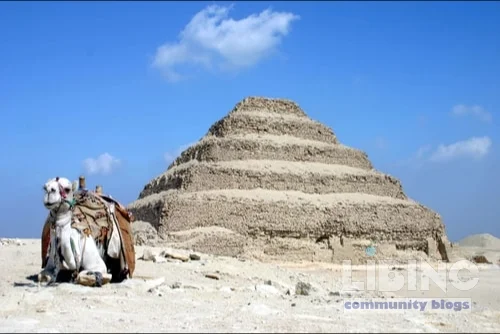
Third Dynasty–Fourth Dynasty transitions complicate the temporal logic of unification. The Third Dynasty’s placement at the boundary of the Early Dynastic Period and the Old Kingdom rests on recent scholarship that emphasizes cultural continuities with earlier phases. The architectural leap from mastaba tombs to the stepped pyramid under Djoser signals not a rupture but an intensification of royal monumentalism and state-sponsored construction. If the Third Dynasty is more akin to a late continuation than a break, then the Old Kingdom’s pyramid age inherits an already sophisticated administrative and religious framework. This contrast matters because it reframes early Egypt’s trajectory: rather than a linear ascent to Great Pyramids, it is a protracted conversion of ritual capital and architectural technology into a centralizing political economy.
Causes and consequences for state formation
Why did unification occur, and what did it yield? A central causal thread is resource security. Upper Egypt’s prosperity and the strategic need to control Lower Egypt’s grain surpluses created incentives for a centralized ruler to coordinate defense, irrigation, and trade. The growth of a shared ritual calendar and a codified hierarchy of offices translated economic concentration into political power. The interplay between economy, religion, and administration created a feedback loop: stabilization reduced risk, enabling more ambitious construction and greater control of labor, which in turn reinforced legitimacy. The result is a durable model of governance in which economic efficiency underwrites political stability, and religion sanctions the sovereign’s primacy in both worlds—the mortal and the cosmic.
The spread of writing and record-keeping accompanies this consolidation, enabling tax collection, tribute flows, and legal norms that standardize practice across vast territories. The earliest writing system in the Nile valley emerges not as a mere emblem of literacy but as a tool for state control, enabling the bureaucracy to map resources, assign labor, and project power across a riverine landscape. The emergence of a calendar is not incidental; it underpins both agricultural cycles and ritual calendars essential to ma'at, the cosmic order. The resulting administrative uniformity helps explain why later pharaonic rule could extend its reach over far-flung communities, even as local elites retained a degree of autonomy within a centralized framework. The confluence of writing, calendars, and centralized governance marks a decisive mechanism by which the Early Dynastic Period lays the groundwork for the Old Kingdom’s administrative sophistication.
The social consequences of centralization are equally instructive. As the state solidified, certain urban centers achieved preeminence, while others adapted to new roles within a unified economy. The proliferation of tomb architecture—mastabas, later formal burials, and monumental cores—reflects a society that uses burial and memorial practices to negotiate collective memory and political legitimacy. The religious imagination—ma'at as harmony and divine order—provided the cultural grammar that justified the state’s reach while guiding ethical norms for ruler and subject alike. This synthesis of economic, administrative, and religious forces yields a portrait of Early Dynastic Egypt not simply as a political achievement but as a social organism—one in which unity requires continuous negotiation between central authority and regional plurality.
Expert reconstruction of Narmer, Menes, and aftermath
Scholars grapple with whether Menes and Narmer denote a single individual or a composite figure. Flinders Petrie and his successors argued for a fusion of the names into one ruler, positing that Narmer and Menes describe the same person who achieved unification through military campaigns and political leadership. Other researchers, including Douglas J. Brewer, propose that Menes represents a title or an idealized archetype—an interpretive convention that preserves the unification narrative without pinning it to a single biography. Where the evidence is ambiguous, the most robust reconstruction treats the names as a generative myth that supports a coherent story of unity, rather than as an exact ledger of events. This approach preserves the methodological caution essential to early dynastic history while acknowledging the cultural logic that later Egyptians used to explain their origins.
Narmer’s potential identity as the founder of a unified realm hinges on a constellation of corroborating signs: the location of his tombs, the political marriages like the alliance with Neithhotep of Naqada, and the geographic sweep of his campaigns into Lower Egypt and into neighboring regions such as Canaan and Nubia. When Hor-Aha—possibly Narmer’s successor—continues the expansion and religious emphasis on burial practices, we see a continuity that supports a plausible trajectory of state expansion rather than a one-off military conquest. The sequence of First Dynasty rulers—Djer, Djet, Merneith, Den—further reinforces that dynastic legitimacy did not hinge on a single, irrefutable act of unification but on a sustained pattern of building, governance, and religious veneration that bound the realm together. The emergence of Den as a king wearing both Upper and Lower crowns epitomizes a long arc of centralized legitimacy rather than a solitary event.
Peribsen’s era, in which Set and Horus cults appear in dialog, highlights the plurality of divine sanction for kings. If Peribsen represents a political realignment rather than a theological break, this case demonstrates that political unity rested on multiple religious legitimations that could coexist under a single regime. The consolidation under Khasekhemwy—often read as the consolidator who reasserted unity across the two lands—provides a potential hinge between the dynastic consolidation and the durable cultural framework that would empower the Old Kingdom. Djoser’s Step Pyramid, designed by Imhotep, embodies this synthesis: a monumentality that blends tomb symbolism with architectural innovation, signaling a state capacity to mobilize labor and material on a scale that foreshadows later pyramid-building. In short, expert reconstructions converge on a picture of the Early Dynastic Period as a phase of intensifying state capacity, where unity arises from a mix of military demonstration, dynastic legitimacy, and monumental religious architecture, rather than from a single, undisputed founder.
The contemporary scholarly landscape thus favors a nuanced, multi-causal account of the Early Dynastic Period of Egypt. Narmer or Menes, whatever the precise identity, anchored a system whose legitimacy rested not on coercive force alone but on a sophisticated interplay of economy, ritual, and administration. The unification narrative becomes a durable frame for understanding how ancient Egypt built a centralized state capable of sustaining a high degree of cultural sophistication, including the development of writing, monumental tombs, and a religious ideology that would shape Egyptian life for centuries. This expert reconstruction emphasizes methodological humility: we must read the artifacts—the Narmer Palette, tombs, temple reliefs—against the broader social processes they illuminate, rather than as literal chronicles of singular events. In doing so, we gain a richer, more reliable portrait of the Early Dynastic Period of Egypt as a crucible in which unity, culture, and governance coalesced into a civilization that would endure into antiquity.
The most critical gap in the current narrative is a concrete, testable sequence showing how distinct communities along the Nile coalesced into a centralized Early Dynastic Egypt. A stage-based model integrates three mechanisms—economic integration (irrigation control, grain flows, labor pooling), ritual legitimation (ma'at and royal cults that tie divine sanction to daily governance), and administrative standardization (scribal literacy, calendrical systems)—to explain state formation in a manageable, evidence-grounded timeline. This lens reconciles the Narmer Palette with gradual consolidation and emphasizes how governance, economy, and religion jointly produced durable central authority across Upper and Lower Egypt, while acknowledging regional nuance. Stage 1 centers on local consolidation in major nodes; Stage 2 formalizes offices and tax networks; Stage 3 widens the realm through territorial ties; Stage 4 cements centralized governance with temple economies coordinating production and redistribution. The Narmer Palette, rather than signaling a single battlefield triumph, aligns with a political mythology that validates a staged unification through shared symbols, writing, and ritual calendars. This approach yields testable expectations: cross-site record-keeping, a unified royal iconography across Upper and Lower Egypt, and durable institutions beyond any one campaign. Key signals of integration Writing networks map taxes, tribute, and labor; calendar rituals synchronize regional economies; and monumental projects allocate labor into a common political enterprise. In this framing, Narmer (or a composite founder) embodies a strategic phase where unity is celebrated and sustained through infrastructure, writing, and a shared religious program. This stage-based model makes explicit the mechanisms behind a durable Early Dynastic Egypt, blending practical governance with sacred legitimacy. During the Early Dynastic Period, centralized royal authority emerges and stabilizes governance across Nile communities, roughly spanning the late 4th to early 3rd millennium BCE, with evidence from elite burials, temple economies, and the earliest scripts; this phase establishes a shared calendar, standardized administration, and a ritual framework in which ma'at legitimizes the ruler while local elites maintain regional networks, creating a durable foundation for state formation and a centralized economy across Upper and Lower Egypt. Analytically, this phase reflects a sophisticated shift: governance aligns economic control with sacred authority, yielding an enduring political economy that supports urban development and monumental building alongside regional autonomy. In practice, the unification narrative appears as a composite of campaigns, marriages, and shared cults rather than a solitary conquest; the Narmer Palette is best read as a legitimizing symbol that coexists with gradual consolidation and long-term state formation across multiple centers. Analyses suggest a blend of military, diplomatic, and ritual strategies that established a durable polity rather than a single defining battle, allowing integration to unfold over generations and across political networks. Writing emerged as a practical tool for mapping resources, recording labor, and coordinating taxation and tribute; calendrical systems synchronized agricultural and religious activities, creating a standardized administrative rhythm that underpinned centralized rule and facilitated large-scale labor mobilization. Analytically, literacy enabled governance to scale beyond kin-based networks and allowed the state to project power across the Nile valley through bureaucratic and temple economies. The Narmer Palette blends conqueror imagery with symbols of ceremonial unity, signaling that legitimacy relied on a fusion of military prowess and ritual authority; its value lies less in a literal sequence of battles and more in its public instruction about the ruler's divine mandate and territorial span. Religion provided a public grammar for sovereignty, channeling daily state functions through ma'at and temple economies; divine sanction reinforced centralized control while accommodating regional cults and plural religious expressions within a single political framework. Scholars debate whether unification was primarily military or ideological; some emphasize symbolic continuity across sites, while others stress institutional growth and administrative standardization as the engine of unity; current consensus favors a multi-causal process that blends coercion, alliance, and ritual legitimacy to produce durable state formation.Center Region Key Role Approx. Period Hierakonpolis (Nekhen) Upper Egypt Political heart of early consolidation ca. 3600–3200 BCE Naqada Upper Egypt Elite power center; ritual hub ca. 3400–3200 BCE Abydos Upper Egypt Religious authority; cult sites ca. 3200 BCE Memphis Lower Egypt Administrative bridgehead for unification ca. 3200–3100 BCE Stage-by-stage timeline of unification
What marks the beginning of the Early Dynastic Period in Egypt?
Did Narmer unify Egypt in a single act or through gradual steps?
How did writing contribute to state formation in this era?
What does the Narmer Palette reveal about political legitimacy?
What role did religion play in Early Dynastic governance?
What are the main debates about unification in this period?





Add a comment
To comment, you need to register and authorize
Comments