

Table of Contents
Elijah the Prophet stands at the hinge between royal tyranny and prophetic fidelity. His life in the Old Testament unfolds as a test case for whether a nation under Ahab’s rule can return to the God of Israel. The events—drought, miracle, and ascent—are not mere wonders; they map the dynamics of faith under political pressure. This article dissects the narrative, cross-references traditional sources, and shows how Elijah’s zeal exposes the frailties of kingship and the demands of covenant faithfulness.
From the outset, Elijah’s name means "the Lord is my God," and his career demonstrates how Old Testament prophets challenge kings, confront Jezebel, and test the Covenant. His ascent into a fiery chariot, the Mount Carmel confrontation, and the Sarepta miracle anchor a narrative that Orthodox readers treat as prophecy-in-action and eschatological rehearsal.
Analytical Perspective: Elijah’s Zeal, Method, and the Covenant Challenge
Elijah acts at the hinge of political-religious crisis; his method blends public summons and private prayer. He places the crisis of drought as a pedagogical instrument designed to awaken a nation asleep to the Covenant. The prophetic message remains concise: fidelity to the God of Israel stands or falls with obedience to the Covenant, not with royal appetite for idols.
In this portrait, the name of the Lord becomes a torch that exposes the moral fault lines of kingship. The Old Testament prophets frame governance as stewardship, where the ruler's legitimacy rests on fidelity to the Covenant. Elijah's confrontation with Ahab demonstrates that prophetic authority derives from heaven, not from court favor, and that prayer acts as a coercive force against divine abandonment. Ecclesiasticus 48:1 frames his words as illumination amid political darkness.
The drought is not merely punitive; it functions as a diagnostic tool revealing the social and religious matrix of the kingdom. When famine tightens the land, worship of idols becomes a spatial problem—temples cannot supply rain, fields fail, and the people must decide whom they will serve. The prophet’s narrative thus pairs theological indictment with strategic public action to recalibrate national allegiance toward the Covenant.
The Horeb encounter later in the story reinforces this pattern: God does not announce power through spectacular phenomena alone but through discernment and fidelity. Elijah learns that prophetic efficacy rests not on loud rhetoric but on alignment with divine will. The contrast between fiery demonstrations and the still, small voice becomes a template for understanding prophetic authority in a world where political power often masquerades as spiritual leadership.
Contrasts: Elijah versus the Baal Prophets in a Tyrannical Context
The Carmel confrontation crystallizes a central contrast: the Yahweh of Israel versus the Baal cult. Elijah’s challenge to the prophets of Baal serves as a public test of divine legitimacy, with the audience comprising the people of Israel who have teetered between fidelity and assimilation. The miracle—fire from heaven consuming the sacrificial offering, the wood, and even the soaked trench—operates as a divinely authorized demonstration of authority that no idol can replicate.
The relationship between Elijah and the ruling regime underscores a critical dynamic: prophetic integrity often requires subverting political convenience. Jezebel’s support for Baal worship and Ahab’s capitulation reveal how religious reform becomes dangerous resistance within the state. Elijah’s response is not merely spiritual admonition; it is a political intervention aimed at reconstituting Israel’s allegiance to the Covenant. This tension illuminates how prophets function as counter-narratives to state-sanctioned religion and how holy zeal translates into public policy pressure.
In the aftermath of Carmel, the narrative pivots toward restorative judgment: the prophets of Baal are executed, the drought ends, and rain returns. Yet the text preserves a counterpoint—the danger Jezebel poses—foregrounding the fragility of reform under a hostile court. Elijah’s flight to the wilderness is not a retreat from duty; it is the necessary phase of spiritual discernment required to sustain reform in the face of mortal threat. The contrast thus clarifies that true prophecy persists beyond sensational acts and remains tethered to ongoing fidelity to the Covenant.
Elisha’s later emergence and Elijah’s ascent symbolize succession rather than replacement. The transmission of prophetic authority through a mantle underscores continuity in the prophetic vocation, while the theological logic remains rooted in the Covenant’s demands. The juxtaposition of Elijah’s fire-borne miracles with his quiet withdrawal in the Horeb encounter emphasizes that divine presence outlasts political cycles and that fidelity to the One God endures beyond a single earthly reign.
Cause and Effect: Drought, Miracles, and National Turn
The chain of causation in Elijah’s career links divine prerogative, prophetic speech, and political consequence. The drought begins as a direct result of Israel’s infidelity and becomes a catalyst for reclaiming worship of the God of Israel. The famine drives the nation to earnest self-scrutiny and lays bare the failure of the royal house to uphold the Covenant. In this sense, drought serves as both judgment and pedagogy, compelling repentance and reform.
Midway through the famine, the prophet’s encounter with the Sidonian widow at Sarepta introduces a secondary cause: hospitality to the prophetic messenger becomes the conduit for a dramatic miracle. Flour and oil remain inexhaustible, a sign that divine provision accompanies faithful obedience—even to a Gentile widow. This interlude broadens Israel’s self-understanding, extending mercy beyond narrow tribal boundaries and modeling inclusion within the Covenant’s logic.
The miraculous restoration of the widow’s son reinforces the causal chain: faithfulness to God yields life where death seems inevitable. Elijah’s prayer functions as a causal mechanism that reopens the channels of divine blessing, illustrating prayer as a legitimate instrument of justice in the prophetic economy. The subsequent restoration and the public demonstration on Mount Carmel further intensify the national turning, shifting collective allegiance away from idols toward the God who answers with fire and rain.
The climactic rainfall is not a mere weather event; it marks a political and spiritual correction. Ahab’s repentance appears to follow visible divine action rather than mere rhetorical contrition. Yet Jezebel’s threat persists, reminding readers that spiritual realignment is fragile and requires ongoing vigilance. The drought’s end thus embodies a complex causal web: divine mercy, prophetic agency, and royal resistance continue to contest the national timetable for repentance and renewal.
When Elijah later flees into the wilderness and encounters the still, small voice, the narrative reveals a deeper cause-effect dynamic: genuine power rests in obedience and humility, not in spectacular displays. The Lord’s assurance that there are seven thousand faithful who have not worshipped Baal reframes national viability as a matter of covenant fidelity rather than political survival. The causal architecture then extends to Elijah’s commissioning of Elisha, ensuring continuity of prophetic witness across generations and transforming personal victory into communal restoration.
Expert Reconstruction: The Eschatological Forerunner and Iconography
From the Church’s patristic and liturgical memory, Elijah acquires a distinctive eschatological role. Orthodox tradition identifies him as the Forerunner of the Dread Second Coming of Christ, signaling that prophetic zeal will reprise itself in a final call to repentance before the world’s culmination. This expectation grounds a durable arc in which Elijah will testify to the truth of Christ, urge universal repentance, and be martyred by the Antichrist before the end of the age. The narrative thus serves as a template for a climactic confrontation between true worship and the consummate apostasy that characterizes eschatological judgment.
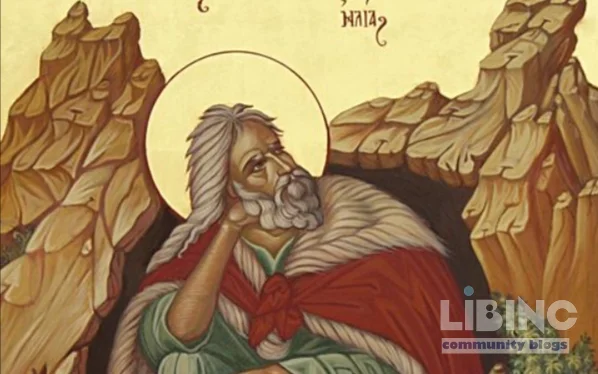
The Transfiguration story—where Elijah appears alongside Moses and converses with Jesus—anchors the textual memory of Elijah in the core Christological event. The appearance on Mount Tabor refracts the Elijah narrative through the New Testament, underscoring continuity between prophetic witness and Christian revelation. Orthodox iconography preserves and interprets Elijah’s ascent to heaven in a fiery chariot as a symbol of divine deliverance and the power of faith to transcend mortal limits. The mantle that passes to Elisha embodies a transfer of prophetic authority, a motif that lends itself to broader reflections on spiritual inheritance and the responsibility of successors to sustain fidelity to the Covenant.
Historically, the Elijah tradition appears in many local cultivations of Christian memory. The Kiev church dedicated to the Prophet Elijah and Saint Olga’s commissioning of a temple in Vibuta evidence how Eastern Christian communities anchored their identity in his memory. Iconographic programs routinely depict Elijah as a fiery ascent, surrounded by flame and equestrian symbolism, conveying a vivid visual theology of purification, zeal, and divine companionship in the pathway to salvation. The Elijah tradition thus functions as a bridge between ancient biblical narrative and contemporary doctrinal reflection, with its imagery continually reinterpreted to speak to faith communities across time.
Analytically, the Elijah story offers a robust test case for how religious memory operates in historical consciousness. The tension between zeal for God and mercy toward enemies, between public demonstration and personal retreat, remains a persistent pattern for theologians and historians alike. The foreshadowed Forerunner role provides a lens through which to examine how religious narratives mobilize ethical demands in times of crisis, how prophetic voices shape political culture, and how communities translate sacred memory into communal action and liturgical life.
In sum, Elijah’s trajectory—from solitary ascetic to public fire-bringer, from drought-struck exile to heavenly ascent—maps a comprehensive theology of prophetic vocation. The life of Elijah, as preserved in 3 Kings and the Deuterocanonical additions, offers a coherent, multidimensional portrait of zeal, mercy, judgment, and eschatological longing that informs both biblical interpretation and Christian devotion. The figure remains an indispensable reference point for understanding how faith confronts power, interprets crisis, and invites a faithful return to the Covenant anchored in the worship of the one God.
As a closing reflection, Elijah’s legacy rests not in a single act but in a sustained call for repentance, a pattern repeated in the Church’s memory as a model for both private devotion and public reform. The enduring relevance lies in the uneasy but necessary balance between prophetic severity and merciful fidelity—a balance that continues to shape Orthodox hermeneutics and Christian ethics in every era.
Conclusion-like reflection: Elijah’s career illustrates how prophetic courage translates into social transformation when aligned with divine will. The narrative’s longevity rests on its insistence that true power appears where human weakness yields to divine purpose, and that the Covenant remains Israel’s true political and spiritual law, shaping lives long after the flames have passed and the rain has fallen.
Closing the gap: Practical leadership patterns from Elijah
Readers seeking concrete pathways need a bridge from the biblical drama to modern practice. The most critical gap in the narrative is translating prophetic action into everyday leadership under pressure—how to balance bold accountability with mercy, how to mobilize communities without surrendering covenant fidelity, and how to respond to political risk with wise discernment. The following section offers evidence-based patterns and scenarios that map Elijah’s covenant language onto today’s decision contexts—policy debates, crisis response, and interfaith engagement—so readers can apply zeal with humility in real settings.
| Phase | Key Event | Divine Response | Impact on Community | Source |
|---|---|---|---|---|
| Drought | Elijah confronts infidelity | Divine cessation of rain | Public reform pressure | 1 Kings |
| Carmel | Fire from heaven | Idol worship exposed as hollow | Renewed allegiance to Yahweh | 1 Kings |
| Sarepta | Miracle for a Gentile widow | Provision beyond Israel | Expanded covenant outreach | 1 Kings |
| Elijah’s Prayer | Son restored | Life where death looms | Hope and trust revived | 1 Kings |
Practical scenario examples include: (a) crisis leadership in a drought-like policy failure, where a community chooses fasting and reform without capitulating to fear; (b) interfaith collaboration that mirrors Sarepta’s mercy, translating mentorship and aid across boundary lines; (c) a reform-minded council facing hostile opinion, balancing prophetic warning with mercy to opponents. These patterns help convert zeal into disciplined, covenantal action, with measurable steps like public accountability, transparent messaging, and inclusive outreach.
There are about 7,000 faithful who have not bowed to Baal, illustrating that true reform rests on enduring loyalty to the Covenant rather than popularity in power.
To sustain reform beyond dramatic moments, leaders can adopt a threefold practice: (1) align decisions with the Covenant’s core duties—justice, mercy, and faithfulness; (2) couple bold critique with ongoing mercy toward opponents; (3) nurture succession by mentoring future leaders who carry the same prophetic integrity into new contexts. A final element is cultivating ritual memory that reinforces these practices through liturgy, study, and communal accountability.
| Phase | Event | Lesson |
|---|---|---|
| 1 | Drought Declares Infidelity | Accountability precedes renewal |
| 2 | Carmel Showdown | Divine authority over idols |
| 3 | Sarepta Miracle | Mercy expands the Covenant reach |
| 4 | Elijah’s Flight & Horeb | Listening before action |
| 5 | Elisha’s Mantle | Continued prophetic witness |
| 6 | Rain Returns | Reform gains political and spiritual momentum |
What does the drought symbolize in Elijah's story, and how can leaders apply this today?
In plain terms, the drought signals a spiritual and ethical rupture that requires repentance and policy recalibration before lasting renewal is possible. It exposes both the nation and its leadership to a test of allegiance to the Covenant. For leaders today, the drought metaphor translates into concrete actions: diagnose policy failures honestly, halt harmful practices, mobilize the community for reform, and publicly model accountability. By treating hardship as a diagnostic tool rather than a punishment, communities can reorient toward enduring values and practical resilience.
Analytically, drought becomes a catalyst for recalibrating priorities, aligning action with shared commitments, and building trust through transparent decisions. It also demonstrates how prophetic voices function best when paired with inclusive process and mercy toward dissenters, shaping a healthier civic culture.
How does Sarepta’s miracle widen covenant inclusion, and what does this mean for interfaith work?
The Sarpta miracle shows divine care extending beyond the inner circle of Israel to Gentile neighbors, teaching that hospitality and mercy can redefine belonging within the Covenant. For contemporary interfaith work, this implies concrete steps: engage across boundaries, share resources in mutual trust, and build partnerships rooted in common human goods rather than exclusive identities. It is a reminder that leadership must model generosity and honor for those outside one’s own circle.
Analytically, inclusion strengthens social cohesion and expands ethical responsibility, encouraging communities to welcome outsiders without compromising core commitments to justice and truth.
What is the Forerunner eschatology, and how does it influence liturgy and iconography?
The Forerunner motif frames Elijah as a template for ultimate repentance before the end of the age, shaping liturgical memory and iconographic programs. In practice, churches might reflect this by annual remembrance cycles that emphasize repentance, mission, and readiness. Iconography can depict Elijah’s fiery ascent alongside themes of mercy, preparation, and steadfast faith, guiding believers toward hopeful anticipation rather than fear.
Analytically, this eschatological lens connects Old Testament fidelity with New Testament revelation, reinforcing a continuity that strengthens theological reflection and communal identity.
How does Elijah's ascent and Elisha's mantle illustrate leadership succession?
Elijah’s ascent and the transfer of prophetic authority to Elisha model a healthy leadership pipeline: mentorship, continuity, and resilience across generations. In modern contexts, organizations can emulate this by formal mentoring, documented knowledge transfer, and clear succession plans that preserve core values while inviting fresh perspectives. It highlights that leadership enduringly rests on the people who carry forward the mission rather than on single individuals.
Analytically, succession becomes a practical mechanism for stability and reform, ensuring that essential commitments survive political cycles.
What practical steps can a modern faith community take to reflect Elijah's fidelity under political pressure?
First, articulate a covenant-based mission statement that ties public action to core values like justice, mercy, and fidelity. Second, practice transparent decision-making with regular accountability checks, including dissenters’ voices. Third, cultivate a culture of prayer and discernment that emphasizes listening for the still, small voice amid noise. Fourth, implement a planned leadership pipeline to sustain the movement beyond any one leader.
Analytically, these steps foster resilience, trust, and sustainable reform, aligning spiritual conviction with civic responsibility.
How can communities apply Elijah’s pattern to modern moral crises without resorting to zealotry?
Apply Elijah’s pattern by balancing bold exhortation with mercy, ensuring critiques focus on behaviors and systems rather than personal attack. Pair prophetic calls with constructive reforms, encourage inclusive dialogue, and measure impact through clear metrics—participation in reform, reductions in corruption, and improved community well-being. This approach preserves moral intensity without suiting zeal to fear or violence.
Analytically, restraint plus courage yields durable reform anchored in the Covenant rather than in momentary power dynamics.
What practical steps can a modern faith community take to reflect Elijah's fidelity under political pressure?
Direct, practical steps include establishing a covenant-based mission, instituting transparent governance, fostering interfaith collaborations, and creating a mentorship path for future leaders. Each step builds trust and ensures continuity of purpose even when political climates shift.
Analytically, fidelity to a shared covenant sustains communities through cycles of crisis and renewal, turning zeal into lasting social impact.





Add a comment
To comment, you need to register and authorize
Comments
This reading prompts several lines of discussion. First, if prophetic authority derives from heaven rather than court favor, what are the ethical implications for how communities evaluate political leadership when it uses religious language to legitimize oppression or indifference toward the vulnerable? Second, the narrative links drought to moral fault lines; rather than a simple punishment, the crisis exposes infrastructural and ethical failures—how does this model translate into modern civic imagination where faith communities confront environmental crisis, inequality, or political intimidation? Third, the article notes the tension between dramatic demonstration and the inner stillness of the divine voice. In contemporary practice, how should faith communities distribute attention between visible acts of reform and the cultivation of listening, discernment, and patience? Fourth, the Sarepta episode widens the covenant horizon to include Gentiles, which invites reflection on the scope of mercy and the ethics of access to blessing. What does hospitality to the prophetic messenger look like in pluralistic or polarized societies, and how can communities avoid the complacency of ritual purity while remaining faithful to their deepest commitments?
Finally, the eschatological reading treats Elijah as a model whose zeal points toward ultimate renewal rather than a mere historical rerun. This invites a dialogue about how memory functions in shaping public life. If the mantle passing from Elijah to Elisha symbolizes a continuity of vocation, what responsibilities accompany succession in leadership, especially when it involves reforming institutions that resist change? How does the article’s synthetic approach—combining textual analysis, patristic memory, and iconographic imagination—offer a resource for educators, clergy, or civic actors who wish to translate biblical insights into contemporary ethics without collapsing them into political ideology? The discussion could benefit from exploring concrete case studies, such as moments when a community faces collective repentance in the face of political pressure, or when prophetic voices are marginalized yet endure. In short, Elijah’s hinge remains a call to fidelity that refuses to collapse into either reckless zeal or quietism, urging readers to weigh courage, mercy, and covenant fidelity in equal measure.