

Environmental restoration as Iran's long-term growth engine: turning a water crisis into a development dividend
Table of Contents
- Analytics: Environmental restoration as a long-term growth engine
- Contrast: The alternative paths for capital and power
- Cause and effect: How ecological decline translates into economic risk
- Expert reconstruction: A blueprint for action
Decades of prioritizing regional influence and military expansion have left Iran with a mounting natural-resource debt. Health burdens linked to air pollution, groundwater depletion, and dust storms add to the fiscal strain and erode productivity. A peace deal with the United States could unfreeze billions and shift the debate from immediate security concerns to strategic investments. The question is not whether to spend, but how to allocate scarce capital so that it creates lasting growth rather than cyclical vulnerability. This article tests whether environmental restoration can become a central growth engine, how it interacts with health and agriculture, and what a credible program would require. Four analytical prisms guide the argument: analytics, contrast, cause and effect, and expert reconstruction.
Analytics: Environmental restoration as a long-term growth engine
The core problem is the erosion of natural capital that underpins the economy. Environmental degradation is not a stand-alone nuisance; it transfers risk across sectors, inflates costs, and narrows growth options. The World Health Organization has highlighted a stark baseline: about 11% of deaths and roughly half of the disease burden in Iran are attributable to environmental risk factors. That is not just a health statistic; it is a cap on national productivity and a drain on public resources. When natural systems falter, farms fail, roads crack, and city life grows more fragile. The consequence is a low-growth equilibrium in which the state must continuously spend to repair avoidable damages rather than invest in durable, productive assets.
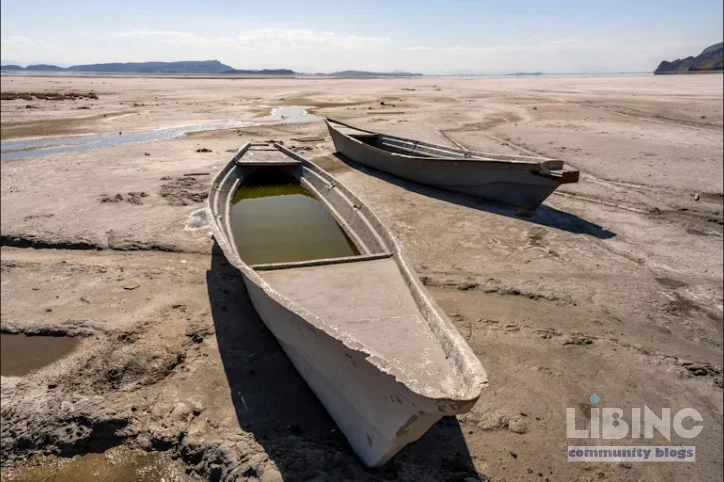
Progress depends on reframing environmental restoration as a strategic asset rather than a sunk cost. Water security becomes a macroeconomic constraint: irrigated agriculture, industrial cooling, and urban supply all depend on stable groundwater and reliable surface waters. In Iran, excessive groundwater extraction has precipitated land subsidence and damaged infrastructure, while Lake Urmia’s collapse has produced dust plumes that travel across borders in hours. Reversing these trends improves efficiency in energy and food systems, raises agricultural yields where they remain viable, and reduces health costs that suppress labor force participation. The payoff is not only resilience but the potential for higher-value activities—manufacturing, technology, and services that rely on a more predictable hydrological baseline.
Two policy levers link restoration to growth. First, legal caps on groundwater abstraction paired with a reformed pricing regime can align user incentives with scarcity realities. Second, a broad-based shift toward water-efficient practices—modern irrigation networks, wastewater recycling, and reuse—creates predictable streams of water for farming and industry. The global experience with similar transitions shows that investments yielding persistent ecosystem services—soil stabilization, flood control, and air and water purification—generate durable returns via lower health costs and steadier production. This is the essence of turning environmental restoration into an engine of macroeconomic stability, not a one-off expenditure.
To summarize, environmental restoration is a catalyst for a broader transformation. It lowers the probability of disruptive shocks, improves the reliability of key industries, and expands the space for high-skill employment. The challenge lies in aligning fiscal space with execution capacity and ensuring that gains translate into widespread social and regional benefits. This is not a pure environmental project; it is a growth program structured around risk reduction, productivity gains, and the expansion of high-value economic activities in a climate-stressed economy. The next section contrasts this path with alternative allocations of capital and power.
Contrast: The alternative paths for capital and power
Iran sits at a crossroads where the same windfall that could repair ecological damage also tempts competing uses. The status quo prioritizes security-oriented spending and short-run fixes to visible vulnerabilities. While this approach may address immediate geopolitical concerns, it risks deepening the long-term economic and health costs that environmental degradation imposes. A different path—one that foregrounds environmental restoration—reframes the peace dividend as a reform and resilience package rather than a transfer of resources to nonproductive lines.
Two alternative trajectories illustrate the stakes. In the first, capital returns to reconstruction of damaged factories and roads only at the surface level, without aligning infrastructure with water and energy efficiency. In that scenario, gains are ephemeral: roads and plants improve capacity briefly but environmental stressors reassert themselves, reducing the durability of any improvement. In the second trajectory, the same capital is channeled into a holistic environmental restoration program that integrates water systems, wetlands, forests, and urban resilience. The result is a self-reinforcing cycle: better water security and air quality reduce health costs and productivity losses, enabling higher returns from industrial upgrading and technology deployment. The contrast is not between “green” and “gray” investments; it is between a narrow, episodic improvement and a strategic, integrated transformation.
- Short-term security spending tends to produce limited, localized gains with uncertain spillovers into growth trajectories.
- Integrated restoration aligns health, agricultural productivity, and urban resilience with longer-term industrial upgrading.
- Public acceptance and social equity hinge on transparent governance, with local communities sharing in job creation and health benefits.
The political economy question remains: will policymakers prioritize the long-term payoff of environmental restoration over the visible but limited fixes of the status quo? The answer hinges on credible financing, accountable institutions, and a governance framework that links spending to measurable restoration outcomes and social benefits. The next section dissects the cause-and-effect logic that makes restoration not just desirable but necessary for durable growth and social welfare.
Cause and effect: How ecological decline translates into economic risk
Environmental degradation propagates through multiple channels that erode growth potential. Groundwater depletion reduces available irrigation water, lowering crop yields and prompting shifts to less water-intensive crops or migration away from rural areas. In many regions, land subsidence from overextraction compounds the deterioration of infrastructure, including pipelines, urban drainage, and transportation networks. These physical damages increase maintenance costs, disrupt supply chains, and raise the price of food and energy. The economic effects extend beyond agriculture: dust storms degrade air quality, drive respiratory and cardiovascular diseases, and reduce labor productivity as workers miss days due to illness or attend to affected family members.
Reversing these dynamics requires an integrated plan that links natural capital restoration to economic and health outcomes. Restoring wetlands and forests stabilizes hydrological cycles, buffers against droughts, and lowers dust emission—an ecosystem-services bundle with explicit economic value. Modern irrigation and wastewater reuse reduce dependence on freshwater withdrawals, enabling more reliable farming and industry. Elevating environmental restoration to a national growth strategy also changes the risk profile of the economy. With better water security, the state reduces exposure to commodity-price shocks in food and energy, stabilizing macroeconomic indicators such as inflation and balance of payments. In other words, the causal chain from environmental restoration to growth runs through health improvements, agricultural resilience, and the stabilization of production costs across sectors.
- Groundwater caps and pricing reform align user behavior with scarcity, lowering depletion rates.
- Wetland and forest restoration improves climate resilience and reduces dust generation.
- Wastewater reuse closes the water loop, boosting irrigation reliability and industrial cooling capacity.
- Health improvements translate into higher labor participation and productivity, reinforcing GDP growth.
Clearly, neglecting environmental restoration imposes escalating costs that lock in a pattern of underutilized capital and vulnerable livelihoods. The evidence supports a strategic reorientation: invest in environmental restoration as a core element of macroeconomic policy, with explicit targets, budgets, and performance metrics. Such a program must be structured to deliver not just environmental gains but comprehensive economic dividends that endure beyond the initial capital outlay. The final section presents a practical reconstruction plan that operationalizes the logic above.
Expert reconstruction: A blueprint for action
The following program blends engineering, economics, and governance to turn environmental restoration into a durable growth platform. It is designed to be funded by a combination of liberated assets from a peace dividend, domestic public finance, and private-sector participation through public–private partnerships. The emphasis is on scalable, job-creating projects with measurable environmental and health co-benefits.
- Modern irrigation networks and water-use efficiency
- Upgrade canal and drip irrigation systems to reduce evaporation and seepage.
- Implement precision agriculture to optimize input use and crop selection for water scarcity regions.
- Wastewater treatment and reuse
- Expand municipal and industrial wastewater treatment capacity.
- Deploy decentralized reuse schemes for agriculture and industry to close the water loop.
- Wetland and forest restoration
- Rehabilitate key wetlands to stabilize hydrological regimes and reduce dust emissions.
- Reforestation and soil-conservation programs to curb erosion and protect crop lands.
- Urban water and energy infrastructure modernization
- Repair leaking urban networks, upgrade distribution grids, and improve resilience to heatwaves.
- Integrate renewable energy with water management for reduced energy intensity in supply systems.
- Climate-resilient urban design
- Adopt heat-island mitigation strategies, green corridors, and shade networks to lower urban temperatures.
- Incorporate climate risk into planning permissions and building codes.
- Legal and economic reforms
- Enact caps on groundwater abstraction and implement tiered pricing reflecting scarcity.
- Encourage diversification away from water-intensive crops and promote alternative livelihoods.
- Governance and financing
- Establish a dedicated environmental restoration fund with transparent oversight and impact reporting.
- Leverage public–private partnerships and international finance to scale credible projects.
- Monitoring, evaluation, and adaptation
- Define clear milestones and independent audits to track environmental and health outcomes.
- Iterate policies according to data on groundwater levels, air quality, and crop yields.
Collectively, this program would reorient expenditure toward durable assets that generate ongoing benefits. It would create skilled jobs across engineering, science, manufacturing, and technology sectors while delivering improved public health and more stable growth. The essential condition is credible execution—clear targets, transparent budgeting, and accountable institutions capable of coordinating across ministries, local governments, and the private sector. The path from restoration to growth is not automatic; it requires disciplined implementation and continuous learning. A successful rollout would transform the peace dividend into a sustained development dividend for the Iranian people.
In the end, environmental restoration stands as Iran’s most strategic long‑term growth lever. It aligns health, agriculture, industry, and urban resilience under a common objective: turning scarce natural resources into reliable, productive capital. With credible financing, robust governance, and a phased, measurable rollout, Iran could convert decades of ecological decline into decades of prosperity and stability. The opportunity is real, the risks manageable, and the potential payoff substantial.
Closing the implementation gap
To translate restoration into durable growth, execution governance and financing clarity are the critical gaps that must be closed.
To illustrate scale and urgency, consider a compact benchmark below.
| Component | Investment (B$) | Water Savings (B m3/yr) | Health Benefit (Index) |
|---|---|---|---|
| Modern irrigation networks | 20 | 2.8 | 1.2 |
| Wastewater treatment and reuse | 15 | 3.5 | 1.4 |
| Wetland and forest restoration | 8 | 1.1 | 1.0 |
| Urban resilience and groundwater management | 12 | 0.8 | 1.1 |
The snapshot suggests that each component yields compound benefits: lower costs in energy and inputs, better health outcomes, and steadier production schedules that support investment in higher-value sectors. Real-world returns depend on governance and sequencing, not just capital so the plan must pair budgets with clear milestones and independent audits.
These gains are contingent on credible financing, phased deployment, and transparent reporting that links each dollar to measurable outcomes in water security, air quality, and crop yields.
Implementation blueprint in three layers
- Governance and financing
- Establish a dedicated environmental restoration fund with clear oversight.
- Leverage PPPs and international finance to scale credible projects.
- Project design and monitoring
- Define milestones and independent audits to track groundwater, soil, and health metrics.
- Community engagement
- Link local hiring and training to restoration activities and revenue cycling.
With disciplined rollout, restoration can become a durable engine for resilience, job creation, and higher-value activity across Iran's economy.
What is the central premise for environmental restoration as a growth engine?
The central premise is that restoring water security, soil stability, and air quality turns degraded natural capital into durable assets that lower exposure to price shocks, reduce illness-related productivity losses, and create predictable inputs for industry and innovation, enabling a broader transition from low-value to high-value sectors as health outcomes improve and public resources are redirected toward education, research, and technology, while local communities gain well-paid jobs in green infrastructure, water management, and precision farming, ultimately increasing resilience to climate stress and opening new opportunities in export-oriented sectors.
In practice, this framing requires credible financing, transparent governance, and phased milestones that tie restoration to measurable health and productivity gains.
How do water security improvements affect macroeconomic stability?
Improvements in water security reduce input volatility for farming and industry, dampen food and energy costs, and lower health expenditures related to pollution and water-borne diseases, thereby stabilizing inflationary pressures and strengthening balance-of-payments dynamics; additionally, resilient water systems enable investment in higher-value activities and exports, supporting a more predictable growth path over time.
Long-term stability comes from integrated planning, cross-sector coordination, and transparent reporting, not from isolated fixes.
What financing mechanisms support a credible restoration program?
Credible financing combines liberated assets from a peace dividend, domestic public finance, and private-sector participation through public–private partnerships; a dedicated restoration fund with clear governance, performance metrics, and risk-sharing arrangements reduces uncertainty and attracts international financing for large-scale projects with durable returns.
Effective design also requires sequencing and repayment plans aligned with measurable environmental and social outcomes.
What health and productivity benefits are expected?
The health benefits include lower respiratory and cardiovascular disease burdens due to improved air and dust control, which expands labor participation; productivity gains arise from steadier water supplies, more reliable crop yields, and reduced disruption to urban and industrial operations, creating spillovers into manufacturing and services.
These gains depend on timely implementation and community engagement to ensure equitable access to improvements.
How can governance ensure transparent implementation and social equity?
Governance requires clear targets, independent audits, open budgeting, and citizen oversight; a regional development lens ensures that benefits are distributed beyond central areas and include local job guarantees, capacity-building, and inclusive access to improved services and income streams.
Structured reporting and community-benefit sharing are essential to sustain political and public support.
What are the main risks and mitigation strategies?
Key risks include financing shortfalls, implementation delays, and governance fragmentation; mitigation relies on phased budgets, contingency planning, strong cross-ministerial coordination, and adaptive management that uses real-time data on groundwater, health indicators, and crop performance to adjust programs quickly.
Building resilience through diversified funding and robust monitoring reduces the chance of reversal.






Add a comment
To comment, you need to register and authorize
Comments