

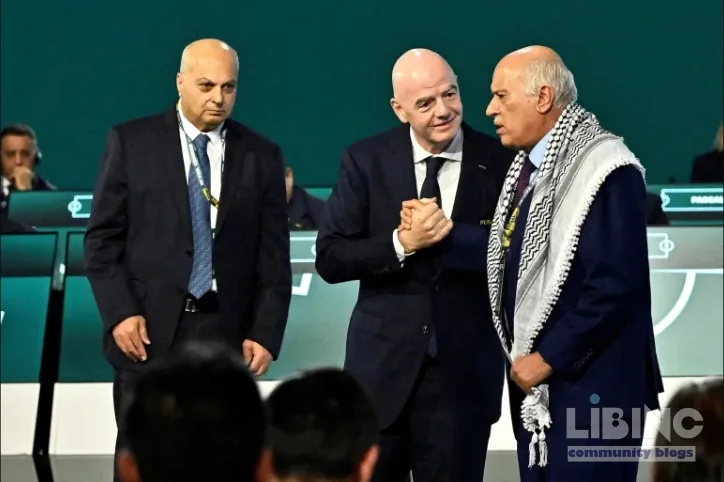
FIFA at the Crossroads: How Leadership, Politics, and Palestinian Football Reveal a Contested World Cup Era
Table of Contents
- 1. Analytics: Governing choices, data, and governance under FIFA
- 2. Contrast: Competing narratives about Palestine, Israel, and the sport's neutrality
- 3. Causes and Consequences: How policy, international law, and on-field results intersect
- 4. Expert Reconstruction: Paths to restoring trust and integrity in FIFA
This World Cup season places FIFA under an intense global glare, revealing how governance, money, and politics increasingly shape the game. The problem is not merely a problematic schedule or a disputed call; it is a broader credibility crisis that makes the spectacle feel instrumental rather than universal. The stakes go beyond wins and losses: sponsorships, broadcast revenues, and the very trust that football can remain a neutral arena for people of every nation depend on credible leadership. The hidden conflict is a tension between an expansionist, branding-driven agenda and a duty to uphold human rights and fair play, especially for Palestinian football and players. The direction of this analysis is to disentangle governance choices, moral obligations, and reform pathways that could restore FIFA's legitimacy in a contested era.
Analytics: Governing choices, data, and governance under FIFA
FIFA's governance architecture concentrates decision power in the presidency and a network of committees, raising questions about independence and accountability. Gianni Infantino has reorganized revenue streams, media rights, and global outreach, expanding the federation's reach while inviting new conflicts of interest that echo beyond football. International law bodies—no matter how aspirational—offer guardrails, but FIFA's practical readings of those guardrails often collide with public expectations of neutrality. In this context, the overturning of a suspension after political intervention signals how governance decisions can be traded against reputational harm, undermining the separation between sport and state power and inviting scrutiny from human-rights advocates and civil society alike.
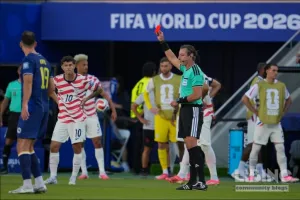
Referee and officiating questions underline another layer of risk: legitimacy depends on neutral, transparent decision-making, not perceived favoritism. Allegations of bias in games involving Argentina, Egypt, or Cape Verde demonstrate the fragility of trust when human judgments are entangled with national rivalries, TV ratings, and sponsorship deals. VAR, if deployed as a neutral arbiter, must be accompanied by independent oversight and clear guidelines to prevent post hoc rationalizations that feed rumors of bias.
Palestinian football's long struggle exposes a test case for human rights in sport. The Palestinian Football Association has pressed for suspensions of the Israeli Football Association for playing in occupied territory, the West Bank, and settlements, while FIFA's responses have hinged on legal complexity rather than decisive action. The absence of condemnation for the detention or harm of players and the destruction of stadiums signals a crisis of values within FIFA's leadership and its ability to translate stated commitments into concrete protections.
Practically, the pattern matters: public trust in international organizations, sponsorship commitments, and the sport's growth depend on credible, consistent governance. As civil society groups and some governments call for accountability, FIFA's leaders risk becoming a political tool used to shield or advance particular foreign policy priorities. The case for reform becomes not a luxury but a prerequisite for continuing to claim football as a common language rather than an arena for grievance, with ICC and UN resolutions as benchmarks.
Contrast: Competing narratives about Palestine, Israel, and the sport's neutrality
Neutrality is the aspirational posture, yet the narratives around Palestine and Israel expose divergent framings. Pro-Israel actors emphasize legal status, security concerns, and the integrity of competition; pro-Palestine voices cite human rights, international humanitarian law, and the right to freedom of movement and association for Palestinian teams. The difference is not cosmetic; it shapes sponsorship, fan engagement, and even the perceived legitimacy of tournaments.
Sports diplomacy has delivered signals—like summits and accords—that can blur the line between peace-building and political leverage. The Abraham Accords, plus the attendance at a Jerusalem Post conference and a venue on Mamillah cemetery, illustrate how sport becomes a stage for soft power. Critics argue that FIFA's embracing of these signals risks normalizing occupation and diluting accountability.
Global governance expectations demand a consistent standard across regions; nonetheless, West Bank status, the IFA's activities, and international jurisprudence show a complicated legal mosaic that FIFA cannot simply bracket away. Without a clear normative stance, the organization tolerates a double standard that damages credibility with players, fans, and human-rights advocates.
Alternative governance models exist in theory: independent ethics panels, transparent disciplinary procedures, and structured public reporting on human rights due diligence. These would not erase political complexity but would provide tangible anchors for judging FIFA's actions by universal standards.
Causes and Consequences: How policy, international law, and on-field results intersect
Root drivers lie in structural design: a global federation that links membership, broadcast revenues, and brand partnerships to strategic decisions concentrated in a single office. This concentration invites lobbying and external influence, including from powerful states pursuing favorable outcomes. The interplay with US foreign policy and allied positions has permeated decision frames on disciplinary measures, broadcast deals, and tournament eligibility.
Consequences ripple across competition and legitimacy. On-field decisions, scheduling, and refereeing credibility depend on a perception of fairness. When leadership signals align with political convenience rather than principle, players and fans interpret results as outcomes of influence rather than merit, hurting the game's universality.
Public trust erodes, sponsors recalibrate, and national associations reassess commitments to global events. The risk is a long tail: reduced youth participation, weaker development programs, and a chilling effect on civil society involvement in sport governance.
Legal and normative tensions intensify as UN and ICC attention increases. FIFA's insistence that the West Bank territorial question remains highly complex closes the door on accountability, while human rights groups press for independent investigations into alleged war crimes and occupation-related harms.
The causal chain continues: policy choices influence travel, visas, and match hosting, which in turn affect fan sentiment and the pipeline of talent. If these patterns persist, the World Cup risks losing its celebrated role as a platform for global dialogue and a universal testbed for sporting ethics.
Expert Reconstruction: Paths to restoring trust and integrity in FIFA
Rebuilding legitimacy requires governance reforms designed for resilience against political capture. An independent ethics council with binding mandates, transparent disciplinary procedures, and real-time oversight from civil society would condition FIFA's decisions on objective criteria rather than power dynamics.
Accountability mechanisms must align with human rights duties and international law. The organization should publicly report on compliance with UN and ICC expectations, and it should engage with Palestinian players and associations in a manner that protects their rights while balancing competitive neutrality.
Concrete reforms could include a multi-stakeholder charter, explicit conflict-of-interest rules, and a formal mechanism to review controversial decisions within a defined time frame. The design should ensure accessible channels for grievances, a clear appeal process, and independent verification of disciplinary outcomes.
Policy argument and practicalities aside, stakeholder actions shape feasibility. Sponsors, broadcasters, and national federations should demand staged reforms tied to performance metrics and transparency milestones. The Palestinian football community deserves sustained engagement, safety guarantees, and routes to fair competition under international standards.
Examples from other international sports governance models show it is possible to disentangle sport from politics without sacrificing competitive integrity. The path forward for FIFA hinges on credible leadership willing to accept scrutiny, share data, and cooperate with international bodies to uphold human rights outranks political convenience.
A future for FIFA that preserves football’s universal appeal will require courage to confront uncomfortable truths, and a commitment to verifiable reform rather than rhetorical pledges. The world watches how the organization reconciles the demand for neutral competition with the inescapable political realities that shape the game today.
- Independent ethics council with binding mandates
- Transparent disciplinary procedures and clear timelines
- Real-time oversight by civil society and donors
- Strict conflict-of-interest controls for all leadership
- Public reporting on human rights due diligence and outcomes
The views expressed in this article are the author’s own and do not necessarily reflect Al Jazeera’s editorial policy.
Closing the Transparency Challenge: Real-Time Governance for FIFA
Addressing the credibility crisis requires a concrete, rights-centered approach that moves beyond pledges. The missing link is credible oversight that is independent of political influence, with public data, timely judgments, and a clear appeal path for affected players and associations.
| Reform Area | Mechanism | Expected Impact | Timeline |
|---|---|---|---|
| Independent Ethics Council | Binding mandates; cross-sport panel appointments | Restored decision integrity; reduced conflicts | 12-24 months |
| Transparent Disciplinary Procedures | Public timelines; publish rationales | Improved fairness perception | 6-12 months |
| Real-Time Civil Society Oversight | Ongoing reports by independent bodies | Continuous accountability signal | Ongoing |
| Public Human Rights Reporting | Annual rights-based review aligned with UN standards | Visible commitment to duties | Annual |
Palestinian football communities would gain explicit protection under rights-based reporting and inclusion in oversight, reinforcing the principle that sport respects human dignity while preserving competitive neutrality.
In the wake of these mechanisms, independent data dashboards, public judgments, and rights-respecting processes become the default. The aim is to harmonize competitive integrity with universal standards, so governance decisions reflect principled action rather than expedient politics.
The reforms should unfold in clear phases, with audits, policy adoption, and ongoing supervision, ensuring that human rights duties and fair play are embedded in every decision.
- Reform Roadmap
- Phase 1: governance audit
- Phase 2: adopt guidelines and publish data
- Phase 3: scale independent oversight
- Engagement Channels
- Open hearings
- Grievance portals
A credible path requires courage to confront uncomfortable truths, and the world rewards transparent leadership that aligns with universal rights and fair play.
What concrete reforms can restore trust in FIFA's leadership?
In practical terms, a public, rights-centered reform agenda is essential. A binding independent ethics council, open disciplinary procedures, and real-time civil-society oversight create a transparent engine for accountability. The goal is to replace opaque decisions with clear criteria, published rationales, and measurable milestones that are verifiable by fans, players, sponsors, and states. This approach fosters legitimacy by tying leadership actions to universal rights and fair competition, rather than political convenience.
Beyond governance mechanics, the reforms must demonstrate tangible progress through dashboards, periodic reviews, and stakeholder reporting, which collectively rebuild trust among diverse audiences.
How should independent ethics oversight operate to ensure neutrality?
The ethics body must possess genuine independence, with appointments that cross-check political influence and industry insiders. It should adjudicate conflicts of interest, publish decisions with rationales, and offer a timely appeal path. Supplementing with cross-sport peer reviews and public access to summaries can provide additional legitimacy and reduce perception of bias.
Regular external audits and a transparent calendar of hearings would further strengthen neutrality while ensuring accountability to a broad stakeholder base.
What role do sponsors play in governance reforms?
Sponsors should condition funding on demonstrable reforms: public reporting, anti-corruption measures, and human rights due diligence. Their leverage lies in the ability to pause or restructure deals if reforms stall, while they gain long-term value from a stable, credible governance environment that attracts fans and partners.
In return, sponsors should support transparent metrics, co-fund independent oversight, and publicly endorse the rights-based framework that underpins the reforms.
How can Palestinian football be safeguarded within FIFA's neutrality?
Safeguards include explicit human rights commitments, safe travel for Palestinian teams, and independent investigations into alleged rights violations. Publishing a clear policy on player protection, stadium security, and non-discrimination gives Palestinian associations a voice in governance while preserving competitive neutrality.
Effective engagement should ensure Palestinian players have access to safe competition and consistent protection under international standards.
How does transparency affect match integrity and decision-making, including refereeing and VAR?
Transparency requires open criteria for refereeing, documented VAR protocols, and independent review of controversial calls. Shared match data, public disciplinary outcomes, and post-game analyses help fans and teams assess integrity beyond loyalty, reinforcing the sport's universal appeal.
When these elements function together, match outcomes are judged on merit and process as much as on reputation or sponsorship weight.





Add a comment
To comment, you need to register and authorize
Comments
A core area for discussion is the relationship between neutrality and accountability in officiating and governance. If refereeing decisions are perceived as biased—whether through post hoc rationalizations, perceived favoritism, or inconsistent disciplinary standards—the entire competition loses legitimacy in the eyes of participants and spectators alike. This calls for independent oversight of refereeing decisions, transparent criteria for officiating choices, and public reporting on how incidents are resolved. It also invites a broader conversation about whether the sport’s governance requires a formal, independent ethics framework with binding mandates; a structure that can impose consequences for conflicts of interest, improper lobbying, or opaque dealmaking that erodes trust. What should be the precise bar for independence and how can it be measured and audited across a sprawling global federation?
The Palestinian case casts a stark light on human rights and sport governance. The Palestinian Football Association has pressed for suspensions of the Israeli Football Association for activities in occupied territories, while FIFA’s responses have leaned on legal complexity rather than decisive action or principled condemnation. The absence of a clear human rights lens in decisive moments signals a crisis of values within FIFA’s leadership and creates a dangerous precedent that actors anywhere can exploit—treating human rights concerns as optional rather than foundational to global sport. A meaningful path forward would connect governance reform with enforceable commitments to players’ safety, freedom of movement for teams, and protections from violence or displacement tied to the game. Such a path would require explicit timelines, independent investigations when harms occur, and a public reporting cadence that makes outcomes visible to athletes and fans around the world. In your view, what concrete reforms would best reconcile the imperative of neutrality with an obligation to protect human rights when the two appear in tension in real time during tournaments, qualifications, or regional competitions?