

Moral Geography on a World Cup Night: Gaza, Spectatorship, and the Politics of Sport
Table of contents
- Analytics: mapping the moral geography
- Contrast: symbols, loyalties, and power
- Cause and effect: from Gaza to policy and perception
- Expert reconstruction: rethinking the moral landscape
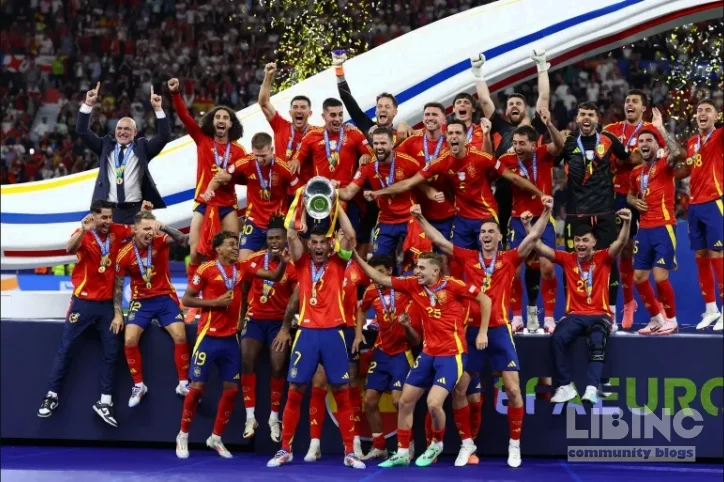
Last night Spain defeated Argentina. For many watchers with a conscience, the match became more than sport; it exposed how Gaza's crisis reconfigures our moral map. The problem is simple and brutal: symbols travel faster than policy, and sport becomes a stage where political memory rewrites allegiances.
The stakes are not who lifts the trophy, but what we choose to honor or condemn when the football field doubles as a moral theater. The hidden conflict is that audiences crave clarity while the world demands nuance, especially when governments and media posture about Gaza. In this analysis, we map the argument across four lenses—analytics, contrast, causal relations, and expert reconstruction—to understand this night’s symbolism without surrendering critical rigor.
Analytics: mapping the moral geography
The phrase moral geography captures something essential: locations that once felt distant become proximate when they echo human suffering. On this night, the field is not merely a venue for passing and pressing; it is a stage where memory, obligation, and power collide. The immediate spectacle—Spain’s victory over Argentina—hires a cast of actors whose real work lies in the undertow of Gaza’s crisis. We cannot separate the emotion of the win from the memory of bombardments, blockades, and displaced lives. The result, in other words, is not just a scoreline but a reorientation of moral reference points.
What we watch, in the end, reveals a calculative shift in how publics assign moral weight to states, leaders, and publics alike. This is where the analytic core lands: moral geography reframes evaluation criteria. Previous loyalties to style, to tactical elegance, or to national icons give way to judgments about courage, accountability, and solidarity under pressure. The game becomes a proxy for questions about who deserves attention and who deserves censure in a world that often prunes moral vocabulary to fit political convenience.
The moral geography at stake is not a map of borders but a map of obligations. The insistence that a government should speak clearly about genocide, or that an arms embargo should be entailed by moral outrage, reframes what counts as leadership. The fact that Spain’s government publicly embraced Palestinian recognition while other Western allies hesitated introduces a cause-and-effect dynamic: political risk is a variable in moral standing as much as in foreign policy. This is not a referendum on Spain’s entire agenda, but a demonstration that political choices echo through unrelated arenas—the stadium, the newsroom, and the classroom alike.
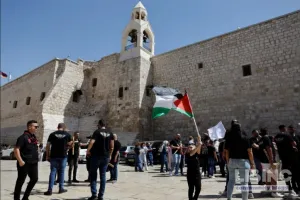
The analysis also flags the limits of symbolic acts. Lamine Yamal waving a Palestinian flag and Messi’s image at the Western Wall illustrate how symbols travel, but symbols alone cannot deliver justice. They function as social signals that invite solidarity, not as substitutes for policy. The real questions lie in institutions and actions: will rhetoric translate into durable commitments, into arms embargoes that outlast headlines, into concrete steps toward accountability? The data suggest a pattern: symbolic gestures tend to intensify public pressure on observers who still hope for tangible redress.
In this sense, the night becomes a case study in moral geography as a dynamic form of political cognition. We learn to read the stadium as a social laboratory where memory, identity, and power collide. The analytic payoff is precise: viewing sport through a moral geography lens helps explain why some audiences react to a score with collective guilt or collective pride, rather than with dispassionate tactical analysis. The stakes extend beyond the match; they touch the way publics imagine global justice and their own role in it.
To map this more clearly, we can pose a handful of analytic questions that drive the argument forward:
- Which actors are rewarded for taking a moral stand, and which are rewarded for silence?
- How do symbolic gestures translate into political capital or costs for governments?
- What is the relationship between high-profile sporting moments and long-term policy shifts?
- Where do memory and obligation cohere, and where do they collide with strategic interests?
Contrast: symbols, loyalties, and power
The night’s contrasts illuminate how moral geography operates in real time. On one side stands Spain, a country whose government has pursued a public stance toward Gaza that includes recognition of the State of Palestine and explicit language about genocide. That stance creates a counterpoint to the typical Western chorus that often voices concern without incurring costs. Spain’s posture—clear, public, and costly—acts as a moral beacon for some observers, signaling that political courage still has currency in the international arena.
On the other side stands Argentina, a footballing powerhouse whose political leadership has advanced a different alignment, one that intersects with Milei’s controversial, pro-Zionist rhetoric. The players, however, carry diverse feelings and loyalties. Messi, whose image circles the globe as a figure of sporting genius, becomes a focal point through which viewers parse national identity and foreign policy. The Western Wall image, even if rooted in a different historical moment, intensifies the sense that public figures cannot be extricated from the political currents that sweep through their national stages.
To those watching through the Gaza prism, the contrast is not about footballing styles but about moral memory. Spain’s stance invites applause for its moral clarity; Argentina’s political line invites skepticism for its alignment with blocs that have long disputed Palestinian rights. The players themselves become interpreters of this moment—whether they insist on a separation between sport and politics or acknowledge that symbols carry consequences beyond the pitch. The class of effects is no longer simply about discipline, fitness, or tactical insight; it becomes about accountability, memory, and the need for consistent political posture when civilians face violence.
The contrast likewise exposes the limits of both national narratives and international complicity. When a state speaks, it embeds a memory that other states must negotiate. When a public figure speaks, they perform a kind of moral theater whose influence stretches to media discourse, diplomatic signaling, and even youth culture. That theater, while powerful, also risks becoming performative if not accompanied by durable policy action. In this sense, the football night functions as a mirror, not a verdict: it shows how people want their leaders to think and act, even as the real work awaits in parliament, multilateral forums, and humanitarian aid pipelines.
Finally, the contrast invites a broader point about solidarity. Sympathy can be contagious, and symbolic gestures can seed real-world mobilization. Yet solidarity without structure can devolve into rhetorical support that fades in the face of policy friction. The night thus becomes a test of whether symbolic acts will translate into durable political reform, or whether they will recede to mere moments of collective emotion without long-term consequence. The analysis must hold both possibilities in view, recognizing that symbols matter while insisting that they align with accountable, repeatable political action.
In practical terms, this contrast yields a set of actionable insights for observers, policymakers, and scholars:
- Symbolic gestures should be paired with concrete policy commitments to Gaza relief and accountability mechanisms.
- Public discourse should distinguish genuine moral courage from tactical appeasement that serves political convenience.
- Sports diplomacy can be a powerful bridge if it accompanies rigorous advocacy and sustained diplomatic pressure.
Cause and effect: from Gaza to policy and perception
Historical memory is not a static archive; it travels through media narratives, political speeches, and the rituals of global sport. The Gaza crisis has become a benchmark by which many publics judge the credibility of leaders and institutions. When a General Assembly resolution on reparatory justice passes with broad support, while only a handful of governments dissent, observers read it as a signal about global norms. The night’s emotional resonance then feeds back into that normative discourse, sharpening the perceived costs of inaction and amplifying the incentives to lead with moral clarity.
The UN vote you mentioned—facts conveyed in a global chamber—exposes a paradox: the most consequential actions can be slow, while the most emotionally salient acts are rapid and symbolic. The speed of public sentiment in the wake of a World Cup win can outpace the bureaucratic tempo of policy reform. Yet the two processes are not independent. Public opinion can mobilize political capital, which in turn accelerates or constrains diplomatic options. In other words, the night’s football drama becomes a catalyst for a broader debate about moral responsibility in foreign policy and the responsibilities of public figures to embody those moral commitments consistently.
The cascade effect appears in several domains. In media, the framing of Gaza as a moral test shifts the kinds of questions journalists ask about leaders and institutions. In diplomacy, ally networks recalibrate the price of silence or vocal advocacy. In civil society, solidarity campaigns gain legitimacy when anchored by credible policy demands and verifiable outcomes. In all these spheres, the crucial variable is not the intensity of outrage alone but the durability of the policy response that follows it. Without that durability, moral geography risks becoming a spectacle rather than a framework for sustained change.
There is also a risk that moral geography slides toward instrumentality. When public sentiment becomes a lever to extract concessions, the suffering of Gazans can be instrumentalized to justify sudden shifts in alliance politics or to reward particular media narratives. That danger exists precisely because symbols—the flag, the gesture, the image—create instant affect that can outpace reasoned analysis. The antidote lies in coupling emotional resonance with institutional accountability: a political program that translates public sentiment into verifiable relief, protection, and justice for those affected by Gaza’s crisis. The night offers a test case for whether publics demand both empathy and efficacy, or whether symbolism alone suffices to placate moral unease.
From a causal standpoint, the sequence can be summarized as follows:
- Memories of historical injustice intensify public sensitivity to new crises.
- Symbolic acts on the world stage amplify that sensitivity into political pressure.
- Political actors respond with reforms or rhetoric that either meet or disappoint moral expectations.
This causal chain is not deterministic, but it remains highly influential. The night’s narrative helps us see where the links are strongest, where they fray, and how durable the resulting political changes can be. The crucial question is whether the momentum generated by symbolic acts evolves into lasting policy mechanisms that protect civilians and promote justice, or whether it dissolves into posturing that fades after the headlines shift.
Expert reconstruction: rethinking the moral landscape
Scholars of political theory, sports sociology, and international relations converge on a nuanced conclusion: moral geography is a useful tool only when it guides practical accountability. One line of expert reconstruction emphasizes the need to separate moral memory from mere spectacle, while acknowledging that memory shapes collective norms. Another line highlights how sports can function as a democratic space for airing grievances, while cautioning against turning the arena into a constant tribunal for state behavior. A third perspective stresses the role of institutions in translating public sympathy into policy outcomes that withstand electoral and media cycles.
From these vantage points, several constructive pathways emerge for future moments when sport and statecraft intersect in morally charged ways. First, conferences and forums should be organized that bring together athletes, policymakers, and humanitarian actors to translate symbolism into action plans with clear timelines and metrics. Second, media literacy should be strengthened so audiences can distinguish between legitimate political advocacy and performative signaling that lacks accountability. Third, sports organizations should adopt transparent policies linking sponsorship, broadcasting, and event logistics to human rights commitments, ensuring that the moral stance of a nation or league is not simply cosmetic but intrinsic to governance.
Experts also urge a more disciplined approach to the portrayal of public symbols. They recommend avoiding essentialist readings that reduce complex geopolitical issues to a single image or flag. Instead, they propose a pluralistic framework that recognizes multiple legitimate moral equities while insisting on universal human rights standards. In practice, this means creating spaces where diverse voices—from Palestinian civil society to European policymakers and international humanitarian groups—can contribute to a shared agenda for protection and justice. The aim is not to freeze interpretation into a single narrative but to cultivate an ongoing conversation that anchors symbol-driven empathy to concrete obligations and measurable progress.
Such expert reconstructions point toward a more robust, durable form of moral engagement with sport. They acknowledge the power of symbols to mobilize conscience while insisting that symbols do not substitute for policy. They recognize that the emotional energy generated by a World Cup final can catalyze much-needed attention to Gaza, but they insist that attention be transformed into accountability through concrete actions, such as independent investigations, humanitarian access, and verifiable commitments to end violence and displacement. The result is a more mature form of moral geography—one that navigates the emotional intensity of sport without sacrificing the rigor of political responsibility.
In closing, the night’s drama offers a demanding lesson. Moral geography is a useful compass, but it does not absolve us from the hard work of policy reform and humanitarian relief. It presses us to ask harder questions about how we translate memory into action, how we ensure that symbols support real change, and how we hold leaders and institutions to account when they speak in the language of justice. The interplay of sport, memory, and policy will continue to test our capacities for empathy, restraint, and reform. The World Cup, in this sense, becomes not a distraction from injustice but a catalyst for renewed scrutiny and more principled leadership.
From this vantage point, the match last night was more than a victory for Spain or a defeat for Argentina. It was a moment when moral geography pressed itself onto the world stage, demanding that spectators transform feeling into responsibility. If we heed that demand, the next time the stadium lights blaze, we may see not merely a game but a shared commitment to justice that endures beyond the final whistle.
Ultimately, the night demonstrates a simple truth: symbols matter, but they matter most when they accompany sustained action. The onus is on governments, media, and publics to turn memory into policy, to align rhetoric with real relief, and to ensure that the moral geography we map tonight remains legible in the days, months, and years ahead. The scoreline will fade, but the implications of what we choose to defend—and how we defend it—should not.
As observers, we will continue to watch for the signs that moral courage translates into durable justice. The next chapter depends not on a single gesture but on a consistent trajectory of accountability, empathy, and policy reform that honors the humanity at stake and keeps faith with the principles we publicly claim to cherish.
Closing the gap between memory and policy
Although the analysis offers a robust map of moral geography, it stops short of outlining how symbolic moments convert into durable policy. This section closes that gap by proposing concrete steps, metrics, and examples that connect conscience with accountability. In practical terms, sport diplomacy can help push for tangible outcomes when paired with clear time-bound commitments, independent monitoring, and credible humanitarian access corridors.
Symbolic gestures vs durable action
| Gesture | Immediate impact | Durable policy |
|---|---|---|
| Flag waving or social media posts | Emotional surge | Low-long-term effect |
| Official condemnations | Public signal | Moderate if paired with action |
| Relief fund pledges | Resource mobilization | High if monitored |
| Independent monitoring access | Consensus-building | Very high durability |
Note: this quick comparison helps translate memory into governance by highlighting where publicity stops and policy begins. The table is illustrative, not exhaustive, but it frames the practical steps that follow.
Policy translation rate
25-40%
Illustrative rate: symbolic acts convert to policy when paired with accountability.
From memory to action: staged pathway
- Define accountability goals
- Identify actors (governments, leagues, sponsors)
- Set time-bound targets
- Pair signals with policy asks
- Humanitarian access corridors
- Independent investigations
- Build public dashboards
- Regular reporting on progress
Timeline: memory to policy (illustrative)
| Step | Timeframe | Outcome |
|---|---|---|
| Gaza crisis triggers global debate | Weeks | Raising public pressure |
| Symbolic gestures gain policy attention | Months | Policy drafts |
| Independent reviews and relief access | Year 1 | Credible progress |
These mechanisms ensure that memory-driven signals become legible actions, enabling publics to trace progress and hold leaders to account.
How can a World Cup moment influence foreign policy toward Gaza?
Public sentiment generated by a World Cup moment can influence foreign policy toward Gaza when symbolic signals are actively integrated into a credible policy package with explicit milestones, independent oversight, measurable humanitarian commitments, and transparent reporting that allows citizens to track progress over time; this fusion turns passion into accountability by creating verifiable expectations for politicians and organizations, and it makes solidarity durable rather than episodic. As a result, officials are pressured to publish timelines, allocate resources, and invite independent monitors, transforming emotion into measurable action.
Analytically, the most effective moments align ethical rhetoric with concrete deliverables, reducing doubt about intent and increasing the legitimacy of reforms. Fans and civil society can reinforce this process by demanding regular progress updates, public disclosures, and rights-based benchmarks. The risk is that symbolism without substance becomes cynical theater, so the key is sustained scrutiny and transparent reporting that remains visible beyond headlines.
What is moral geography in the context of sports and Gaza?
Moral geography maps how public attention to Gaza travels through the lens of sport, memory, and policy, shaping which actors feel moral obligation and which actions count as legitimate responses. Sports events create shared spaces where spectators absorb humanitarian narratives, while leaders must decide how to respond in ways that are both principled and practical. In practice, moral geography calls for 연결 between affective moments and institutional commitments—tying empathy to measurable outcomes such as access, accountability, and humanitarian relief—so that public sentiment translates into durable governance. This approach balances symbolism with universal human rights standards, avoiding oversimplified readings of complex politics.
What steps translate symbolic gesture into relief?
Answering this requires a concrete program: (1) set time-bound commitments that specify relief targets and monitoring timelines; (2) establish independent oversight with public dashboards showing progress; (3) secure humanitarian access corridors and protections for civilians; (4) require sports bodies to adopt human-rights aligned policies for sponsorships and venue selection; (5) publish annual reports detailing both failures and gains to maintain accountability. In each case, the aim is to align symbolic acts with clear, verifiable actions that stakeholders can verify over time.
What risks arise when symbolism outpaces policy?
Relying on symbols without policy backing risks cynicism, reduced credibility for advocates, and a temporary spike in attention that fades once headlines shift. The danger lies in using moral signals as a substitute for accountability. To mitigate this, officials should couple rhetoric with formal commitments, independent monitors, and transparent progress reports. Civil society can counteract drift by demanding measurable outcomes, prioritizing long-term relief, and avoiding performative gestures that do not tie into durable reforms or access guarantees.
How should sports organizations participate in human rights commitments?
Organizations should embed human rights criteria into every aspect of operations—sponsorships, broadcasting, stadium logistics, and travel. They can publish a public human-rights roadmap, appoint independent observers, and require partner entities to meet verifiable standards. By tying events to concrete benefits, such as funded clinics, aid delivery, and monitoring missions, sports bodies become catalysts for accountability rather than symbols alone. Fans and players can advocate for these commitments and hold organizations to account through transparent reporting and stakeholder dialogue.







Add a comment
To comment, you need to register and authorize
Comments