

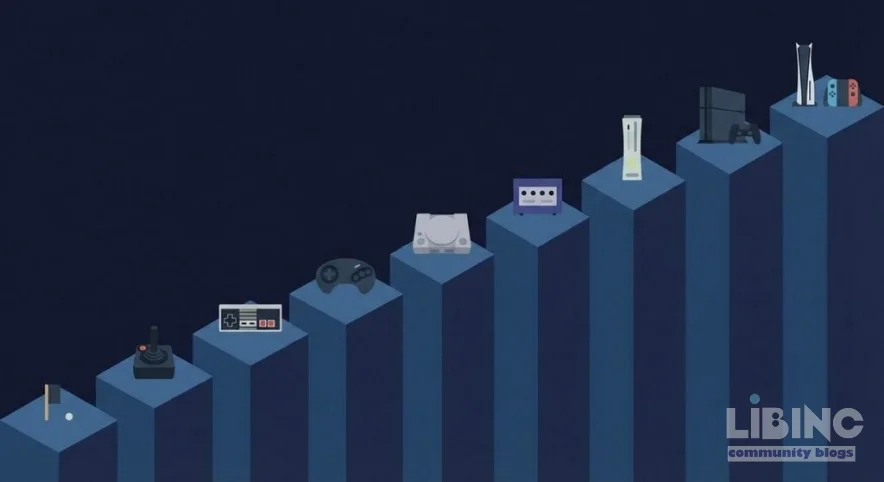
Console Generations as an Analytical Framework for the Evolution of Gaming Hardware
Table of contents
- Block 1 — Analytics through the dynamics of generations
- Block 2 — Through contrast: how competing approaches defined eras
- Block 3 — Through cause-and-effect relationships: mapping decisions to outcomes
- Block 4 — Through expert reconstruction: counterfactuals and forward-looking synthesis
The problem is simple but consequential: the idea of console generations is a handy shorthand yet a blunt instrument for understanding a half-century of hardware and software evolution. The stakes are higher than nostalgia. Misreading how eras emerge leads to flawed forecasts about what future platforms must do to succeed. Hidden in plain sight is a conflict between power and practicality, between spectacular specs and real-world ecosystems. This article offers four analytical lenses to illuminate that conflict: a data-informed, structural view; a contrast-driven comparison of competing strategies; a causal map that ties decisions to outcomes; and expert reconstructions that stress-test alternative histories. The aim is a mature, usable map of console generations that remains vibrant as technology and distribution models evolve.
Block 1 — Analytics through the dynamics of generations
At the core, generations hinge on three levers that converge over time: release timing relative to rivals, hardware capability, and market competition that rewards scale. When these levers align, a generation forms a durable cluster; when they diverge, boundaries blur and overlap grows. Treating a generation as a period of overlapping releases, similar performance bands, and shared consumer expectations yields a predictive model for why some eras crystallize into lasting platforms while others collapse into transitional footnotes. In practice, the analytics reveal that hardware power matters, but the ecosystem surrounding software, licensing, and distribution often matters more for long-term viability. Backward compatibility and licensing models thus become strategic weapons in the battle to extend a platform’s lifespan.
When we quantify dynamics, the first signal is a cascade of launches within a narrow window, signaling coordinated industry effort and investor confidence. The second signal is the perceived value created by a growing software library, cross-platform accessibility, and the ease with which developers can enter and scale. The third signal is market response: price points, bundling, and retailer alignment that stabilize a platform’s position. This triad—timing, capability, and ecosystem momentum—drives adoption curves and defines whether a generation becomes a long-lived pillar or a brief flash. Third-party licensing emerges as a critical determinant of software velocity and quality, shaping both supply and tempo of game development.
To ground this in history, the late 1990s and early 2000s illustrate a pivotal shift: optical media transformed storage into scalable, cost-effective software footprints, enabling larger, more diverse libraries and longer product cycles. The CD-ROM era is not just a technical footnote; it alters pricing architectures, localization pipelines, and the cadence of new titles. A generation’s success thus depends on how hardware power is married to a viable software and distribution strategy, not on silicon alone. The result is a structural logic that explains why the PlayStation era exploded in scope while contemporaries struggled to maintain relevance.
Block 2 — Through contrast: how competing approaches defined eras
Contrast sharpens what a generation means. In the 16-bit era, Sega’s Genesis and Nintendo’s Super Nintendo pursued divergent design logics—Sega pushed arcade-ported speed and aggressive marketing; Nintendo leaned on a curated software library and brand discipline. The market felt dynamic yet stubbornly bifurcated, a pattern repeated in later cycles when hardware power ran ahead of broad software ecosystems. This is not a mere tally of sales; it is a window into how strategic choices shape perceived value, consumer expectations, and long-term viability. The undercurrents of risk, profitability, and brand trust explain why some platforms endure while others recede into niche status.
In the seventh generation, the competing strategies diverged more than ever. The Xbox 360 popularized online services and Achievements that monetized ongoing support and social play; the PlayStation 3 pursued raw power and media integration at a premium price; the Nintendo Wii emphasized motion controls and a broad, nontraditional audience at a relatively low price. The lesson is that the fastest hardware race is not decisive; ecosystem design—online pathways, storefront economics, and user-interface simplicity—often tips the balance. The power race mattered, but the lasting footprint came from how interfaces and services lock players into a tribe that stays engaged across titles and years.
These examples also reveal how nonhardware factors gate adoption. A platform can be technically superior yet fail if software support remains shallow or if online services stumble. Conversely, a less powerful system can dominate if it offers a compelling library, a welcoming interface, and a smart price. The recurring implication for future generations is clear: align hardware ambition with software strategy and service design to scale the audience and the development community, rather than chasing power for its own sake. The era-defining tension remains constant: capacity versus audience, sophistication versus accessibility, and ambition versus execution.
Block 3 — Through cause-and-effect relationships: mapping decisions to outcomes
Causal analysis begins with launch strategy. A high initial price paired with unclear value signals can depress early momentum, while a lower price framed around a robust game lineup accelerates adoption and signals confidence to developers. The ecosystem momentum then feeds back into distribution, marketing, and retail partnerships, creating a self-reinforcing cycle that can carry a platform well beyond the first year. The timing of a launch often determines whether a platform captures momentum before competing devices saturate the market. The ripple effects touch not only end users but also publishers, retailers, and independent studios that must decide where to invest their scarce creative and financial capital.
Third-party support acts as an accelerant or brake on a generation. A broad, deep library reduces risk for consumers and keeps them within the ecosystem, encouraging longer-term engagement and more ambitious projects. The economics of software— royalties, exclusivity, and revenue sharing—shape which titles appear, how often, and at what price. When publishers anticipate strong demand, they invest in larger teams, cultivate franchises, and seed long-running series. Conversely, a fragile software base prompts caution, delaying marquee releases and constraining innovation. This dynamic explains why some platforms maintain vibrant libraries for years, while others experience a steep decline after a handful of notable titles.
Storage and media formats test a platform’s adaptability. The shift from cartridges to optical discs, and later to downloadable content, redefined production timelines, localization, and post-release support. The market’s embrace of digital distribution altered the economics of development and retail, enabling rapid iteration, broader participation from independent studios, and new pricing models. In this epoch, backward compatibility serves as a proving ground for whether a platform can sustain a long-lasting library while inviting new software and new players into the ecosystem.
Block 4 — Through expert reconstruction: counterfactuals and forward-looking synthesis
Experts routinely test counterfactuals to reveal which decisions mattered most. If a rival had matched launch pricing, or if a platform had adopted a more developer-friendly licensing regime, the arc of an era might shift substantially. The consensus view is that ecosystem dynamics—player communities, third-party confidence, and dependable online services—often outrun raw hardware power in determining long-term leadership. The PlayStation 2 example demonstrates breadth of software and cross-market appeal can sustain leadership beyond a single generation, while the Dreamcast case shows how momentum, timing, and a cohesive strategy for online play and media integration could fail without a dominant platform’s advantages.
The Nintendo Switch reframes the framework by acting as a hybrid device that blurs the line between generations. Its portability, flexible play modes, and strong first-party lineup create durable value even as the eighth generation matured. The takeaway is not that hybridity guarantees success but that modality matters. A device that blurs home and mobile play aligns with changing routines and developer expectations around cross‑platform titles and streaming-enabled experiences. In this view, cloud-capable components and subscription services become the balancing forces that keep a platform resilient when hardware cycles bend to new distribution models and social trends.
In synthesis, console generations remain a practical frame for understanding decades of hardware and software evolution, but they demand a living interpretation. The trajectory hinges on how quickly platforms translate technical capability into meaningful experiences, how effectively they attract and retain developers, and how well they integrate with broader digital ecosystems. A forward-looking outlook suggests future generations will hinge on flexible storage architectures, sophisticated streaming and cloud capabilities, and a sustained emphasis on inclusive, accessible software that reaches wider audiences. The core insight is simple: generations endure not because they rigidly pigeonhole hardware but because they capture patterns of choice, competition, and community that persist over time.
Seen together, console generations form a practical compass for tracking how hardware, software, and services co-evolve, and for anticipating where gaming will head next.
To translate the four analytical lenses into a practical, decision-ready toolkit, this brief section closes a central, actionable gap by turning historical insight into repeatable signals for planning future consoles. The focus rests on three levers that consistently predict long-term viability: ecosystem velocity (developer accessibility, licensing economics, and distribution cadence), cross‑generation compatibility, and the alignment of hardware ambition with services and store design. The following artifacts provide compact, repeatable tools that teams can use in roadmap reviews, prototype tests, and investor updates.
Figure 1 — Cross-era snapshot
| Era | Hardware Power | Library Size | Online/Store | Backward BC | Launch Price |
|---|---|---|---|---|---|
| 16-bit era | Mid-range | 500-700 titles | None | Partial | $199 |
| 32/128-bit era | High | 1,000-1,500 | Early online | PS2 BC | $299 |
| 7th gen | Advanced | 3,000+ | Robust online | Limited | $499 |
| 8th gen | High | 4,000+ | Strong marketplace | Partial legacy | $399-499 |
| 9th gen | Very High | 5,000+ | Cloud + Store | Extensive | $499 |
Interpreting the snapshot reveals a practical takeaway: a broad software library and predictable licensing consistently predict longer platform lifespans, even when hardware power accelerates.
Share of players who stay within a platform due to library breadth and cohesive services.
That momentum translates into a practical rule: invest in a large, coherent catalog and a frictionless online experience to convert early adopters into lasting communities.
Decision framework: three-layer funnel
- Hardware readiness
- Thermal design
- Reliability
- Upgrade path
- Software ecosystem
- Developer access
- Licensing terms
- Exclusive catalog
- Services and distribution
- Store economics
- Subscriptions
- Cloud features
Taken together, these tools turn historical insight into actionable planning, balancing hardware ambition with the health of software libraries, developer ecosystems, and consumer-facing services.
What defines a console generation beyond hardware power?
The ecosystem, not raw hardware power alone, defines a console generation. The breadth of software, the clarity of licensing, the quality of online services, and the strength of developer ecosystems create lasting momentum that hardware alone cannot sustain. In practice, track the cadence of new titles, the rate of third‑party participation, and how backward compatibility is maintained, because it reduces friction and preserves the installed base. These signals, not silicon numbers, determine long‑term leadership and the ability to attract new audiences year after year.
Beyond speed, the sustainability of a platform hinges on how easily developers can scale, how a storefront monetizes ongoing play, and how well the system evolves with user expectations for cross‑play and streaming.
How do software ecosystems influence generation longevity?
The software ecosystem is the most powerful driver of long-term adoption. A broad, well-organized library reduces consumer risk, while developer-friendly licensing accelerates growth and keeps titles arriving consistently. A vibrant ecosystem supports cross‑generation titles, reduces friction for independent studios, and sustains engagement through frequent updates and new content. In practice, success shows up as a rising catalog curve, steady revenue sharing that attracts studios, and visible cross‑platform play that broadens the audience.
In the broader view, a thriving ecosystem lowers market friction, enabling innovative genres and extended product cycles that outperform mere hardware progress.
What role does backward compatibility play in platform success?
Backward compatibility preserves the installed base, accelerates consumer confidence, and lowers the opportunity cost of upgrading. It signals a mature platform philosophy that values continuity, not just novelty. When a system supports a large share of prior titles with quality performance, it tends to see faster adoption, better dispersion of development cost, and stronger second‑hand markets. Practically, BC affects pricing strategy, localization pipelines, and the speed at which studios port franchises across generations.
Over time, extensible compatibility reduces risk for publishers and encourages a broader, more enduring library that sustains consumer interest across cycles.
How have digital distribution and cloud services changed generation dynamics?
Digital distribution and cloud features shorten the time-to-market, broaden access for indie developers, and create recurring revenue streams beyond a single title. They also enable ongoing engagement through subscriptions, streaming, and cross‑device progression. The key shifts are lower distribution costs, more flexible pricing, and a broader audience reach. Practically, platforms that couple strong libraries with robust cloud and streaming options tend to attract both developers and players who value convenience, experimentation, and personalized experiences across devices.
In effect, cloud and digital delivery reframe the generation timeline from a rigid cycle to a more fluid, service‑oriented continuum.
What can we learn from hybrid devices like Nintendo Switch for future generations?
Hybrid form factors demonstrate the value of modality—how play patterns shift when devices support both home and mobile experiences. The Switch shows that a strong first‑party lineup, practical portability, and a flexible user experience create durable value even as traditional cycles progress. For future generations, the lesson is not hybridity as a guarantee, but the strategic alignment of hardware adaptability with developer ecosystems, store design, and cross‑platform play that fits shifting consumer routines and on‑demand content.
In short, modality matters; blending contexts for play requires thoughtful integration of software, services, and distribution to sustain long-term engagement.
What signals should developers watch when evaluating a new console?
Developers should watch three signals: the efficiency of development tools and licensing terms, the robustness of the online services and store economics, and the breadth and accessibility of the software library. A clear, developer-friendly licensing model reduces time to first release and fosters ongoing investment. A reliable store and straightforward revenue sharing attract both major franchises and indie creators, accelerating the volume and quality of titles. Finally, a thriving library across generations lowers risk for publishers and helps studios plan long-term franchises rather than one‑offs.
Monitoring these signals helps determine whether a platform is likely to attract durable creative partnerships and sustain a vibrant catalog across cycles.





Add a comment
To comment, you need to register and authorize
Comments