

Arctic Security under Strain: NATO's Arctic Sentry and the Challenge of a Rising Arctic Threat
Table of contents
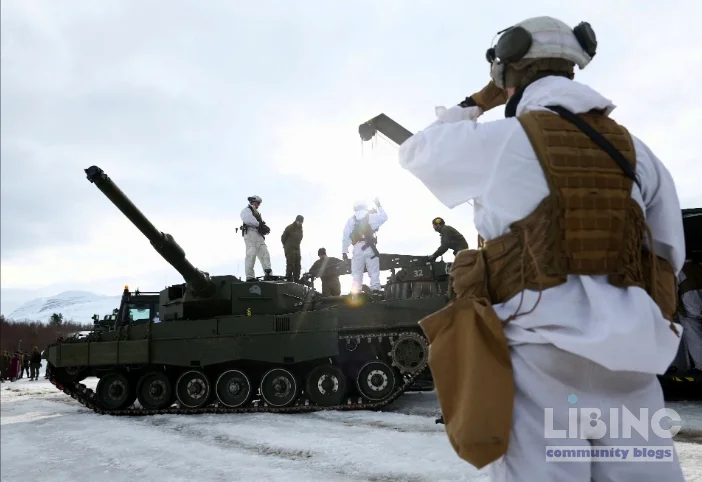
The Arctic security agenda now centers the High North as a strategic theater where climate change, resource competition, and alliance credibility collide. Arctic Sentry, NATO's latest convening of vigilance, pushes the alliance to validate a multi-domain posture that can deter a resurgent Arctic power while sustaining operations in an environment that erodes sensors, platforms, and willpower alike. The region's transformation is not theoretical: melting ice clears sea lanes, expands resource access, and multiplies the number of actors with strategic interests. Yet the depth of commitment from Washington and allied capitals remains unsettled, shaped by competing priorities and the volatility of domestic politics. This article treats Arctic security as a continuous negotiation among warning sensors, industrial capacity, and political will, and asks what it would take to move from posture to resilience.
Arctic security is not a single program but a framework of integrated capabilities, shared intelligence, and durable presence. The narrative surrounding Arctic defense has moved beyond symbolic drills toward long-horizon investments in ice-capable fleets, undersea surveillance, and space-based communications. The practical question is not merely whether NATO can stage an exercise in Barents Sea conditions; it is whether the alliance can sustain credible deterrence when the operating environment forces trade-offs between readiness, sustainment, and political capital. The following sections dissect the architecture, tensions, and trade-offs that define Arctic security today.
Analytics: The anatomy of Arctic security
In analytical terms, Arctic security rests on four pillars: deterrence credibility, assured access to the sea and air domains, information dominance, and resilience against environmental volatility. Russia’s Arctic strategy has evolved from passive presence to an integrated, multi-domain posture that leverages icebreakers, submarines, and long-range missiles. The North has become a testing ground for hypersonic delivery concepts, undersea cables, and the ability to project power along the GIUK Gap and into the Barents Sea. NATO’s response—through Arctic Sentry and related initiatives—seeks to close gaps in sensing, tracking, and interoperability between Nordic forces and the U.S. military.
Arctic security depends on robust ice-capable platforms and sensors that can operate in extreme cold and shifting salinity. The region’s unique physics disrupt traditional surveillance methods: sound travels differently, currents shift, and salinity gradients confound sonar. NATO’s investment logic must balance capital-intensive assets—icebreakers, new submarines, satellite constellations, and resilient comms—with flexible, distributed systems that can endure harsh weather without collapsing. The strategic payoff is not only a higher deterrent posture but also faster, more accurate intelligence that feeds better political and military decision-making in crisis scenarios.
To operationalize Arctic security, alliance planners emphasize four linked capabilities: multi-domain awareness, resilient reach, speed of decision, and credible forward presence. Each dimension is tested under climate-driven constraints: more navigable passages invite greater traffic, while harsher winters and thinner ice complicate risk assessments for patrols and exercises. The result is a paradox: the melting Arctic creates new opportunities for commerce and diplomacy even as it heightens strategic competition. The question becomes whether NATO can translate increased activity and visibility into durable deterrence rather than episodic demonstrations.
LSI terms: Northern Sea Route planning, icebreaker fleets, undersea cables, Barents Sea operations, GIUK Gap surveillance, satellite-enabled comms, multi-domain command and control, deterrence theory in Arctic conditions.
Contrast: National directions and political headwinds
There is a clear divergence between Nordic commitments and U.S. political signaling. Nordic states—Norway, Finland, Sweden, and Canada—have steadily increased defense spending and are pursuing a more autonomous Arctic posture. Canada’s C$35 billion Arctic defense plan signals an intent to build infrastructure, improve air and maritime access, and coordinate more closely with Nordic partners. Norway’s modernization drive—frigates, submarines, and a robust air component—reflects a strategic calculation that proximity to Russia makes Arctic defense an existential concern rather than a distant obligation. In parallel, the Nordics have pooled air assets to form a joint capability envelope large enough to challenge more established defense powers in the region.
By contrast, the United States has faced domestic debates that complicate long-term commitments. The broader political volatility around NATO and the question of burden-sharing have created a mood where some leaders question the value and permanence of American commitments in Europe. TheTrump-era rhetoric about Greenland and potential U.S. disengagement reverberates, complicating alliance cohesion and funding decisions for high-cost Arctic programs. Reuters sources show a persistent ambiguity about the U.S. contribution level to Arctic defense, even as official statements reaffirm commitment. The tension is not merely rhetorical; it shapes planning cycles, industrial bases, and the willingness of allies to rely on U.S. leadership in the High North.
The contrast also reveals a strategic misalignment risk: Nordic partners push for durable basing, expanded ice-capable fleets, and greater pre-positioning of equipment, while U.S. political cycles and strategic redeployments introduce uncertainty about long-term basing and force posture in Europe. The strategic stakes go beyond optics. Arctic security depends on steady, predictable access to the region’s strategic chokepoints, including the GIUK Gap and the Barents Sea, and on continuous intelligence-sharing that transcends political tides. In this sense, Arctic security is less about a single operation and more about maintaining a credible, persistent advantage across multiple domains and seasons.
LSI terms: Nordic defense investments, Arctic basing, ice-capable vessels, Canada-Nordic collaboration, GIUK Gap control, deterrence credibility, burden-sharing, political cycles in defense.
Cause and effect: Capabilities, costs, and climate change
The causal chain linking climate change to strategic outcomes is both direct and mediated by policy choices. Warming oceans alter sound propagation and complicate submarine tracking, a finding echoed by NATO Defence College research. If forces cannot reliably track enemy submarines in the Barents Sea, deterrence credibility erodes, and misinterpretations of activity could trigger escalation. Conversely, investments in long-endurance drones, satellite constellations, and advanced underwater sensors strengthen the alliance’s ability to detect, attribute, and respond to Russian maneuvers. These investments, however, come at a price—hundreds of billions of dollars in hardware and decades of steady support.
Climate dynamics also shift the operational envelope. More open water shortens transit times and increases patrol efficiency, but it also expands the tempo of operations and the likelihood of wear on equipment in extreme cold. The North Atlantic’s warming trend affects acoustic salinity and currents, complicating sonar-based detection and forcing a redesign of sensor suites. The consequence is a need for new sensor technologies and data fusion methods that can deliver real-time, high-fidelity situational awareness when traditional assets falter. In other words, climate-driven change magnifies the cost of bad intelligence and the value of robust, redundant sensing networks.
Economic and industrial effects cascade from capability choices. Building and sustaining icebreakers, multi-mission submarines, and space-ground communication networks demands industrial capacity, specialized shipyards, and a secure supply chain for cold-weather components. Nordic nations and Canada are pushing toward domestic resilience to reduce dependency on distant suppliers, while the United States weighs preserving a global industrial base capable of rapid mobilization. The result is a redefinition of alliance resilience as a capability not only to deter but also to outlast potential aggressors in the Arctic’s demanding environment.
LSI terms: submarine tracking challenges, underwater sensors, multi-domain sensing, data fusion, cold-weather operation costs, industrial base resilience, Northern Sea Route economics.
Expert reconstruction: Lessons and the path forward
Experts converge on a set of reforms to make Arctic security credible and sustainable. Mauro Gilli, a professor of military strategy, argues that NATO must enhance intelligence, surveillance, and reconnaissance (ISR) in Arctic theater to overcome the limitations of traditional equipment in extreme cold. The emphasis is on distributed sensing—sharing data across partners, expanding satellite coverage, and deploying long-endurance drones capable of operating in subzero temperatures. The objective is not just to listen harder but to fuse signals into decision-ready intelligence that informs timely, calibrated responses.
Olafur Ragnar Grimsson, who chairs the Arctic Circle forum, stresses that the Arctic will not tolerate a vacuum of leadership. The region’s economic and strategic value makes it indispensable for great-power competition, and no single nation will shape its future unilaterally. The reconstruction plan, therefore, requires a broad coalition with predictable contributions from the United States and steady, tangible investments from Nordic and allied partners. In Grimsson’s view, Arctic security rests on a credible, long-term alliance posture rather than episodic demonstrations.
Transparency and governance also matter. Iris Ferguson highlights that while urgency remains, the region’s governance must adapt to changing security threats without triggering unnecessary militarization. The path forward involves risk-sharing agreements, joint basing arrangements, and coordinated investments in critical infrastructure, including airfields in the Arctic and hardened communications networks that function in extreme cold. The practical upshot is a more resilient Arctic security architecture that aligns political will with material capacity across the alliance.
To operationalize the expert recommendations, NATO should pursue four concrete steps:
- Expand joint procurement for ice-capable platforms and sensors to avoid single-supplier bottlenecks.
- Increase integrated ISR networks that connect satellites, ships, submarines, and ground-based radars for continuous Arctic monitoring.
- Develop a synchronized logistics and pre-positioning strategy to sustain operations during protracted crisis scenarios.
- Foster political agreement on burden-sharing and predictable force posture to stabilize alliance commitments in the High North.
The Arctic’s future hinges on translating the doctrine of Arctic security into a durable, financially viable, and politically credible strategy. The terrain and the weather do not bow to rhetoric; they demand concrete, long-term commitments. The alliance has begun to respond, but the pace and scale of reforms will determine whether Arctic security remains a strategic ballast or a stabilizing force in a world of shifting power balances.
In sum, Arctic security is evolving toward a robust, multi-layered defense that can endure political fluctuations while delivering credible deterrence in the High North. The Arctic Sentry exercises are both a proof of concept and a test bed for the alliance’s capacity to lock in a sustainable security architecture capable of withstanding a new era of competition and climate-driven risk.
As the United States, Nordic partners, Canada, and their allies chart the next decade, Arctic security will increasingly define the credibility of NATO itself. The region is not an optional theater; it is central to strategic stability in the 21st century. The question is whether the alliance can convert intent into enduring capabilities, and whether political leaders will align budgets, industrial capacity, and operational concepts to sustain the High North’s strategic importance.
Ultimately, Arctic security is not merely about deterrence but about resilience—the ability to keep critical lines of communication, supply, and information open even if crisis unfolds in icebound waters. The Arctic will test NATO’s coherence as a political-military entity, and it will reward those who commit to a capable, comprehensive, and continuous presence in the North.
LSI terms: Arctic ISR integration, Arctic procurement, force posture in Europe, credibility of deterrence, Arctic governance, alliance resilience, critical infrastructure in the High North.
Operational path: credible Arctic deterrence in practice
Turning Arctic security into action requires translating doctrine into a concrete, funded, and long-term plan that aligns alliance expectations, industrial capacity, and political will across diverse capitals, because without mutual commitment to shared costs, predictable basing, long-term procurement, and sustained sensor coverage the high north remains at risk of episodic actions, misread signals, and delayed responses, while harsh weather, sea ice variability, and the vast distances magnify small mistakes into strategic miscalculations. The first step is to harmonize planning cycles, budget horizons, and industrial capacity with transparent milestones, so exercises, training, and deployments reinforce a credible posture rather than a fluctuating display. This is not optional but essential to deter adversaries by showing reliable access to space, air, sea, and cyberspace domains.
| Domain | Asset | Benefit | Timeframe |
|---|---|---|---|
| Air | Airborne ISR & AWACS upgrades | Faster situational awareness | 3-5 yrs |
| Sea | Ice-capable ships & submarines | Sustained presence | 4-6 yrs |
| Space/ISR | Satellite constellations | Global coverage | 5-7 yrs |
| Sustainment | Pre-positioned depots | Operational resilience | 2-4 yrs |
In practice, this means pre-deploying maintenance spares, fuel, and rations at neutral hubs; using safe overflight corridors; running regular joint exercises to align procedures; and tying budget lines to a transparent, time-bound plan. For example, a year-by-year basing and procurement schedule coordinated through a Nordic-Atlantic council ensures that equipment, maintenance, and training are synchronized rather than siloed.
The new path integrates governance, industrial capacity, and alliance solidarity to deliver a stable, credible Arctic security architecture that can withstand political ebbs and climate-driven volatility.
How does Arctic deterrence translate into practice for NATO?
Arctic deterrence in practice requires translating doctrine into a concrete, funded, and long-term plan that aligns alliance expectations, industrial capacity, and political will across diverse capitals, because without mutual commitment to shared costs, predictable basing, long-term procurement, and sustained sensor coverage the high north remains at risk of episodic actions, misread signals, and delayed responses, while harsh weather, sea ice variability, and vast distances magnify small mistakes into strategic miscalculations. The plan must also bind budgeting to a clear sequence of milestones so that exercises, deployments, and industrial activity reinforce a stable posture rather than seasonally shifting displays.
Analytically, this requires synchronizing decision cycles, procurement timelines, and data-sharing protocols across partners to ensure warning, decision, and action align in near real time.
What are the core capabilities that enable multi-domain Arctic security?
Arctic security rests on a quartet of capabilities: multi-domain awareness, resilient reach, rapid decision-making, and durable forward presence. Each domain—air, sea, space, and cyber—must be connected through integrated ISR networks, robust space-ground links, and interoperable command-and-control. When these elements are fused, commanders gain crisp attribution, faster routing of forces, and better risk management under ice, wind, and cold. The practical effect is a deterrent that translates into practice rather than rhetoric.
How does climate change reshape sensor performance in the Arctic?
The Arctic’s changing physics alter acoustic propagation, currents, and salinity profiles, which challenges traditional sonar and underwater surveillance. Sensor suites must adapt with distributed, data-fusion architectures, longer endurance platforms, and resilient comms that function in extreme cold. Real-time data combining space, air, and undersea observations reduces false alarms and improves trajectory predictions—crucial for crisis management in a region where small timing differences can escalate quickly.
What role do Nordic partners play in Arctic security?
Nordic partners anchor credibility through autonomous basing options, integrated air and maritime assets, and a shared appetite for resilience. Their investments in ice-capable fleets, pre-positioned logistics, and joint training reduce dependency on distant suppliers and enable faster responses. In practice, a Nordic-led basing and baselining framework complements U.S. capabilities, enabling a distributed posture that withstands political cycles and budgetary fluctuations.
What concrete steps can NATO implement to strengthen Arctic resilience?
Key steps include expanding joint procurement for ice-capable platforms and sensors, building a fully integrated ISR network that links satellites, ships, submarines, and radars, developing synchronized logistics and pre-positioning, and securing predictable burden-sharing agreements. These measures translate doctrine into a continuous, sustainable presence capable of withstanding protracted crises in the High North.
Why is burden-sharing essential for Arctic defense?
Burden-sharing anchors political legitimacy for long-term investments and aligns diverse national interests behind a common security objective. In the Arctic, where costs are high and risks are seasonal, predictable contributions from each ally ensure sustained capability growth, stable basing, and consistent industrial support. Without this alignment, alliance credibility erodes as costs rise and timelines slip, inviting strategic ambiguity and slower responses.




Add a comment
To comment, you need to register and authorize
Comments