

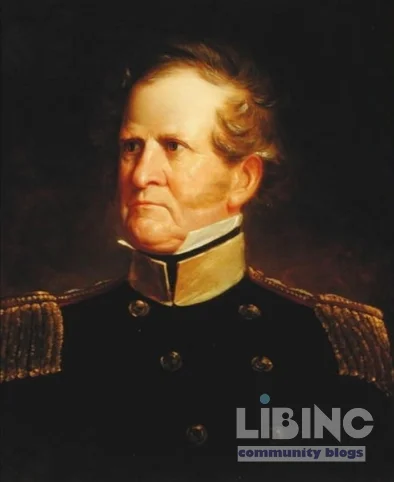
Winfield Scott and the Anaconda Plan: Discipline, Training, and the Making of Modern American Strategy
Winfield Scott's career reveals a throughline: disciplined training, professionalization, and strategic patience can outlast political pressure and numerical inferiority. This analysis follows how Scott built a force capable of sustained campaigns across the War of 1812, the Indian Wars, and the Mexican War, culminating in a plan that would come to symbolize Civil War strategy. By tracing the logic of his reforms and the reception of the Anaconda Plan, we illuminate why his approach endured, where it collided with contemporary politics, and what it implies for modern military practice. The lens is fourfold: an analytical frame, a contrast with fast-track thinking, a causal chain tying reforms to outcomes, and an expert reconstruction of legacy.
Analytical frame: disciplined power and strategic patience
Scott anchored his career in a **professional army doctrine** built around rigorous drill, standardized instruction, and codified tactics. The 10-week Camp of Instruction at Buffalo in 1814 became a template for how to produce a capable infantry and artillery corps under pressure. This reform of the fighting force mattered because war in the early republic had exposed the Army's fragility: morale collapsed without dependable training, and improvisation yielded inconsistent results. The shift was not cosmetic; it reshaped the central capability of the United States Army: reliable drill, coordinated action, and predictability under stress. The immediate consequence was a battlefield discipline that carried into the Battle of Chippawa, where coordination between supported units translated into a decisive, if costly, victory. The deeper implication is that doctrine—when paired with command climate—becomes a strategic asset. The General Regulations for the Army (1821) and Infantry Tactics (1835) codified practices that veteran units would rely on for decades. This is not merely history; it is a demonstration of how organizational culture translates into battlefield outcomes and long-run capability.
Moreover, Scott's emphasis on professionalization created the spine of the Army of the 1840s and 1850s. His career shows that doctrine without implementation is inert, and implementation without doctrine is ad hoc. The synthesis—doctrine translated into practice—produced a force that could project power across distances and sustain campaigns from the Canadian frontier to the Gulf of Mexico. The essential mechanism was a feedback loop: training improves performance, which justifies further investment in manuals, camps, and staff planning, which in turn deepens training. This loop is the core of what modern military analysts call force readiness: the capacity to convert organizational potential into operational effect under pressure. The practical upshot is that Scott helped create a prototype for a U.S. Army capable of multi-year campaigns, not merely episodic confrontations.
In the political realm, Scott's insistence on a trained army intersected with the era's professional ethos. He integrated infantry manuals from the French tradition, translated them into English, and fused them with American circumstances. The result was a shared language of tactics that allowed subordinates to execute complex operations with a common frame of reference. This shared language underpinned synchronized marches, coordinated flanks, and the kind of battlefield tempo that would later shape Civil War operations. It also created a professional standard that later generals—Grant, Sherman, and others—could adapt to their own campaigns. The critical question is why this mattered: in a war that would demand long, attritional campaigns, the difference between a hastily assembled militia and a disciplined corps often determined whether the Union could sustain war production and manpower for the long haul.
Finally, the strategic logic behind Scott's reforms foreshadowed a broader transformation in American warfare: the shift from episodic battles to doctrinally grounded, institutionally supported warfighting. The training regime, the manuals, and the insistence on professional behavior created the psychological alloy of a force that could endure setbacks, learn from mistakes, and maintain cohesion under strain. The result was an Army whose officers were not simply soldiers but systems thinkers who could operate within a larger strategic framework. The lesson for readers today is stark: strategy is more than a plan; it is a disciplined organizational project that shapes what a military can do when confronted with uncertainty.
Contrasts with rapid-victory thinking
The 1861 debates over how to confront the Confederacy crystallized a central strategic tension. Lincoln and many political leaders expected a quick, decisive victory through a bold push toward Richmond, leveraging the mass of volunteer troops. The impulse was clear: a short war would minimize casualties and restore the Union without protracted sacrifice. The counter-current—advocated by Scott—was that victory would require a long, methodical, and externally supported effort, with the navy blockading southern ports and army operations designed to sever the Confederacy from its economic lifelines. The outcome of this clash turned on a simple causal fact: speed can create a false sense of security if the adversary retains the ability to sustain resistance, while time can erode the enemy's capacity if the state's power to finance and supply a war machine is maintained.
The early failures of the quick-strike approach—most notably the First Bull Run defeat—proved that an untrained or overly optimistic army, even with tactical prowess, could not deliver enduring success. Scott's hand in the project was not to outpace the enemy at a single engagement, but to outpace the enemy's ability to wage war on multiple fronts over years. The contrast is not merely strategic but operational. The Anaconda Plan sought to encircle the South, using a naval blockade to bleed its economy while forcing the Mississippi River campaign to divide and isolate Confederate forces. This was not a ceremonial contribution; it dictated the tempo of operations and the allocation of resources for a generation. The lesson: agility in the political sphere must be matched by patience in military execution, a balance that requires both institutional capacity and political will to sustain.
Where Lincoln hoped to capitalize on public appetite for swift victory, Scott anticipated resistance to a prolonged fight by the Confederacy and the international audience watching the war’s costs. The strategic calculus thus turned on the credibility of the blockade and the reliability of Western campaigns to keep pressure on the Confederacy's supply lines. While some argue that the blockade’s effectiveness remains debated, no historian denies its central role in constraining Confederate resources and enabling Union leverage along the Mississippi. The long-term payoff was not a single decisive battle but a sequence of strategic blows: the capture of New Orleans, the control of upstream river traffic, and the eventual suffocation of southern ports. This is a case study in strategic patience delivering decisive political-military effects.
In this frame, Scott’s insistence on professional capabilities predates and informs later campaigns. The emergence of a standardized command culture, the use of staff work, and the reliance on sustained operations became characteristics of the Union war effort. The comparison with McClellan—his successor as commander in chief—highlights further contrasts: McClellan’s caution sometimes restrained initiative, while Grant and Sherman exploited the same disciplined impulse but translated it into aggressive, sustained campaigns. The throughline is clear: the urgency of political victory cannot trump the logistics of war. Scott's approach offered a template for how to win by sustained pressure rather than single-shot offensives, a template that the Union would refine under later leadership.
Cause-and-effect trajectory from training to campaign outcomes
Scott’s 1814 drill camps created a cadre of troops whose tactical competence could be translated across theaters. The immediate cause: intensive practice produced battlefield reliability. The effect: a string of successes in the War of 1812, including the victory at Chippawa on July 5, 1814, and his subsequent promotion to major general. The long-run effect: his reforms became the baseline for U.S. Army training and doctrine for decades. The causal chain did not stop there; it fed into the Mexican War’s planning logic and the Veracruz campaign. In Veracruz, Scott organized the largest amphibious assault in American history to that date. The bombardment lasted forty-eight hours and, after the city’s resistance collapsed, opened the path to Mexico City. The civilians and combatants killed arose from a harsh calculus: the price of strategic leverage is measured in both military and humanitarian terms, and Scott did not hesitate to press the advantages of overwhelming force when diplomacy failed. The operation’s brutality cannot be excused, but it demonstrated the power of a well-trained army to execute a complex campaign at scale.
The Mexican War, in turn, produced a generation of officers who would shape the Civil War’s high-level decisions. Graduates who had learned under Scott or served with him—Hancock, Armistead, Hood, Johnston—carried forward a toolkit that blended disciplined drill with aggressive maneuver. The lineage mattered because it allowed the Union to translate professional standards into flexible, decisive action once the war began in earnest. The Mississippi campaigns, the blockade, and the siege operations of Grant’s army all drew on a shared professional language that could adapt to the varied demands of a continental war. The causal logic here is not merely about a battlefield success; it is about how professionalization seeded strategic resilience that the United States would rely on in future conflicts. The core causal takeaway: training and doctrine create the capacity for sustained, multi-front operations even under political pressure and shifting strategic objectives.
In the political-military synthesis, the Anaconda Plan provided the framework for coherent action: blockade as a strategic instrument, riverine campaigns to split the Confederacy, and a gradual buildup of a trained force capable of applying pressure across multiple dimensions. The plan’s ultimate success rested not on a single operational victory but on the ability to maintain a long-term strategic course despite political expectations for a quick settlement. The plan also set the stage for the postwar transformation of the U.S. Army into a professional service capable of ongoing mobilization and modernization, a transformation that allowed the United States to project power on a continental scale in later years. The causal arc—from training to strategic patience, from doctrine to battlefield outcome, from reform to national security—stands as a principal contribution of Winfield Scott to American military history.
Expert reconstruction of a lasting legacy
Readerly debate about Scott’s legacy often centers on two tensions: the ethical implications of the Trail of Tears and the broader expansionist project that accompanied Manifest Destiny. The record is clear on the first point: Scott oversaw the removal of the Cherokee from the Southeast, a campaign that led to substantial suffering and loss of life. Scholars such as Amy S. Greenberg emphasize the human costs embedded in policy decisions of the era, warning against reducing a complex military career to a single moral judgment. The second tension concerns historical interpretation of a strategy that prioritized outlasting the Confederacy. Critics argue that the Anaconda Plan was insufficiently aggressive and too slow to quell southern resistance. Proponents counter that its strength lay in its coherence and sustainability—the ability to tie a blockade, a river campaign, and a reinforcing set of professional standards into a comprehensive war effort. The expert consensus recognizes both the brilliance and the moral peril of Scott’s approach, and it treats his reforms as a pivotal source from which later commanders drew lessons about training, logistics, and strategic patience.
Another axis of reconstruction concerns the plan’s influence on later campaigns. Ulysses S. Grant, William T. Sherman, and even George B. McClellan owe a lineage to Scott’s emphasis on a well-trained army and a cumulative, multi-front strategy. The veteran soldiers of the Civil War carried with them Scott’s doctrine and the expectation that a disciplined force could convert patient planning into decisive victories. The broader historical arc—Scott as the agent of modern American military practice and as a participant in a controversial expansionist project—persists in scholarly discussion because it captures the double-edged nature of strategic reform: capability and consequence coexisting within a rapidly changing national project. The lasting value of Scott’s legacy is not a flawless biography but a framework for understanding how professionalization, strategic patience, and integrated campaigns can shape the outcome of a continental conflict.
From the vantage of contemporary defense analysis, Scott’s career offers a reminder: the strongest military reforms are those that translate into durable capability under pressure. The modern equivalent is the integration of training pipelines, doctrine development, and cross-branch coordination into a cohesive warfighting system. The historical test case—Scott’s era—shows that the most enduring innovations are often those that endure beyond the political cycle that incubated them. The frontier of the analysis lies in balancing ethical responsibilities with the demands of national security, a challenge that remains as pressing today as it was in Scott's time. The conclusion drawn from this reconstruction is precise: Scott’s disciplined army and the Anaconda Plan did not simply win a war; they redefined how the United States conceived and executed war on a continental scale.
In sum, Winfield Scott stands as a central figure in the evolution of American warfare. His insistence on training, his development of staffable doctrine, and his strategic patience culminated in a military approach that enabled the Union to prevail. The Anaconda Plan, as his codified concept, provided a durable template for continental warfighting that persisted long after the war’s end, influencing generations of officers and the institutional shape of the U.S. Army.
Operationalizing Scott’s reforms in Civil War campaigns
Across the long war, the bridge from drill fields to riverine and blockade actions was built through organizational habits and disciplined planning. The practical thread shows how training, staff work, and doctrinal discipline translated into sustained operations like the blockade and the Mississippi campaigns.
| Area | Purpose | Mechanism | Outcome | Historical Example |
|---|---|---|---|---|
| Training regime | Create reliable drill culture | Structured camps and standardized tactics | Higher unit cohesion under stress | Buffalo Camp (1814) → Chippawa (1814) |
| Doctrine codification | Aligns units toward common methods | General Regulations, Infantry Tactics | Predictable execution across theaters | 1835–1841 doctrine adoption |
| Staff planning | Turn plans into actionable schedules | Staff officers, wargaming, orders pipelines | Timely logistics and coordinated movements | Mexican War logistics flows |
| Logistics discipline | Sustain campaigns over extended periods | Pre-positioning, supply lines, issue control | Continued provisioning under pressure | Veracruz amphibious operation |
| Inter-service coordination | Synchronize navy and army efforts | Joint commands, unified intelligence | Multidimensional pressure on the Confederacy | Mississippi River campaigns |
These mechanisms produced battlefield reliability, delivery of logistics, and synchrony across units. In Veracruz, for instance, a well-coordinated amphibious approach required planning horizons that matched the scale of the assault; the same logic applied to later Mississippi operations, where blockades tightened the Confederacy’s grip over months and seasons.
The deeper takeaway is that doctrine without execution remains inert; execution without doctrine degenerates into ad hoc action. The reform loop—train, plan, staff, execute—became the backbone of continental warfighting, a pattern modern militaries strive to place in their own training pipelines and staff structures.
Operational checklist for modern readers
- Inter-service coordination
- Align infantry, artillery, and navy planning horizons
- Establish joint briefing cycles
- Logistics discipline
- Standardize supply lines; pre-position reserves
- Train planners in logistics at scale
- Doctrine-to-discipline loop
- Codify tactics; rehearse via simulations
- Maintain feedback from field to manuals
FAQ
What was the core idea behind the Anaconda Plan and how did Scott shape it?
The central idea was to squeeze the Confederacy by blockading ports and cutting internal lines of supply while pressing the Mississippi to divide the Confederacy in two. Scott’s influence lay in framing a long, patient strategy rather than quick, dramatic offensives; he emphasized sustained pressure, interlocking operations, and a disciplined army capable of operating across multiple theaters over years. This approach aimed to erode the South’s economic and military capacity gradually, with political support to endure a protracted conflict.
Analytically, the plan combined naval power, river operations, and land campaigns into a single, coherent effort rather than a sequence of separate actions. Its merit lies in strategic steadiness and the capacity to translate professionalization into continental impact.
How did Scott’s reforms translate into Civil War operations like blockades and river campaigns?
First, training and doctrine created a reliably capable force, able to move and fight under cohesive command. Second, staff planning synchronized naval and army actions, enabling timely riverine operations and coordinated blockades. Third, logistics discipline sustained long campaigns despite political pressure and shifting priorities. In practice, these factors produced a Union war effort that could maintain pressure along multiple axes, not merely win a single battle.
The result was a more durable warfighting system that could adapt to changing circumstances while preserving core capabilities.
What ethical considerations accompany Scott’s career and policies?
Scholars weigh the balance between military reform and complicity in policies that harmed indigenous populations and expanded territorial power. While reforming the army’s training and doctrine, Scott’s actions as a commander intersected with broader policy contexts that included forced removals and expansionist aims. A nuanced view recognizes both the technical merit of professionalization and the moral costs embedded in the era’s larger national project.
Ethical reflection remains essential for evaluating how organizational innovations translate into political outcomes and historical legacies.
What lessons from Scott’s approach apply to modern military practice?
The core lesson is that durable capability arises from the fusion of training, doctrine, and sustained planning. Modern forces translate this into formal training pipelines, joint doctrine, and long-range logistics. The emphasis on staff work, simulations, and cross-branch coordination shows how to translate strategic patience into operational momentum, even when political expectations demand quick results.
In practice, this means structured readiness, continuous rehearsal, and a governance model that protects long-term capability beyond electoral cycles.
How did the Mexican War influence Civil War leadership and strategy?
Mexico exposed a generation of officers to large-scale amphibious operations, complex logistics, and multinational coordination. The experience shaped leaders who later ran Civil War campaigns with attention to scale, supply lines, and joint operations. It also reinforced the value of professionalization as a stable backbone for any continental conflict, influencing how leaders approached strategy, staff work, and inter-service collaboration.
Thus, the Mexican War served as a proving ground for the organizational concepts that would define the Union war effort.




Add a comment
To comment, you need to register and authorize
Comments