

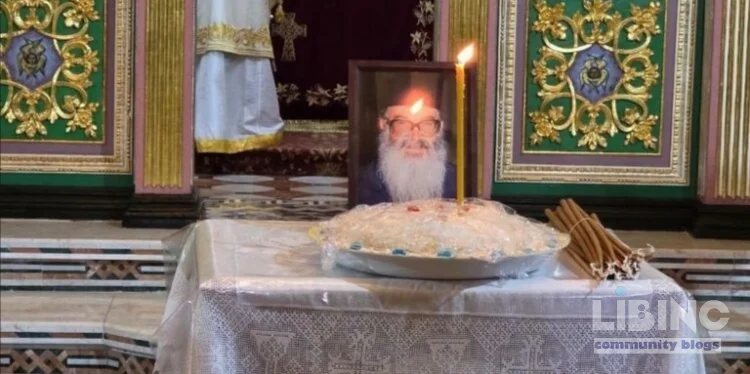
Analyzing the Mount Tabor Memorial Service: liturgical memory, Holy Sepulchre ministry, and inter-Orthodox solidarity in the Nazareth Metropolis
Table of Contents
- Analytical perspective on the Mount Tabor Memorial Service
- Contrasts and comparative memory within the Holy Land’s Orthodox practice
- Causes and effects: how the memorial reshapes ecclesial life
- Expert reconstruction: interpreting the Mount Tabor Memorial Service in a longer arc
- Closing synthesis
On 25 July 2026, the Mount Tabor plateau in northern Israel hosted a high-stakes liturgical event: the fortieth-day Memorial Service for Hieromonk Hilarion, under the presidency of Patriarch Theophilos III of Jerusalem. The gathering, which included Metropolitan Hesychios of Capitolias, Metropolitan Joachim of Helenoupolis, and a vestiary of hierarchs, clerics, and monastic communities, framed a moment of spiritual memory and institutional continuity. The Mount Tabor Memorial Service here is more than a ritual obituary; it is a strategic act of liturgical memory that binds past sanctity to present ecclesial authority. By examining the ceremony’s structure, its scriptural grounding, and its attendant social dynamics—the role of the Holy Sepulchre Brotherhood, the Reineh community, and the Nazareth Metropolis—we can illuminate why such memorials endure as central instruments of canonical legitimacy and sacred space preservation in the Holy Land. The Mount Tabor Memorial Service thus serves as a lens on how Orthodoxy negotiates memory, space, and leadership within a contested regional landscape, where diplomacy and devotion intersect at a plateau famous for the Transfiguration of Christ.
Analytical perspective on the Mount Tabor Memorial Service
The Mount Tabor Memorial Service is analyzed here not as a singular rite but as a composite act that reasserts ecclesial authority and communal belonging. The service’s liturgical texture—Divine Liturgy followed by the fortieth-day Memorial Service—operates on several interlocking planes: theology, ritual economy, and the politics of sacred space. Theologically, the rite anchors memory in the resurrection narrative: the deceased are not merely mourned but reiterated as participants in the life of the Church, a claim reinforced by scriptural citations such as 1 Thessalonians 4:13-14 and John 5:24. The Liturgical economy—intended to harmonize praise, supplication, and the memory of the departed—fulfills the Apostle Paul’s injunction to present the body as a living sacrifice through the Holy Spirit, thereby linking Hilarion’s life to the larger salvific drama of the Church.
- Liturgical architecture matters: the memorial service sits within a Mount Tabor context that itself embodies divine transfiguration as a symbolic backdrop for spiritual renewal.
- Textual program matters: scriptural and patristic citations are not decorative; they reframe the memory of Hilarion within the eschatological horizon of resurrection and eternal life.
- Ecclesial actors matter: the presence of hierarchs from Nazareth and beyond signals an interdiocesan unity around a shared sacred memory, reinforcing the Holy Sepulchre Brotherhood’s mission and the Holy Land’s pilgrimage network.
From this perspective, the Mount Tabor Memorial Service demonstrates how memorial rites function as soft power, aligning local piety with canonical tradition and the broader ecclesial project of preserving sacred geography. The Holy Sepulchre Brotherhood’s legacy is not a static relic; it is a living framework that continues to mobilize communities around shared rites, which in turn sustains the Holy Places’ symbolic force in a volatile regional environment. The emphasis on the Dimittis-like tone of the service—the call to rest from labors and to leave a lasting witness—transforms grief into a liturgical resource for communal identity formation and inter-church collaboration, with the Reineh community serving as a visible locus of local devotion within the Nazareth Metropolis.
Contrasts and comparative memory within the Holy Land’s Orthodox practice
Placed beside other memorial traditions in Eastern Orthodoxy, the Mount Tabor Memorial Service reveals both continuity and distinction. It shares core elements with Makaria ceremonies—the final memorial meal and the ceremonial commemorations that follow a death—but it situates these elements within a historically charged landscape where sacred space continuity and monastic labor intersect with metropolitan governance. In comparison to memorials held in more centralized metropolitan centers, the Mount Tabor rite emphasizes local memory tied to a geographically resonant site—the Mount of Transfiguration—thereby strengthening a regional narrative of sanctity and stewardship that the Nazareth Metropolis actively champions through its clergy and monastic staff.
- Site-specific liturgy: Mount Tabor’s Transfiguration backdrop deepens the symbolic resonance of Hilarion’s service, linking personal memory to a historic moment of divine revelation.
- Monastic-civic interface: The ritual brings together canons, community nuns, and lay faithful, illustrating a nexus where monastic leadership, parish life, and pilgrimage networks converge in a single ceremony.
- Historical continuity vs. modern diplomacy: The presence of visiting hierarchs and a secretary of the Holy Synod underscores the ceremony as a platform for ecclesial diplomacy, not merely mourning.
The Holy Sepulchre Brotherhood’s influence in this setting is not incidental; it acts as a guarantor of sacred memory, ensuring that the memorial work goes beyond personal tribute to a structural reaffirmation of sacred geography, monastic mission, and the protection of holy sites within the collective conscience of Orthodox believers in the Holy Land. The Mount Tabor Memorial Service thus operates on a dual axis: it consoles the bereaved while publicly renewing a policy of sanctity preservation that has historically underwritten pilgrim routes, monastic landholding, and inter-Orthodox relationships within the region.
Causes and effects: how the memorial reshapes ecclesial life
To understand the memorial’s effects, one must map the causal chain from liturgical act to communal transformation. The fortieth-day memorial creates a hinge moment: it consolidates the deceased monk’s legacy, legitimizes the present ecclesial leadership, and solidifies a shared memory that future generations will access through ritual practice and space-keeping. The cause-and-effect pattern extends beyond personal bereavement to institutional coherence within the Holy Sepulchre’s patrimony, the Nazareth Metropolis’s pastoral reach, and the wider network of Rum Orthodox communities connected to Reineh and surrounding locales.
- Memory as governance: A memorial service reinforces leadership narratives by presenting the deceased as a model of priestly service aligned with biblical exhortations to shine one’s light before others.
- Space preservation: By conducting the service on Mount Tabor, the ceremony reinforces the valley’s sacred status and reinforces the argument for continued care and investment in holy sites.
- Pilgrim and monastic networks: The gathering amplifies pilgrim flows and strengthens monastic ties with neighboring districts, ensuring resource and spiritual exchanges among communities such as Reineh.
These dynamics show how memorial rites can function as strategic instruments of intra-Orthodox cohesion and sacred-space stewardship. The persisting memory of Hieromonk Hilarion becomes a resource for reconciliation among communities with diverse liturgical sensibilities, while the ceremony also communicates a message of continuity to external observers and to the local faithful who rely on the Holy Sepulchre Brotherhood for a living link to their shared past. The Makaria offered at the Hegumen’s Residence after the service symbolizes a social and liturgical closure that translates memorial memory into communal nourishment and fellowship, reinforcing the bond between contemplation and daily life in the Nazareth Metropolis.
Expert reconstruction: interpreting the Mount Tabor Memorial Service in a longer arc
From an expert’s vantage, the Mount Tabor Memorial Service can be read as a deliberate inscription of memory into ongoing ecclesial practice. Such rites function as memory technologies that coordinate theology, space, and social relations. Theologically, the memorial reframes the departed’s life as a living witness whose works continue to follow them, aligning with Paul’s exhortations about faith, love, and endurance under pressure. Spectral of this approach is the insistence that the presented fathers and monks are participants in a larger eschatological drama, not simply subjects of commemoration. The ceremony, then, becomes a theatre of authority, in which liturgical choreography and scriptural invocation reinforce a canonical narrative about unity, mission, and holy space stewardship.
- Liturgical choreography as governance: The sequence of Divine Liturgy and memorial rites curates a rhythm that sustains trust in ecclesial leadership across diocesan boundaries.
- Memory and materiality: The Mount Tabor site’s materiality—its mountainous contour and its association with the Transfiguration—translates memory into a tangible claim on sacred geography.
- Networked authority: The attendance of Metropolitan Hesychios, Metropolitan Joachim, and other hierarchs signals an explicit demonstration of hierarchical solidarity and shared governance of sacred spaces.
Interpreting the Mount Tabor Memorial Service as a long-view construct suggests a trajectory in which memorial acts stabilize a fragile regional religious landscape. The Holy Sepulchre Brotherhood’s ongoing ministry, buttressed by this service, functions as an institutional memory archive that preserves not only the past but also the practical means of continuing sacred work. The Reineh community and nearby districts thus benefit from a ritual economy that coordinates liturgy, pastoral care, and monastic cultivation. The expert reconstruction implies that the Mount Tabor Memorial Service is a deliberate act of memory-making with enduring implications for ecclesial identity and the stewardship of holy spaces in the Holy Land.
Closing synthesis
The fortieth-day Memorial Service at Mount Tabor is not a singular farewell but a strategic nexus where memory, space, and leadership converge. It embodies a liturgical logic in which the departed’s life illuminates present faith, the sacred geography of Mount Tabor reinforces communal boundaries, and the Holy Sepulchre Brotherhood anchors a shared mission across diocesan lines. The event confirms that memorial rites in this context function as tools of continuity, not merely acts of remembrance. By framing Hilarion’s priestly labor as a living witness—rooted in scriptural authority and expressed through a robust monastic-pilgrim network—the ceremony strengthens the Nazareth Metropolis’s capacity to nurture faith communities across generations. In this sense, the Mount Tabor Memorial Service acts as a durable instrument of Orthodox memory, sustaining the Church’s presence in a landscape where sacred history and contemporary life remain in constant dialogue.
Closing the practical gap: integrating memory governance with site stewardship
While the Mount Tabor memorial analysis foregrounds ritual structure and interdiocesan symbolism, it offers limited guidance for local communities to operationalize memory governance in daily life. This section lays out concrete mechanisms that Nazareth Metropolis, Reineh, and the Holy Sepulchre Brotherhood can implement to translate memory into ongoing stewardship, education, and pilgrim management.
Table: Operational links between rite and space stewardship
| Aspect | Action in Liturgy | Site Stewardship | Community Role | Output |
|---|---|---|---|---|
| Memory anchor | Fortieth-day memorial | Mount Tabor care | Monastic & parish | Sacred geography sustained |
| Textual program | Scriptural citations | Patristic context | Educators & guides | Shared narrative |
| Ecclesial actors | Hierarchs in attendance | Pilgrim network | Local clergy & nuns | Canonical unity |
| Space politics | Liturgical choreography | Decorum and access | Transparency in governance | Legitimate space use |
| Memory economy | Makaria afterglow | Resource sharing | Volunteer mobilization | Sustained devotion |
Visual guide: practical actions to implement memory governance
- Establish an annual Mount Tabor remembrance day with a pilgrim route plan and liturgical timetable.
- Create a local archive of texts, photos, testimonies, and liturgical texts to enable education and memory sharing.
- Coordinate with the Holy Sepulchre Brotherhood on maintenance protocols for sanctuaries and pathways.
- Develop youth programs that connect sacred geography to daily life and service projects.
Action framework: immediate, mid-term, long-term steps
- Immediate: appoint a site custodian and gather basic liturgical texts for reuse.
- Mid-term: launch a community pilgrimage network with Reineh and Nazareth.
- Long-term: establish a virtual memory archive and periodic inter-Orthodox symposia.
By tying memory to concrete practices, the Mount Tabor ceremony becomes a blueprint for sustained sacred space stewardship across communities and generations, weaving continuity into daily faith life.
What is the Mount Tabor Memorial Service and why does it matter?
The Mount Tabor Memorial Service is a longstanding Orthodox ritual that commemorates a monk or hieromonk on the fortieth day after death, integrated with the Divine Liturgy to anchor memory within the life of the Church. The rite binds local devotion to a wider network of pilgrimage, monastic leadership, and sacred geography, turning personal grief into communal witness and ecclesial continuity. It matters because it communicates leadership legitimacy, preserves sacred space, and reinforces interdiocesan unity among Nazareth, Reineh, and Jerusalem centers.
Analytically, the ceremony becomes a living memory tool that aligns personal virtue with corporate governance, ensuring sacred spaces remain active centers of worship and education for future generations.
How does the service illustrate memory governance and sacred space in the Holy Land?
The rite operates at the intersection of liturgical practice, space management, and community memory. By staging the memorial on Mount Tabor and inviting hierarchs from multiple eparchies, it demonstrates governance through ritual act, while the Mount Tabor setting literalizes memory in place. The service reinforces a shared narrative about sanctity, protects access to holy sites, and coordinates monastic-pilgrim networks that sustain the sacred geography over time.
Analytically, it shows memory governance as a living system where ritual, space, and social ties reinforce each other, stabilizing a volatile regional religious landscape.
What roles do the Holy Sepulchre Brotherhood, Reineh, and Nazareth Metropolis play in the memorial?
The Holy Sepulchre Brotherhood acts as the custodial memory institution, while Reineh provides local devotion and a geographic anchor for daily worship. The Nazareth Metropolis coordinates pastoral oversight and interdiocesan dialogue, ensuring the memorial’s meaning extends beyond a single parish. Combined, these actors create a network that preserves the rite’s sacred geography, supports monastic careers, and sustains pilgrimage flows that connect believers to key holy sites.
Analytically, such collaboration demonstrates memory governance in practice: a distributed authority that keeps sacred space vibrant and reachable for ordinary worshippers and visitors alike.
What practical steps can local communities take to sustain sacred sites around memorial rites?
Practically, communities can establish a standing memory team, maintain a digital archive of liturgical texts, and implement small-scale preservation projects (pathway repairs, signage, and accessibility). They can also schedule youth-oriented education on Mount Tabor’s Transfiguration symbolism and create volunteer patrols for site cleanliness and safety during pilgrim seasons.
Analytically, these steps convert ritual memory into sustained stewardship and inclusive participation, ensuring sacred spaces remain living resources rather than historical artifacts.
How does this ceremony relate to broader Orthodox memory practices and other memorial rites like Makaria?
The Mount Tabor memorial shares core Orthodox motifs with Makaria and Makarian meals, including communal meal practices, prayers for the deceased, and an emphasis on continuity between life and eternity. However, its site-specific framing on a mountaintop linked to the Transfiguration adds a symbolic layer that emphasizes divine revelation and prophetic witness in memory governance. The rite thus illustrates both shared and distinctive features within Orthodox memorial culture.
Analytically, it shows how geography and liturgical choreography shape collective memory while remaining connected to universal patterns of mourning and solidarity.
How can pilgrims engage with Mount Tabor memory in daily life?
Pilgrims can incorporate Mount Tabor memory by visiting the site with guided routes, following the liturgical calendar, and participating in local monastic programs that teach the Transfiguration symbolism. They can also contribute to the memory archive with testimonies, photographs, and reflections, and support space preservation through volunteer activities and donations.
Analytically, daily engagement turns sacred memory into actionable faith, strengthening personal devotion and communal identity across generations.





Add a comment
To comment, you need to register and authorize
Comments