

The Church of the Presentation of the Lord in Tanta: Renewal as a Barometer of Orthodox Resilience in Egypt
The Church of the Presentation of the Lord in Tanta stands at the intersection of faith, memory, and diplomacy. In a region where heritage assets compete with rapid modernization, its reopening after a comprehensive renovation becomes a test case for how Orthodoxy sustains itself within Egypt’s wider religious and civic landscape. The event, led by Patriarch Theodoros II of Alexandria and All Africa, signals more than bricks and sanctuaries; it signals a deliberate commitment to living worship and to the continuity of a historical community whose roots reach back to the late 19th century.
This analysis asks: why does this restoration matter now, and what does it reveal about the future of Orthodoxy in Egypt? We examine the leadership presented in Tanta, the role of the Metropolis of Hermopolis, and the state's support for historic churches under President Abdel Fattah el-Sisi. We also consider the broader implications for Greek-Egyptian and Greek-Cypriot ties, the memory of early Greek settlers, and the ongoing work of heritage preservation in a modern state. The answer lies in a nuanced understanding of memory, religion, and governance as interdependent forces shaping a living religious landscape.
Analytics perspective
The restoration of the Church of the Presentation of the Lord in Tanta is best understood as a multi-layered signal. Historically, the foundation stone was laid on 11 March 1886 by the late Patriarch Sophronius IV of Alexandria, marking a period when the Greek community in Tanta thrived as a center of Orthodox life in Upper Egypt. The current renovation translates that historical moment into a contemporary act of stewardship, ensuring that the physical space remains a conduit for living faith rather than a relic. The analytical question is not merely about reconstruction; it is about sustaining a ritual ecology that binds language, liturgy, and lineage across generations.
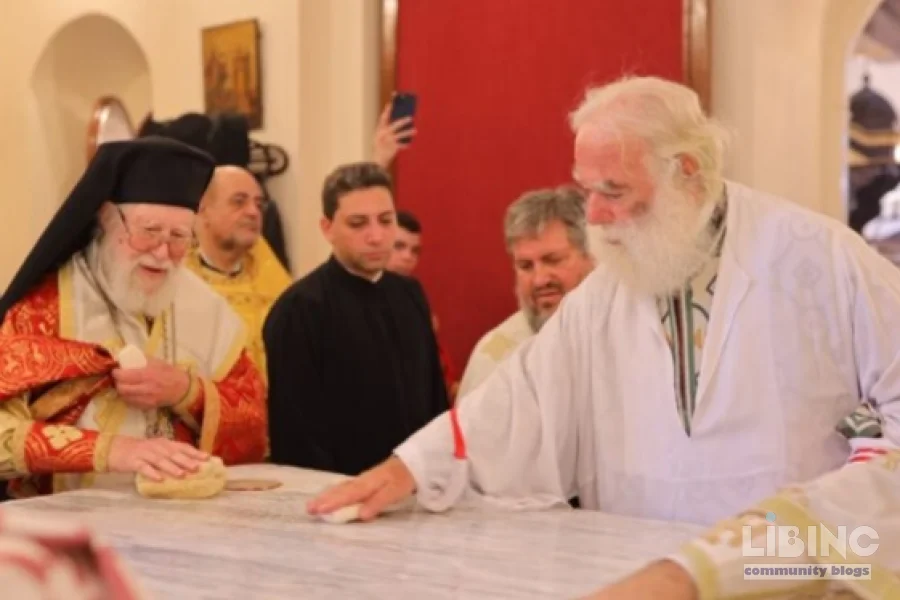
Architecturally and liturgically, the project targets preservation of the church’s domes, interior iconography, and the Holy Altar, whose consecration during the Divine Liturgy reaffirms the space as a sacred instrument for worship, not a museum artifact. The act of consecration by Patriarch Theodoros II serves as a doctrinal reaffirmation: orthopraxy—the right practice of faith—remains the core of the community’s life. The renovation is thus a hardware upgrade for a living software system: the Church’s rituals, languages, and social functions must be enabled to operate in a changing environment without losing their distinct identity.
On a macro scale, the event is a data point in the broader policy of the Egyptian state toward religious heritage. President el-Sisi’s era has witnessed visible attention to historic churches as symbols of cultural diversity and national legitimacy. The restoration of historic churches, the construction of new ones, and the establishment of ecclesiastical and charitable institutions act as a form of soft power, widening Egypt’s diplomatic reach among Greece, Cyprus, and the global Orthodox diaspora. The Tanta project, then, is not only about a single parish; it is about how a state negotiates memory, heritage economies, and religious pluralism in a modern nation-state.
Socially, the event underscores the role of the Greek community in Egypt and its ongoing ties with the Arab-speaking Orthodox faithful across the country. The attendance of Greek diplomats, Cypriot officials, and leaders from the Coptic Church in Tanta signals a layered diplomacy of coexistence. The presence of local authorities and institutional representatives indicates that the church is now interpreted as a shared space for historical memory, intercommunal dialogue, and civil society engagement. In short, the renovation reframes a church as a node in a web of cultural diplomacy, heritage economics, and communal resilience.
Ultimately, the restoration is a case study in how memory and material culture converge to sustain a religious population in exile and in place. The stones speak not only of prayers and tears but of decisions—about funding, governance, and interfaith collaboration—that determine whether Orthodoxy remains visible and viable in Egypt’s public sphere. The olive tree planted by the Patriarch at the end of the ceremony embodies a forward-looking symbol: hope rooted in rootedness, continuity secured by care, and peace anchored in shared memory.
Contrasts across time
Two trajectories define the Church of the Presentation of the Lord in Tanta: a historical arc of growth and a modern arc of restoration. The first reflects a late 19th-century flourishing of Greek life in Egypt, when Orthodox clergy, lay leaders, and benefactors established networks that made Tanta a beacon for Greek-speaking Orthodox faithful in Upper Egypt. The second arc, however, presents a landscape shaped by intermittent decline, outward migration, and shifting religious demographics. The contrast is not merely about bricks versus memory; it is about whether the church remains a dynamic workspace for worship and community life or becomes a static monument under protective glass.
In the present moment, the church’s reopening reframes that contrast. The restoration restores liturgical capacity and community function at once. It preserves the physical environment where generations were baptized, married, and mourned. Yet the act is also a statement that Orthodoxy in Egypt is not a relic but a living tradition capable of absorbing shocks from migration, political change, and social modernization. The Greek community in Cairo, along with Arabic-speaking Orthodox faithful across cities like Tanta, demonstrates that the church’s vitality depends on a network of relationships that extend beyond a single parish or country.
From a comparative vantage point, the Tanta project aligns with broader patterns in Eastern Christian heritage: a deliberate coupling of conservation with living worship, state endorsement with minority rights, and diaspora engagement with domestic religious life. While many churches abroad become centers of tourism and scholarship, the Church of the Presentation of the Lord in Tanta aspires to be a living hub where liturgy remains central and memory becomes a resource for future generations. The contrast, then, is not of preservation versus novelty, but of preservation as enabler of ongoing religious practice and social cohesion.
The narrative also highlights the role of leadership in sustaining identity. Patriarch Theodoros II frames restoration as a duty to history and to the faithful who have persevered despite periods of decline. Metropolitan Nicholas of Hermopolis and the parish leadership are cast as stewards of both the sacred space and the community it binds. In this sense, the contemporary church is a product of continuous negotiation among ecclesiastical authority, lay patrons, and the state, all of whom must reckon with the memories embedded in the stones and the demands of a changing generation of worshippers.
Causes and consequences
The renovation action can be traced to several interlocking causes. First, a tangible restoration imperative emerged from the need to safeguard a building that has long symbolized the Greek presence in Tanta and Western Delta. The founding history, with the 1886 cornerstone, anchors a narrative of long-standing community life that demanded continuity. Second, external political and diplomatic incentives mattered. The Egyptian state’s interest in preserving historic churches aligns with broader regional stability goals and with international perceptions of Egypt as a custodian of diverse religious traditions. Third, philanthropy and community mobilization played crucial roles. Major benefactors and the Greek community in Cairo contributed resources, while support from Greece and Cyprus reinforced transnational bonds. Fourth, ecclesial leadership shaped the process. Patriarch Theodoros II energized the renovation, underscoring that restoration is a moral act as much as a structural one, linking stewardship to the memory of generations who built and sustained Orthodox life in Egypt.
What follows are the observable implications of these causes. First, worship resumed in a renovated sanctuary with a restored Holy Altar, enabling ongoing liturgical life that honors the church’s 19th-century origins while conforming to 21st-century needs. Second, the event reaffirms the Greek community’s presence in Egypt as a living, evolving diaspora, not a historical footnote. Third, the ceremony elevated the church into a site of cultural diplomacy, strengthening ties with Greece, Cyprus, and other Orthodox communities. Fourth, it set a precedent for future conservation projects across Egypt, signaling a policy environment favorable to heritage-led communal resilience. Finally, the planting of the olive tree symbolizes a forward-looking continuity: peace, prosperity, and shared responsibility for preserving sacred spaces in a complex regional landscape.
Impact on local interfaith and civil society remains nuanced. The presence of Coptic bishops, Egyptian authorities, and foreign ambassadors indicates a climate in which religious heritage can serve as a bridge rather than a banner for division. Yet the success of such efforts depends on sustained governance, transparent fundraising, and long-term maintenance plans. The Church of the Presentation of the Lord in Tanta thus operates as a microcosm of heritage policy in action: decisions made today shape the capacity of Orthodox communities to endure tomorrow’s tests of identity, mobility, and legitimacy.
From a doctrinal perspective, the event reinforces the continuity of liturgical identity within a multilingual and multiethnic church. The sacred language of the original Greek, the liturgical practices of the Orthodox tradition, and the historical memory of Greek Egyptians converge in a contemporary act of renewal. This convergence underscores that the church’s vitality depends not only on architectural integrity but also on the ability to sustain the rituals, languages, and networks that knit generations together. The cause-and-effect trajectory is clear: strong leadership and community solidarity produce durable heritage outcomes that, in turn, enable continued worship and cultural exchange.
Expert reconstruction
Envisioning the Church of the Presentation of the Lord in Tanta as a living heritage project requires an expert lens on both the concrete and the symbolic dimensions of restoration. A heritage professional would assess the scope of work as not only cosmetic but also systemic: structural reinforcements, archival documentation of iconography, conservation of stonework, and upgrading of liturgical spaces to accommodate contemporary worship while preserving period aesthetics. The project’s success rests on integrating traditional craftsmanship with modern conservation methods, ensuring that any interventions respect the original materials, geometry, and symbolic language of the building.
One critical area is the Holy Altar and sanctuary precinct. The consecration ceremony conducted by the Patriarch is more than ritual; it signals that the sanctified space remains the center of Orthodox life in Tanta. The expert reconstruction would emphasize meticulous attention to the altar arrangements, lighting, acoustics, and climate control to protect sacred objects and ensure long-term usability for liturgical rites, processions, and the sacraments. The restoration should also address the church’s domes and exterior façades to preserve architectural integrity while improving resilience to weathering and potential seismic activity common in the region.
In terms of intangible heritage, the project must safeguard the Greek language liturgy, singing traditions, and ecclesial memory embedded in the community. This involves documentation of chants, prayers, and ecclesiastical vestments, as well as the training of clergy and parish staff to maintain continuity in an era of demographic shifts and diaspora movements. The expert view would call for a formal governance framework that includes routine maintenance cycles, emergency funding reserves, and a stewardship plan aligning with the Patriarchate of Alexandria’s long-term objectives for Orthodox life in Egypt.
From a sustainability standpoint, the olive tree planted by the Patriarch connects ecological stewardship with spiritual renewal. An expert reconstruction would recommend integrating landscape maintenance into the church’s governance, ensuring that courtyard flora enhances microclimates around the sanctuary, provides shade for outdoor liturgical activities, and serves as a living symbol of resilience. The project’s ripple effects extend to education and outreach: the church can host heritage-focused programs, interfaith dialogues, and cultural events that illuminate the Greek-Egyptian experience for younger generations and visiting scholars alike.
Finally, the case of the Church of the Presentation of the Lord in Tanta offers a blueprint for similar restorations in Egypt and beyond. The interplay of ecclesiastical leadership, diaspora philanthropy, state patronage, and local engagement demonstrates that heritage conservation thrives when it is embedded in living communities. The expert reconstruction thus envisions a trajectory in which this church remains a dynamic center for worship, memory, and cross-cultural dialogue for decades to come, steadily reinforcing Orthodoxy’s presence in the Nile valley as a durable, adaptive tradition.
In closing, the renewal of the Church of the Presentation of the Lord in Tanta is not merely about restoring a sanctuary; it is about sustaining a lineage. The building’s stones, the voices within its walls, and the network of communities that rally around it collectively determine the future of Orthodox life in Egypt. The olive tree’s quiet growth in the church courtyard stands as a living pledge: a future where memory and faith continue to shape a shared public space, and where the Greek community in Egypt remains a vital thread in the national tapestry of the Nile region.
Governance and long-term maintenance blueprint
To ensure the renovation yields durable living heritage, a formal plan for governance and upkeep is essential. The gap is not only in stone but in stewardship: without defined roles, budgets, and risk management, liturgical continuity and conservation can deteriorate. The following instruments translate policy into practice for the Church of the Presentation of the Lord in Tanta and are adaptable to other heritage sites.
| Role | Responsibility | Cadence | Budget | Status |
|---|---|---|---|---|
| Parish Council | Oversees maintenance and liturgical space | Quarterly | $12k | Active |
| Patriarchate Liaison | Ensures doctrinal and liturgical standards | Semi-annual | $6k | Planned |
| Donor Fund | Finances repairs and conservation | Annually | $20k | Fundraising |
Analysis: this governance tool clarifies accountability, aligns Greek-Egyptian partnerships, and stabilizes funding against climate and demographic shifts, enabling steady worship and preservation.
Analysis: a transparent budget map helps donors and authorities see progress and exposes gaps, guiding future fundraising rounds and ensuring ongoing liturgical life and public access.
What is the significance of the Tanta church renovation for Orthodox life in Egypt?
The renovation matters because it preserves a living place of worship and memory for Greek-Egyptian communities within a changing society. It links liturgical continuity with heritage conservation to demonstrate that tradition can endure alongside modernization. This is not only about building repair but about sustaining a community’s rituals, language, and social networks. The effort also signals to regional partners that religious heritage remains a center for dialogue and resilience in Egypt.
Analytically, the project shows how faith communities coordinate with state policies and diaspora philanthropy to protect living culture, while inviting broader civil-society engagement and intercultural exchange.
How does the renovation support living worship and liturgical continuity?
The restoration prioritizes the Holy Altar, domes, iconography, and acoustics to ensure reverent worship can continue in a renovated space. By preserving liturgical languages and ritual practices, the church remains a center for weekly services, weddings, baptisms, and feasts, rather than a static monument. This continuity strengthens identity among Greek Egyptian and Arabic-speaking Orthodox faithful alike.
In practical terms, improved climate control and lighting protect sacred artifacts, while staff training preserves chant, reading, and ceremony traditions for future generations.
What governance measures ensure long-term maintenance?
The project advocates a formal governance framework with defined roles, quarterly reviews, and a dedicated maintenance fund. Clear reporting to the parish, the Patriarchate, and international partners builds transparency. A contingency plan addresses climate risks and voluntary fundraising cycles, ensuring that upkeep and worship can proceed without interruption.
Analytically, governance reduces risk, aligns diaspora support with local need, and creates a scalable model for other heritage sites in Egypt.
What roles do state and international partners play in heritage conservation here?
State support signals national recognition of diverse religious heritage, while Greek and Cypriot partners provide diaspora resources and cultural diplomacy. The collaboration encourages cross-border cultural exchange, visitor engagement, and scholarly access. It also offers a framework for safeguarding minority heritage within a diverse national tapestry.
From a policy view, this partnership demonstrates how soft power and heritage-led resilience can coexist with democratic pluralism and social cohesion.
How can visitors engage with the church’s heritage beyond worship?
Guided tours, clergy-led talks, and heritage programming can be offered in multiple languages, highlighting iconography, history, and the Greek-Egyptian narrative. Temporary exhibits, concert series, and interfaith dialogues can broaden public understanding while protecting sacred spaces during events.
These activities foster intercultural learning, community pride, and a sustainable visitor economy around a place of living worship.





Add a comment
To comment, you need to register and authorize
Comments