

Vendicari Nature Reserve: A Sicilian Wetland Model for Conservation and Community Resilience
Table of contents
- Analytics through Vendicari: wetlands, policy, and people
- Through contrast: development pressure and the activist countercurrent
- Cause and effect: wetlands health, migration, and governance
- Expert reconstruction: lessons for contemporary reserve management
Vendicari is more than a coastline postcard. The urgent question is not merely what you see, but what you save. The Sicily wetlands known as Vendicari sit at the intersection of migratory routes, agricultural history, and political will. In our rented baglio by the sea, we learned that preservation requires more than charm; it demands credible opposition to short-term gain, and a shared language among locals, policymakers, and scientists. The stakes are clear: a local ecosystem that supports tens of thousands of waterbirds, a regional identity built around traditional farming and seasonal harvests, and a public trust in the protection of Europe s marshlands. The hidden conflict emerges when development promises jobs or growth but erodes ecological capital that sustains both people and birds. Our journey through Vendicari reveals how history pressures the present to decide its future. The analysis that follows uses four angles to map the terrain: analytics, contrast, cause and effect, and expert reconstruction.
Analytics through Vendicari: wetlands, policy, and people
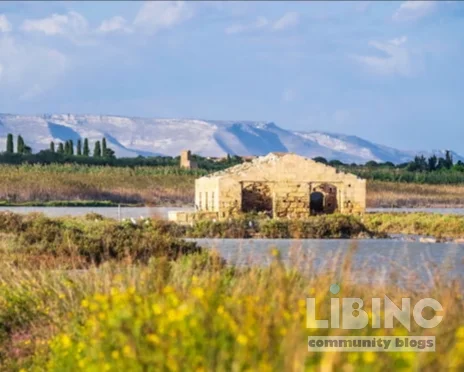
Vendicari occupies the southeast corner of Sicily near Noto. It hosts two lakes at its heart that gather thousands of flamingos, ducks, stilts, and wading birds during migration. The reserve is rightly celebrated as one of Sicily s most important wetlands, a site that demonstrates how hydrology, soil chemistry, and climate interact to sustain biodiversity. In 1984 it earned designation as a Ramsar site, signaling international recognition of its ecological value and the obligation to protect it from irreversible loss. Yet designation alone does not guarantee resilience. Hydrologic balance, salt marsh dynamics, and the integrity of feeding grounds depend on land use in the surrounding bagli, farmland, and urban pressure.
The area confronted a plan in the 1970s by an asphalt and petroleum company to build an oil refinery here. Local officials, sipping coffee in baroque towns, approved the plan without fully accounting for migratory routes and the marsh s capacity to absorb industrial pollution. Then Bruno Ragonese, an immigrant from Libya with 20 abandoned dogs, mobilized local communities, used field observations on birds, and argued that migratory birds cross continents and require international protection. His activism, paired with Ramsar s intervention, created a coalition that stalled the project and reframed the reserve not as a local resource, but as a globally significant habitat.
The reserve s governance structure relies on a mix of regional policy, local associations, and ecotourism. The cost of protection is real; the payoffs include stable bird populations, a scenic landscape that supports sustainable tourism, and a growing local pride around agricultural products like Femminello Siracusano lemons. The lemon groves, the baglio s stone walls, and the daily rhythms of harvests shape a landscape that makes ecological conservation a practical, not purely moral, choice. This is why tools such as habitat mapping, seasonal staffing for patrols, and community education become essential components of resilience in Vendicari.
Calamosche beach and the Grotta di Calamosche illustrate how wilderness and accessibility can coexist. The reserve shelters a coastline that tempers the sea with dunes, juniper, and wild irises, while remaining a place where visitors can walk or picnic. Behind the beach, the ruins reach back to a tuna cannery and, further back, to the era when oil interests pressed for industrial scale in a marshland that sustained a different economy. The layered history matters because it shows how conservation is not merely about protecting a single species, but about defending a web of uses that span time and people. The two lakes at the heart of Vendicari teem with flamingos, black-winged stilts, and grebes, as if the air itself holds a whispered debate about priority and future. The ecological story is simple in outline but complex in consequence: protect the habitat, protect the migratory routes, and you protect the livelihoods that depend on them.
Through contrast: development pressure and the activist countercurrent
In the Sicilian landscape, contrast is not a rhetorical device but a daily negotiation. The baglio that housed us sat beside lemon groves that yielded fruit so abundant that the farmers treated abundance as a social contract rather than a one-off gift. The idea of replacing wetlands with synthetic ponds for a cheaper patch of land portended a different future. It was not only about profitability; it was about the scale and speed of change, the politics of local councils, and how memory of the marsh is maintained in a region where tourism, fishing, and agriculture compete for attention. The proposal to drain and reconfigure the land was pitched as modernization, as an upgrade for the local economy. The counterargument, voiced by conservationists, teachers, and a few skeptical officials, insisted that the true product of the landscape is ecological capital—the kind that keeps migratory birds feeding and visitors returning year after year.
The contrast became visible in four episodes that echo through Vendicari s history. First, the official meeting where the oil plan was debated and the faces of Noto shifted with the wind of justifications. Second, the informal networks that Bruno Ragonese built, turning field observations into a narrative that reached Ramsar headquarters. Third, the everyday choice of farmers and families who harvest lemons responsibly, recognizing the premium value of a healthy marsh as a living market. Fourth, the moment when a family breakfast with ricotta and honey becomes a lesson in how local food cultures depend on protected ecosystems. The tension is not an abstract problem; it is a clash of worldviews about how to measure wealth and how to allocate risk across generations.
- Economic growth vs ecological integrity
- Local governance and opportunistic development
- Activism bridging local knowledge and international law
- Ecotourism as a healing compromise
These contrasts illuminate why Vendicari remains a touchstone in discussions about Mediterranean wetlands.
Cause and effect: from habitat loss to governance reform
Habitat loss in a coastal wetland triggers cascading effects. Reduced feeding grounds, altered hydrology, and fragmented roosting sites push migratory birds toward riskier routes and reduced reproductive success. In Vendicari, the potential oil refinery would have introduced pollutants, increased sedimentation, and disrupted the delicate balance between fresh and brackish water that sustains the lakes and the dune systems. The immediate effect would have been a visible decline in bird populations during the peak migration windows, followed by shifts in the predator-prey relationships that support the broader ecosystem. The broader social effect would be a decline in local livelihoods tied to birdwatching, beachgoers, and harvests from the lemon groves. The cost of losing these services would fall on communities that rely on a stable, legible landscape for their identity and income.
What happened instead reveals a chain of governance and civil action that reshaped the outcome. Ramsar contacted local authorities and demonstrated that this is not simply a regional problem but an international obligation. Environmental groups formed a coalition that argued for a more functional water regime, not a cosmetic patch. The result was a policy environment that values climate resilience, wetland restoration, and cross-border cooperation with North Africa on migratory routes. The key causal relationships are clear: strong evidence of ecological value drives policy attention; informed advocacy expands the repertoire of tools for conservation; and community narratives reframe land use from a zero-sum game to a shared investment in ecological capital.
Four causal threads stand out:
- Ecological value triggers policy attention and funding opportunities
- Community science expands the evidence base and legitimizes action
- Legal instruments like Ramsar create binding expectations for preservation
- Economic alternatives such as ecotourism align local incentives with conservation
In Vendicari, the net effect is not a binary victory but a shift in how the reserve is perceived and governed. The presence of the two lakes, the lemon groves, and the baglio s stone walls becomes a living dataset that guides ongoing management.
Expert reconstruction: lessons for contemporary reserve management
From the trenches of this Sicilian landscape, four practical lessons emerge for reserve management anywhere that migratory birds rely on a mosaic of habitats.
- Integrated governance: align regional policy, local communities, and scientists under a shared monitoring framework
- Transparent impact assessment: require public disclosure of all land-use changes and long-term environmental costs
- Co-management with communities: build local legitimacy by including farmers, fishermen, and ecotourism operators in decision making
- Adaptive management and climate resilience: design flexible strategies that can withstand droughts, floods, and shifting migratory patterns
In Vendicari, the model rests on a deliberate balance between access and protection. Visitors are welcome, but with rules that protect sensitive feeding grounds and preserve the integrity of the dunes. Local lemon farmers gain a reliable future by marketing the region as a high-quality, sustainable product rather than as a quick extractive opportunity. The Ramsar framework provides a scaffold for cross-border cooperation and long-term stewardship, but it requires constant engagement from locals. The case study shows how a place can retain its character while embracing progress not as a zero-sum contest but as a calibrated, evidence-driven compromise.
Vendicari demonstrates that wetlands demand more than beauty; they require systems that link ecology, economy, and culture. The history of this reserve teaches that communities, when organized and informed, can steer development toward resilience rather than collapse. The four analytical lenses applied here offer a blueprint for translating field observations into governance that lasts beyond any single administration or project. The future of Vendicari, and other Mediterranean wetlands, rests on keeping migratory birds as living ambassadors of a landscape that people still choose to protect.
Closing the governance loop: practical co-management for Vendicari
What Vendicari needs is a transparent, durable framework that links policy with local practice and scientific monitoring. A compact co-management model can be built around four habits that align the two lakes, the baglio, and the dunes with sustainable use.
Governance options and expected outcomes
| Option | Primary Actors | Key Benefit | Risk |
|---|---|---|---|
| Joint monitoring | Rangers, scientists, farmers | Real-time data access; faster responses | Data overload; need for capacity |
| Public dashboards | Communities, schools | Transparency; local buy-in | Maintenance costs |
| Buffer zones | Park managers, landowners | Habitat protection | Impact on agriculture |
| Ecotourism safeguards | Operators, guides | Sustainable income; incentives | Visitor pressure |
| Impact reporting | All stakeholders | Accountability; informed decisions | Administrative burden |
In practice, a simple sequence can start with a quarterly joint review of water regimes and bird counts, followed by public dashboards and clear triggers for temporary access restrictions or restoration work. Data transparency, together with inclusive decision-making, makes protections durable even as markets shift. A small fund—supported by regional budgets and conservation networks—can seed habitat restoration while ensuring that lemon growers and ecotourism operators see long-term value in conservation. This approach turns ecological capital into tangible local advantage, aligning ecological integrity with livelihood opportunities.
To scale this model, training in habitat mapping and citizen science should be embedded in schools and community groups, with outcomes feeding directly into policy cycles. The Ramsar framework then functions not as distant doctrine but as a living standard that legitimizes locally grounded actions. The result is a resilient landscape where migratory birds remain ambassadors of a shared future, and people perceive protection as a practical, profitable choice. LSI keywords: habitat restoration, co-management, migratory birds, Ramsar obligations, ecotourism governance, climate resilience.
Impact pathway to action
- Evidence-driven decisions → policy alignment
- Community participation → legitimacy and compliance
- Restoration projects → habitat quality up
- Adaptive plans → resilience to droughts and floods
Closing note
The path to durable protection weaves together data, dialogue, and design that respects both birds and farmers. By keeping the landscape legible and the benefits visible, Vendicari can extend its ecological and cultural heritage to future generations.
Frequently asked questions about Vendicari’s wetland conservation
What makes Vendicari a model for Mediterranean wetlands?
Vendicari demonstrates that a fragile coastline can endure when local action is backed by regional policy and international oversight. A Ramsar designation anchors long-term protection, while transparent data and shared decision rights align economic activity with habitat health. This balance keeps migratory birds safe and supports livelihoods in lemon farming and ecotourism. In practice, quarterly joint reviews, public dashboards, and adaptive planning translate protection into everyday choices for residents and visitors alike. This model shows how ecological capital can become a foundation for sustainable development across the Mediterranean.
The depth comes from integrating on-the-ground practice with external accountability, ensuring that the reserve’s character persists even as markets and demographics shift.
How did Ramsar designation influence governance at Vendicari?
Ramsar status reframed the marsh as a globally significant habitat, prompting international attention and civil action. The designation helps justify protective measures, encourage cross-border cooperation on migratory routes, and incentivize data sharing. Locally, it legitimizes community science and supports transparent impact assessments, making decisions less vulnerable to short-term pressures. In short, the designation elevates the conversation from local interests to shared ecological stewardship.
It acts as a bridge between local knowledge and international expectations that sustains long-term governance commitments.
What practical steps support effective community co-management?
Effective co-management rests on four pillars: joint monitoring with open dashboards, inclusive decision-making councils, defined buffer zones to protect feeding grounds, and adaptive plans that respond to climate signals. In Vendicari, these steps translate to regular farmer-ecologist meetings, public access rules during peak migration, and restoration priorities funded by a shared pool. Practically, this requires capacity-building, clear data-sharing protocols, and legal clarity on roles, which together reduce conflict and increase resilience.
Engagement that yields visible benefits for livelihoods sustains participation and compliance over time.
What role does ecotourism play in protecting the wetlands?
Ecotourism provides a revenue stream tied to conservation outcomes, encouraging visitors to respect feeding grounds and supporting restoration work. In Vendicari, guided birding, lemon product branding, and responsible beach use generate income that fuels protection rather than extraction. The key is governance that curates visits, limits impact during sensitive periods, and shares benefits with local communities. This creates a positive feedback loop where protection and tourism reinforce each other.
Successful ecotourism aligns economic incentives with habitat health and community pride.
How can other reserves replicate Vendicari’s approach?
Other reserves can adapt the four-pillar model: establish joint monitoring and dashboards, create inclusive councils, designate buffering zones, and implement adaptive management. The essential element is a phased rollout: start with a pilot in a manageable area, document lessons, and scale as capacity grows. Integrating local data with Ramsar-compatible standards ensures continuity across administrations. This approach translates to real improvements in habitat quality and community well-being while maintaining the region’s cultural identity.
Replication hinges on building trust, ensuring data accessibility, and maintaining a clear path from policy to practice.




Add a comment
To comment, you need to register and authorize
Comments