

India's Rise as a Global Solar Manufacturer: From Import Dependence to a Self-Sufficient Powerhouse
Problem: India's rapid solar expansion exposed a structural vulnerability: heavy reliance on imports for core components of solar infrastructure. Stakes: energy security, price stability, and the pace of the green transition hinge on domestic capability. Hidden conflict: while policy accelerated deployment, domestic manufacturing lagged behind, leaving the economy vulnerable to supply shocks and geopolitical rifts. Direction: this analysis traces how India solar manufacturing evolved from simple assembly to a fully integrated supply chain, the policy levers that fueled the shift, the resulting export dynamics, and the gaps that must be closed to cement lasting self-sufficiency.
Analytics: Mapping India solar manufacturing trajectory
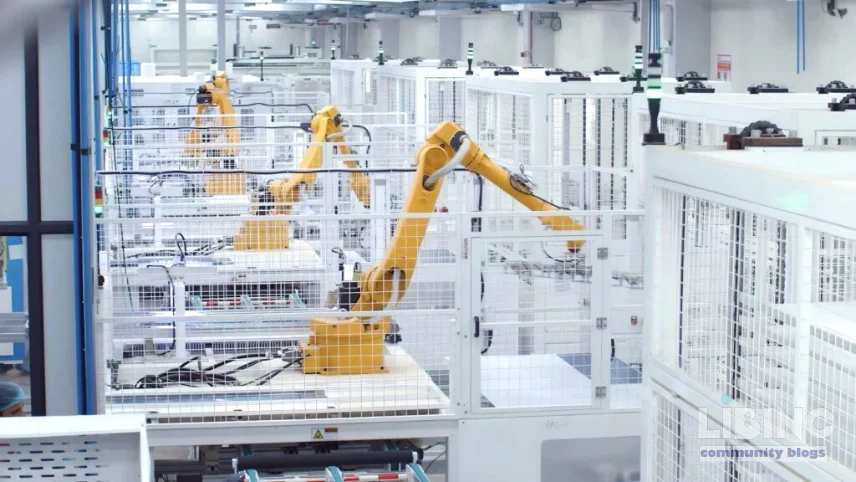
India's solar journey began with rapid deployment, powered by cost-competitive components sourced abroad. The turning point did not lie in subsidizing assembly alone, but in creating incentives for end-to-end manufacturing. The Production-Linked Incentive (PLI) scheme redirected subsidies toward expanding raw manufacturing capacity, encouraging deep vertical integration rather than mere assembly. The Approved List of Models and Manufacturers (ALMM) extended sourcing mandates from government-backed projects to foundational production layers, cementing a domestic pipeline from polysilicon to wafers, cells, and modules. This shift altered the playing field: suppliers faced a domestic demand certainty that rewarded scale, quality, and technology upgrades. India solar manufacturing began to transition from being a price-driven importer to a capability-driven producer.
Upstream realities defined the pace of change. Indian fabs historically concentrated on basic module assembly, while core technologies—especially solar cells, ingots, and polysilicon—remained heavily imported. This created a two-tier supply chain: high-value, high-risk dependence on foreign sources for wafers and polysilicon, and lower-tech, faster-to-scale assembly operations at home. The ALMM tightening, paired with the PLI, compelled manufacturers to invest in domestic upstream capabilities, even as the private sector pursued international markets. The result was a cautious but persistent upward reconfiguration of the value chain toward domestic wafering, ingot crystallisation, and cell production. Why this matters: without vertical integration, energy security is illusory because a shock to one link propagates quickly through the entire system.
Embedded in this transformation is an export dynamic that surprised many observers. As domestic capacity matured, Indian producers began diversifying beyond their traditional markets and selling to Western economies seeking resilient clean-energy supply chains. The export boom, however, did not occur without friction. Trade authorities in importing regions examined price signals and subsidized competition, sometimes invoking countervailing duties and anti-dumping measures on crystalline solar products. Rather than shrinking the industry, these barriers pushed Indian exporters to diversify markets and consolidate capabilities, reinforcing the logic that reliable domestic manufacturing reduces exposure to external policy shifts. The strategic logic is clear: a self-reliant sector can weather geopolitical weather better than a fleet of dependent suppliers.

Key takeaways for India solar manufacturing strategy include: a) policy alignment across procurement and production to nurture domestic high-value segments; b) building a multi-stage foundry ecosystem that can produce wafers, ingots, cells, and modules; c) balancing export ambition with a strong home market to maintain capacity utilization; d) cultivating a robust R&D engine to push next-generation cell architectures and materials. These elements collectively elevate the nation from an importer of equipment to a scalable, globally competitive solar manufacturing hub.
Contrasts: From import dependence to domestic champions
The pre-PLI era in India featured aggressive deployment but fragile supply chains. Modules were assembled domestically, but the heart of the technology—cells and upstream materials—remained foreign. This created a clear asymmetry: rapid growth depended on external suppliers, while domestic firms faced limited incentives to invest in high-end manufacturing. The policy pivot—focusing on raw-material and core-component capacity—reconfigured incentives and risk profiles. As a result, several latent contrasts emerged:
- Scope of manufacturing: assembly-only lines evolved into multi-stage plants capable of producing wafers, ingots, and polysilicon processing, not merely modules.
- Risk exposure: dependence on international supply chains diminished as local capabilities grew, reducing vulnerability to shipping disruptions and sanctions.
- Cost dynamics: while initial CAPEX was high, long-run cost advantages accrued from shorter value chains and more predictable public procurement cycles.
- Market orientation: domestic demand anchored by government projects balanced by growing export markets, creating a more resilient revenue mix for manufacturers.
The reconceived domestic supply chain also altered how Indian firms assessed their competitive edges. In the past, entry barriers favored scale at the module level. Now, the value lies in technical proficiency across the entire stack: cell efficiency, ingot quality, wafer throughput, and polysilicon purity. This shift raises the bar for domestic players but also creates a durable moat against purely price-based competition. export diversification reinforces this effect, as global buyers seek reliable partners with predictable supply schedules and quality control systems.
Alongside these shifts, the ALMM framework extended its reach from project approvals to the very foundations of production. This was not merely a bureaucratic change; it realigned corporate strategy toward end-to-end capability. Firms that previously specialized in modules reoriented investments toward upstream operations, accelerating the transition from import-reliant to export-ready manufacturers. The contrast is stark: the country moved from a position of vulnerability to one of strategic capability, though not without new challenges around reliability, cost, and technical competence across a broader stack.
Cause-and-effect: Policy levers and market realignments
Policy actions created a chain reaction that reshaped the industry’s architecture. Cause: targeted incentives through the Production-Linked Incentive (PLI) scheme rewarded domestic manufacturing capacity, especially in upstream segments. Effect: capital inflows, technology upgrading, and scale-up of multi-stage foundries. The intent was to push beyond assembly to an integrated supply chain that could supply not only the domestic market but also competitive exports. As India solar manufacturing matured, private players began reorienting product lines toward higher value-add and higher-margin segments, leveraging the policy certainty to commit long-term CAPEX. This dynamic illustrates a classic industrial policy payoff: when the state anchors demand for advanced capabilities, private sector investment follows, and the result is a more resilient ecosystem.
Two subsequent developments reinforced the policy-driven shift. First, the ALMM's expanded mandate created a rising floor for domestic sourcing, pushing firms to internalize more of the value chain. Second, global trade frictions compelled Indian manufacturers to diversify markets. When Western regulators considered anti-dumping or countervailing duties on crystalline products, Indian exporters responded by widening geographic reach to Europe, Africa, and the Middle East. The causal chain thus extends beyond national borders: domestic policy shapes international trade patterns, which in turn feed back into domestic investment and capacity expansion. Why this matters: policy creates the incentive structure; market responses determine how quickly and where those incentives translate into real capabilities.
Yet the causal story is not unidirectional. The emergence of a robust domestic market — including government procurement and private demand for solar projects — further sustains capacity utilization. In parallel, the push toward vertical integration reduces exposure to external shocks and prices, lowering systemic risk for the economy. The net effect is a more autonomous solar ecosystem in which India can negotiate terms with global suppliers from a position of increased leverage, not dependence.
Expert reconstruction: Closing gaps and the path ahead
Despite strides, lingering gaps prevent India from fully realizing its potential as a top-tier solar manufacturer. First, investment in R&D must outpace the growth of production capacity. Next-generation solar cells demand new architectural approaches and novel materials. Without a stronger in-house R&D engine, India risks trading one set of dependencies for another—relying on licenses and foreign IP for the next leap in efficiency. Second, polysilicon processing and advanced ingot crystallisation technologies require expensive, specialized equipment and a skilled workforce. Domestic firms must secure strategic supplies and foster competency in process engineering to achieve durable cost advantages. Third, policy uncertainty and funding complexity can impede long-horizon CAPEX projects. Consistent policy signals and streamlined financing are essential to sustain investment momentum.
- R&D and IP strategy: fund joint industry-academia programs targeting panchromatic and multi-j junction cells, perovskite-inspired materials, and advanced passivation techniques.
- Polysilicon and ingot technology: build domestic capacity for high-purity polysilicon refining, low-defect ingot growth, and high-throughput wafering processes.
- Capital formation: create dedicated, long-tenor financial instruments for large-scale semiconductor-grade manufacturing lines and tool procurement.
- Supply chain resilience: diversify raw-material sources and establish regional hubs to mitigate global shocks and tariff volatility.
- Skills and ecosystem: invest in workforce development, project management, and quality assurance systems that align with global standards.
Beyond internal shifts, the path to a true solar powerhouse requires pragmatic collaboration. Industry leaders should harmonize standards, accelerate pilot-scale demonstrations, and build export-grade supply chains that can compete on reliability and total cost of ownership. For policymakers, the goal is to sustain incentives while guarding against market distortions, ensuring that domestic manufacturing does not become a closed loop but a globally competitive platform.
In the end, the arc of India solar manufacturing reveals a deliberate reengineering of sovereignty—an industrial strategy that treats energy security as an economic asset rather than a political liability. The journey from import dependence to a self-reliant, export-oriented ecosystem is well underway, but the last mile hinges on closing the R&D gap, mastering high-value upstream processes, and maintaining policy coherence that incentivizes long-horizon, capital-intensive manufacturing.
Final thought: true energy sovereignty is not a shield against competition but a platform from which a nation can shape global clean-energy trajectories. India’s experience shows that when policy aligns with industrial ambition, a country can rewrite its role in the global solar value chain.
The path ahead requires sustained investment in advanced materials, higher-efficiency cell architectures, and a resilient domestic supply chain that can withstand geopolitical headwinds. With steady policy support, a skilled workforce, and an integrated technology strategy, India can transform from a major importer into a leading global solar manufacturer, contributing to a more diversified, secure, and equitable green economy.
Bridging R&D to capacity: a practical action plan
To turn policy momentum into durable domestic capability, India needs a concrete, time-bound bridge that links research outputs to scalable production across upstream stages such as polysilicon refining, ingot crystallisation, wafering, cells, and modules. The plan rests on three pillars: (1) targeted R&D collaborations with industry, academia, and private partners to deliver incremental and breakthrough improvements in materials and processes; (2) phased capital formation and pilot lines that de-risk large-scale investment, with three 12- to 18-month pilots focused on polysilicon refining, wafering, and high-efficiency cell architectures; and (3) governance, standards, and procurement signals that translate tech gains into measurable capacity and cost reductions. Example milestones include achieving a 15% purity improvement in polysilicon streams, a 20% reduction in cell process losses, and a 25% decrease in module manufacturing cycle time by year five. The approach also envisages shared IP arrangements and public credit facilities to unlock private finance, with dashboards that align incentives across universities, labs, and industry partners. In short, this bridge converts policy into a replicable, export-ready manufacturing capability. Practical steps include: (a) establish a national R&D program linking three top technical institutes with selected manufacturers; (b) create a rolling procurement plan that supports the pilots and transitions them into full-scale factories; (c) set IP rules that encourage licensing while protecting strategic assets; (d) require public-private partnerships for equipment pools and ongoing maintenance.
Table: Upstream capacity by stage (estimates)
| Stage | 2023 | 2024 | 2025 Target | Notes |
|---|---|---|---|---|
| Polysilicon refining | 0.3 | 0.6 | 1.0 | Pilot plants; purity targets |
| Ingot crystallisation | 0.4 | 0.8 | 1.3 | Improved defect control |
| Wafering | 0.25 | 0.65 | 1.1 | Higher throughput |
| Cell fabrication | 0.2 | 0.5 | 0.9 | Enhanced efficiency targets |
| Module assembly | 1.5 | 2.0 | 3.0 | Scale-up and standardization |
Key levers and indicators
R&D collaboration intensity, pilot-line success rates, and procurement stickiness are leading indicators of capability. A 12-month cadence tracks purity improvements in polysilicon, defect reduction in ingots, wafer yield gains, and cell efficiency milestones. Strong IP protection and shared licenses accelerate diffusion, while public credit facilities unlock private capital for scale.
Foundry roadmap: hierarchical steps
- Polysilicon refining
- Purity uplift programs
- Energy efficiency upgrades
- Ingot growth and crystallisation
- Defect density reduction
- Higher-throughput furnaces
- Wafering and cell line integration
- Wafer thinning control
- Mass-market cell architectures
What is the Production Linked Incentive (PLI) scheme and how does it influence solar manufacturing in India?
The PLI scheme offers targeted financial incentives tied to incremental domestic production, with the explicit aim of expanding high-value segments along the solar value chain such as polysilicon refining, ingot growth, wafering, and advanced cell and module manufacturing; the primary effect is to shift capital investment toward fully integrated, end-to-end capabilities and to encourage scale with long-run cost advantages. It also creates a predictable demand environment for firms, helping to justify expensive, capital-intensive upgrades. As a result, firms align product development with government procurement pipelines and international markets that seek stable, local supply, reducing exposure to external shocks and tariff volatility.
Analytically, the PLI acts as a demand-stimulus for complex, capital-heavy upgrades, while risk-sharing mechanisms embedded in the policy architecture encourage longer investment horizons, faster technology diffusion, and a reconfiguration of the domestic supply chain toward higher value-added activities. This combination is essential to move beyond module assembly to upstream capabilities with export potential.
Why is vertical integration important for building a resilient domestic solar supply chain?
Vertical integration consolidates the chain from raw materials to finished modules, reducing the number of external touchpoints and enabling better control over quality, cost, and timing; a more integrated structure buffers the sector against price swings, supplier outages, and geopolitical frictions that can disrupt single-link dependencies. In practice, firms that own or closely coordinate polysilicon refining, ingot growth, wafering, and cell fabrication can optimize throughput, shorten cycle times, and implement consistent quality assurance across stages. This translates into more reliable delivery for large-scale projects and a stronger negotiating position with global buyers who value predictability and total cost of ownership.
What policy steps are needed to sustain growth and reduce dependence on imports?
Beyond the PLI and ALMM, sustained growth requires (1) continued, transparent policy signaling that aligns with long-horizon CAPEX cycles, (2) robust support for R&D and IP development through university-industry partnerships, (3) targeted mechanisms to diversify supply risks—such as regional raw-material hubs and multiple sourcing arrangements—and (4) finance structures offering long-tenor loans and risk-sharing instruments tailored to semiconductor-grade manufacturing pipelines; together these steps reduce imports by enhancing domestic capability, price stability, and resilience to external disruption.
What are the main bottlenecks to scaling upstream solar manufacturing in India?
Key bottlenecks include high upfront capital requirements for advanced upstream equipment, limited in-country expertise in polysilicon refining and ingot growth, uncertainty in policy implementation over multi-year cycles, and gaps in access to patient capital for long-horizon projects; addressing these requires a mix of targeted R&D funding, public-private partnerships for pilot lines, standardized procurement that rewards quality and reliability, and risk-sharing financing that aligns with institutional investors.
What export opportunities exist for Indian solar manufacturers in a diversified market?
With a globally diversified demand base seeking resilient clean energy supply chains, Indian manufacturers can compete in Europe, Africa, the Middle East, and parts of Asia by offering stable delivery, strong quality control, and modular upgrades; success hinges on achieving competitive unit costs through vertical integration, achieving consistent purity and efficiency benchmarks, and building export-grade supply chains with standardized documentation and after-sales support; these capabilities enable price-competitive, reliable partnerships with international buyers who value sustainable, local production.





Add a comment
To comment, you need to register and authorize
Comments