

The Ecumenical Patriarchate: Authority, Unity, and the First Among Equals in Orthodoxy
Table of Contents
- Lead
- Analytics Perspective
- Contrast Perspective: Ecumenical Patriarch vs. Papal claims
- Cause-and-Effect Perspectives
- Expert Reconstruction
- Endnote
In the earliest centuries, the Christian Church organized around five principal sees, each led by a bishop who carried distinctive liturgical and theological expressions. This framework formed a blueprint for how authority traveled across vast regions. Today, the Orthodox world recognizes nine archiepiscopal centers, with Constantinople bearing a title that matters far beyond ceremonial pomp. The Ecumenical Patriarchate, exercised through the Archbishop of Constantinople-New Rome, claims a unique, ecumenical responsibility without undoing the rights of other bishops. This article dissects what the modern Ecumenical Patriarchate is, why the term ecumenical matters, and what it means for unity among Orthodox Christians globally. The central claim is not conquest but guardianship: a primacy that preserves communion, discipline, and doctrinal integrity while upholding collegiality among peers.
At stake is the precise meaning of the title Ecumenical Patriarch and the practical jurisdictions it implies. The historical record shows Canon 9, Canon 17, and Canon 28 from Chalcedon as touchstones that structured appeals and equal privileges. The modern interpretation often collides with broader expectations—especially from Rome and from other Orthodox centers—about who leads and how. The hidden conflict is over scope: is the Ecumenical Patriarchate a moral and procedural first among equals, or a constitutional tip of the spear that can override regional autonomy? This article follows the argument through four analytic lenses, concluding with a realistic appraisal of Bartholomew’s tenure as a contemporary test case of the office’s function in the twenty-first century.
To begin, the term ecumenical is not a synonym for universal jurisdiction over every diocese. It signifies a specific, internationally minded responsibility: to adjudicate disputes among bishops, uphold canonical discipline, and safeguard the unity of the Church in world-spanning contexts. The analysis that follows treats the office as a carefully bounded authority that interacts with diverse patriarchates, national churches, and ecumenical dialogues. The aim is not triumphalism but a clear accounting of how the Ecumenical Patriarchate operates within its historic charter and contemporary realities.
Analytics Perspective: The canonical roots and functional scope of the Ecumenical Patriarchate
The analytic lens begins with the canonical framework that gave the Patriarch of Constantinople his distinctive status. The Fourth Ecumenical Council (Chalcedon, 451) did not grant the office unilateral supremacy; it affirmed a form of primacy grounded in legitimacy, not absolutism. Canon 9 provided a procedural pathway for appeals to the Exarch or to Constantinople when disputes arose beyond a metropolitan jurisdiction. Canon 17 reinforced this mechanism, ensuring that wronged clerics could seek redress in the imperial capital’s throne when local structures failed. Canon 28 spoke explicitly of equal privileges between Constantinople and Rome, acknowledging a parity that later generations would reframe as a unique, ecumenical responsibility rather than a superiority claim.
From this analytical perspective, the Ecumenical Patriarchate emerges as a governance instrument with a global horizon. It is tasked with mediating inter-bishop disputes, coordinating inter-Orthodox relations, and serving as a spiritual reference point for a communion of autonomous churches. The practical effect is a standing invitation to dialogue and mediation rather than a deposition of doctrinal sovereignty. The office thus acts as a custodian of unity without dissolving the legitimate autonomy of other patriarchates. This distinction matters because it defines what does and does not fall under Ecumenical Patriarchal jurisdiction in day-to-day ecclesial life.
Analytically, the term Ecumenical indicates breadth of concern—ecumenical in worship, governance, and the impulse toward worldwide ecclesial communion. It does not imply a centralized machine that overrules local liturgical traditions or national churches. The modern condition is that ecumenical leadership must negotiate with diverse practices, languages, and historical trajectories. The result is a delicate balance between universal responsibility and local legitimacy. A key question is how this balance survives political and cultural pressures without becoming merely ceremonial theater. The data suggest that durability comes from a commitment to dispute resolution, shared theology, and transparent procedures rather than coercive authority.
To ground this in a contemporary case, consider the succession as the 269th successor to Saint Andrew the Apostle—the Istanbul-oriented link to the ancient Christian witness. This lineage anchors the office in continuity rather than novelty, which helps explain the enduring appeal of the office as a moral and spiritual reference point across Orthodox jurisdictions. The analytic takeaway is simple: the Ecumenical Patriarchate’s value rests in its capacity to act as a mediator, interpreter, and guarantor of unity—not in an imagined ability to micromanage every local church.
LSI: Orthodox Church, Constantinople, Chalcedon, Canon 9, exarch, equal privileges, unity, mediation, dialogue. The presence of these terms in the analysis anchors the argument in canonical history while connecting to contemporary practice within the Orthodox world.
Contrast Perspective: Ecumenical Patriarch vs. Papal claims and the “first among equals” paradigm
A central point of contrast lies between the Ecumenical Patriarchate and the Roman papacy. The Roman Pope claims universal jurisdiction over the entire Church, a claim rejected by Eastern Orthodoxy as incompatible with a conciliar ecology that privileges collegial governance among equals. The title Ecumenical Patriarch does not translate into a pope-like sovereignty; it signals a primacy of honor and a duty of guardianship rather than a jurisdictional monopoly. In this sense, the office embodies a pragmatic, not a doctrinal, supremacy.
Historically, Gregory Dialogus's reaction to the title serves as a cautionary tale. He warned that whoever seeks to be the universal bishop risks blasphemy and the dismantling of episcopal equality. The letter is not a rejection of ecumenical scope but a warning against supremacy masquerading as universality. The divergence is not about the text of doctrine but about the consequences of authority in a diverse, decentralized church. The modern church remains wary of attempts to centralize power under a single chair that claims to speak for everyone, everywhere. The contrast clarifies that the Ecumenical Patriarchate's strength lies in fostering unity through dialogue rather than coercion.
In practice, the Ecumenical Patriarchate engages with other autocephalous churches on equal footing, even as it serves as a historical mediator in times of fracture. This has consequences for ecumenical dialogue with other Christian traditions as well as for intra-Orthodox relations. The paradox is that the office seeks unity without dissolving the legitimate identities of diverse churches. The implication is that a functional ecumenism rests on accepted boundaries, mutual respect, and shared accountability to canonical norms, rather than on unilateral decrees from a single chair.
LSI: first among equals, collegial governance, papal supremacy, universal jurisdiction, canon, dialogue, ecumenism. These terms illuminate how the Ecumenical Patriarchate operates within a broader Christian milieu without replicating Western models of authority.
Cause-and-Effect Perspectives: How the Ecumenical Patriarchate shapes church unity and governance
The cause-and-effect frame asks what follows when the Ecumenical Patriarchate engages disputes and fosters communion. A principal effect is the stabilization of intra-Orthodox relations through canonical mechanisms that resolve conflicts and articulate shared norms. When a metropolitan sees a disagreement, appeal to the Exarchate in Constantinople can de-escalate tensions and prevent schisms. The result is a more cohesive Orthodox world that preserves both diversity and unity. The price, however, is that peripheral churches sometimes question the impartiality of a center that holds historical prestige and symbolic authority. The balance requires ongoing transparency, traceable procedures, and acknowledgment of each church’s autonomy.
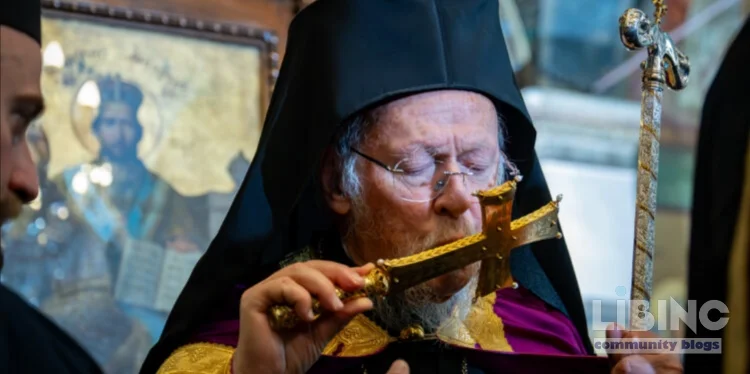
Bartholomew’s tenure provides a contemporary case study of how this cause-and-effect chain plays out. Since 1991, he has faced global religious, social, and political change, from post-Soviet dynamics to interfaith dialogues in a pluralist world. The practical effect has been a more engaged role for the Ecumenical Patriarchate in global affairs, a renewed emphasis on climate ethics, humanitarian concerns, and inter-Christian cooperation. Yet this expansion of influence cannot be confused with radical centralization. The effect remains bounded by the canonical framework that keeps jurisdictional boundaries intact while expanding the office’s moral and diplomatic reach.
Another causal thread concerns unity in practice. The Ecumenical Patriarchate’s ability to convene councils, issue pastoral letters, and coordinate liturgical calendars across fellow patriarchates helps maintain visible communion. The practical benefit is a robust signal of solidarity during periods of regional tension. The challenge is translating symbolic unity into everyday governance for diverse national churches operating under different political and cultural conditions. The Ecumenical Patriarchate must, therefore, maintain both reverence for tradition and responsiveness to contemporary needs.
LSI: unity, canon, exarch, interfaith dialogue, climate ethics, pastoral correspondence, governance. These terms anchor the causal analysis in concrete mechanisms that connect theory to practice within the Orthodox world.
Expert Reconstruction: Synthesis, critiques, and a forward-looking appraisal
Expert reconstruction combines the analytic, contrast, and causal threads into a coherent assessment of the Ecumenical Patriarchate as an institution. The office is not a power grab; it is a disciplined governance instrument designed to preserve communion across a patchwork of autocephalous churches. The historic Canonical framework grants a unique, ecumenical responsibility to adjudicate disputes and preserve unity without negating the autonomy of other centers. In the modern era, the office has leveraged this framework to become a voice for global Orthodoxy on issues ranging from interfaith engagement to cultural continuity. The strength of this model lies in procedural legitimacy, doctrinal fidelity, and a willingness to engage in difficult conversations with diverse partners.
Yet the critique is equally sharp. Critics worry about perceived bias or the risk that a centralized center can erode local autonomy over time. Critics also press for greater transparency in decision-making processes and more explicit criteria for invoking canonical procedures. The challenge for Bartholomew and his successors is to sustain credibility while expanding leadership in areas like humanitarian action, environmental stewardship, and inter-Christian dialogue without sacrificing collegiality. The expert verdict is nuanced: the Ecumenical Patriarchate remains indispensable as a guardian of unity, but its success depends on clear limits, inclusive processes, and measurable accountability to the wider Church.
Myriad modern realities—diaspora communities, migration, and shifting national identities—test the off ice’s adaptability. The reconstruction argues that the office should emphasize concrete mechanisms for dispute resolution, transparent reporting, and collaborative leadership with other patriarchates. The goal is not to maximize power but to maximize coherence of the entire Orthodox body. In this sense, the Ecumenical Patriarchate’s enduring value is its function as a stabilizing, ethically grounded, globally oriented leader in a world where religious identity intersects with politics and culture.
In sum, the present-day Ecumenical Patriarchate operates as a historically rooted, canonically bounded, and globally engaged institution. Its legitimacy rests on a threefold base: fidelity to tradition, commitment to unity, and openness to dialogue across differences. The office does not vanish into abstract theory; it acts in concrete ways to shape the life of churches, clergies, and lay communities that constitute the Orthodox world. The roadmap ahead involves strengthening governance transparency, reinforcing collaborative networks, and maintaining the delicate balance between local autonomy and universal ecclesial responsibility.
LSI: Bartholomew, interfaith dialogue, environmental stewardship, diaspora, autocephaly, governance, accountability, unity.
Endnote: The Ecumenical Patriarchate as a living, dynamic entity
The Ecumenical Patriarchate stands at the intersection of memory and mission. It preserves an ancient witness—the lineage from Saint Andrew to Saint John Chrysostom—while engaging with modern ecumenical questions. Its credibility rests on a disciplined balance: to honor canonical boundaries, to mediate disputes among bishops, and to guide a global communion toward shared moral and spiritual aims. The figure of Bartholomew embodies a contemporary test: how a historic office can remain relevant, credible, and ethically persuasive in an era of pluralistic religious landscapes. The analysis concludes that the Ecumenical Patriarchate can continue to fulfill its unique mandate only by maintaining open dialogue, transparent procedures, and unwavering commitment to unity without coercion. The result is not a centralizing project but a living model of episcopal unity within a diverse church.
The practical takeaway for readers who seek to understand Orthodoxy is simple: the Ecumenical Patriarchate functions as a guardian of communion, not a seat of universal jurisdiction. Its authority is proven in dispute resolution, doctrinal fidelity, and the cultivation of relationships across cultures and continents. This is the core of the office’s enduring relevance: a dynamic, ecumenical responsibility that requires humility, discernment, and steadfast dedication to the integrity of the Church worldwide.
The practical dimension of the Ecumenical Patriarchate is best understood as a framework for mediation, canonical oversight, and global spiritual leadership, not as universal jurisdiction over all parishes. It coordinates inter-Orthodox dialogue, fosters unity among autocephalous churches, and guides diaspora communities across North America, Europe, and beyond; it does not claim universal jurisdiction over every diocese, but asserts a primacy of honor and a responsibility to preserve communion, canonical order, and a credible witness in a changing world, supported by annual synods, consultative commissions, and open dialogue with other Christian traditions.
| Aspect | Mechanism | Scope | Notes |
|---|---|---|---|
| Canon 9 | Appeals to Exarch or Constantinople | Disputes beyond metropolitan jurisdiction | Procedural path to mediation |
| Canon 17 | Redress through imperial throne | Wronged clerics | Balance of local remedies |
| Canon 28 | Equality with Rome | Legacy parity | Ecumenical responsibility, not supremacy |
| Synodic governance | Inter-Orthodox councils | Advisory, consensus-building | Not binding unilaterally |
| Diaspora governance | Overseas representation via local churches | Pastoral continuity | Autonomy preserved |
In practice, the office operates through a predictable chain: receive appeal, consult with regional representatives, appoint a study commission if needed, publish findings, and guide implementation across the affected jurisdictions. This is how Orthodox Church governance maintains unity without erasing difference.
Practical effects include more coherent liturgical calendars in multi-jurisdiction settings, shared responses to humanitarian crises, and a durable framework for dialogue among diverse cultures within Orthodoxy.
What is the role of the Ecumenical Patriarchate in Orthodoxy today?
The Ecumenical Patriarchate functions as a pastoral and diplomatic center for the global Orthodox family, offering guidance on shared doctrine, coordinating inter-Orthodox dialogue, and mediating disputes among autocephalous churches, while guiding diaspora communities across North America, Europe, and beyond. It does not claim universal jurisdiction over every diocese, but it asserts a primacy of honor and a responsibility to preserve communion, canonical order, and a credible witness in a changing world. This work is supported by annual synods, consultative commissions, and ongoing dialogue with other Christian traditions. Analytically, the leverage comes from procedural legitimacy and inclusive dialogue rather than coercive power, ensuring local autonomy while enabling shared action on common concerns such as climate ethics and humanitarian aid.
Analytical depth: The practical effect is a governance ethos rooted in cooperation, transparent decision-making, and shared accountability with other Orthodox centers and global partners.
How does the Ecumenical Patriarchate differ from papal jurisdiction?
The Patriarchate embodies a primacy of honor and guardianship rather than universal dominion; it does not claim the authority to rule every church directly, but it seeks consensus through councils, shared norms, and mutual respect among autocephalous churches. This distinction keeps the Orthodox family together without erasing local identities. Analytically, its strength lies in mediation, canonical clarity, and inclusive dialogue rather than centralized power. Practical examples include coordinated liturgical calendars, joint humanitarian efforts, and cooperative ecumenical initiatives. The approach preserves collegial governance across diverse cultures and languages.
What canonical foundations shape its authority?
The authority rests on a historical framework from Chalcedon, notably Canon 9, Canon 17, and Canon 28, which establish procedural paths for appeals, redress, and equality among major centers. This creates a bounded, canonical mechanism for resolving disputes and safeguarding unity. Analytically, the system favors legitimacy and restraint over expansion of power, ensuring all actions align with the broader ecclesial charter. In practice, this means formal channels for mediation, credible mediation outcomes, and transparent reporting to the broader Orthodox world.
How are disputes resolved in practice?
Disputes flow through a defined sequence: a metropolitan raises a concern, an Exarchate consult is convened, and a possible commission reviews the issue before a resolution is issued and implemented. This cycle reduces risk of schism and preserves canonical balance. Analytically, the mechanism emphasizes accountability, trackable procedures, and respect for local autonomy while enabling a shared, binding outcome when consensus is reached. A concrete example is the coordinated handling of cross-jurisdiction pastoral matters and calendar harmonization.
What has been Bartholomew's impact as a contemporary leader?
Bartholomew has expanded the Patriarchate’s global presence through interfaith work, humanitarian initiatives, and climate ethics advocacy, while maintaining the canonical framework that protects autonomy. His leadership demonstrates how a historical office can remain relevant by engaging with contemporary ethical and social issues. Analytically, credibility depends on transparent governance, inclusive dialogue, and measurable accountability to the wider Church. In practice, this translates into cross-border cooperation, diaspora care, and renewed emphasis on ecological stewardship.
How does the Patriarchate engage in interfaith and humanitarian work?
The Patriarchate actively participates in interfaith dialogues, supports humanitarian relief, and promotes shared moral values across faiths, while upholding canonical norms that prevent coercion. Analytically, this outreach broadens Orthodoxy's public witness and strengthens global relationships. Practically, it means joint statements on humanitarian crises, collaborative relief projects, and public commitments to climate ethics and social justice, all conducted within a governance framework that preserves local church autonomy and mutual accountability.





Add a comment
To comment, you need to register and authorize
Comments