

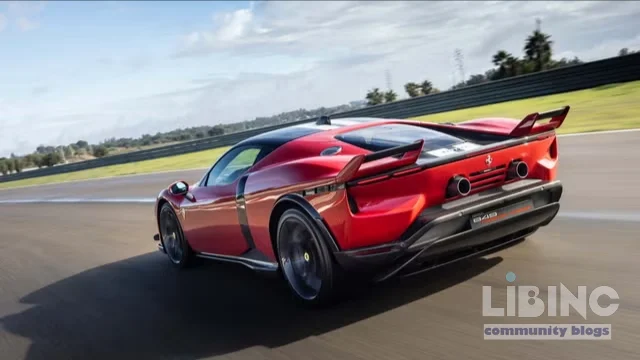
Ferrari 849 Testarossa: Reinventing a legend through a radical, performance-first design
Table of Contents
Lead
Looks matter as much in the showroom as horsepower matters on the road. The 2027 Ferrari 849 Testarossa bets big on a visual shock to secure a future-proof identity, pairing a dramatic silhouette with a blistering drive. The problem is straightforward: refresh a storied name without erasing its heritage. The stakes are equally clear: a design misstep could haunt perception and resale value, while the engineering must prove that the look translates to real track performance. A hidden conflict sits in plain sight—the bolder the styling, the heavier the burden on chassis, aero, and driveline to deliver believable grip and predictable behavior. This article follows that tension through four analytic angles—Analytics, Contrast, Cause and Effect, and Expert Reconstruction—to reveal what Ferrari gains and what it risks with this reinvention.
From a numbers perspective, the 849 Testarossa stacks a high-performance powertrain against an aggressively revised chassis. The package centers on a twin-turbo V-8 with front electric motors and a rear axial-flux unit, producing a combined output well north of a thousand horsepower while allowing torque delivery that feels more immediate and controllable than a purely mechanical setup. The real test lies in how those figures translate to real-world grip, cornering tempo, and the ability to sustain speed through the twisty stuff—especially given the car’s weight, aero, and tire choices. In short, Ferrari chased not just peak numbers but the kind of dynamic pace that makes a car feel alive at the limit. And that balance—between shock value and measurable capability—will determine the Testarossa’s legacy within the brand’s modern era.
Analytics: what powers the 849 Testarossa
Technical core
The 849 Testarossa uses a revised twin-turbo 4.0-liter V-8 that sits behind a front-mounted electric drive system and a central axial-flux motor. The engine alone produces 819 horsepower at 7,500 rpm and 621 lb-ft at 6,500 rpm. The front motors contribute a combined 133 horsepower and 63 lb-ft, while the rear motor adds 201 horsepower and 196 lb-ft. The combined output lands at the design target of 1,036 horsepower, with a 7-kWh battery pack that enables roughly eight miles of electric-only range on EPA testing. The gearbox remains an eight-speed dual-clutch, with power delivered to the pavement through a rear-biased all-wheel-drive system. These figures translate into a straight-line punch that eclipses everyday supercars while demanding sophisticated torque management to avoid becoming a handful in tight corners.
- Engine: 4.0-liter twin-turbo V-8, 819 hp, 621 lb-ft
- Front motors: 133 hp, 63 lb-ft
- Rear motor: 201 hp, 196 lb-ft
- Combined: 1,036 hp; 7-kWh battery; 3.3 kW peak recharge
- Transmission: 8-speed dual-clutch; Drivetrain: AWD with rear bias
Dynamic hardware
Structure and materials mirror the performance target: a titanium-fastened, largely aluminum block reduced through material-shedding on the V-8, paired with a recycled aluminum engine block philosophy on the base platform. The car’s mid-engine layout, front and rear motors, and ceramic-brake package are tuned to maximize grip at the limit rather than chase raw top speed alone. The Assetto Fiorano package adds hewn aero elements, double-stacked wings, and a carbon-fiber wheel assembly that slightly reduces unsprung mass. The result is a braking balance and turn-in that feel sharply calibrated for aggressive driving, with a weight around 3850 pounds—within shouting distance of the SF90 Stradale and noticeably lighter than some contemporaries in the hypercar spectrum.
Aero, chassis, and tires
Weight savings are intentional: the Assetto Fiorano package shaves about 66 pounds through carbon wheels and lighter seats, while the standard car still carries substantial downforce. Total downforce climbs to just over 900 pounds with the aero appendages, of which about 220 pounds come from an active rear spoiler that deploys in less than a second. Taller, wider tires—265/35R-20 in front and 325/30R-20 in rear—with 10 mm extra width versus the SF90 deliver more grip, aided by Michelin Pilot Sport Cup 2 tires whose grip remains close to their Cup 2R iterations. The car’s braking uses Brembo carbon-ceramic rotors that deliver consistent stopping power under track and street loading, contributing to a carefully managed energy return through the drivetrain and tires.
Performance envelope
On the Fiorano test circuit, the 849 Testarossa shows a clear performance edge: a claimed 0–60 mph time near 1.9 seconds and a 1/4-mile time around 9.2 seconds. The top speed sits at roughly 205 mph, a number offset by the dramatic downforce and improved aero efficiency that enable stronger midcorner acceleration and faster corner exit. The chassis responds with a highly communicative steering feel and precise weight transfer behavior, though some drivers may notice the brake-by-wire system’s pedal travel is perceptible at the limit—an area Ferrari will likely dial in as the car ages in the market with further development. In the real world, those dynamics translate to a car that feels faster on a race track than on a dry runway, thanks to how the drive modes modulate suspension, throttle response, and torque vectoring to maintain compromise between grip and agility.
Contrast: the new look versus the SF90-era formula
Design language and visual impact
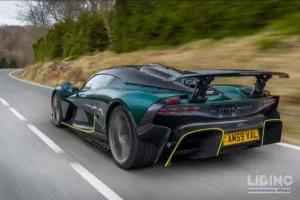
The 849 Testarossa abandons a conventional, cohesive silhouette in favor of stacked front-end protrusions and a rear aero architecture that evokes Ferrari’s 512S and 512M racers from the late 1960s and early 1970s. The front end features blackout trim that nods to pop-up headlights, while horizontal slats give way to a modern, sculptural face. In person, the design can feel overwhelming at first glance, but the visual boldness becomes more intelligible with time. The overall effect is less about modern minimalism and more about a memory-inflected, high-contrast silhouette that communicates a story of speed before you even press the start button.
- Homage vs. modernity: a deliberate retelling of the 512-era language
- Front-end blackout trim as a signature cue
- Suspended, multi-slat aero concept for visual drama and downforce
Performance versus top-line speed
Ferrari’s engineering team accepts a slightly lower top speed compared with the SF90, trading a few mph for greater downforce and grip. The 849 Testarossa claims higher downforce due to aerodynamics refinements and widened tires, which helps with cornering tempo and midcorner steadiness. The result is a car that feels more planted at speed through sweeping sections and baffles with a more direct, communicative steering experience. This is not a mere styling showpiece; the car’s essence lies in how its look translates into track-ready behavior, particularly in terms of tire grip, aero balance, and throttle modulation in high-load corners.
Ride quality and daily usability
With the AF package, the Testarossa borrows fixed dampers and stiffer springs that reduce travel, translating to sharper response and higher lateral stiffness. Yet Ferrari keeps a front-end lift option to clear driveways and speed bumps, preserving daily usability that often erodes on more extreme, track-focused models. The result is a supercar that can be a practical weekend companion while still delivering the visceral drama that its new looks promise.
Cause and effect: how hardware shapes the lap times
Powertrain choices and grip
Ferrari’s choice to couple a highly boosted V-8 with front and rear electric motors creates an accelerative profile that feels immediate in the midrange and relentless at high rpm. The front motors help quell understeer by providing precise torque delivery to the inside wheel during cornering, while the rear motor supports torque vectoring to maintain a stable pivot about the center of gravity. This arrangement improves the car’s ability to rotate under throttle, especially on damp surfaces where tire grip is limited. The net effect is improved corner exit speed and more consistent lap times across different track textures.
Aero balance and tire performance
Downforce and aero efficiency drive much of the Testarossa’s track behavior. The combination of active rear spoiler, larger wings, and wider tires yields higher peak downforce at speed, enabling more aggressive braking and faster corner entry. Yet the increased aero drag means top speed benefits are capped; Ferrari prioritizes midcorner stability and braking performance over raw top speed. Michelin Cup 2R tires provide meaningful grip advantage, especially when paired with the car’s electronic stability and torque-management systems, which become active partners in delivering consistent tempo through corners.
Weight tuning and structural choices
Weight reductions, such as carbon components and lighter seats, help offset the engine and battery mass. The engine block’s recycled aluminum approach and titanium fasteners contribute to a stiffer, lighter chassis that responds more crisply to steering inputs. The AF package’s 66-pound saving, combined with carbon-fiber wheels, further reduces unsprung mass, sharpening turn-in and reducing inertia during lateral transitions. The structural choices, therefore, directly affect braking efficiency, tire performance, and sustained corner speed—the levers that determine track times more than peak horsepower alone.
Expert reconstruction: implications for Ferrari and the segment
Materials, manufacturing, and design philosophy
Ferrari leans into lightweight construction and material recycling without sacrificing rigidity. The engine’s titanium fasteners and the use of recycled aluminum on the block highlight a pragmatic approach to performance engineering that acknowledges sustainability without compromising stiffness. Carbon-fiber wheels and lightweight buckets contribute to a significant reduction in unsprung weight, enabling more responsive suspension behavior. The steering and pedal calibration reflect a car that expects the driver to engage actively, rewarding precise inputs with instant feedback rather than coddling comfort at the limit.
Controls and human-machine interface
Ferrari preserves a tangible start button on the steering wheel and reintroduces real buttons on the wheel spokes, a nod to tactile feedback and reliability that contrasts with industry-wide shifts toward capacitive controls. HVAC and mirror adjustments still rely on tactile interfaces, ensuring that essential adjustments remain intuitive at speed. The combination reinforces the brand’s philosophy: maintain driver engagement through concrete, repeatable controls even as performance electronics sharpen intervention thresholds and slip-angle estimation by the vehicle dynamics software.
Aero and electronics integration
The 849 Testarossa’s aero package and electronic systems are interwoven to squeeze every ounce of grip from the available weather and road surface. Accuracy improvements in vehicle-speed estimation and slip-angle calculations enable tighter interventions by electronically controlled differential and stability controls, translating to more confident cornering and reduced risk of abrupt instability in high-load scenarios. The result is a car that can be driven at the limit with a clearer sense of where the boundary lies, and how to push it without crossing it abruptly.
What it means for the future
Ferrari’s 849 Testarossa reframes the brand’s approach to the modern hypercar: aggressive, heritage-informed styling paired with a propulsion system designed for optimal on-track tempo rather than only raw top-end performance. The car’s weight strategy, aero architecture, and upgraded front and rear drive dynamics signal a direction where design language and driving chops advance in lockstep. It remains to be seen how customers respond to the polarizing aesthetics, but the engineering logic is clear: if the looks provoke attention, the mechanicals must deliver the cadence that makes attention sustainable on the road and the track. For Ferrari, this blend could set a new standard for how a modern Testarossa wears its name in a world that increasingly values performance clarity, driver involvement, and responsible engineering choices.
Real-world pace and ownership in practice
Translating headline numbers into street and track behavior reveals how the 849 Testarossa behaves as a complete package. The hybrid propulsion offers immediate torque, while the chassis and aero manage heat, grip, and stability so that power translates into controlled tempo rather than chaos.
| Scenario | Grip (dry) | Braking feel | Cornering tempo | Notes |
|---|---|---|---|---|
| Track day, dry | Excellent | Precise bite | High pace | Balanced torque management |
| Track, wet | Good but cautious | Stability control | Controlled rotation | Electronic intervention helps |
| City streets | Predictable | Consistent response | Moderate pace | Livable with lift |
| Autocross-ish | Grip limited | Torque vectoring aids turn-in | Sharp | Requires precise inputs |
| High-speed sweepers | Stable | Strong braking | Neutral | Aero pays off |
In practice, the car rewards precise throttle modulation and smooth steering inputs. A mid-seat weight distribution gives the feel of a rear-mid engine car with a responsive front axle, and the Assetto Fiorano package increases downforce while trimming unsprung mass for sharper turn-in without ruining everyday usability.
- 0–60 mph: ~1.9 s
- Top speed: ~205 mph
- Downforce: ~900 lb total
These dynamics show up most clearly on a track with varied surfaces, where grip management and torque distribution determine how quickly the car exits corners and how calmly it behaves under heavy braking.
| Aspect | Detail |
|---|---|
| Price tier | High, with depreciation risk and limited resale market |
| Maintenance interval | Frequent checks by authorized center; costs elevated |
| Battery life | 8-mile EV range; thermal management critical |
| Tire wear | High-performance tires wear quickly, especially on track |
| Insurance | Very high; specialized policy required |
| Warranty | Limited, with terms negotiated at purchase |
Ultimately, the 849 Testarossa aims to blend drama with credible track pace, inviting repeated, precise driving that rewards both the driver and the car's engineering choices.
What is the propulsion configuration of the 849 Testarossa?
The propulsion system fuses a revised 4.0-liter twin-turbo V-8 with front and rear electric motors, delivering a total output of 1,036 horsepower and a compact 7-kilowatt-hour battery; the front motors contribute 133 hp and 63 lb-ft while the rear motor adds 201 hp and 196 lb-ft, all fed through an eight-speed dual-clutch gearbox and a rear-biased AWD layout. The EV portion supports quick starts and refined torque delivery, with an electric-range capability of roughly eight miles for low-load passages. This layout enables rapid acceleration and precise torque distribution to support grip on corner entries.
Analytical depth: The architecture uses electric torque to sharpen throttle response and enable torque vectoring, while the internal combustion engine sustains high-end pace for sustained track performance.
How does the front electric drive influence handling?
The front electric drive provides immediate torque to the inside wheel during midcorner transitions, helping reduce understeer and promoting a cleaner rotation without abrupt yaw. This enhances corner-entry confidence and allows the driver to carry more speed into apexes. In damp or uneven surfaces, the system smooths power delivery and collaborates with the rear motor for balanced, predictable behavior. The effect is a more forgiving midcorner cadence when the driver asks for quick throttle modulation, especially in Sport and Race modes.
What does the Assetto Fiorano package add?
Assetto Fiorano adds aero enhancements, a carbon-fiber wheel package, and weight-reducing components that raise downforce and reduce unsprung mass. The result is sharper turn-in, more stable high-speed balance, and improved braking confidence. Practically, this means you can push later into corners and exit with higher momentum, provided the tires and track surface can sustain the load. It also preserves daily usability via a lift system and calibrated suppression of harsh ride behavior in normal conditions.
What is the real-world pace and range?
0–60 mph is listed near 1.9 seconds with a top speed around 205 mph, but the real-world pace depends on aero setup, tire temperature, and grip. The battery assists acceleration without compromising traction control, while the chassis and tires keep entry speeds within a predictable envelope. The EV range remains modest, about eight miles, so most driving remains combustion-powered for longer sessions on track or road trips.
What ownership considerations should a buyer plan for?
Expect high maintenance costs, service intervals at authorized centers, and specialized insurance. Battery thermal management, tire wear, and the need for proper storage and climate control are key factors. Warranty coverage can be nuanced and negotiated at purchase, so buyers should secure clear terms on components like the hybrid system and electronics. A long-term ownership plan should include access to calibration updates and potential software tweaks that Ferrari may offer to refine performance over time.
How does the 849 compare to the SF90?
Compared with the SF90, the 849 Testarossa trades a portion of top-end speed for higher downforce and grip, improving midcorner stability and lap pace on twisty circuits. The steering feel is more communicative, aided by reduced unsprung mass and a more direct aero balance. For buyers prioritizing dynamic feel and track tempo over outright top speed, the 849 aligns with a more driver-focused experience while preserving daily usability through lift and adaptive dynamics.




Add a comment
To comment, you need to register and authorize
Comments