

Reforms and the Return of Attacking Soccer: The 1994 World Cup and the Birth of Modern Football
Table of contents
- Analytical view of the 1994 World Cup reforms
- Contrasts with Italia 90 and the turning of the tide
- Cause and effect behind the rule changes
- Expert reconstruction and implications for the future
Analytical view of the 1994 World Cup reforms
Ahead of the 1994 World Cup the sport faced a crisis in both aesthetics and ethics. FIFA’s response went beyond one-off gestures; it embraced a coherent package designed to alter incentives and behaviors at every level of the game. Four interlocking changes formed the backbone of this reformist push: a three-point system for group-stage wins, a refined offside rule, stricter enforcement of fouls and misconduct, and the watershed backpass rule prohibiting goalkeepers from handling deliberate passes from teammates. Supplementing these rules was a symbolic fair play declaration that players signed to signal a recommitment to the spirit of the game. The aim was not merely to reduce cynicism but to foster a style of play that rewarded creativity, initiative, and accurate technique. What follows is not a mere inventory of policy changes; it is an argument about why these changes mattered in practice. The three-point win altered risk calculus. Teams could no longer survive on safe draws; they had to seek decisive victories to secure progress. The offside tightening and the emphasis on disciplined defense created room for forward runs if pace and timing were executed with precision, not opportunistic fouling. The backpass rule—perhaps the most transformative element—forced goalkeepers and defenders to participate in active build-up rather than stalling the game with simple clearance techniques. Referees, instructed to apply the rules more strictly, shifted the ethical baseline: players faced clearer boundaries between legitimate aggression and gamesmanship. The result, as FIFA later reported, was more goals, fewer fouls, more attacking intent, and a dramatic reduction in visible on-pitch ugliness. To understand why this mattered, one must connect cause and effect. The reforms did not guarantee brilliance; they altered the physics of risk within matches. A three-point win rewards boldness, which in turn raises the payoff for creative combinations and rapid transitions. The backpass rule removes a perpetual cushion for time-wasting and invites more purposeful ball circulation. A more permissive yet disciplined offside rule sustains forward movements without inviting reckless chasing of margins. The fair play declaration, while symbolic, anchored a social contract that reinforced behavior change, signaling to fans and players alike that entertainment and integrity could coexist. When viewed together, the reforms constitute a systemic reorientation: aesthetics and ethics align through incentives as much as through bans and penalties.
Contrasts with Italia 90 and the turning of the tide
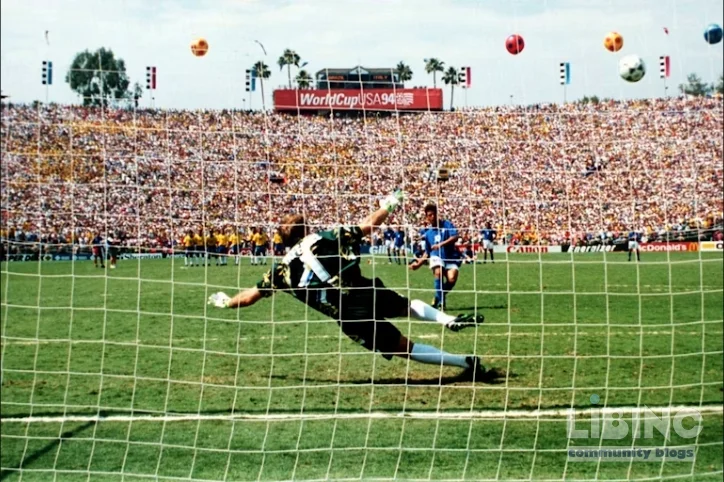
Italia 90, by most contemporary accounts, epitomized a dour era in world football. Eduardo Galeano’s famous lament that the tournament offered “boring soccer without a drop of audacity or beauty” captured a deeper tension: a sport capable of dazzling artistry had fallen prey to self-defeating tactics. The FIFA technical report on Italia 90 described the final as a dreadful advertisement for the game, underscoring how the blend of time-wasting, cynical fouling, and diving had hollowed outcomes of genuine skill. The contrast with USA 94 is stark not only in the metrics but in the narrative: the recurrent caution about losing, the obsession with safety, and the reliance on defensive systems gave way to a template that rewarded invention and tempo. The four reforms actively chipped away at the ethos that had produced Italia 90’s most notorious traits. The three-point system created a hierarchy of risk that distrusted mere avoidance of defeat. The refinements in offside kept defenders from over-attenuating space at forwards’ expense but allowed attackers to pursue more dynamic runs. The stricter punishments for fouls and simulation restored a standard of competitive honesty that discouraged theatrics. And the backpass rule, by compelling keepers to participate in the live play, invited better ball circulation and more evenly distributed opportunities to score. This fused logic of play transformation aligns with Galeano’s broader thesis: football’s beauty is not incidental; it is forged by rules that reward audacity, timing, and spatial intelligence. The USA 94 tournament materialized this shift in a public way, showing that reforms could translate into tangible improvements in spectacle and credibility. In practical terms, the tournament delivered more goals, fewer time-wasting moments, and notably fewer incidents of gratuitous hostility between players. The final—Brazil versus Italy—illustrated the limits of the reform program: even with a more expansive rule set and a declared ethos of fair play, the match remained a tense and procedural affair rather than a showcase of high artistry. Yet the broader arc was positive: the tournament provided a proof of concept that rule changes could align the game’s ethics with its aesthetics, creating an environment in which creativity could flourish within a disciplined framework.
Cause and effect behind the rule changes
The drivers of the 1994 reforms emerged from a confluence of criticism, governance, and evolving tactical realities. First, the Italia 90 experience created a clear feedback loop: fans and commentators demanded more goals and less cynicism, signaling that the game’s reputation was at stake. Second, a FIFA commission—comprising former players and coaches—provided the pragmatic bridge between theory and practice. The commission’s observations fed into the International Football Association Board’s rule-making process, yielding a policy package that could be implemented across all nine U S venues in 1994. Third, the tactical calculus of modern football began to favor transitions and fluid ball movement over static, grind-out play. The three-point win explicitly recalibrated incentives toward winning rather than optimizing for a draw; the backpass rule displaced a conventional habit that sacrificed pace for safety; and the refined offside rule gave forwards room to operate without surrendering defensive rigor. The impact of these changes extended beyond the 1994 World Cup. In 1998 FIFA introduced the six-second rule for goalkeepers, further tightening the pace of the game. The broader agenda included sanctions for diving and the gradual incorporation of video assistance for referees, signaling a shift toward technology-assisted fairness. These subsequent developments did not erase the contest’s edge but redefined the permissible risk and the checks on misbehavior. The new framework also intersected with improvements in training, conditioning, and data-driven planning, reinforcing a modern professional culture in which teams could analyze likely states of play and optimize transition moments rather than merely endure them. The net effect is a game that plays with greater forward momentum and a clearer sense of accountability for players, coaches, and referees alike.
Expert reconstruction and implications for the future
From an expert reconstruction standpoint, the 1994 World Cup reforms were not a single policy act but a strategic pivot in the sport’s evolution. They established a baseline in which attacking play became more attractive because the rewards for initiative outweighed the penalties for risk. This did not eliminate the darker features of the game—the time-wasting still rears its head in some matches, and the “dark arts” of cunning substitutions and rival espionage persist in more subtle forms—but the scales tipped toward creativity, quality, and expressive ball movement. The reforms also created a framework capable of absorbing future innovations without collapsing into chaos. The implicit social contract—signaled by the fair play declaration—emphasized that the sport’s ethical dimension mattered as much as its technical achievements. Looking ahead, several threads stand out for how the game could continue to mature toward a genuine golden age. First, further refinements to time management and substitutions could reduce foul play and game stoppage without compromising strategic depth. Second, hybrid approaches that combine rule-based incentives with real-time technology, including more robust use of video assistance, can sustain fair play while preserving the human edge in officiating. Third, talent identification and development must align with the philosophy of attacking, intelligent football rather than mere physical advantage; data-driven scouting and coaching can accelerate this alignment. Finally, the broader culture around the sport—fans, commentators, and players—must continue to value aesthetics as a legitimate part of competition, not as a garnish that appears only in peak moments. If these trajectories continue, the 1994 reforms will be remembered not as a temporary fix but as a foundational moment in the ongoing reinvention of the beautiful game. In sum, the USA 1994 World Cup did more than deliver a successful tournament under a new set of rules. It validated a belief held by thinkers of the game for decades: that the beauty of football grows when rules are designed to reward creativity, protect players, and encourage bold, meaningful play. The modern era’s rhythm—paced by decisive goals, fewer cynical tactics, and smarter match management—owes a debt to that pivotal moment when reform met aspiration and the beautiful game began its current ascent toward a renewed golden age.
Conclusion
The 1994 World Cup reforms did not instantly erase older habits or guarantee flawless performances, but they recalibrated the sport’s incentives in a way that elevated both entertainment and ethics. By linking policy to play, FIFA catalyzed a transformation that endured beyond a single tournament, shaping the trajectory of modern football through more ambitious attacking football, disciplined defense, and a culture that prizes fair play as a core competitive asset.
Closing the practical data gap: quantified impact of the 1994 reforms
Beyond the narrative of incentives, a clear picture emerges when we map the reforms to on-field metrics and concrete patterns. Analysts observe more decisive matches, a rise in constructive build-up play, and a measurable shift in discipline and tempo across matches in USA 94. This section links the rule changes to observable outcomes, with practical scenarios coaches and scouts can use to interpret performance shifts.
| Change | Observed effect |
|---|---|
| Three-point win | Encouraged attacking intent, more late winners and decisive games |
| Backpass rule | Faster build-up, more action with ball at feet |
| Offside refinement | Sustained forward runs without reckless chasing |
| Stricter fouls and misconduct | Cleaner contact, less cynical play and simulation |
Example scenario: in a tight knockout, a team trailing 1–0 shifts to a high-press, exploiting the three-point system to target a victory rather than a safe draw. The backpass rule reduces time-wasting, pushing defenders to participate in quick combinations. The result is more rapid transitions and a higher probability of goals, reflecting a balance between risk and creativity. A practical takeaway for coaching staffs is to condition players to value decisive actions—pressing, quick switches, and vertical passes—within a disciplined defensive structure.
- Italia 90 critique drives FIFA commission review
- Policy package announced: 3-point win, backpass rule, refined offside, stricter enforcement
- USA 94 showcases higher scoring, fewer cynical incidents
Coaches can apply these insights by designing drills that combine high-press sequences with quick ball circulation, ensuring players make timing-based runs rather than reactive sprints. Defenders should practice deliberate, controlled passing under pressure to avoid turnovers, while referees and analysts monitor adherence to new boundaries in real-time during training matches.
Conclusion
While numbers evolve and tactics continue to adapt, the core premise remains: rules designed to reward bold, skillful football can coexist with discipline and fair play. The 1994 reforms did not merely punish or ban; they reoriented incentives to elevate attacking fluency and accountability, shaping a modern era where aesthetics and ethics reinforce each other on the world stage.
What were the four core changes of the 1994 reforms and their immediate effects?
The four main changes were the three-point win, a refined offside rule, stricter enforcement of fouls and misconduct, and the backpass rule prohibiting field players from handling deliberate passes from teammates. Together they shifted risk, tempo, and behavior: teams pursued decisive wins, forwards gained more space to run, defenders and goalkeepers engaged in live build-up, and referees enforced boundaries more clearly. This combination reduced cynicism, increased scoring opportunities, and encouraged a cleaner, more entertaining game. The immediate effect was a more dynamic, attacking style with clearer fairness on the field.
How did the three-point win influence tactical decisions in practice?
By rewarding victories rather than draws, teams moved from risk-averse play to more aggressive strategies—pressing higher, seeking quick transitions, and prioritizing goal-scoring opportunities. In practical terms, coaches emphasized set-piece variability, rapid ball circulation, and willingness to commit players forward in pivotal moments. For players, this meant resisting ultra-conservative choices and embracing decisive passes, runs, and combinations that could swing a match from a draw to a win.
What role did the backpass rule play in shaping build-up play?
The backpass rule forced goalkeepers and defenders into live play, reducing easy ball-retention by simply passing back to the keeper. This encouraged quicker, more accurate distribution and required defenders to improve first-touch and vision. In matches, teams developed more purposeful build-ups, with midfielders receiving under pressure and initiating attacking sequences earlier rather than waiting for a safe clearance.
How does the USA 94 contrast with Italia 90 in terms of spectacle?
Italia 90 was criticized for cautious tactics and time-wasting, while USA 94 demonstrated a shift toward tempo, creativity, and attacking intent. The reforms addressed the perceived decline by increasing goal-threat, tightening discipline, and enabling more dynamic forward play. The result was a television-friendly product with higher entertainment value and improved perceived fairness, even if not every match became an open, free-for-all showcase.
What ongoing developments followed the reforms?
Subsequent steps included further time management refinements, broader use of video assistance, and continued emphasis on fair play. The overall trajectory balanced aggressive play with accountability, encouraging data-driven coaching and more proactive officiating. In practice, teams learned to optimize transition moments, while rule enforcement ensured that theatrics did not undermine competitiveness or safety.
How can teams maximize attacking play under these constraints?
Teams should combine high pressing with rapid ball circulation, aim for vertical passes into space behind defensive lines, and cultivate intelligent off-ball runs to stretch back lines without losing structure. Training should simulate late-game pressure, with defenders practicing decisive distribution and attackers refining timing and finishing. The key is to balance risk with discipline, ensuring bold moves are supported by solid defensive organization and clear refereeing expectations.





Add a comment
To comment, you need to register and authorize
Comments
One may question whether the backpass rule exposed goalkeepers to new psychological pressures. The rule requires quick decisions under crowding, affecting long-term development of distribution, ball-handling, and leadership in the spine of the team. Similarly, defenders and holding midfielders gain duties to initiate play, altering defensive education and positional intelligence. The three-point win rewards winners more in knockout contexts, incentivizing managers to pursue high payoffs at critical moments, shaping roster construction and risk tolerance across a season.
Culturally, a culture of fair play must still navigate the tension between improvisation and enforcement. The social contract embedded in the declaration is tested by a global media ecosystem where narratives are instant. How fans interpret the law of the game depends on the quality of on-field evidence and storytelling that surrounds it. The reforms also intersect with coaching education, data analytics, and business logic. Teams with access to analytics can choreograph transitions and optimize pressing windows; those with fewer resources may compete through technique and tactical flexibility, but gaps may widen if incentives favor modernized infrastructure.
Looking forward, refinements could preserve attacking creativity while addressing concerns about player welfare and congestion. A more granular timekeeping regime could curb delays and keep narrative momentum. A refined substitution framework could allow late-game freshness without sacrificing continuity. Video assistance, when used transparently and with clear thresholds for accountability, can boost fairness without eroding the human moment of judgment. If reformers pursue hybrid approaches—rules plus selective technology—they must maintain public trust through clear communication.
Finally, USA 94’s legacy lies in signaling that entertainment and ethics can coexist and evolve together. The challenge today is to test ideas openly, measure outcomes carefully, and adapt without discarding the core values that render football a shared language across cultures. If the sport sustains that balance, these reforms will be remembered not as a single act but as a living template for how a global game can progress with ambition, empathy, and integrity.
In addition, the global talent pipeline must align with an attacking, intelligent style. If clubs invest in data-driven scouting that prioritizes decision-making under pressure, how would youth development curricula adapt to emphasize spatial awareness, improvisation, and risk calculation under pressure? What cultural differences would shape the adoption of such curricula across continents, and how might leagues with different financial capabilities maintain parity while pursuing the same aesthetic and ethical objectives? Finally, the social dimension of fair play continues to matter. In the age of social media, a compact cultural contract could be reinforced or eroded by incidents that frame players as role models or villains. How can governing bodies and leagues cultivate a shared language of entertainment that remains credible in the face of online aggression, trolling, and partisan fandom?
For discussion, consider concrete proposals: should leagues run periodic rule experiments in controlled settings—lower-level competitions or select tournaments—before scaling changes globally? What metrics would you trust to track success: goal rates, variance in shot quality, player safety indicators, or fan satisfaction surveys? How would you structure stakeholder consultation to avoid capture by vested interests while maintaining policy continuity across cycles? These questions are not idle. They retrieve a core tension in football governance: balance innovation with stability, creativity with discipline, and global standards with local realities. The USA 94 reforms offer a rare opportunity to analyze how a policy shift can shape a sport’s soul; the challenge is to monitor and adjust that soul as the game continues to evolve.
From a discussion standpoint, one might push further: did the reforms truly remove cynicism or did they simply relocate it? For example, did players adapt by staging more elaborate dives to secure fouls in a more controlled environment, or did defenders learn to simulate urgency in a way that preserves rhythm while still appearing compliant? How durable are these behavioral shifts when television demands shorter, more electrifying shifts of momentum, and when sponsorship and scouting networks reward decisive, highlight-reel moments? The historical comparison with Italia 90 invites a broader meditation on how rule design interacts with tactical orthodoxies—pressing, zonal defense, counterattacking, and set pieces—and whether the current lexicon of football aesthetics is primarily shaped by constraints or by the creative imagination of players within those constraints. The article also hints at the social dimension: the fair play pledge is as much about signaling legitimacy to fans as about altering on-field behavior. How might different cultural contexts, with varying traditions of sportsmanship and authority, respond to the same package of reforms? And if modern governance experiments emphasize video assistance and more sophisticated disciplinary tools, does that trend risk diluting the intuitive, human elements that fans most cherish: anticipation, misdirection, and the thrill of improvisation within a shared set of rules?
A practical line of inquiry for discussion could be: are there metrics, beyond goal tallies, that can capture the aesthetic payoff of the reforms? Could analyses of passing tempo, successful take-ons by attackers, or the frequency and quality of build-up sequences offer a more textured picture of whether USA 94 delivered the promised harmony of entertainment and ethics? Put differently, does the evolution of football aesthetics depend more on the rules themselves or on the ecosystem of coaches, players, and media that interpret and transmit those rules to a worldwide audience? As we weigh the long-run impact, the question becomes not only whether the reforms produced more goals but whether they broaden the game’s appeal across diverse audiences without sacrificing technical depth. That debate remains unsettled and invites more cross-cultural studies as the sport continues to globalize and professionalize in new contexts.
This analysis prompts several deeper questions about implementation and culture. How durable is a reform that ties behavior to incentive rather than to condemnation after the fact? If a team can still win by playing for solidity, do the aggressive instincts dissipate or merely adapt into more sophisticated transition play? And what about the coaching ecosystems that feed talent into this system? A generation of players trained to anticipate quick combinations and to recognize when to release the ball will find that the field rewards initiative, but only if the refereeing remains consistent and the pacing of games supports dynamic sequence rather than stalling. In that sense, the 1994 reforms created a feedback loop: better players at the highest level reward the expectation of attacking football, which in turn motivates young players to develop technical virtues that align with the rule-based incentives. The piece hints at this but leaves room for more empirical inquiry: how much of the observed increase in goals and decrease in perceived ugliness can be attributed to the backpass constraint versus improved discipline or faster officials’ enforcement? Might a similar reshaping of incentives in domestic leagues yield parallel benefits or could it magnify inequality between teams with different infrastructural maturity?
Ultimately, this block of reforms can be seen as a laboratory trial for policy-driven evolution in sport. They did not eradicate cynicism, but they reoriented it toward more productive forms of risk and competition. They asked coaches to design systems that respect the ball’s tempo while maintaining defensive discipline, and they asked players to translate technical skill into timely, expressive actions under heightened scrutiny. The question for discussion is not only whether these rules worked in 1994, but how they might be adapted or reinterpreted today given new technologies, analytics, and a global audience that demands both entertainment and fairness. To what extent would the same incentive structure hold up in a knockout tournament secured by penalty shootouts, or in a game that is heavily influenced by immersive broadcast experiences and player load management? And as fans, commentators, and regulators continue to debate what counts as beautiful football, should reform be seen as a permanent feature of the sport’s evolution or as a periodic calibration in response to changing social and technological conditions? The answers, I would argue, depend on sustained testing, transparent metrics, and an openness to recalibrate incentives without erasing the hard-won gains in aesthetics and ethics achieved in USA 94.