

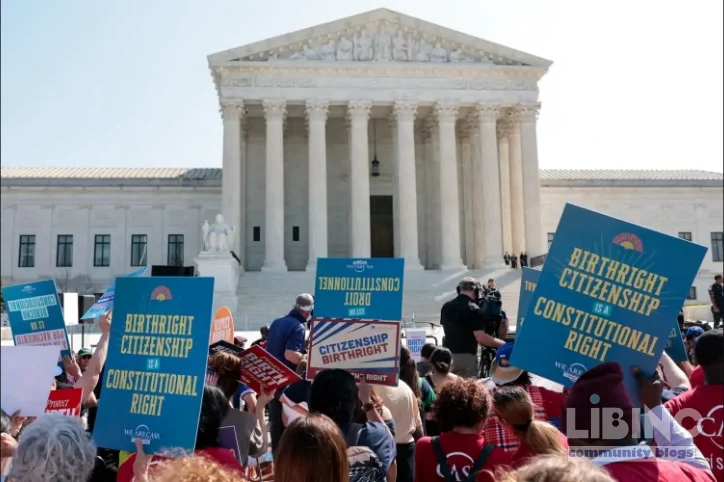
Birthright Citizenship and the American Constitutional Order: Reassessing the 14th Amendment and Its Future
Birthright citizenship anchors a continuous thread in American constitutionalism: the nation’s founders linked national belonging to the principle of popular sovereignty, a trust embodied in the opening promise of We the People. This lineage culminates in the 14th Amendment, which declares that all persons born or naturalized in the United States, and subject to its jurisdiction, are citizens. The 250th anniversary of the Declaration invites us to interrogate not just the text, but the lived consequences of citizenship in a polarized era. The question is not only who qualifies, but how the framework adapts to new realities—demographic change, legal reinterpretation, and evolving notions of allegiance. This article builds a pathway from historical foundations to contemporary debates, asking what birthright citizenship should mean in a pluralistic republic.
Analytics: Birthright citizenship within the American constitutional order
The core analytic question is simple in form but hard in implication: how should a modern state define citizenship at birth without diluting the rule of law or eroding the principle of equal protection? The answer rests on tracing a chain of legal and political decisions that begin with the Declaration’s assertion of rights grounded in citizen consent and proceed through the Constitution’s structure, the 14th Amendment’s text and history, and the evolving jurisdictional language that governs who is counted as a citizen. In this analytic block, we map the logic from founding-era debates to today’s challenges, emphasizing that the constitutional order relies on a stable, inclusive, and enforceable meaning of birthright citizenship.
Historically, the 14th Amendment’s citizenship clause provided a robust answer: birth within the United States confers citizenship by birth, with a broad reading of jurisdiction that includes most people physically present in the country. This principle was reinforced by later statutes and judicial interpretations that treated birthright citizenship as a core attribute of U.S. membership. The jurisprudence created a durable standard—one that could, in theory, withstand political shifts—because it linked citizenship to a jurisdictional reach of the state over persons within its borders. The stakes are not merely formal; they govern how families are integrated, how communities participate, and how the nation defines its own legitimacy.
Yet the record is not static. The Dred Scott decision, for example, historically anchored a counter-narrative about who belongs in America, a precedent later overturned by constitutional amendment and landmark cases. The Indian Citizenship Act of 1924 further redefined inclusion by granting dual citizenship in both the United States and tribal communities, signaling that the citizenry could be both expansive and contested. These markers show that citizenship by birth is not a fixed fact but a political instrument that policymakers have repeatedly reshaped to fit national purposes and moral commitments. The analytical takeaway is that birthright citizenship is best understood as a dynamic hinge between sovereignty and inclusion, not a rigid relic of the past.
In recent decades, the interplay between immigration policy and constitutional interpretation has intensified. The Immigration and Nationality Act codifies birthright concepts while leaving some interpretive room for statutory modification, creating a tension between text and policy aims. When a presidency or Congress seeks to recalibrate this balance, the central question becomes whether statutory tools alone can anchor legitimacy, or whether constitutional reform—through amendment or reinterpretation—must supply the enduring legitimacy. From this vantage point, birthright citizenship emerges as a constitutional instrument whose conservation requires disciplined legal reasoning and careful political design, rather than opportunistic expedients. The practical implication is clear: any proposed change to who counts as a citizen must be grounded in rigorous interpretation of the text, history, and the rule of law, not merely popular sentiment.
Why does this analytic frame matter today? Because citizenship is both a shield and a signal: it shields individuals from statelessness while signaling the nation’s commitments to inclusion and order. The concept of jurisdiction—what it means to be under a country’s authority—carries deep policy consequences for security, education, welfare, and civil rights. In a period of intense political polarization, the analytic task is to separate rhetoric from function: to ask not what would be expedient, but what would sustain the constitutional order while honoring the core promise of equal protection under the law. This requires a precise reading of the text, an honest appraisal of historical practice, and a forward-looking assessment of social impact related to birthright citizenship.
In sum, the analytics reveal a core tension: the desire for a clear, stable definition of citizenship versus the reality of a diverse, changing society. The logical center of gravity should be a conception of birthright citizenship that respects the 14th Amendment’s jurisdictional language, preserves equal protection, and remains adaptable to legitimate policy refinements. The challenge is not to abandon principle in favor of expedience, but to articulate a principled pathway that sustains both national identity and inclusive citizenship as the Republic evolves.
Contrast: The divergent paths of originalism and non-originalist readings
The second analytic axis contrasts two broad interpretive traditions: originalism, which seeks to recover the text’s original meaning, and non-originalist or living-constitution approaches, which stress evolving standards of national identity and modern policy needs. Each path offers insights and risks when confronted with birthright citizenship, a topic that sits at the intersection of constitutional design, immigration policy, and civil rights. The contrast is not a mere academic debate; it shapes court decisions, executive policies, and legislative conversations that determine who is counted as a citizen and under what conditions those determinations can be adjusted.
From the originalist perspective, the 14th Amendment’s text is read as a fixed anchor: birth within United States borders, subject to the jurisdiction thereof, suffices for citizenship. This view emphasizes textual fidelity, historical intent, and the long shadow of American jurisprudence that prioritized uniform rules of membership. Proponents argue that a stable birthright citizenship standard protects against statelessness, discourages arbitrary state action, and preserves the constitutional order from ad hoc political tinkering. The potential cost is the risk of excluding individuals who, in lived reality, participate in American life and contribute to its civic fabric, thereby challenging the reach of equal protection under shifting social conditions.
In contrast, living-constitutionalism tends to treat birthright citizenship as malleable, responsive to social, economic, and demographic changes. This approach asks what is best for national cohesion and democratic legitimacy in a changing world, even if it requires reinterpretation or recalibration of the text. It foregrounds the realities of migration, the realities of dual allegiance, and the evolving concepts of domicile and allegiance that courts and legislatures have long debated. Critics warn that excessive flexibility risks legal incoherence or politicization of jurisdictional determinations, undermining the rule of law if policy goals eclipse principled interpretation. Supporters counter that adaptive interpretation permits the Constitution to stay relevant without abandoning core commitments to due process and equal protection.
Where do we draw the line between faithful reading and pragmatic adjustment? The debate is not purely normative; it is empirical. Originalist readings, when deployed in isolation, risk producing outcomes that clash with modern realities—such as global mobility and the constitutional status of diverse families. Living-constitution readings, if unchecked, may erode predictable boundaries that anchor legal stability. The productive middle ground asks for a principled methodology: explicit interpretive standards that tie policy choices to text, history, and demonstrable societal impact, while preserving the coherence of the citizenship regime. This hybrid approach helps prevent birthright citizenship from becoming a tool of partisan advantage and instead frames it as a durable constitutional institution with accountable governance.
Ultimately, the contrast highlights a central truth: the meaning of birthright citizenship depends less on a single textual fix than on the interpretive method used to apply that text to real-world challenges. The implications extend beyond courts to fundamental questions about national belonging, the obligations of the state to its residents, and the legitimacy of policy changes that affect generations. A robust analysis must illuminate both the strengths of a stable baseline and the necessity of principled evolution when demographic and political conditions demand it. This is not a call to abandon principle; it is a call to render it explicit, resourced, and answerable to the universal commitments the Constitution enshrines.
Cause and effect: Citizenship doctrine and political legitimacy
This block examines how changes to birthright citizenship doctrine translate into political legitimacy, policy design, and social cohesion. If birthright citizenship is perceived as fair and predictable, governance gains legitimacy because citizens and residents alike can anticipate the state’s inclusivity and its limits. Conversely, sudden or opaque shifts in who is considered a citizen can provoke social tension, bureaucratic friction, and a legitimacy gap between the state and populations with long-standing ties to the nation. In other words, doctrine is a political technology: it shapes trust, order, and the social compact that sustains self-government.
One clear cause-effect chain begins with jurisdiction. A broader interpretation of jurisdiction—beyond pure territorial presence—to include long-term presence, economic participation, and social integration could broaden citizenship without eroding constitutional commitments. The effect would be greater social inclusion and a more robust sense of belonging for people who contribute to American life. However, expanding the frame also increases administrative complexity: verification, record-keeping, and harmonization with immigration and naturalization processes become more demanding. The practical result is a more inclusive but potentially more resource-intensive citizenship regime, requiring careful policymaking and funding to avoid backlog, delays, or inequitable outcomes.
Another chain runs from constitutional defaults to policy. If the judiciary or Congress signals openness to reinterpreting birthright citizenship, the policy environment shifts: states may adapt their welfare, education, and civil rights programs to reflect new eligibility norms. This has ripple effects on schools, housing, and local governance, where communities rely on stable demographics to plan and invest. The destabilization of expectations can undermine social trust unless accompanied by transparent, rights-protective processes that ensure due process, nondiscrimination, and clear pathways to citizenship for qualifying residents. The central causal insight is that citizenship doctrine is not merely legal symbolism; it is a governance instrument with concrete effects on inclusion, resource allocation, and democratic strength.
In this causal frame, demographic reality matters. As immigration patterns intensify and families span borders, the legitimacy economics of birthright citizenship require clear, justifiable criteria that are resistant to partisan manipulation. The state’s obligation to protect stateless individuals and to provide fair naturalization paths remains central to legitimacy. The political calculus thus becomes: how can a robust birthright citizenship regime maximize inclusion while preserving predictable rules that sustain public trust? The answer lies in principled reforms anchored in text, confirmed by history, and tested against measurable social outcomes such as educational attainment, civic participation, and economic integration.
Finally, constitutional reform—whether through statute, judicial reinterpretation, or formal amendment—carries a legitimacy payoff only if it is transparent, broadly debated, and grounded in constitutional principles that endure across administrations. The risk of failed reform is higher than the risk of maintaining a contested status quo: both the rule of law and the public’s confidence can erode if changes appear ad hoc or detached from the citizenry’s real-life concerns. A disciplined approach to birthright citizenship, one that centers procedural fairness and equality under the law, offers the best path to sustained political legitimacy while respecting the nation’s founding commitments.
Expert reconstruction: Reframing birthright citizenship for the 21st century
The final analytic frame moves from analysis to reconstruction. Experts propose pathways that preserve constitutional integrity while ensuring policy tools respond to contemporary realities. The aim is not to erase history but to recast it in a way that aligns legal doctrine with lived citizenship, including the aspirations of immigrant families, the duties of national allegiance, and the rights guaranteed by the 14th Amendment and related statutes. The reconstruction centers on three pillars: textual fidelity, historical continuity, and pragmatic governance.
Textual fidelity requires a robust interpretation of the 14th Amendment’s citizenship clause that respects its clear language—birth in the United States, under its jurisdiction, suffices for citizenship. This is the bedrock for a lawful, predictable system that minimizes arbitrariness. Yet fidelity must be married to historical continuity: subsequent acts and judicial decisions clarified corners of the jurisdiction concept, such as the treatment of Native Americans, diplomats, and other unique categories. Experts argue for a disciplined synthesis that honors the original meaning while recognizing historical nuance, ensuring that practical administration does not undermine core protections against discrimination.
Historical continuity also means acknowledging the nation’s evolving understanding of allegiance and belonging. The Reconstruction era’s amendments, civil rights jurisprudence, and the later Immigration and Nationality Acts reveal a trajectory toward broader inclusion without sacrificing rule of law. The reconstruction thesis invites policymakers to articulate a clear framework for addressing modern phenomena—dual citizenship, long-term residency, and transnational family ties—without destabilizing the citizenry’s core expectations. The result is a citizenship regime that remains intelligible to the public, subject to checks and balances, and capable of adapting to future challenges in a principled way.
Pragmatic governance completes the triad by translating principles into concrete institutions. A recommended route involves explicit statutory codifications that define birthright citizenship in alignment with the 14th Amendment while providing congressionally authorized pathways to resolve edge cases with minimal delay. This approach reduces litigation risk, clarifies administrative procedures, and preserves equal protection. It also creates a transparent track for reform—one where reforms are debated in public, justified by evidence, and subjected to oversight. The pragmatic outcome is a citizenship regime that is both morally grounded and administratively resilient, capable of withstanding political tempests without eroding the nation’s foundational commitments.
As deliberations continue, a careful reconstruction emphasizes public education about the meaning of citizenship, its moral underpinnings, and the duties it entails. An informed citizenry, understanding both legal text and practical implications, is essential for safeguarding democratic legitimacy. The reconstruction also recognizes that birthright citizenship is not a final endpoint but a living agreement. Its best form is one that reconciles the historical ideals of equal protection and national unity with the realities of a diverse, mobile, and interconnected world. If executed with rigor, the reconstruction will reinforce a resilient constitutional order capable of evolving in step with the nation it serves.
Conclusion
Birthright citizenship sits at the intersection of constitutional text, historical practice, and modern policy. The analysis presented here treats it not as a static relic but as a living framework that requires rigorous interpretation, principled reform, and durable governance structures. The central takeaway is that birthright citizenship should be understood as a dynamic constitutional instrument—one that maintains the promise of equal protection while accommodating the realities of a changing society. A careful balance among textual fidelity, historical continuity, and pragmatic administration will safeguard national belonging and the rule of law for generations to come.
Practical pathway to reform
To translate theory into durable policy, a pragmatic reform path must anchor in the 14th Amendment while building transparent administration. A codified framework can preserve equal protection and reduce litigation by clarifying who qualifies at birth and how edge cases are resolved.
- Codify birthright criteria (jus soli) with explicit jurisdiction tests and clear ties to physical presence and allegiance.
- Protect stateless individuals with automatic naturalization after a brief period if birthright is narrowed.
- Clarify edge cases (diplomats, dual citizens, long-term residents) with statutory definitions.
- Create a transparent processing timeline and digital registry to track eligibility, with public dashboards.
- Institute independent oversight to review reforms, measure outcomes, and sunset provisions.
The compact table below outlines a concrete approach, balancing principled fidelity with workable governance.
| Aspect | Current approach | Proposed change | Rationale |
|---|---|---|---|
| Birth baseline | Automatic citizenship for most births | Maintain baseline; add explicit jurisdiction tests | Reduce ambiguity and litigation |
| Edge cases | Limited statutory guidance | Explicit categories (diplomats, long-term residents) | Clarify boundaries and protect equal protection |
| Stateless safeguards | No automatic track | Automatic naturalization after X years for stateless births | Prevent statelessness and ensure due process |
| Administration | Existing paper trails | Digital registry with dashboards and timelines | Transparency and efficiency |
| Oversight | Ad hoc review | Independent commission; sunset clauses | Accountability and adaptability |
Process example:
- Birth in U.S. with jurisdiction ties signals baseline citizenship.
- Jurisdiction check adds presence, ties, and intent.
- Stateless path triggers automatic naturalization review.
- All records modernized in a national registry for transparency.
These steps promote clarity, consistency, and fair treatment while letting policy adapt to change.
- Processing times
- Statelessness rates
- Naturalization throughput
- Equality metrics
Frequently asked questions
What is birthright citizenship under the 14th Amendment?
Birthright citizenship, under the 14th Amendment, is the automatic conferment of U.S. citizenship to individuals born within the United States or its jurisdictions, based on the idea that citizenship attaches by place and moment of birth under the reach of the sovereign state, with the accompanying protections of equal protection and due process that guard against arbitrary exclusion, while recognizing that certain categories—such as diplomats and persons without lawful jurisdiction—are treated as exceptions within a carefully bounded framework that has evolved through history, court decisions, and policy practice. In practice, courts have balanced federal authority and individual rights, and policy debates continue about whether birth should alone confer citizenship or whether extra checks are needed for certain populations.
Analytically, the key point is that the core rule aims to bind membership to the state’s authority while safeguarding rights and ensuring predictable inclusion for those who genuinely participate in national life.
How do originalist and living-constitutional readings affect birthright citizenship?
Originalist readings treat the text as fixed in time, emphasizing the historical understanding of the 14th Amendment and the aim to prevent statelessness and arbitrary exclusion, whereas living-constitutional readings view citizenship as a dynamic institution that should respond to migration patterns and social changes; both claim to preserve equal protection but diverge on governance paths, with originalists stressing textual fidelity and predictability and living-constitutional scholars emphasizing adaptability to contemporary realities and civic needs.
Analytically, the debate centers on whether stability or flexibility best preserves the rule of law, equality, and national cohesion in a diverse society.
What policy steps could modernize birthright citizenship while preserving the rule of law?
Policy steps would include explicit statutory codification of birthright criteria, clear timelines for determinations, robust anti-discrimination safeguards, and a transparent, auditable registry to track cases and outcomes; they should also establish independent oversight with periodic sunset reviews to ensure reforms stay aligned with constitutional guarantees and measurable social goals.
Analytically, reforms should balance clarity with fairness, avoiding arbitrary change while enabling timely responses to shift in demographics and mobility.
What safeguards prevent statelessness if eligibility changes?
Safeguards include automatic naturalization pathways for those who would otherwise become stateless, explicit retention of universal access to asylum and relief procedures, and a rights-protective naturalization framework that minimizes delays and preserves due process; these measures ensure basic human rights while allowing policy refinements.
In practice, statelessness prevention is essential to social stability and international obligations, even when birthright rules are tightened.
How would reforms affect schools, housing, and social services?
Reforms influence eligibility for public benefits and access to education, housing, and civic programs by shaping who is considered a lawful resident and eligible student or recipient, requiring careful forecasting, funding, and parity safeguards to avoid service gaps or discriminatory outcomes.
Analytically, predictable rules and transparent processes reduce administrative friction and support equitable access for families already contributing to communities.
What is a principled approach to reform that respects both text and contemporary realities?
A principled approach aligns textual fidelity with historical practice and pragmatic governance: codify birthright standards grounded in the 14th Amendment, preserve protections for vulnerable groups, and implement clear pathways to citizenship for those who lose or gain status through evolving family and migration patterns; add oversight and sunset reviews to keep policy responsive yet stable.
Analytically, this path honors constitutional commitments while delivering governance that communities can understand and trust.





Add a comment
To comment, you need to register and authorize
Comments