

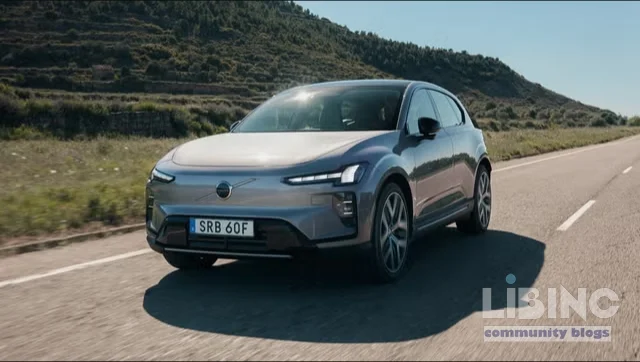
Volvo EX60 as a software-defined future: analytics on the 2027 electric SUV
Technology is consuming the automotive world at a breakneck pace, promising unprecedented convenience, productivity, and safety. Volvo treats this as a mandate, presenting the EX60 as a software-defined future for its lineup. The drive experience we sampled through the Spanish countryside near Barcelona reveals a battleground of hype and practicality: more digital control can enhance safety and user experience, but it can also tempt drivers with screens and settings that distract as much as they inform.
The stakes are substantial. If the software stack delivers, the EX60 can extend vehicle lifespan via over-the-air updates, tailor safety responses to occupants, and optimize energy use across conditions. If not, the very tools designed to protect can become sources of friction, privacy concerns, and maintenance headaches. The EX60 complicates the traditional trust relationship between driver, machine, and manufacturer by turning software into a continuous product, not a one-and-done feature list.
This analysis traverses the EX60’s core hardware-software stack—from the SPA3 platform and an 800-volt architecture to a floor-mounted battery and a central nervous system dubbed HuginCore. We’ll assess how these elements interact with a new Android-based infotainment system, a Gemini AI assistant, and a broad ecosystem of partners. The goal is to separate architectural promise from real-world performance and ownership implications, with a focus on why this matters for the market and for you as a potential owner.
Block 1: Analytics — The EX60 as a system of systems
Volvo’s EX60 is not a single technology upgrade; it’s a deliberate re-architecting of the car as a digital platform. The HuginCore central nervous system ties together processors, sensors, software modules, and cloud services, leveraging in-house development alongside Google, Nvidia, and Qualcomm to deliver a cohesive experience rather than a patchwork of features. This approach aims to improve how the car perceives its environment, how it communicates with occupants, and how it learns from real-world driving data over time.
The move toward a software-defined core requires a rethink of what constitutes “hardware” versus “software” in a modern EV. The EX60’s Android-based infotainment system, anchored by a 15.0-inch OLED touchscreen, is not merely a display; it is the control center for navigation, climate, media, and advanced driver-assistance parameters. The architecture is designed for rapid iteration: features can be introduced or refined through OTA updates, reducing the need for physical recalls or mass-complete redesigns to address evolving safety or convenience needs.
Why this matters: software-defined control creates new leverage for safety and personalization, but it also raises the bar for reliability and security. The EX60’s OTA cadence is a signal that Volvo intends to treat the vehicle as an evolving platform rather than a static product. In practice, that cadence translates into more frequent bug fixes, feature improvements, and potential refinements to the way front-seat occupants are protected and guided through complex driving scenarios.
To support this, Volvo integrates a suite of hardware partners and software platforms into a unified stack. The result should be more meaningful OTA updates during the EX60’s lifecycle and a more adaptive safety arsenal capable of tailoring responses based on ambient conditions, driver behavior, and occupant presence. The challenge is ensuring that the data streams required for such adaptation are secured and that updates do not unintendedly degrade other critical systems.
From a packaging and manufacturing perspective, the EX60 uses an 800-volt electrical architecture that harmonizes with the SPA3 platform to improve energy efficiency and charging speed. The electrical backbone is not an afterthought; it is a core delivery mechanism for the vehicle’s performance and its evolving software features. A reduction in weight and improved packaging result in part from the floor-mounted battery cells that double as structural elements, a choice that influences crash performance, ride quality, and center of gravity. The aluminum megacasting of the rear subframe further streamlines the structure by replacing dozens of components with a single, rigid element. These choices reduce unsprung mass and friction losses, enabling sharper dynamic response without sacrificing safety margins.
In this analytics frame, the EX60’s powertrain options—the P6 and P10—provide a platform for evaluating software-hardware interaction. The P6’s 369 hp rear-drive configuration pairs with an 80-kWh pack, while the P10’s dual-motor setup yields 503 hp from a 91-kWh pack. The higher-performance variant gains a meaningful edge in acceleration and high-load conditions, but the true differentiator is how the software stack manages torque delivery, brake blending, and energy recovery across diverse driving cycles. The rest of the ecosystem—ranging from regenerative braking settings to calibration of steering effort—occurs through the central software layer, reinforcing the argument that Volvo is building a car that participates in continuous improvement rather than a one-and-done purchase.
In sum, the EX60’s analytics-centric design shifts the value equation away from mere range and quanta of power toward a more resilient, upgradeable, and occupant-aware platform. The central question is whether the software-defined approach can maintain reliability and privacy while delivering tangible, real-world improvements in safety and efficiency. The following section contrasts this with rivals that emphasize different priorities and packaging, to illuminate where the EX60 gains or loses leverage in a crowded field.
Key architectural takeaways:
- HuginCore ties sensors, processing, and cloud services into a single, upgradeable ecosystem that is supposed to improve over time rather than stagnate.
- Android-based infotainment centralizes control and expands data flows, making the UI a critical component of safety and usability.
- 800-volt SPA3 integration supports faster charging and tighter energy management, but adds thermal and software complexity.
Block 2: Contrast — How the EX60 stacks up against rivals
When placed against similarly sized luxury EVs, the EX60’s emphasis on software-defined capability yields a mixed reading. Rivals like the Audi Q6 e-tron, BMW iX3, and Mercedes-Benz GLC Electric leverage their own ecosystems, but Volvo’s strategy leans more aggressively into OTA-driven lifecycle management and occupant-centric safety tuning. In this context, the EX60’s strength lies not just in raw numbers but in how it uses software to optimize what those numbers mean in day-to-day ownership.
From a powertrain perspective, the P6’s 369 hp and the P10’s 503 hp deliver coherent performance with acceptable resale-room for the segment. The stacking of torque and the flat mid-range response are enhanced by the software’s drive-mode mapping and regenerative braking, which balance friction, efficiency, and friction/brake transitions. The 10 to 80 percent charging window of 18 minutes, with peak rates up to 370 kW on capable stations, is compelling on paper but depends on the availability of high-power charging infrastructure. The EX60’s charging approach also aligns with a standard NACS port, easing some interoperability with US networks, though real-world charging speed will vary with station temperature, state of charge, and cadence requirements of the battery management system.
In terms of interior and comfort, the EX60 provides modern Scandinavian minimalism with a very bright interior thanks to the glass roof and a seat design that supports long-haul comfort. However, the lack of physical climate controls is a notable friction point for some users. The reliance on the central display for HVAC and vent adjustments, while common in high-end EVs, can slow response in demanding conditions and demand a careful re-evaluation of touch-target sizing in real-world driving gloves or with cold fingers. The cabin experience remains quiet and refined, which is a meaningful differentiator for buyers in this segment.
From a value perspective, the P6 with Plus trim undercuts the XC60 plug-in hybrid on price, while the P10 increases range and power for a modest premium. Ultra versions add features like ventilated front seats and the 28-speaker Bowers & Wilkins stereo with Dolby Atmos tuning, highlighting how Volvo monetizes the software-enabled luxury stack. The question for buyers is whether the incremental software-enabled benefits justify the price delta for the specific needs of daily commuting, family travel, and occasional spirited driving.
Putting the EX60 in a market context requires acknowledging how competitors frame their technology strategies. The Audi Q6 e-tron offers strong packaging and a premium interior with a different emphasis on quattro dynamics; the BMW iX3 emphasizes driving dynamics and a broader high-tech ecosystem; the Mercedes-Benz GLC Electric focuses on comfort and a more traditional luxury experience. The EX60’s software-forward approach is a differentiator, but it will need to prove that OTA-driven improvements translate into durable, real-world advantages beyond the first-year novelty of new features.
Overall, the EX60 can be compelling as a software-enabled, compact-luxury EV, particularly for buyers who value continuous improvement and occupant-centric safety. Yet rival interpretations of the same market—whether focusing on ride quality, efficiency, or brand prestige—will determine how the EX60 positions itself as the ongoing, software-defined choice in this crowded space.
Block 3: Cause-and-effect — How architecture and packaging drive performance and efficiency
The EX60’s engineering choices create a chain of cause-and-effect relationships that influence performance, efficiency, and everyday practicality. The 800-volt architecture, when combined with a floor-embedded battery, is not just a powertrain detail; it reshapes the thermal envelope, packaging constraints, and energy recovery strategies. Higher voltage reduces current for the same power, enabling thinner cables, reduced heat loss, and the potential for faster charging, provided the station can deliver it. In a real-world setting, this translates to shorter dwell times at the charger and more time on the road, which matters for long trips and fleet operations alike.
The packaging strategy—placing battery cells in the floor to function as partial structural elements—improves torsional rigidity and lowers center of gravity. The upshot is a more composed ride with a matter-of-fact ability to stay planted through corners and over less-than-perfect pavement. The aluminum megacasting of the rear subframe further reduces the number of discrete components, which can simplify manufacturing, reduce weight, and improve crash performance when paired with the car’s adaptive dampers. The downside is a higher upfront manufacturing complexity and a need for supply-chain resilience to support such advanced castings.
Powertrain parity between P6 and P10 shows how software shapes the practical outcome of capability. The P6’s 4.0 seconds estimated 0-60 mph, and the P10’s 4.4-second target are credible, but the actual experience is guided by the vehicle’s throttle response mapping, brake regeneration levels, and energy management routines. The EX60’s braking system, with multiple regen levels and a one-pedal mode, lets drivers tailor deceleration to conditions; software tuning here directly affects energy efficiency, range, and even tire wear over time. In turn, the EX60’s ideal daily use hinges on how well its software calibrates these subsystems in real-world contexts rather than in laboratory tests.
Battery thermal management remains a critical constraint. While the 112-kWh pack for the anticipated P12 upgrade will push energy density further, it will also demand sophisticated cooling to prevent performance throttling on long climbs or in hot climates. The EX60’s software stack must manage thermal throttling gracefully, avoiding abrupt power drops or uncomfortable fading in power delivery during sustained highway merges. If executed well, the result is a more consistent, confident driving character, even when battery temperature swings occur during extreme use. If not, the car risks feeling sluggish or inconsistent when it matters most.
Charging behavior is a practical bridge between architecture and daily use. Volvo’s approach—rapid top-ups with strong peak rates, a broad 10–80% window, and broad compatibility with public networks—interfaces with the vehicle’s energy management and battery chemistry. The availability of high-power stations will determine how frequently owners can realize the claimed 160 miles of range replenishment in ten minutes. In markets where charging infrastructure remains uneven, the EX60’s real-world advantage will depend on station mix and regional energy policies as much as on hardware capability.
In this cause-and-effect framework, the EX60’s architectural choices push toward a future where software-defined upgrades can continuously improve battery efficiency, charging speed, and dynamic handling. The price of that ambition is added engineering complexity and an increased reliance on a resilient software ecosystem. The next section explores what this means for ownership and for the wider market, including privacy and data governance questions that arise when software becomes the main product.
Block 4: Expert reconstruction — What Volvo’s approach means for ownership and the market
From an ownership perspective, the EX60 promises a living platform rather than a single snapshot. The OTA cadence can deliver improved range, new driver-assistance capabilities, and more refined personalization over the vehicle’s life. Yet the model also raises questions about software support timelines, update reliability, and how Volvo manages data collected through its cloud-enabled services and Gemini AI. The practical outcome is a car that evolves with time, potentially depressing resale depreciation by keeping the feature set fresh, but also creating ongoing costs and expectations for owners who must remain plugged into the software ecosystem.
The EX60’s Gemini AI, integrated with Google services and the vehicle’s Android-based interface, embodies a new era of in-car assistance. The practical benefit is a more capable assistant that can answer real-world questions and help with routine tasks, but the trade-off is data flow that traverses the car, driver, and cloud servers. Protecting occupant privacy without sacrificing the benefits of a connected experience will require transparent data governance, patient design of consent flows, and a policy for how data is used to improve safety and personalization without being monetized in ways customers cannot fully anticipate.
Volvo’s software-first strategy also signals a shift in how the market frames what a car is worth. A software-defined EX60 should, in theory, stay relevant longer, with updated safety features and efficiency optimizations delivered over time. That dynamic shifts the relationship between automaker, dealer, and owner, as maintenance and updates become part of a lifecycle contract rather than a one-off purchase. The Cross Country variant, planned for 2028 and available in P10 or P12 tunes, expands this concept into a more rugged form, signaling Volvo’s intent to extend the same software-centric philosophy across different body styles and mission profiles.
Ultimately, the EX60’s approach embodies a broader industry trend: the car as a platform whose value is loaded not only in its hardware but in its software pipeline and the cadence of its updates. This has implications for pricing, service strategies, privacy, and user experience. For buyers and fleets, the payoff is a future-proofed vehicle whose capabilities can grow without a physical redesign. The risk is a dependency on network availability, vendor commitments, and the long-term reliability of cloud and edge computing used to sustain the car’s most advanced features.
Bottom line: the Volvo EX60 offers a compelling glimpse into a software-defined future for the premium EV segment. If the reliability, data governance, and OTA cadence live up to the promise, the EX60 could redefine what “ownership” means in the luxury EV category. But success hinges on delivering consistent, secure, and user-centered software updates that truly add value without eroding simplicity or driver confidence.
In sum, the Volvo EX60 represents more than a new electric SUV. It is a case study in how software-defined engineering can reshape performance, safety, and ownership economics in a way that may outlast the car’s body panels. The architecture choices—SPA3 with 800V, floor-embedded batteries, aluminum megacasting, and HuginCore—are not cosmetic upgrades; they are statements about how Volvo intends to create a platform that learns, adapts, and improves after the sale. The success of this approach will hinge on the reliability of OTA updates, the integrity of data governance, and the ability of the software to deliver meaningful, tangible benefits in real-world driving—without overwhelming the user with complexity.
Block 5: Ownership realism — governance, privacy and reliability in practice
As Volvo’s EX60 evolves into a software-driven platform, ownership will hinge on clear governance, predictable update behavior, and transparent handling of data. The practical value of OTA cadence depends on how well consent, security, and data-use policies are designed and communicated to owners in real time.
Operational governance and OTA reliability snapshot
| Area | Mechanism | Real-World Benefit | Risk/Mitigation |
|---|---|---|---|
| Data privacy | Granular opt-in controls; per-feature data scopes | Owners tailor what is shared for safety improvements and personalization | Mitigate by clear prompts; default to minimal data collection |
| Security patches | Automated OTA with rollback option | Fast risk reduction after vulnerabilities | Rollback gaps managed by staged deployment and user dashboards |
| Consent flow | Visible consent screens for data categories | Trust and autonomy in choosing data uses | Proactively explain implications; offer opt-out at any time |
In practice, owners will encounter consent prompts during updates, with explanations of what will be collected and how it improves safety. For example, during a winter update, the car may request data to refine braking and traction control using anonymized patterns. If consent is declined, core safety functions remain active, but personalization and cloud-assisted features may be limited. Such scenarios illustrate the need for a transparent, user-friendly governance model that makes the trade-offs clear while preserving essential safety capabilities.
Privacy snapshot: Data is encrypted in transit and at rest (AES-256); retention windows are defined, and dashboards show data categories, retention periods, and access rights. Owners can review and adjust preferences anytime via the vehicle UI or companion app.
Ownership economics and maintenance cost matrix
| Aspect | Annual Cost Range | OTA Impact | Notes |
|---|---|---|---|
| Data governance administration | $120–$400 | Frequent policy updates with UI prompts | Best viewed as part of lifecycle plan |
| Cloud services and analytics | $60–$240 | Sustain features and data insights | Monitor for cost drift and efficiency |
Overall, owners exchange a future-proofed feature set for ongoing stewardship of data, with governance designed to keep software updates aligned with safety and privacy expectations.
FAQ
How does HuginCore coordinate sensors, software and cloud services in the EX60?
In practice, HuginCore acts as a central coordinating layer that integrates sensor inputs, local processing, and cloud-based analytics to deliver a cohesive vehicle understanding. This coordination helps the car respond more accurately to real-world scenarios, while allowing updates to refine perception and decision-making over time. The approach reduces fragmentation by delivering a single, upgradeable stack rather than disparate subsystems. This integration improves consistency across driving conditions, but it relies on robust data governance and secure data paths to protect occupant privacy.
Analytically, the system relies on continuous feedback loops between on-board processors, edge devices, and cloud models, enabling improvements to safety features and efficiency with each OTA release.
What makes OTA updates meaningful for safety and efficiency?
OTA updates can refine safety features (like collision avoidance, braking calibration, and driver monitoring) and improve energy management through software refinements. A real-world example is updating regenerative braking maps for urban stop-and-go patterns, which can improve range by reducing energy waste. The cadence enables fast fixes for vulnerabilities and gradual feature enhancements, but it also requires clear user notices and a reliable rollback mechanism if an update introduces issues.
From a management perspective, owners should expect a staged rollout that starts with opt-in for non-critical features, with critical safety updates deployed broadly after validation cycles.
What privacy protections are built into the EX60 software?
Volvo emphasizes data minimization, encryption in transit and at rest, and transparent consent prompts for data sharing. Practically, owners receive dashboards showing which data categories are used, retention windows, and access rights. In scenarios where data informs safety improvements, owners can choose to participate and learn how data improves performance across conditions. The design aims to balance personalization with user control and regulatory compliance across regions.
Analytically, effective privacy governance reduces risk and increases owner trust, while enabling more precise safety tuning through anonymized aggregates.
How reliable are updates and what happens if an update fails?
Update reliability hinges on staged rollouts, validation in real-world scenarios, and robust rollback capabilities. If an update produces undesirable behavior, a safe fallback path is activated, and critical safety functions remain available while the issue is diagnosed. A failure protocol reduces downtime and preserves driver confidence. Practically, this means a two-track approach: continuous improvement for features and a separate, secure channel for essential safety patches.
From a risk perspective, owners should expect a clear update history and support contacts that clarify how issues are resolved and what to expect during maintenance cycles.
What should buyers expect in the ownership lifecycle?
Buyers should view the EX60 as a living platform. Over-the-air updates can extend the vehicle’s useful life by adding features and optimizing efficiency. However, this also creates ongoing expectations for connectivity, data governance, and cloud reliability. A transparent ownership experience will include predictable update schedules, clear consent choices, and accessible tools to monitor data usage and retention over time.
Economically, the lifecycle approach shifts some costs toward software maintenance and data governance, but it can be offset by longer asset relevance, fewer physical recalls, and a more personalized ownership experience.





Add a comment
To comment, you need to register and authorize
Comments