

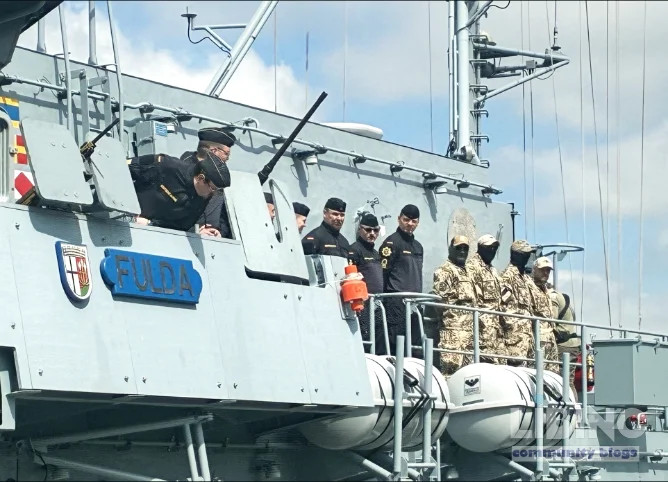
NATO Beyond Borders: Reassessing Hormuz, Security, and Strategic Memory
Table of contents
- Analytical view: why NATO beyond borders has long been central
- Contrasting narratives: restraint versus proactive continuity
- Causal chains: Hormuz, markets, and alliance credibility
- Expert reconstruction: pathways for a coherent, coalition-driven approach
Every few years, NATO rediscovers an old argument about its core mission. The debate resurfaces as the Strait of Hormuz becomes a testing ground for what counts as security for the Alliance. The question now is whether NATO should safeguard freedom of navigation even when Hormuz lies beyond the treaty’s territory. The stakes are not abstract: disruptions ripple through energy prices, industrial output, and defense readiness across the Euro-Atlantic space. The hidden conflict concerns memory versus reality. The alliance’s history suggests a broader horizon, while current rhetoric often trims it. This analysis tracks that arc, tests the logic of extending NATO’s security remit, and sketches pathways for a credible, coalition-based response that avoids both mission creep and strategic amnesia. In truth, NATO beyond borders has long been part of its operational DNA.
Analytical view
The first strand asks what the alliance has already proven about security beyond geography. The 1999 Strategic Concept introduced crisis-response operations beyond Allied territory. The 2010 Strategic Concept codified three core tasks—collective defense, crisis management, and cooperative security—and explicitly flagged ballistic missiles as a direct threat, naming Iran among the proliferators. This is not an American import; it reflects a shared European understanding that allied security depends on the stability of adjacent regions and critical chokepoints. The conclusion is not rhetorical: security is a system property. If one piece of the network frays, perturbations travel along energy corridors, shipping lanes, and supply chains that link European economies to global markets. The analytic implication is straightforward: NATO beyond borders is a structural feature of alliance resilience, not a temporary expansion of appetite.
Beyond doctrine, the world’s interdependence has intensified. Maritime access, energy resilience, and the integrity of critical infrastructure have moved from peripheral concerns to central determinants of security policy. When a single link in the global energy chain—such as Hormuz—faces disruption, price volatility cascades through industrial sectors, defense procurement, and military readiness. The analytic logic: cross-border threats demand cross-border responses. Freedom of navigation, once treated as a maritime detail, becomes a strategic capability to safeguard the alliance’s overall deterrence posture. This is why the Gulf’s security environment cannot be reduced to a regional curiosity; it is a global public good with direct implications for European security budgets, allied interoperability, and the credibility of NATO’s strategic concept.
The practical question then becomes how to translate this logic into coherent action without overreach. European navies already operate near or within Gulf approaches in partnership configurations, and individual allies contribute to maritime security beyond Europe’s shores. The evidence is not exceptional; it is normal. The alliance’s practice over decades shows that relevance requires a spectrum of activity that includes, but is not limited to, traditional territorial defense. The analytic takeaway is that NATO beyond borders, properly framed, remains a continuity of the alliance’s mission rather than a radical departure from it. It is a question of prioritization, governance, and the political will to align strategy with enduring dependencies rather than retreat into a provincial reading of security.
Contrasting narratives: restraint versus proactive continuity
The second block moves from what NATO has done to what its members say about doing more. The familiar refrain—not our war or not our problem—appeals to prudence and risk aversion. It frames Hormuz as a distant issue that would require authority, resources, and escalation risks beyond what the collective can responsibly bear. The objection rests on three pillars: jurisdictional limits, alliance cohesion, and crisis management risk. Each pillar is analytically testable, not merely rhetorically persuasive. If alliance risk aversion becomes the default setting, the result is strategic paralysis: a narrowing of the alliance’s ability to absorb systemic shocks that do not respect borders. The question becomes not whether NATO can operate beyond its borders, but whether the alliance is prepared to acknowledge openly that allied security sometimes requires action beyond territory—without compromising territorial defense.
In practice, restraint can resemble strategic discipline in the short term but morph into strategic drift in the medium term. A notional “not our war” frame tends to immunize national publics from costly commitments while eroding allied solidarity, interoperability, and the shared burden of risk. The counterpoint is that decisive action in defense of freedom of navigation, if characterized correctly, does not erase the primacy of territorial defense. It complements it. The key is a narrative that distinguishes the legitimate use of crisis-management tools for maritime security from an unbounded expeditionary mindset. NATO has long maintained that collective defense remains the center of gravity; the question is whether the alliance can adopt a layered approach that respects both territorial obligations and the operational realities of global chokepoints. The strategic risk of failing this test lies not in overreach but in strategic amnesia—the forgetting of lessons from Bosnia, Kosovo, and the Horn of Africa as the security environment evolves.
From a policy perspective, the contrast reveals a more nuanced choice: the alliance can maintain a disciplined footprint beyond homelands while preserving a credible deterrent against existential threats. This requires governance arrangements, a clear ruleset for when and how to act, and robust political backing at the highest levels of alliance decision-making. It also requires acknowledging that the Gulf, as a hub in the global energy system, affects European defense industrial bases and the readiness of NATO forces to deter Russia or other potential aggressors. The parity between restraint and readiness is not a call for indiscriminate intervention; it is a call for strategic accountability to a networked security environment that links the stability of Hormuz to the stability of the Euro-Atlantic security order.
Causal chains: Hormuz, markets, and alliance credibility
The third block traces the causal chain from maritime disruption to strategic decision-making. The logic is linear but the implications are systemic. A disruption through Hormuz raises energy prices, tightens energy markets, and elevates inflationary pressure across a broad range of sectors. Higher energy costs translate into higher production costs, constrained defense expenditures, and tightened fiscal space for modernization programs. In response, political leaders weigh the benefits of extrabureaucratic interventions—such as coalition naval patrols or maritime interdiction operations—against the risks of escalation and miscalculation. The causal chain hinges on the resilience of critical infrastructure, which determines how quickly a disruption translates into operational vulnerability for military assets and supply chains. In this sense, Hormuz is not merely a transit corridor; it is a determinant of deterrence credibility in a security environment where energy and defense budgets intersect with alliance cohesion.
Meanwhile, the security environment includes a web of dependencies: integrated civilian-military supply chains, dual-use technologies, and allied industrial bases. A crisis in the Gulf reverberates through European shipyards, defense contractors, and NATO training cycles. The presence or absence of a credible capability to safeguard freedom of navigation becomes a test of the alliance’s political economy: can NATO marshal resources quickly enough to stabilize sea lines of communication, reassure markets, and deter potential aggressors without triggering a broader confrontation? The causal analysis shows why the gulf remains a core security concern, not a peripheral issue. It also demonstrates why a narrow focus on geography ignores the real strength of alliance governance—the ability to mobilize collective capabilities to protect shared interests across borders and disciplines.
A final causal insight concerns narrative and legitimacy. The alliance’s credibility depends on visible, proportionate actions that align with the risk calculus of allied publics. When the narrative frames NATO beyond borders as a necessary extension of collective defense and crisis management, it gains political legitimacy. When it treats such actions as status quo disruption, it risks public fatigue and political resistance. The lesson is not simply to act; it is to act with a clear, proportionate, and transparent purpose that reinforces deterrence while avoiding unnecessary entanglement. This is the heart of a disciplined causal model: actions proportional to threats, anchored in alliance governance, and oriented toward sustaining both security and legitimacy in a rapidly interconnected world.
Expert reconstruction: pathways for a coherent, coalition-driven approach
The fourth block translates analytic insights into concrete policy pathways. The main question is not whether NATO should operate beyond borders, but how to structure such activity so that it reinforces deterrence, reinforces alliance unity, and respects national sensitivities. The reconstruction offers four interlocking pathways: a NATO-led maritime-security framework, a NATO-enabled architecture leveraging allied navies, a coalition arrangement with political backing and limited operational scope, and a strategic communications plan that aligns public expectations with strategic necessities.
- NATO-led framework: Establish a formal charter for crisis-response operations in maritime choke points, with clear rules of engagement, risk thresholds, and exit criteria. This framework would specify when freedom of navigation tasks justify naval presence, how to minimize escalation, and how to integrate with existing mission sets like counter-piracy or counter-terrorism operations.
- NATO-enabled architecture: Build interoperability through common standards, joint exercises, and information-sharing protocols among European navies, partners in the region, and allied intelligence communities. This path preserves alliance unity while distributing leadership according to capability and risk appetite.
- Coalition-anchored operations: Leverage coalitions with NATO political support and a clearly defined mission scope. This approach reduces bureaucratic friction, allows flexible coalitions to adapt to evolving threats, and keeps allied publics engaged through shared risk, burden, and recognition.
- Strategic communications and legitimacy: Develop a narrative that explains the security logic of action beyond borders, linking maritime security to civilian resilience, energy security, and the stability of transatlantic markets. The narrative should be precise about thresholds for action, exit strategies, and the proportionality of force.
The practical steps to operationalize these pathways include: establishing joint assessment mechanisms to monitor Hormuz-related risks, aligning defense investment with shielded capabilities for sea lanes, and creating rapid-adaptation units capable of credible deterrence without provoking unnecessary escalation. A disciplined governance model is essential: regular reviews, transparent criteria, and fixed decision rights that balance national mandates with collective risk tolerance. This is not a policy reform for a distant crisis; it is a strategy to preserve alliance cohesion while plugging into global security dynamics that centralize energy resilience and maritime security as core concerns of European defense planning.
Several objections deserve direct counter-arguments. Critics worry about mission creep, misperception of intent, and the risk of provoking conflicts. The appropriate response is not to abandon the idea but to constrain it within a proportional, rules-based framework that prioritizes crisis management and deterrence. Critics also fear that public opinion will not bear costs. The counter to that is a transparent governance mechanism with clear political endorsement, measurable benchmarks, and a demonstrable link between action in Hormuz and tangible improvements in energy and defense resilience for the Euro-Atlantic community. Ultimately, the expert reconstruction aims at a durable balance: enable practical cooperation, sustain deterrence, and safeguard the alliance’s core function of defending allied security while recognizing the realities of a globalized security environment.
In sum, NATO beyond borders is not a radical redefinition but a deliberate re-synthesis of a long-standing capability set. The Gulf is the litmus test: it reveals whether alliance leaders can translate historical experience into present-day practice without slipping into either romantic expeditionism or treacherous withdrawal. The history of NATO shows repeatedly that security challenges rarely respect borders. The future, too, demands a disciplined, coalition-based approach to maritime security that reinforces, rather than weakens, the alliance’s primary task: the defense of Europe and its interests in a connected world.
Conclusion
To avoid strategic amnesia, NATO must acknowledge a simple historical truth: defending allied security sometimes requires action beyond allied territory. The Hormuz question tests this memory against a complex, interconnected world where energy resilience and maritime security shape deterrence as surely as land borders. A credible path forward blends a disciplined crisis-management capability with a clear political and strategic framework for out-of-area actions. By anchoring such actions in alliance governance, interoperable capabilities, and transparent explanations to the public, NATO can maintain its center of gravity—territorial defense—while responsibly addressing risks that traverse borders. In that balance lies resilience for the Euro-Atlantic security order—and a credible answer to the call for NATO beyond borders.
Closing the governance deficiency: a concrete framework
Although the strategic case for action beyond borders is clear, there remains a practical deficiency in how such actions are authorized, scaled, and unwound. A concise governance framework with transparent thresholds and exit criteria can prevent mission creep while preserving deterrence and alliance unity.
The proposed model uses four linked elements: political authorization, scenario-based thresholds, disciplined rules of engagement, and a timed exit. Together they tie out-of-area actions to alliance risk tolerance and public accountability, while keeping territorial defense at the core of NATO's mission.
Table 1. Governance Decision Matrix
| Threshold | Proposed Action | Escalation Level | Exit Criteria |
|---|---|---|---|
| Low risk | Maritime presence for deterrence | ROE limited | Stability confirmed |
| Moderate risk | Coalition patrol with diplomatic backing | Consultative, UN Charter-aligned | Threat downgraded |
| High risk | Joint NATO-led operations | Comprehensive governance activated | Mission objectives achieved |
Practical scenarios illustrate how this framework works in real time. Scenario A Hormuz disruption during a global energy shock prompts a four-nation coalition to secure key lanes for six weeks under strict ROE and an exit plan. Scenario B a maritime incident tests escalation thresholds, triggering coalition coordination, air-sea patrols, and diplomatic channels to manage risk.
- Scenario C gradual vulnerability in critical hubs requires phased capability deployment and interoperable communications.
- Scenario D a miscalculation leads to limited confrontation, then rapid de-escalation under NATO oversight.
The remaining steps include joint assessment mechanisms, aligned defence investments, and rapid-adaptation units to deter without provoking escalation. This approach preserves alliance cohesion and links energy resilience to maritime security as core elements of European defense planning.
Table 2. Interoperability milestones
| Milestone | Timeline | Purpose |
|---|---|---|
| Joint exercises | 12-18 months | Build readiness and trust |
| Information sharing | Ongoing | Faster decision loops |
| ROE validation | Annual | Prevent miscalculation |
In sum, NATO beyond borders is a disciplined re-synthesis of a long-standing capability set. The Gulf acts as a litmus test for how doctrine translates into practice without drifting into needless expedition. By binding out-of-area actions to governance, interoperability, and transparent public messaging, the alliance preserves deterrence and reinforces resilience in a more connected security environment.
What does NATO beyond borders mean in practice for Hormuz security?
In practice, NATO beyond borders means disciplined, rules-based actions anchored in crisis management and deterrence rather than open-ended intervention. Coalition naval presence would be authorized through political decisions, guided by clearly defined thresholds and exit criteria, with ROE calibrated to minimize escalation risk. The aim is to deter aggression while preserving alliance cohesion and territorial defense commitments. It requires transparent public explanations, robust interoperable capabilities, predictable burden sharing, and a clear political authorization chain that can mobilize resources quickly while respecting national sensitivities. This framework links maritime security to energy resilience and Euro-Atlantic stability.
Analytical depth: such a framework aligns security actions with systemic risks, ensuring timely, proportional responses that support both defense and resilience goals.
How would a governance framework avoid mission creep?
In practice, a tight governance framework fixes decision rights, defines scenario-based thresholds, and sets explicit exit criteria. Political authorization and time-bound tasks preface ROE, keeping operations focused on deterrence and crisis management. It also creates accountability mechanisms and prevents sustained deployments without demonstrable security returns.
What roles do allied navies play and how is burden shared?
The framework promotes interoperability through standardized procedures, joint exercises, and shared intelligence. Burden sharing is allocated according to capability, risk, and political consensus, with NATO leading when necessary and coalitions handling less complex tasks to maintain unity.
How does Hormuz risk affect European energy security and defense budgets?
Energy-market volatility affects inflation, defense modernization, and procurement. A credible out-of-area posture helps stabilize sea lanes and signals commitment, potentially moderating price spikes and protecting defense budgets through predictable allied readiness and shared resilience investments.
What are the exit criteria and escalation controls?
Exit criteria are defined by objective indicators such as restored freedom of navigation and restored market stability. Escalation controls include ROE limits, multilateral oversight, and mandated pauses if miscalculations occur, ensuring a return to baseline operations promptly.





Add a comment
To comment, you need to register and authorize
Comments