

Racial Justice and Economic Inequality in the United States: From Founding Ideals to the Intergenerational Wealth Gap
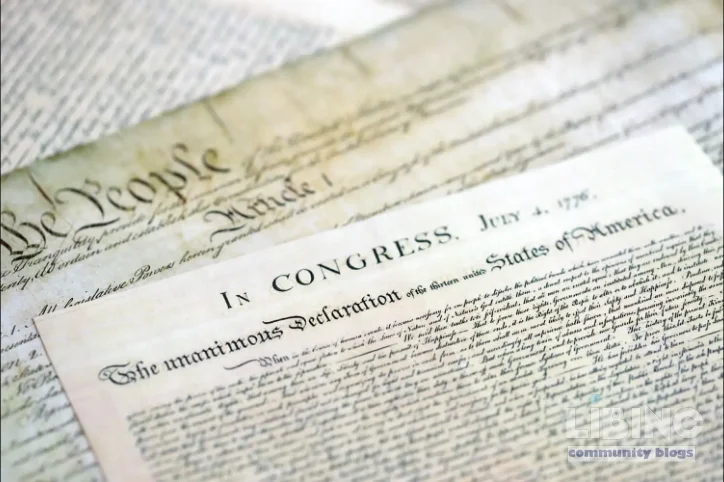
Let us begin with a problem that looms over every milestone of American democracy: a founding language that proclaims equality of all citizens, and a social order that has repeatedly denied Black, Latino, and Indigenous people the basic means to live with dignity. The Declaration of Independence anchors rights in universal humanity, yet the nation’s economy has been built on racial hierarchies that constrained opportunity for generations. This tension matters today because politics and policy increasingly hinge on whether the promise of equality translates into material security. If the United States aspires to be a republic where liberty is meaningful for every citizen, it must confront how access to wealth and the means of wealth accumulation shape actual citizenship—and not merely civil rights on paper.
The stakes are not abstract. Without addressing the racial wealth gap, civic equality is at risk of becoming a hollow guarantee. Wealth confers power: it funds education, health, housing, and political influence. If one generation cannot secure intergenerational wealth or credible pathways to homeownership and business formation, the next generation starts with a handicap that the law alone cannot erase. The hidden conflict is this: constitutional equality and economic opportunity have grown apart, even as social movements have pressed for both. The article that follows traces how these strands pulled apart, and how disciplined attention to wealth can recalibrate the promise of equality for all Americans.
The path of analysis here is twofold. First, we examine how foundational ideals and subsequent civil rights milestones reframed who counts as a full citizen, while economic structures remained rigidly segregated. Second, we map the causal mechanisms—policies, practices, and market dynamics—that hardened wealth disparities across generations. By the end, the aim is not mere diagnosis but a sober reconstruction of how policy can bind justice to economics, so that the Declaration’s equality principle becomes a living condition, not a rhetorical artifact.
Table of Contents- Through Analytics
- Through Contrast
- Through Cause-and-Effect Relationships
- Through Expert Reconstruction
Through Analytics
Founding rhetoric anchored in universal rights clashes with a national economy structured by race. The assertion that life, liberty, and the pursuit of happiness are unalienable rights rests on a proposition about human capital—how individuals accumulate and deploy wealth over time. The question is not whether these rights exist in law but whether the economic framework supports their realization for every citizen. When rights and wealth diverge, governance becomes a negotiation over opportunity, not merely justice in the abstract.
Consider the enduring racial wealth gap as a structural feature of the American economy. The data points to a persistent chasm in intergenerational wealth that derives from centuries of exclusion, discriminatory policy, and unequal investment. The modern snapshot shows a dramatic discrepancy: Black households report median wealth around forty-five thousand dollars, Latino households about sixty-two thousand, while White households approach roughly two hundred eighty-five thousand and Asian American households exceed half a million. These numbers are not incidental; they reflect a cumulative advantage or disadvantage that expands with time through mortgage access, college financing, and inheritance. The racial wealth gap is the most consequential metric of economic inequality because it translates into durable difference in opportunities and resilience to shocks.
Why does this matter for democratic governance? Because wealth shapes political influence, neighborhood safety, and educational outcomes, all of which feed back into the capacity to exercise rights. White households accumulate capital more readily, while Black, Latino, and Indigenous households face barriers, including access to credit, reliable housing, and affordable education. The structural nature of these barriers means that even with formal equality of opportunity, meaningful equality of outcomes remains out of reach for large segments of the population. This is not merely an issue of distributive justice; it is a question of social stability, mobility, and trust in institutions that promise fairness.
To trace the mechanics, we must connect policy, law, and markets. The postwar era introduced a suite of opportunities—education subsidies, housing programs, and social insurance—that typically benefited white households more than Black families. When we examine the post-slavery state, we see a pattern: gains in civil rights did not automatically translate into parallel gains in wealth accumulation. Why? Because the structural rules governing housing, labor, and credit systemically favored white households and penalized Black ones. The consequence is a cyclical process: fewer assets lead to reduced investment capacity, which in turn suppresses future earnings, and the loop intensifies across generations. The objective is not to rehearse grievances but to diagnose how policy choices shape material outcomes—and to identify leverage points for reform.
Key historical policy channels that shaped wealth outcomes include housing credit, retirement security, and labor protections. The New Deal era expanded social insurance and labor rights but left out substantial portions of Black work, including domestic labor and sharecropping. The GI Bill launched a modern middle class for many white veterans, yet its implementation was locally administered and segmented by race, preventing broad access for Black veterans. Redlining and later housing discrimination blocked wealth-building pathways through home equity—one of the principal engines of intergenerational wealth. Each policy, implemented with the intention of stabilizing the middle class or expanding opportunity, interacted with existing racial hierarchies to produce a durable asymmetry in wealth and influence. The result is not simply a gap in bank accounts; it is a gap in the capacity to shape the rules of opportunity itself.
Through Contrast
The Declaration grants equal standing in theory, but the nation’s history treats equality as a work-in-progress—one carried forward by social movements and legal reforms that restore, reinterpret, or augment rights with economic remedies. Frederick Douglass highlighted a paradox in the mid-19th century: liberty proclaimed in law coexists with a system that codifies bondage. The contrast fuels a moral argument: a republic cannot claim legitimacy if a segment of its people remains structurally dispossessed. The later civil rights era reframed equality as a national obligation to rectify past injustices, yet the economic dimension remained stubbornly unresolved. The promissory note structure—rights promised but not yet backed by resources—became a recurring rhetorical device in public discourse about equity.
The moral arc of the 20th century shows progress in civil rights through landmark legislation, but progress in wealth and opportunity lagged. The 1964 Civil Rights Act and the 1968 Fair Housing Act outlawed discriminatory practices. But the wealth gap persisted because access to capital, education, and housing did not mirror the gains in legal equality. The economic battlefield shifted from slavery to redlining to tax and benefit structures that favored property accumulation and retirement security for whites. The modern era has witnessed a resurgence of movements—Black Lives Matter among them—that insist equal protection of the law must be accompanied by equal protection of economic prospects. The contrast reveals a core insight: rights without resources cannot deliver full citizenship; resources without rights cannot sustain democratic legitimacy.
Today’s rhetoric of equality, including the insistence on Black Lives Matter, extends the logic that the Declaration’s guarantees are universal. Yet the economic claims of these movements require institutions to translate moral claims into tangible policy. The contrast is not merely a historical recounting; it is a test of whether American democracy can align its wealth-creating structures with its egalitarian rhetoric. If the nation cannot close the gap between rights and wealth, it risks hollowing out the very idea of citizenship that the Declaration seeks to defend. The test is practical: can policy, law, and markets cooperate to deliver intergenerational wealth as a condition of equal citizenship?
Through Cause-and-Effect Relationships
The causal chain begins with historical dispossession and extends into contemporary policy arrangements. The end of slavery did not erase the need to restructure the economy in ways that count Black Americans as full participants in wealth formation. Instead, successive public policies created an uneven landscape for opportunity. The Reconstruction Amendments aimed to guarantee citizenship and the vote, while in practice, local enforcement and economic practices like convict leasing and sharecropping perpetuated a caste-like system. The effect was not immediate, but cumulative—generational gaps in asset ownership that shaped schooling, housing, and wages for decades to come.
As the nation transitioned to the modern era, federal interventions in labor markets, housing, and retirement security did not target the roots of inequity with precision. The New Deal and postwar reforms expanded social protections, but implementation gaps, occupational segregation, and selective enforcement left Black workers underrepresented in the benefits. The GI Bill, often cited as a model for broad economic uplift, demonstrates how policy can fail when design explicitly or practically excludes communities. Local administration and biased underwriting restricted access to mortgages, college tuition assistance, and small-business loans for Black veterans, thus curtailing the primary channels of wealth accumulation: home equity, education, and business capital. The effect is a long tail of deprivation, where the costs of exclusion compound through generations.
Redlining, urban renewal, and evolving zoning laws crystallized a geography of opportunity—a map of neighborhoods that determined access to investment, school quality, and asset appreciation. The consequences are measurable: persistent disparities in homeownership rates, school funding, and neighborhood investment translate into lower lifetime earnings and reduced social mobility for families of color. The causal mechanism is simple in form but devastating in impact: when access to wealth-building opportunities is systematically blocked, the opportunity for future generations to ascend erodes. The state could not guarantee equality of outcomes, but it could have safeguarded equal opportunities; that missed responsibility is why wealth remains the most powerful determinant of political voice and life chances. The current data—intergenerational wealth gaps that persist across cohorts—are the imprint of a policy landscape that rewarded some families with capital while denying others a fair shot at capital formation.
The practical implications are straightforward but demanding. If policy aims to realign rights with material reality, it must target the levers of wealth: homeownership, education financing, income security, and investment in communities. The effect of any reform depends on the design: race-aware programs can be controversial, but race-conscious strategies have historically been necessary to counter years of exclusion. The causal logic is not a moral fable; it is an operational blueprint. Without reengineering the backbone of wealth creation, remedial rights remain incomplete, and democracy remains politically unstable. The core lesson is clear: a robust equality project requires explicit attention to how assets are built, transferred, and protected across generations.
Through Expert Reconstruction
What would an expert reconstruction of policy look like if it sought to close the racial wealth gap while preserving individual rights? The proposals below aim to integrate legal guarantees with proactive economic investments, aligning the Declaration’s equality promise with concrete pathways to wealth for Black, Latino, and Asian American communities.
- Wealth-building programs with universal access: expand matched-savings accounts, down-payment assistance, and small-business capital with clear metrics for minority participation; ensure eligibility across income levels and eliminate borrower bias in underwriting.
- Housing equity and geospatial investment: pursue targeted mortgage subsidies, expanded affordable housing, and zoning reforms that unlock value in underserved neighborhoods; link investments to long-term community wealth metrics rather than short-term construction outputs.
- Education and training as a wealth channel: combine debt-free college access with apprenticeships and career pathways that align with local labor markets; provide universal college-quality early-childhood education as a long-run wealth amplifier.
- Tax and transfer mechanisms oriented to equity: reform property tax structures to prevent capital drain in marginalized communities, implement progressive capital-gain rules, and expand refundable credits tied to asset accumulation and intergenerational wealth transfer.
- Accountability through data and governance: standardize race- and income-disaggregated wealth statistics, publish regular progress reports, and empower independent bodies to audit policy impact on wealth disparities without political interference.
- Systemic enforcement of fair lending and credit access: strengthen enforcement against discriminatory underwriting, expand community development financial institutions, and promote transparent credit markets that reflect actual risk rather than negotiated social biases.
- Public goods investment that builds durable capital: fund infrastructure, health systems, and digital access in marginalized communities to anchor long-run prosperity and reduce the fragility of households facing economic shocks.
The reconstruction path requires a calculus that balances rights with assets: legal equality is a necessary foundation, but wealth equality is the engine that powers durable civic participation. These measures must be designed to counteract historical biases while leveraging the dynamic potential of diverse communities. Critics will push back on the costs or the scope, yet the cost of inaction is higher—a polity that negotiates rights without preserving the ability to realize them. In practice, a cohesive program will mix universal standards with targeted interventions, ensuring that every American has a credible route to wealth that is consistent with the nation's deepest commitments. The hard work is instituting this alignment, measuring it rigorously, and sustaining it across political cycles so that equality proves robust, not rhetorical.
Concluding this synthesis, the United States confronts a defining question about its identity: can a republic built on universal rights transform those rights into universal opportunity? The answer hinges on economic policy as much as constitutional principle. By connecting the Declaration’s equality to tangible wealth-building pathways, policymakers can move beyond symbolic gestures and toward a society where the pursuit of happiness is a real and attainable trajectory for all families. The road is long, and the terrain is contested, but the destination is clear: a nation where civil rights and economic opportunity are mutually reinforcing, and where the principle of equal citizenship is measured not only in votes cast or laws enacted, but in the lifetime wealth and security enjoyed by every community.
Conclusion
The path from founding ideals to intergenerational wealth equality is not a straight line, but it is navigable. By diagnosing the mechanisms that widen the racial wealth gap and by reconstructing policy with an eye toward durable wealth creation, the United States can honor the Declaration’s promise in more than speech. This is not an antiquarian exercise; it is a policy imperative that defines the viability of democracy in the 21st century. The question remains open, but the method is clear: embed wealth-creation in the architecture of rights, and let equality become a condition of everyday life for all Americans.
Closing the Wealth-Equality Gap
The most critical gap in translating rights into durable civic equality is the absence of explicit, scalable wealth-building mechanisms that link civil rights to asset accumulation across generations. Policy must blend universal access with race-aware design so that wealth creation occurs in every community while correcting harms from past exclusions.
To operationalize this alignment, consider three practical levers: universal asset-building accounts, targeted housing equity, and transparent governance that tracks wealth outcomes by race and income. Below is a compact illustration of how different policy paths can translate into meaningful wealth gains over time.
Policy Pathways and Wealth Outcomes (illustrative)
| Policy Lever | Short-Run Impact | Long-Run Wealth Effect | Race Group Impact (illustrative) |
|---|---|---|---|
| Universal matched-savings accounts | Moderate uptake | Significant asset growth over 15-20 yrs | White + Black + Latino gains, larger relative gains for historically excluded groups |
| Expanded down payment assistance | Increases homeownership in all communities | Builds home equity and neighborhood investment | Greater momentum for Black and Latino families |
| Targeted small-business capital | Low to moderate access | New business formation and payroll growth | Buoyant entrepreneurship in communities of color |
| Education funding tied to wealth outcomes | Debt burden reduced | Higher lifetime earnings and savings capacity | Educational parity contributes to asset growth across groups |
Consider a few practical scenarios. A first-generation college student from a historically marginalized neighborhood uses a universal savings account to fund college and a down payment on a home after graduation. A small-business owner from a redlined district secures capital through a community development lender and scales to hire locally. In each case, policy is not merely about access to rights but about creating durable capital that supports families across generations.
To ensure accountability, governance should include regular, disaggregated reporting on wealth outcomes and independent audits of program impact. A fourth lever is careful reform of tax and transfer rules to reduce asset erosion in marginalized communities, while ensuring that benefits scale with demonstrated wealth-building progress. Together, these components create a cohesive pathway where rights and assets reinforce each other, turning the promise of equality into a lived experience.
Wealth-Construction Pathways
- Universal access to matched-asset accounts paired with clear repayment terms
- Targeted housing subsidies linked to long-run neighborhood wealth metrics
- Debt-free education options combined with apprenticeships aligned to local needs
- Transparent credit markets and fair-lending enforcement to expand opportunity
By embedding wealth-building in the architecture of rights, policy moves from rhetoric to durable policy that sustains civic participation and trust in institutions.
FAQ
What is the racial wealth gap and why does it persist?
From a broad vantage, the racial wealth gap is not a single statistic but a long-running discrepancy in family assets that results from centuries of exclusion, discriminatory laws, biased lending, redlining, unequal schooling, and limited access to capital, which together reduce the ability of Black, Latino, and Indigenous households to save, borrow, buy homes, start businesses, or weather financial shocks, while white families accumulate capital through home equity, college funding, retirement security, and advantaged access to credit, creating a cumulative advantage that compounds across generations, nation-wide in ways that shape decisions about education, housing, and political participation. This persistent asset gap then translates into differences in opportunities and security that influence civic life and daily wellbeing. This understanding points to policy that must address assets as a core channel of opportunity, not only income or rights on paper.
How have historic policies shaped wealth without equalizing rights?
From redlining to the GI Bill, policy choices gave disproportionate access to credit, homeownership, and education to white households while systematically limiting those opportunities for Black, Latino, and Indigenous families. This created a long tail of asset accumulation advantages that compound over generations, undermining the practical realization of equality even when formal civil rights are protected. The result is a structural bias in wealth formation that requires targeted corrective measures alongside universal protections, rather than relying on rights alone.
What policy levers can close the gap while preserving rights?
Effective levers include universal asset-building accounts, expanded housing subsidies tied to long-term wealth metrics, debt-free education with apprenticeships, and transparent wealth tracking with independent audits. When combined with fair lending enforcement and progressive tax rules, these measures create durable capital formation, especially for communities historically excluded. The key is alignment: rights must be paired with assets that residents can use to secure homes, fund education, and start enterprises across generations.
How should universal wealth programs be designed to correct past harms?
Design should blend universal access with calibrated targeting that recognizes historic disparities. This means universal savings or education supports that remain accessible, plus race-aware components that correct for past redlining and unequal underwriting. Programs should include guardrails against bias, strong data reporting, and independent oversight to ensure effects reach the intended communities without creating new inequities.
What metrics track progress toward wealth equality?
Key metrics include intergenerational wealth changes by race, homeownership rates, average college debt per cohort, small-business formation rates, and the share of households with liquid emergency assets. Disaggregated by race and income, these indicators should be published annually with independent audits and public dashboards to maintain accountability and guide policy adjustments.





Add a comment
To comment, you need to register and authorize
Comments