

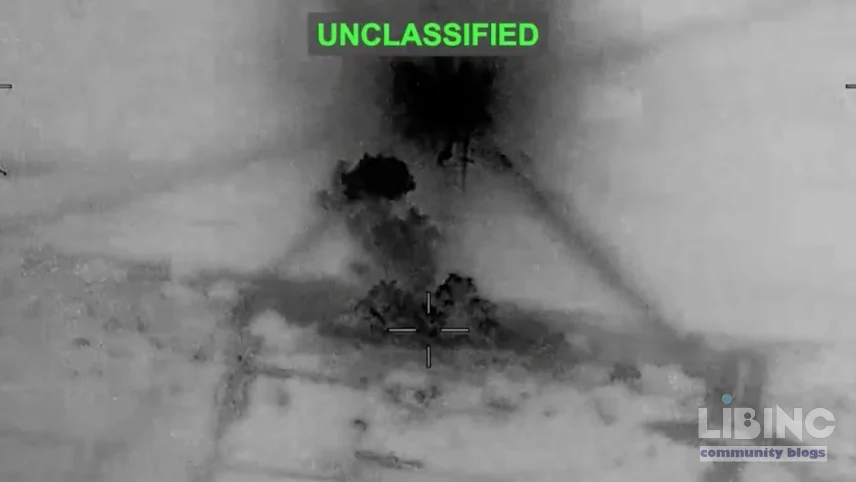
Reassessing the US‑Iran Memorandum of Understanding: Ceasefire Dynamics and the Straits of Hormuz
- Analytical perspective: the MOU as leverage
- Contrasting ambitions: Washington vs. Tehran
- Cause and effect: sequence, incentives, and prices
- Expert reconstruction: forecasts and constraints
The current pause in fighting between the United States and Iran is more than a fleeting lull; it is a test of a memorandum of understanding (MOU) that aims to calm the Strait of Hormuz while shaping forthcoming talks on critical issues, including Tehran’s nuclear program. The agreement’s terms have already influenced shipping, sanctions posture, and regional diplomacy, creating a strategic environment where both sides seek to avoid a costly return to broad hostilities. Yet the dynamics are delicate: a ceasefire without verifiable enforcement would become a fragile backdrop for negotiations rather than a solid springboard toward a final settlement. This article examines why the MOU matters, what it accomplishes, and where it might fail, with attention to how the broader international economy and domestic politics constrain both sides.
To understand the moment, it helps to view the MOU as a framework rather than a finished pact. It encodes a shared interest in keeping the Strait of Hormuz open and preventing a repeat of the economic disruption that followed the early stages of the conflict. At the same time, it creates incentives and signals that affect each side’s bargaining posture in talks over the nuclear file and other regional questions. The key question is not whether the ceasefire holds for a week, but whether the MOU can produce durable constraints on violence while providing credible room for negotiation on incompatible long‑term objectives.
Analysts should also watch how the public messaging around the MOU interacts with private diplomacy. Washington has framed the pause as a pivot toward a comprehensive settlement, while Tehran emphasizes strategic redundancy: it gains time, sanctions relief, and the ability to resume maritime activity with reduced risk, all while calibrating its leverage to pressure the United States on sanctions and security guarantees. This dissonance between public rhetoric and private aims is a central feature of the current moment and a key reason the MOU’s durability remains in doubt.
In sum, the next 60 days will reveal whether the ceasefire is a disciplined halt or a temporary resplice in a longer contest. The following sections unpack the mechanics of that choice, mapping how incentives, domestic politics, and the geography of energy trade in the Strait of Hormuz shape what comes next.
The Memorandum of Understanding as a strategic instrument
The MOU operates as a strategic instrument in four core ways. First, it creates a bounded arena for de‑escalation that reduces the probability of miscalculation around critical flashpoints near the Strait of Hormuz. Second, it signals a willingness to separate tactical pauses from permanent policy shifts, preserving room for both sides to test commitments without prematurely collapsing talks on the nuclear program. Third, it provides a managed pathway for sanctions policy to evolve—an essential feature for Tehran as it seeks to revive oil exports and stabilize its faltering economy. Fourth, it anchors a narrative in which both sides acknowledge a common interest in avoiding a second wave of global price shocks that would complicate domestic politics on both sides of the Atlantic.
Why the MOU matters long after the initial headlines fade is precisely because these four functions address systemic risks rather than surface concerns. The Strait of Hormuz is a chokepoint that matters far beyond regional security; its stability underwrites global energy pricing and the credibility of economic sanctions regimes. A durable agreement would measurably reduce the likelihood of inadvertent escalation during a tense negotiation window and thereby lower the probability of a broader conflagration that could invite third-party involvement or miscalculation in urban centers far from the waterway. The argument is not that the MOU guarantees peace, but that it creates a more predictable operating environment for diplomacy to proceed.
Nevertheless, the MOU’s content remains deliberately narrow in scope. The agreement trades near‑term de‑escalation and crisis management for a longer, more contentious negotiation about Iran’s nuclear program and regional behavior. In practice, this means the memorandum is a strategic pause rather than a settlement of core disputes. The result is a delicate balance: Tehran obtains space to marshal economic relief while Washington preserves leverage over Iran’s nuclear prospects. The logic is straightforward, yet the risk is not trivial. If either side interprets the pause as a permanent concession, the other side may push for a more aggressive next move, risking a relapse into a familiar cycle of tit‑for‑tat escalation around critical nodes like the strait and adjacent airspace.
From a technical standpoint, the MOU’s effectiveness hinges on how verification, enforcement, and incentives are designed. In practice, that means distilling credible signals of compliance—such as de‑escalation of direct attacks, restraint in naval and aerial encounters, and transparent timelines for sanctions action—into a framework that can survive leadership transitions and domestic political pressures. The absence of a robust verification mechanism would turn the MOU into a symbolic gesture rather than a functional tool, making future talks even more contested and unpredictable. This is the core reason why the MOU must evolve into a durable trap door: it buys time, but only if it is backed by credible deterrence and verifiable compliance metrics.
To illustrate the mechanism, consider the alignment of incentives around maritime traffic. If Tehran observes a sustained, verifiable pause in attacks on shipping and the US responds with measured sanctions relief rather than sweeping concessions, both sides gain: Iran stabilizes revenue streams, and the United States preserves strategic influence without triggering a crude resurgence of violence. The mismatch between expectations and capabilities—between what both sides can deliver under domestic scrutiny and under international scrutiny—will determine whether the MOU moves beyond a hinge point to a durable platform for broader negotiations. The next section contrasts these incentives with competing narratives that threaten to destabilize this delicate balance.
Contrasting ambitions: Washington vs. Tehran
Public narratives diverge sharply between Washington and Tehran, particularly in how the ceasefire is framed and what counts as a successful outcome. Washington emphasizes the MOU as a step toward a comprehensive agreement that would end the war and reframe regional security in terms of deterrence and compliance with international norms. Tehran, by contrast, treats the frame of reference as more tactical: relief from sanctions, the ability to monetize navigation in the strait, and a measured progression in the nuclear talks that avoids unconditional concessions. This divergence matters because it shapes both sides’ patience thresholds and signaling behavior in private diplomacy.
In the real world, public confidence is a fragile currency. The Trump administration publicly trumpeted progress, even as Iranian officials suggested that no formal working group meetings were planned in the immediate term. The difference between rhetoric and concrete steps matters because it alters incentives: if Iran perceives that Washington is over‑promising, it may test patience by escalating, whereas the United States risks appearing to blink in the face of a potentially protracted negotiation. The strategic hazard here is that the public narrative can escalate expectations beyond what the MOU can reasonably deliver in the short run, thereby pressuring both sides to overstate early gains and underplay the complexity of the nuclear talks ahead.
Domestic political dynamics further complicate the contrast. In the United States, parts of Congress view the MOU through the lens of war powers and mandate credibility, especially given the political sensitivities around intervention and economic performance at home. In Iran, hardliners may interpret measured compliance as a stepping stone to greater regional influence, particularly if Tehran sees an economic windfall from resumed oil exports and a strategic advantage in shaping Gulf security architecture. The risk is that each side interprets the other’s patient posture as weakness, prompting a strategic re‑calibration toward more assertive moves in the Strait of Hormuz or in allied capitals across the region. That would undermine the aim of a cautious, incremental progression toward a final settlement.
Another layer to contrast is the international ecosystem surrounding this episode. The MOU sits at the intersection of sanctions policy, energy markets, and diplomatic signaling. The international community’s willingness to adapt sanctions in a staged manner depends on credible evidence of restraint and the perception that both sides are keeping to the agreed tempo. If the signal is perceived as a one‑sided concession, Tehran wins a bargaining space without delivering verifiable restraint, and the United States loses leverage at the bargaining table. The stabilization of the Strait of Hormuz, in this sense, is both a geopolitical outcome and a political signal about who controls the rules of the arena in the weeks ahead.
Finally, an important contrast arises from how allies are drawn into the negotiation calculus. The United States relies on Gulf partners and maritime allies to sustain a credible security posture, while Iran counts on a broader alliance framework and regional networks to offset any single nation’s pressure. The MOU thus becomes a battleground for alliance discipline and signaling. If allies perceive that the US is simultaneously negotiating with Tehran and signaling a willingness to ease pressure on the regime, they may adjust their own posture—tightening or loosening support depending on perceived certainty of the outcome. The consequence is a shifting strategic landscape in which reliability and predictability become the scarce commodities that determine the negotiation’s direction.
Cause and effect: sequence, incentives, and prices
Understanding the chain of events from the flare‑ups to the negotiation horizon requires tracing incentives across multiple domains. Iran’s gains from the MOU include expanded space to manage traffic through the strait and the prospect of resuming oil shipments in a climate of sanctions relief. Those gains are not simply economic; they carry strategic value in terms of signaling resilience and the ability to deter adversaries by threatening or exploiting economic leverage. The effect is a recalibration of regional power dynamics that strengthens Tehran’s bargaining position without triggering an all‑out war. The causal logic here is straightforward: economic relief enables political leverage, which then influences the terms of future negotiations on the nuclear file and regional security questions.
For the United States, the primary economic effect is indirect but consequential. By maintaining a credible military and diplomatic posture in the Gulf, Washington can prevent adversaries from using the strait as a coercive instrument while buying time for diplomacy. Sanctions relief acts as a compliance reward, nudging Tehran toward more cooperative behavior. The price of this approach, however, includes the risk of greenlighting a longer period of negotiations that could be exploited by hardliners to entrench a peacetime narrative that resists concessions on the nuclear program. In short, the United States trades immediate, visible deterrence for the prospect of a more stable geopolitical equilibrium later, with the caveat that the timing and sequencing of steps remain under close scrutiny by domestic and international audiences.
Oil prices respond directly to any shift in maritime risk and sanction posture. The reactivation of Tehran’s export capacity and the absence of a renewed spike in violence tend to ease prices, which has the downstream effect of making gasoline cheaper for American voters and allies alike. This is not a trivial outcome, given the political sensitivity of energy costs ahead of elections. The link between the strait’s stability and consumer prices is a blunt but powerful reminder that energy diplomacy has real electoral consequences, not just strategic implications. The causal chain here helps explain why leaders care about showing progress even when the technical details of a final nuclear deal remain unsettled.
In the longer arc, the need to balance deterrence with diplomacy becomes a central planning problem for both sides. Iran must avoid signaling weakness while pushing for concessions, while the United States must prevent the regime from achieving a sense of impunity through incremental gains. The intermediate outcomes—sanctions relief, resumed shipping, and cautious de‑escalation—affect not only the Gulf but the global system that depends on predictable energy flows and credible signals of restraint. The effect is a chessboard where each move around the strait or in the negotiation room shifts risk profiles for suppliers, buyers, and political audiences around the world.
Looking ahead, the most consequential causal question is whether the MOU evolves into a verifiable mechanism for long‑term restraint. If the parties can translate symbolic pauses into credible enforcement and incremental concessions, the pipeline toward a final agreement on Iran’s nuclear program could become clearer. If not, the risk of renewed escalation remains high, and the Strait of Hormuz would quickly revert to a contested, high‑risk corridor with global economic repercussions. The path chosen will reflect not only strategic calculations but also the stamina of domestic coalitions that insist on accountability and demonstrable progress rather than grand but vague promises.
Expert reconstruction: forecasts and constraints
Leading observers anticipate a tense, protracted phase in which diplomacy and pressure remain the two poles shaping strategy. Former national security advisers, congressional analysts, and regional specialists emphasize that the nuclear file will dominate the agenda and that the MOU is a hinge rather than a door now opening toward a final settlement. The relevance of experience from past negotiations is clear: durable accords tend to emerge from iterative, verifiable steps rather than grand gestures that overpromise on timing or scope. The MOU should be treated as a foundation onto which a more granular verification regime and staged concessions can be layered.
Jake Sullivan’s assessment that the recent events could presage a longer, agonized negotiation aligns with the longer arc of diplomacy in the region. The dynamic is not unique to this cycle; it echoes patterns seen in previous rounds where both sides seek to preserve leverage while testing signals of good faith. Sullivan’s analysis underscores a critical constraint: the United States cannot appear to abandon deterrence or undermine allied confidence, while Iran cannot accept a settlement that leaves it strategically exposed or economically strangled. The equilibrium, therefore, rests on credible guarantees and transparent enforcement that neither side can easily break without triggering disproportionate costs.
Several pragmatic steps could bolster the odds of a sustainable outcome. First, establish clear, incremental benchmarks for both sanctions relief and nuclear commitments that are independently verifiable. Second, deploy a robust maritime verification framework to monitor traffic through the Strait of Hormuz without creating an overly intrusive regime. Third, align regional security assurances with credible enforcement mechanisms that reassure Gulf partners while limiting Iranian incentives for provocative actions. Fourth, maintain a credible track record of restraint in the wake of any uptick in tension, signaling that the MOU’s pause is durable and not a rhetorical cushion for renewed aggression.
From a strategic perspective, the most significant risk remains misinterpretation. If either side reads domestic signals as a signal to escalate, the entire architecture could collapse with little warning. The combination of domestic political pressures, opaque deliberations, and the high stakes of energy security makes misinterpretation a constant risk. The only antidote is a disciplined, incremental approach to diplomacy with continuous, public, verifiable indicators of progress that reinforce trust rather than volatility. The MOU, properly evolved, could become the spine of such a disciplined strategy rather than a mere placeholder for talks to come.
The broader implication for regional stability is that, even in times of tension, the Strait of Hormuz remains a focal point of global energy security and geopolitical signaling. The current pause demonstrates that both sides can refrain from broad-scale violence while bargaining over a longer horizon. The question is whether this pause can be transformed into a lasting mechanism for restraint that reduces risk, stabilizes markets, and creates a credible, verifiable path to addressing Tehran’s nuclear program. The answer will shape not only the trajectory of US‑Iran relations but the broader security architecture of the Middle East for years to come.
As the diplomatic calendar unfolds, the essential measure of success will be progress that is visible, verifiable, and sustainable. The MOU can fulfill its promise only if it translates into concrete steps that both sides cannot easily reverse without incurring costs that are unacceptable at home and abroad. If that standard is met, the ceasefire will be remembered not as a temporary pause but as the turning point in a longer, more disciplined negotiation that reshapes regional dynamics while preserving global energy stability. The next phase will reveal whether the strategic instrument can deliver such an outcome or simply defer a harder reckoning that has yet to be resolved.
In the end, the MOU’s success depends less on abstract guarantees and more on the credibility of ongoing steps, the clarity of signals, and the ability of both sides to resist the siren song of maximalist moves that would unravel the framework. The strategic calculus now hinges on whether the pause turns into a carefully choreographed sequence of verifiable concessions and public assurances that keep the Strait open and the negotiations on track.
Key takeaways for policymakers, scholars, and market observers include the following:
- The MOU is a calibrated pause, not a peace treaty. It reduces immediate risk while deferring decisive long‑term decisions to a later phase.
- Verification matters as much as promises. Without credible enforcement, the MOU cannot withstand domestic political shocks or strategic misinterpretations.
- Oil market dynamics stay a central lever. Sanctions relief and resumed exports influence both economies and bargaining power in parallel.
- Public messaging must align with private diplomacy. Rhetorical overreach undermines confidence and can provoke a destabilizing response.
As observers, we should monitor indicators such as the tempo of marine traffic through the Strait of Hormuz, the cadence of sanctions decisions, and the cadence of private‑to‑public communications from both governments. The durability of the MOU will ultimately be judged by whether these signals converge toward a stable, verifiable path to broader settlement, or whether they dissipate into a cycle of escalation that again tests the region’s resilience. The coming weeks will reveal whether diplomacy, tempered by strategic patience, can outlast the hawkish pressures that have long defined this rivalry.
Ultimately, the question is not whether the MOU can deliver a perfect outcome, but whether it can offer a credible, incremental framework capable of absorbing shocks and fatigue. If the parties succeed, the Strait of Hormuz will emerge as a testament to disciplined diplomacy rather than a flashpoint drowned by rhetoric. If they fail, the risk is a return to the escalatory track that has defined much of the last decade in the Gulf and beyond. In either case, the world will be watching how the memorandum is transformed from a framework into a durable instrument of strategic restraint.
Closing the practical verification path
To convert the pause into durable restraint, a concrete, time-bound verification framework is essential. The aim is observable, verifiable progress that can withstand political shifts and market shocks. Without such signals, the pause risks fading into routine rhetoric rather than becoming a stable platform for longer-term diplomacy. A credible path forward rests on clear benchmarks, independent data streams, and a governance rhythm that keeps both sides accountable while preserving room for negotiation on larger strategic questions.
| Step | Activity | Responsible | Timeline |
|---|---|---|---|
| 1 | Publish joint de-escalation indicators | Washington, Tehran | 0–2 weeks |
| 2 | Establish maritime traffic verification | Independent body | 4–6 weeks |
| 3 | Phase-wise sanctions relief unlock | Sanctions committees | 2–3 months |
| 4 | Public cadence of confidence-building signals | Both sides | ongoing |
Practical scenarios show how this could work in real time. Scenario A: Tehran commits to a demonstrable pause in attacks on shipping for a rolling 30-day window, in exchange for staged sanctions relief measured by independent reports. Scenario B: a joint maritime monitoring dashboard is opened to Gulf partners, with transparent incident logs. Scenario C: if violations occur, automatic consultations trigger within 72 hours and a pre-agreed escalation ladder is activated.
- Sanctions adjustments tied to verifiable metrics
- Resumed traffic through Hormuz with traceable routes
- Independent review of incidents and de-escalation steps
Governance considerations emphasize a rotating, high-trust monitoring body that can receive data from multiple sources without creating new asymmetries. The objective is steady, incremental progress that remains visible to markets and domestic audiences alike, while avoiding reflexive concessions that could destabilize the broader nuclear talks. The approach centers on consistent communication, credible enforcement signals, and a shared sense of progress rather than dramatic breakthroughs.
- Overarching aim: sustainable restraint
- Governance: joint monitoring and data-sharing
- Escalation: defined, time-bound triggers
The final piece is a disciplined cadence of disclosures and audits, designed to deter misreadings and miscalculations. If the parties sustain this pace, the pause can mature into a durable frame for broader talks on the nuclear file and regional security architecture, reducing volatility in energy markets and reassuring allies who crave predictability.
What is the essence of the MOU in the Hormuz crisis and why does the pause matter?
In plain terms, the memorandum aims to create a bounded space where violence is restrained while major issues, especially Iran’s nuclear program, are negotiated separately. The pause matters because it reduces near-term risk to shipping lanes, stabilizes energy markets, and preserves leverage on both sides for longer negotiations. It is a tactical device, not a final settlement, designed to prevent a slide back into broad hostilities while confidence builds gradually.
From a policy standpoint, the essential logic is to buy time with credible signals of restraint. This helps markets, allies, and domestic publics to observe that diplomacy remains possible even under pressure. It also clarifies incentives: each side gains if the other adheres to measurable steps rather than grand promises that are hard to verify. The risks hinge on misinterpretation and over-interpretation of symbolic moves, which is why the verification component is critical for staying on a constructive path.
How could verification work in practice to ensure credible restraint?
The core idea is to couple observable actions with independent data streams. Practically, this means published incident logs, open dashboards for shipping routes, and third-party verification of naval activity near critical nodes. The first-iteration targets would be a defined pause in attacks, a measurable change in shipping risk indicators, and timely reporting that sanctions- relief steps are aligned with concrete milestones. This creates a feedback loop: if metrics improve, relief progresses; if they falter, a calibrated recalibration is triggered.
Depth comes from layered checks: data from multiple sources, cross-validation, and a clear consequence mechanism. The result is a credible, transparent framework that can outlast political cycles and maintain market confidence even as leadership changes unfold.
What risks threaten the pause and how can they be mitigated?
The main risks are rapid escalation from misinterpretation, domestic political backlash, and gaps in verification. Mitigation relies on explicit triggers for escalation, timely public disclosures, and sustained allied reassurance. A robust communication strategy helps manage expectations and reduces volatility in energy markets. Regular joint reviews with independent observers can detect drift early and prevent small incidents from spiraling.
Another mitigation path is tying certain sanctions steps to independently verifiable outcomes rather than to broad promises, ensuring that both sides see concrete rewards only after demonstrable progress. This alignment reduces incentives for unilateral coercion and encourages disciplined diplomacy.
How do sanctions relief and oil exports influence the talks?
The relationship is bidirectional. Sanctions relief can provide Tehran with the breathing room it seeks to stabilize its economy, while oil exports restore liquidity and signal to markets that risk is contained. For Washington, verified relief can reward restraint and keep the nuclear process on a patient, multi-stage track. The key is to anchor relief to verifiable benchmarks, not to promise-fill in the abstract. In practice, relief should be incremental, transparent, and contingent on measurable de-escalation and compliance signals.
Market expectations hinge on a clear timetable and credible enforcement, so the path forward relies on synchronized steps that both sides view as fair. This helps avoid sudden spikes in energy prices and sustains global confidence in the stability of the Strait of Hormuz.
What signals should markets monitor to gauge progress?
Markets should watch shipping risk indicators, such as the frequency of incidents near chokepoints, changes in tanker traffic through Hormuz, and the pace of sanctions actions. Additionally, look for public disclosures, third‑party verifications, and the cadence of diplomatic communications that reflect a disciplined approach to de‑escalation. A steady improvement in these signals tends to correlate with calmer energy prices and reduced geopolitical risk premiums in commodity markets.
How should Gulf partners and allies respond to evolving dynamics?
Allies should reinforce a credible security posture while avoiding overreaction to every fluctuation in the negotiation. This means maintaining naval readiness, supporting transparent verification, and aligning messaging so that domestic constituencies understand that restraint and diplomacy are the preferred course. A unified, predictable stance from Gulf partners reduces the risk of unilateral actions that could derail negotiations and helps maintain market stability through the transition to a longer-term settlement.





Add a comment
To comment, you need to register and authorize
Comments