

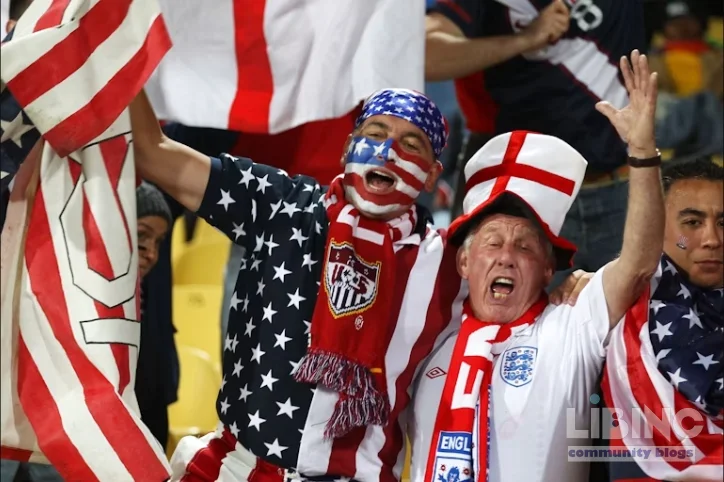
Americanization of European football: Ownership as the decisive force reshaping the game
Soccer purists have long warned about an Americanization of the game, but the most consequential shift is not the color of the jerseys or the cadence of the halftime show. It sits in the boardrooms, where ownership models determine who profits, who risks, and how teams are tethered to the cities they claim. Americans now own more than forty European clubs, including notable powers such as Arsenal and Inter Milan, and they’re expanding rapidly in the leagues below the top tier. The capital flows are real, and so are the governance differences that accompany them: U.S. ownership tends toward centralized decision-making and long-range leverage, while traditional European ownership has leaned toward local linkage and cultural stewardship. The question is not whether American money will appear in European soccer, but what that money will do to the game’s structure, its drama, and its long-term sustainability. This article tests that proposition through four analytical lenses: data-driven analytics, a contrast of ownership cultures, cause-and-effect reasoning, and expert reconstruction of possible futures.
Table of contents
- Analytics perspective on the Americanization of European football
- Contrast: two models of ownership and the sport’s pyramid
- Causes and effects: incentives, risks, and spillovers
- Expert reconstruction: plausible futures and policy implications
Analytics perspective on the Americanization of European football
The core phenomenon is not merely ownership by Americans but the integration of a North American governance logic into a European sport. That logic emphasizes scale, centralized capital, fixed commitments, and the ability to move assets toward higher profits regardless of local resonance. What follows is a synthesis of observable trends, with attention to the causal chain between shareholder strategy and on-pitch, on-field consequences.
First, capital density matters. American groups have assembled diversified portfolios that combine top-tier clubs with exposure in adjacent markets and in lower divisions. This enables transfer of financial expertise and risk management across assets that share functions—brand value, media rights, sponsorship networks, and merchandising. The handoff from debt-laden ownership to cashflow-driven ownership changes valuations but also tightens the lever on leverage. In practice, that means valuations can rise when clubs remain in top leagues or capital improves through favorable media deals, while the threat of relegation or a sharp downturn in performance can severally deflate value as fixed-cost structures bite down on a club’s balance sheet.
- Debt-service vs. equity growth: high leverage can amplify gains but also magnify losses when results dip.
- Cross-asset synergies: across leagues and sports properties, owners seek cross-market revenue expansion, often through shared platforms and sponsorship strategies.
- Debt-prone exits: capital structures that rely on continued success can become fragile if the on-pitch performance falters.
Second, ownership breadth correlates with governance signals. The public-facing posture of American groups emphasizes professionalized governance, standardized reporting, and governance boards with fiduciary duties to maximize value. The governance script differs from traditional European models, where owners are often embedded in local communities and see teams as reputational capital rather than purely financial assets. When American owners prescribe alignment with corporate playbooks—cost control, revenue diversification, and merit-based promotions of executives—the sport experiences a tension between the demand for predictable economics and the sport’s inherently unpredictable outcomes. The risk, as a consequence, is a mismatch between how a club generates value in a revenue cycle and how fans experience the sport’s competitive drama.
Third, potential upside and downside hinge on the structural context of the competition. In closed European markets, ownership can extract predictable profits by stabilizing debt and securing fixed earnings streams. Yet the European pyramid—promotion, relegation, and the potential drop in valuation when a club tumbles—acts as a built-in volatility mechanism that American owners must navigate with care. This is not merely theoretical: the performance of teams like Burnley, West Ham, Hellas Verona, and others reminds us that the relegation risk is a real call option on a club’s future cash flows. The result is a paradox: higher ownership discipline can stabilize some clubs, while the risk of relegation can destabilize others and erode long-term value for owners who seek certainty. These dynamics explain why some American groups push for changes that cushion teams from relegation or that introduce different competition formats to reduce volatility.
Finally, the dialogue around innovation—ranging from offside experiments to postseason formats—illustrates how American-style changes can be persuasive, even when not adopted wholesale. The creative tension between increasing scoring, expanding revenue streams, and protecting the integrity of promotion and relegation is the crucible for policy and governance reforms. Todd Boehly’s advocacy for all-star games and playoffs, alongside Chelsea’s need to offset record losses, underscores a broader appetite among American owners for revenue-enhancing mechanisms that can be integrated with the existing league architecture. The practical question remains: which of these tools delivers sustainable gains without undermining the sport’s identity?
Contrast: two models of ownership and the sport’s pyramid
The contrast between the American franchise mindset and the European caretaker model is not merely about profit; it’s about how value is created, measured, and defended. The American model treats clubs as assets within a broader portfolio, where moves across cities or leagues can be rationalized as portfolio rebalancing. In Europe, clubs are often anchored in their communities, with a history that transcends quarterly metrics. The consequences are visible in practice and in sentiment—fans fear that a profit-centric system might erode the sport’s emotional core while some owners insist that business discipline is essential to long-term competitiveness.
Promotions and relegations are the clearest flashpoints. They generate drama, loyalty, and long-tail revenue opportunities but also expose clubs to sudden revenue shocks. For American investors accustomed to fixed markets, this risk profile can be economically disconcerting. Recent relegations of clubs with American stakes—such as Burnley and West Ham, and Italian and Spanish examples—illustrate a volatility that clashes with the fixed-asset mindset. The reaction among U.S. owners has been a mix of caution and lobbying for guardrails, which highlights a broader strategic question: should European soccer adapt to American-style resilience and risk management, or should American investors adapt to the sport’s native risk framework?
The European Super League episode in 2021 crystallized this tension. The plan—permanent entry for a selection of teams, reduced competitive risk, and a multibillion-dollar pipeline financed in part by U.S. capital—was rejected by fans and players alike as an existential betrayal. The backlash demonstrated a crucial truth: the sport’s cultural legitimacy rests on a balance between market discipline and the unpredictable beauty of competition. The episode did not halt American influence, but it did constrain the pace and scale of potential monetization through elite fixed-franchise concepts. It also reaffirmed the strength of the existing pyramid as a social contract between clubs, leagues, and supporters.
Even where resistance holds, the mere existence of American investment reshapes strategies at every level. Some owners lean into media-rights leverage, others into data analytics and performance optimization, and a few pursue cross-league franchises and cross-border collaborations. The result is a widening spectrum of ownership approaches across Europe, with varying implications for competitive balance, fan engagement, and sustainability. The debate, in short, is no longer whether Americans influence European soccer; it is how their influence reconfigures the sport’s governance and its culture of risk and reward.
Causes and effects: incentives, risks, and spillovers
Several causal threads run through the current moment. First, the global chase for scalable media rights and diversified revenue streams has drawn American capital toward European clubs, where brand equity and global markets converge with the allure of prestige and history. Second, the structure of American professional leagues—closed, with fixed franchises and a robust framework for cross-asset capitalization—offers a model for predictable profitability that many owners see as complementary to, rather than antagonistic toward, European competition. Third, the market’s appetite for risk-adjusted returns has intensified the willingness of private equity and wealthy individuals to place bets on long horizons, even at the cost of short-term losses. These incentives are not passive; they shape how clubs negotiate leverage, governance, and the distribution of profits.
But incentives create externalities. One clear spillover is the gradual normalization of new governance norms—greater executive autonomy, professionalized boards, and performance-based compensation for sport executives. These shifts can improve efficiency and decision speed, yet they also run the risk of diluting the traditional, locally rooted identity that fans value. Another spillover concerns competitive dynamics. If some clubs gain disproportionate access to capital and media exposure, the quality gap between the biggest clubs and the rest can widen, potentially accelerating a cycle in which owners seek further structural changes to protect investments. This dynamic is not theoretical: the ascent of American-owned clubs in global markets has already altered negotiation power in media deals, sponsorships, and player recruitment networks.
From a policy perspective, the sea change invites questions about governance, risk-sharing, and the social license to operate. How should leagues allocate revenue to avoid a two-tier system that undermines amateur and lower-division clubs? Which protective measures—salary caps, owner-rotation rules, or fan-voiced governance—best preserve the sport’s competitive tension while delivering sustainable returns? The answers require careful calibration because the temptation to overcorrect can erase the very drama that makes soccer compelling. The risk, if mismanaged, is a retreat into a purely financialized ecosystem that reads like a business case rather than a sport with a communal life.
Expert reconstruction: plausible futures and policy implications
Experts converge on four plausible futures, each with distinct governance prescriptions and cultural consequences.
Option A: Preserve the pyramid, reinforce governance, and expand shared revenue. Under this path, leagues deepen revenue-sharing mechanisms, enforce independent financial oversight, and introduce targeted guardrails to mitigate the impact of relegation risk on valuations. The objective is to retain promotion and relegation while reducing systemic volatility via revenue stabilization, fan participation in governance, and transparent capex allocation. This keeps the sport’s drama intact while addressing investor concerns about long-term value and debt sustainability.
Option B: A calibrated hybrid—keep promotions but pilot limited fixed-franchise features. Some leagues might experiment with limited subsets of fixed-participation or controlled cross-league formats, particularly in non-relegation zones or in supplementary competitions. The aim is to extract the upside of predictable revenue without sacrificing the core incentives of competition. The challenge is ensuring that any pilot program remains aligned with competitive integrity and fan expectations, not merely corporate finance.
Option C: A regional fixed-franchise corridor (e.g., Mexico’s Liga MX as a test bed). The Liga MX case shows how American ownership can drive a transition toward fixed participation without fully abandoning promotion elsewhere. If a corridor emerges, it may reconfigure the Latin American and North American football markets, testing the political economy of fixed structures within a broader continental framework. Policymakers and leagues would need to guard against disproportionate disparities in resource allocation and ensure a fair path for clubs in transition.
Option D: Strategic retrenchment or reallocation of capital to non-pyramid projects. Some owners may shift capital toward digital platforms, data services, and global branding that do not depend on relegation outcomes. This approach emphasizes brand-building, direct-to-consumer streams, and cross-border sponsorship, reducing exposure to the sport’s volatility while preserving growth potential. The danger is a drift away from the sport’s traditional communities and a loss of the “local-identity through sport” narrative that fans cherish.
What these futures share is an understanding: ownership patterns will increasingly shape the sport’s economics, but the social contract—the relationship between clubs, fans, and communities—remains the ultimate constraint on any reform. A careful balance will require policy tools that align incentives with the sport’s core identities: drama, accessibility, and regional belonging. The most promising path blends prudent governance with revenue reforms that broaden the financial base without eroding the pyramid’s integrity. In practice, that means clearer metrics for value creation, stronger protections against exponential debt growth, and governance architecture that elevates fan voices alongside investor interests.
For practitioners—club executives, league commissioners, players, and fans—the takeaway is simple but consequential. American ownership is no longer a curiosity; it is a recurring variable in the sport’s equation. The question is whether the sport’s institutions will adapt in ways that preserve competition, safeguard heritage clubs, and still enable capital to do what capital does best: allocate resources efficiently and reward successful risk-taking. The answer will not come from utopian reforms or purely market-driven heuristics. It will come from disciplined experimentation, transparent accounting, and a shared commitment to a game that remains, first and foremost, a social enterprise as much as an economic one.
In short, the Americanization of European football is not a single moment but a process. Ownership norms are evolving, the pyramid remains a stubbornly persistent source of value and tension, and the sport’s future will hinge on governance that can reconcile private incentives with public enthusiasm. The path forward is not predetermined, but it is increasingly navigable—if stakeholders choose to chart it with clarity, restraint, and an insistence on preserving what makes soccer globally compelling: the drama of ascent and the possibility of redemption in every season.
Ultimately, the question is not whether American ownership will continue to grow; it is how European football will integrate those ownership practices without surrendering the sport’s soul. The signs point toward a blended future—one that embraces investor sophistication while safeguarding the pyramid’s romance. If clubs, leagues, and fans collaborate on governance, revenue, and competitive balance, the sport can harness the best of both worlds: the discipline of professional sports and the narrative power of promotion, relegation, and community identity.
Expanded governance and practical implications
American ownership in European football is shaped by a multi-faceted drive: access to scalable media-rights, diversified sponsorships, and the ability to run a centralized governance playbook across a portfolio of clubs. This approach aims to stabilize cash flows, spread risk across markets, accelerate talent development via shared analytics, and convert on-field performance into predictable revenue while protecting long‑term asset value even in slumps. It also hinges on patient capital, transparent reporting, and the capacity to navigate local culture and fan expectations. Together, these factors translate market‑level pressures into concrete decisions about budget, staffing, and strategic priorities across clubs and leagues.
To translate theory into practice, consider three actionable levers: governance discipline, revenue diversification, and stakeholder engagement. Governance discipline means independent boards, standardized dashboards, and clear debt covenants that make cross-asset strategies feasible without sacrificing integrity. Revenue diversification pushes clubs to monetize beyond matchdays—think international media packages, data analytics services, and cross-border sponsorship ecosystems. Stakeholder engagement keeps fans at the center by offering transparent disclosures and mechanisms for input, ensuring that financial engineering does not erode community identity.
Industry exemplars show how these levers play out. Arsenal’s integration into a broader US-led ownership group brought enhanced analytics and sponsorship networks; Inter Milan’s foreign ownership spurred discussions on cost controls and global partnerships. The key takeaway is that governance, revenue strategy, and fan trust must evolve in tandem to sustain both competitive balance and social legitimacy.
Put simply, the next phase of Americanization is not about transplanting a single model but about blending disciplined financial engineering with the sport’s core identity—competition, locality, and accessible drama. Leagues that embrace shared reporting, guardrails against excessive debt, and fan-informed governance are more likely to sustain value while preserving the pyramid’s appeal. In this sense, the path forward is a calculated synthesis of market opportunity and cultural stewardship, not a wholesale rewrite of the game’s DNA.
Across multiple leagues, the share of revenue tied to media rights and sponsorship rose faster than gate receipts, underscoring the primacy of non-matchday income in sustaining clubs with high fixed costs and volatile on-pitch results.
In summary, the practical impact rests on combining governance sophistication with revenue expansion, while safeguarding fan experience and club heritage. The balancing act is to keep the sport vibrant for supporters while enabling investors to allocate capital efficiently across a broader ecosystem.
What is driving American ownership of European clubs?
American ownership is driven by a combination of scalable media-rights access, diversified sponsorship networks, and the appeal of centralized governance across a portfolio of clubs. This approach aims to stabilize cash flows, spread risk across markets, and accelerate value creation through cross-border synergies and data-driven performance optimization. In practical terms, investors seek predictable returns by leveraging broadcast deals, global sponsorships, and digital platforms that reach fans beyond traditional markets. The broader context includes a willingness to embrace governance innovations that align incentives with long-term asset value while navigating local cultures.
From a strategic standpoint, this model emphasizes disciplined budgeting, standardized reporting, and cross-club collaboration on talent development and analytics. Analysts note that the tension between financial discipline and cultural identity remains the defining challenge, as investors push for efficiency without eroding the social contract with fans.
How does promotion and relegation affect risk for American-owned clubs?
Promotion and relegation introduce a real option on cash flows that fixed-franchise models lack. First, teams face upside opportunities when promoted and downside risk if relegated, which can stress debt covenants and capital plans. The direct answer is that American owners must design capital structures with resilience to volatility, such as diversified revenue streams, revenue-sharing provisions, and governance safeguards that limit leverage during downturns. In practice, clubs may seek guardrails from leagues, including caps on debt or automatic stabilizers during periods of relegation pressure.
Analysts observe that balanced formats and revenue-sharing can attenuate downside while preserving competition, suggesting a pragmatic path that preserves the sport’s drama without inviting destabilizing financial shocks.
What governance reforms could balance investor interests with fan culture?
Direct answers point to independent financial oversight, transparent capex allocation, and fan participation in governance where appropriate. A pragmatic reform framework includes annual debt-service transparency, standardized key performance indicators, and independent audits tied to governance dashboards accessible to the public. Beyond numbers, leagues can pilot fan councils with observer status on major strategic decisions—such as large sponsorship deals or new competition formats—so that investor aims align with the community’s values and the sport’s identity.
Analytically, the strongest reforms separate ownership control from day-to-day operations, clarify decision rights, and tie executive compensation to both financial and competitive metrics, reducing the risk of short-termism and reinforcing long-term sustainability.
What role do media rights play in club valuation?
Media rights are a principal engine of value, often outweighing ticketing or local sponsorship in a global market. The first sentence presents the core: media-rights revenues feed cash flows that support debt service, player investments, and infrastructure while enabling cross-border partnerships. In depth, this means that clubs with global broadcast agreements and streaming platforms can sustain higher valuations even if domestic results falter. Analysts emphasize the need for transparent reporting on rights sales, distribution formulas, and growth projections to ensure credible valuations across markets.
How can leagues preserve competitive balance with cross-border ownership?
Direct answer: leagues can preserve balance by combining revenue-sharing, strict debt controls, and governance standards with flexible formats that retain the essence of competition. In practice, this entails a mix of shared income from media deals, pro-rated sponsorship pools, and performance-based allocations that reward progress rather than perma-advantaged status. Depth: the challenge is to design mechanisms that do not stifle ambition yet prevent a small group of clubs from consolidating too much power. A thoughtful approach blends guardrails with opportunities for clubs to grow through merit, not mere market size.








Add a comment
To comment, you need to register and authorize
Comments