

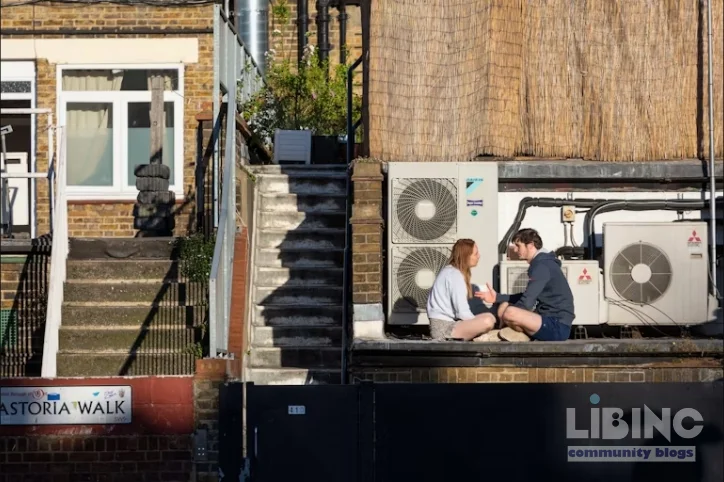
The Cooling Divide in the UK: An Analytical Exploration of Residential Cooling and Equity
- Lead
- Analytics: Mapping the UK cooling landscape
- Regional contrasts in residential cooling
- Causes and consequences of the cooling divide
- Expert reconstruction and policy options
For decades, the UK treated air conditioning as a feature of elsewhere—cities with warmer climates, hotels, or foreign holidays. Yet as summers heat up and heatwaves become more frequent, households face a new reality. Our analysis of the English Housing Survey, covering roughly 16,000 households, shows air conditioning remains uncommon: 4.3% use it in summer. But this national figure masks a developing cooling divide. Geography, income, and home type shape who can shield themselves from extreme heat. London and the east of England show the strongest adoption, while northern regions lag. The result is not mere preference; it is a question of protection, health, and power demand in a changing climate.
Analytics: Mapping the UK cooling landscape
Across the English Housing Survey sample, 4.3% of households report cooling use in summer. This figure understates the scale of readiness: as heat becomes a regular feature, households face decisions about comfort, sleep, and work performance. The co-occurrence of heat exposure and device adoption reveals a pattern: cooling remains a niche in most regions, but not in the capital's margins where urban heat island effects intensify heat stress.
- 4.3% of households use air conditioning in the summer
- Higher adoption in London and the east of England compared with other regions
- Income gradient: high-income households are more than twice as likely to own cooling than low-income households
- Renters lag owner-occupiers due to upfront costs and permission barriers
The most striking social gradient lies in income: households in the top income band are more than twice as likely to own air conditioning as those in the bottom band. High upfront costs and ongoing running expenses render AC a retreat only for some. Ownership concentration in London and the south-east aligns with the geography of affluence, suggesting that the cooling divide tracks economic power as much as climate risk.
Vulnerability compounds the divide. Older people, lone-parent families, and many low-income households face higher health risks during extreme heat but report lower access to cooling. Social and private renters lag owner-occupiers, constrained by upfront costs and landlord permissions that block installation. The result is a dual problem: those most at risk struggle to shield themselves, while others enjoy increasingly reliable protection.
Illustrative map of regional cooling-adoption patternsRegional contrasts in residential cooling
The geography of the cooling divide in the UK mirrors the urban form. City regions—London, the east of England—suffer stronger urban heat island effects, with higher temperatures and denser housing. In contrast, northern regions report lower cooling uptake, reflecting colder microclimates, different housing stock, and varied energy-service access. The home type matters: owner-occupied houses with built-in cooling or easier retrofits rise alongside higher incomes, while private and social renters face barriers such as permission hurdles and split incentives.
- Urban heat island intensities correlate with cooling adoption
- Owner-occupiers have greater retrofit flexibility than renters
- Regional income dispersion shapes access to cooling
The regional pattern also tracks housing tenure. Owner-occupiers are more likely to install and operate cooling systems than renters, a divergence rooted in responsibility for upgrades and access to capital. The disparities translate into uneven resilience to heat waves across the country, with city dwellers in affording positions gaining protection earlier than rural and northern households.
In London and the South East, wealth concentration coexists with practical barriers such as modern flat layouts and limited spaces that restrict unit-based cooling compared with detached homes. These nuances matter for policy because a one-size-fits-all approach cannot bridge the gap while respecting different housing forms and energy networks.
Causes, consequences, and feedbacks of the cooling divide
Several factors propel the cooling divide beyond geography. Climate change raises peak temperatures, and increasing urban density intensifies heat exposure. Summer electricity demand grows as more households install or use cooling devices, creating stress on power networks during heatwaves and complicating energy planning.
- Higher summer temperatures increase cooling demand
- Urban density amplifies heat exposure through urban heat island effects
- Electricity networks face peak-load stress during heatwaves
That demand surge interacts with energy poverty. Families facing high electricity bills must choose between staying cool and keeping living costs manageable, a classic form of summer fuel poverty. When protection hinges on income or tenure, heat becomes a health risk for the most vulnerable, not a matter of comfort.
Hybrid working has reshaped exposure. Before the pandemic many relied on air-conditioned workplaces; now homes host hot-day work. Households with someone working from home at least two days a week are significantly more likely to own cooling, shifting the burden toward households that already shoulder greater energy bills and living costs.
These dynamics create a feedback loop: hotter summers raise heat-stress, which pushes more households toward cooling, which increases electricity demand and, if not sourced from zero-carbon supplies, elevates emissions. The climate system faces a self-reinforcing cycle unless mitigation emphasizes efficiency and low-carbon cooling options.
- Cooling adoption can raise electricity demand unless paired with clean energy
- Equity gaps deepen health risks during extreme heat
Expert reconstruction: policy options for equitable cooling
What would a practical response look like? A national cooling plan that does not default to universal air conditioning but prioritizes passive and natural cooling first. This means external shading, reflective surfaces, and urban trees to reduce heat uptake and store less heat in built environments. It also means rethinking planning rules, building codes, and municipal heat-resilience programs to align with health and equity goals.
- Adopt passive cooling design in new and renovated homes
- Provide grants for energy-efficient retrofits in vulnerable households
- Offer landlord incentives to overcome retrofit and permission barriers
Targeted support should accompany broad measures. For households most at risk—older people, lone parents, low-income families, and renters—policy can provide subsidies or grants for energy-efficient retrofits, heat-mardened ventilation, and affordable cooling options that minimize running costs. The policy package should also assist landlords with retrofit incentives to overcome upfront costs and permission barriers while preserving tenant rights.
Beyond equipment, cities must prioritize design that reduces demand. Shading, tree canopies, cool roofs, and street-level refuges decrease ambient temperatures and reduce the need for heavy cooling devices. A regional approach that coordinates generation with local demand could curb peak loads and anchor decarbonisation in a just, inclusive way.
Finally, improving energy networks matters. Investments in grid capacity, demand-response tools, and access to low-carbon electricity will soften the emissions impact of necessary cooling and help avoid a scenario where heat protection becomes a privilege. Equity requires that cooling resilience go hand in hand with decarbonisation and affordability for all households.
The cooling divide in the UK is not a fixed fate but a policy choice. Acting now with a comprehensive strategy—built on data, regional nuance, and equity—can protect health while keeping energy systems resilient and climate-friendly.
Closing the practical gap: an equity-first cooling action plan
To close the practical gap between who can access cooling and who needs protection, policy must translate analysis into funded actions with clear who, how, and when. This compact plan prioritises passive cooling, delivers targeted grants, and removes barriers for renters and landlords while keeping energy use低 and grid stress manageable.
| Measure | Typical cost per unit | Annual energy savings (kWh) | Health/comfort impact | Beneficiary groups | Funding approach |
|---|---|---|---|---|---|
| Passive shading (blinds/awnings) | £200–£800 | 100–300 | Better sleep, lower heat glare | Renters + owners | Grants/low-interest loans |
| Reflective roof coating | £15–£25/m2 | 50–200 | Lower indoor temps | All | Grants |
| Ceiling fans (efficient) | £25–£60 | 50–150 | Immediate comfort boost | Renters + owners | Subsidies |
| Insulation upgrades | £600–£2,000 | 200–600 | Reduces overheating risk | All | Grants |
| Draft-proofing | £50–£200 | 20–100 | Reduces heat ingress | All | Energy-supplier programs |
| Heat-pump cooling | £5,000–£12,000 | 300–800 | High efficiency, durable | All | Grants |
| Smart thermostat with demand response | £100–£250 | 50–120 | Better control, peak relief | All | Programmes |
Key steps include: 1) set annual retrofit budgets, 2) define vulnerability-based eligibility, 3) align landlord incentives with tenant rights, 4) pair cooling with efficiency to reduce running costs, 5) track adoption and health outcomes with regional dashboards.
- Eligible households defined by age, health risk, and income
- Delivery via local authorities, housing associations, and energy suppliers
- Metrics: adoption rate, energy spend, health indicators
The final steps roll out regionally with a 2026–2030 timeline, anchored by health outcomes, grid resilience, and affordability. The emphasis remains on reducing demand first, then expanding efficient cooling only where necessary and affordable.
What share of households in the UK currently use air conditioning in summer, and how does this vary regionally?
The latest analysis shows 4.3% of UK households report cooling use in summer, but this average hides regional variation—London and the east have higher adoption while the north trails behind. Urban heat island effects, housing stock, and income levels shape access; the metric may understate readiness because some households rely on non-AC cooling or portable devices not fully captured. Regional patterns align with affluence and urban form, underscoring the need for targeted action beyond national averages.
Analytically, owner-occupiers are more likely to own cooling than renters, and the highest income groups are over twice as likely to own cooling than the lowest, signaling that heat risk concentrates where tenancy risk and energy affordability intersect.
Who is most vulnerable to heat and least likely to access cooling?
The most vulnerable include older people, lone-parent families, and low-income households, especially those in private or social rental sectors. These groups face higher health risks during heatwaves but report lower access to cooling, due to upfront costs, lease constraints, and landlord permissions. The result is a pronounced equity gap where protection depends on income and tenure rather than climate risk alone.
Additionally, those who work from home or have caregivers at home experience greater exposure to heat, as hot days extend into work hours without the same cooling supports once found in offices. This amplifies the need for targeted, affordable, and desk-friendly cooling solutions.
What concrete policy measures can close the cooling gap, and what are typical costs?
A practical package includes prioritized passive cooling in new and renovated homes, grants for energy efficiency retrofits in vulnerable households, and landlord incentives to overcome retrofit barriers. The cost picture varies by measure, but modest upgrades (shading, draft-proofing, and fans) can deliver meaningful comfort at low per-unit expense, while larger retrofits (insulation, heat pumps) require staged funding and tenant protections. A balanced plan couples grant funding with demand-side management to avoid peak-load stress on grids during heatwaves.
In practice, a national program could anchor annual budgets, establish clear eligibility, and use regional delivery partners to ensure rapid uptake and accountability. The aim is to improve health and productivity during heat events without compromising affordability or decarbonisation goals.
How can cities balance cooling with decarbonisation and affordability?
To reconcile cooling with climate goals, a focus on passive and energy-efficient cooling is essential. Urban trees, reflective surfaces, and shaded streets reduce ambient heat and the need for mechanical cooling, while low-carbon electricity and demand response lessen emissions during peaks. Affordability is advanced through grants, low-interest loans, and incentives that target those most at risk, paired with price protections and energy-usage transparency for tenants.
What role do renters, landlords, and energy suppliers play in expanding equitable cooling?
Renters gain access through well-designed grants or subsidised units, while landlords require incentives and streamlined permissions to install efficient cooling or retrofit measures. Energy suppliers can support through targeted programmes, heat resilience schemes, and demand-response incentives that reduce grid stress during heat events. Collaboration across local authorities, social housing providers, and community groups is essential to scale equitable cooling with fairness and accountability.





Add a comment
To comment, you need to register and authorize
Comments