

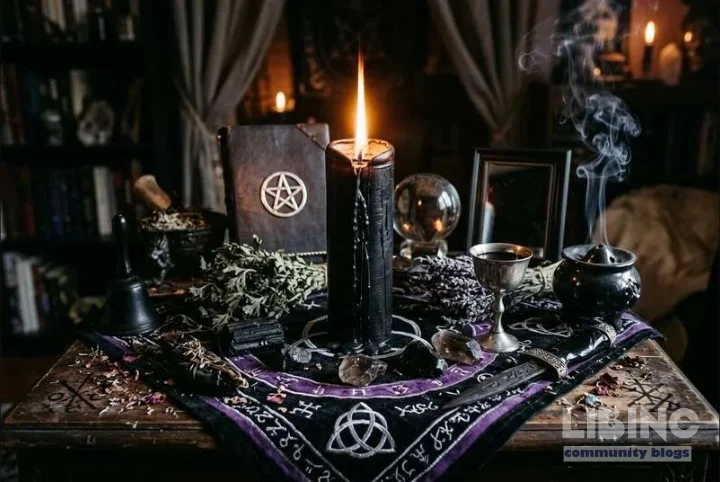
Black Candle Magic: An Analytical Framework for Protection, Banishing, and Shadow Work
Table of Contents
- Analytical Frame: Mapping Black Candle Magic
- Contrasting Perspectives: Lore vs Modern Practice
- Cause and Effect Dynamics: The Mechanics in Practice
- Expert Reconstruction: Integrating Theory and Practice
- A Simple Black Candle Magic Spell You Can Try Tonight
- Reading the Flame and Wax: Signs and Signals
- Safety and Ethics: Grounded, Responsible Practice
The discussion that follows treats black candle magic as a deliberately structured practice rooted in earth-based wisdom, not a sensational artifact of cinema. When a practitioner lights a black candle with a clear, disciplined intention, the act becomes a controlled experiment in boundary maintenance, energetic hygiene, and shadow integration. The central claim is not that darkness is summoned, but that a conscious alignment between desire and material reality can reorganize energy—absent harm to others and with accountability to karmic laws. This article dissects how that alignment works, what evidence counts as success, and how to navigate common pitfalls that dilute efficacy.
At stake is a pragmatic toolkit rather than a metaphysical fantasy. The technique requires intention, preparation, and ethical clarity. It demands respect for the Earth element, an understanding of personal boundaries, and a willingness to confront uncomfortable truths about one’s life and patterns. The hidden conflict here is not between light and dark, but between clear intention and fragmented energy. The direction of analysis examines (1) the conceptual framework that underpins black candle work, (2) how modern practitioners translate archetypal symbolism into actionable ritual steps, (3) the causal pathways by which materials like oils, herbs, and moon phases influence outcomes, and (4) how to integrate this practice into a mature spiritual discipline that honors safety, consent, and accountability.
To anchor the discussion, the keyword driving the thread is black candle magic. This term will recur as we map its core functions: protection, banishing, and purification, all anchored in practical earth-energy work. The aim is to move beyond caricatures and toward a rigorous, replicable approach that respects both tradition and contemporary ethical constraints. The following sections unfold in four analytic modes, each sharpening the reader’s capacity to assess, perform, and refine black candle rituals as a serious spiritual technology.
Analytical Frame: Mapping Black Candle Magic
Analytically, black candle magic operates as a triadic system: material preparation, energetic structuring, and outcome conditioning. The material layer encompasses the candle itself, the oils, herbs, and stones, plus the environment in which the candle burns. The energetic layer concerns the practitioner’s focus, emotional state, and alignment with elemental forces. The outcome layer tracks the changes in safety, boundary integrity, and the release of negativity. This separation mirrors a laboratory model: hypotheses (intentions), procedures (dressing and burning), and measurements (observed effects in flame, wax, and life circumstances).
Why this matters: the Earth element is not a vague metaphor but a set of actionable correspondences. Earth energy grounds intention into the physical realm, creating a stable field that supports change without chaos. The strategic use of grounding materials—black salt oil, rosemary, bay leaves, and protective crystals—enhances the likelihood that energy moves where it is directed rather than dissipating aimlessly. In practical terms, the practitioner builds a shield of metabolizable energy that can absorb negativity, which is not synonymous with amplifying harm or fostering dependency on ritual. The analysis here locates the mechanism in a predictable, repeatable sequence rather than in mystique or rumor.
- Energetic absorption as a deliberate mechanism: the candle acts as a sponge for negativity, transmuting it into neutral energy that the practitioner can release.
- Transformation through movement: energy shifts are most reliable when the ritual structure respects cycles, timing, and intention clarity.
- Boundary architecture: the practice centers the self by reinforcing personal sovereignty against encroachment, whether internal habits or external influences.
In this frame, the practice is not about domination but about alignment. When intention, material preparation, and ethical stance converge, black candle magic reveals a controlled, repeatable dynamic rather than a superstition. The essential question becomes: what counts as a reliable signal of success? A steady flame, a clean wax burn, and a felt sense of safety in daily life—these are the tracers of a well-executed ritual. The analysis moves from abstract symbolism to measurable effects, grounded in disciplined practice and critical reflection.
Contrasting Perspectives: Lore vs Modern Practice
The cultural imagination often pairs black candle magic with fears of malevolent power. The modern critique frequently conflates darkness with chaos, which obscures the purposeful, ethical dimension of the craft. A closer look reveals a spectrum rather than a binary: traditional lore emphasizes boundary work, spiritual cleansing, and the removal of detrimental patterns; contemporary practice foregrounds safety, consent, and the ecological impact of ritual action.
Why this contrast matters to a serious practitioner is not simply about belief. It shapes how rituals are designed, how they are taught, and how outcomes are evaluated. In the modern frame, the practitioner treats black candle magic as spiritual ergonomics: optimize posture, breath, and timing to create a stable stage for change. This approach reduces sensationalism and increases reliability, enabling practitioners to compare results across sessions and even across practitioners with a shared language of intention and evaluation.
Another axis of contrast concerns ethics. The golden rule guiding this practice is simple and practical: protect, never attack. The ethical boundary is explicit: hexing or harming others is not a legitimate objective of black candle magic. Yet the ethical framework does not stop at intent alone; it requires ongoing accountability. In practice, ethical use means avoiding manipulation, keeping energy work transparent, and recognizing that consequences extend beyond personal boundaries to include the broader field of relationships and community. This ethical stance ensures the method remains responsible, reproducible, and credible.
From a technical standpoint, the contrast also encompasses the materials and timing used in rituals. The modern toolkit favors explicit preparations: cleansing, blessing, intention-setting, and precise dressings with oils and herbs. While the core aim remains protection and banishing, the added emphasis on documentation, standardization, and post-ritual reflection makes the practice more robust and teachable. The practitioner’s ability to articulate what changed, how it changed, and why it changed becomes the foundation for reproducible outcomes rather than solitary anecdotes.
Cause and Effect Dynamics: The Mechanics in Practice
To move from symbolism to mechanism, we map the cause-and-effect chain that governs black candle magic. Each element—moon phase, oil, herb, crystal, and intention—contributes a discrete causal vector. When aligned, these vectors reinforce one another; misalignment creates friction, reducing efficacy or generating unintended consequences. This causal model is not deterministic but probabilistic: it shifts probabilities toward safety, clarity, and boundary reinforcement rather than guaranteeing a specific external event.
Moon phase and planetary timing matter because celestial cycles exert rhythmic energy that can modulate intention intensity. Waning periods emphasize release and banishing, while full moons amplify protective energies. Saturnian timing, particularly Saturday rituals, strengthens boundaries and structure. The cause-effect pattern can be summarized as follows: timing shapes the energy field; the ritual elements encode that field; and the psyche integrates the changes into behavior and perception. The result is a measurable alignment between the ritual state and daily life, visible in steadier emotional environments and fewer disruptive intrusions into personal space.
Dressings—oil applications, herb rollings, and graveyard dirt—serve as material catalysts. Oils like frankincense promote spiritual awareness and boundary integrity; myrrh deepens transformation and supports shadow work. Rosemary, bay leaf, sage, garlic, and rue supply protective or purificatory functions depending on the target of the spell. The causal chain works like this: the oil and herbs create a resinous matrix that anchors intention to the candle; as the candle burns, the matrix releases its energy gradually, creating a field that repels negativity while inviting discernment and safety. The crystals placed nearby—black tourmaline, obsidian, hematite, smoky quartz—act as resonance amplifiers and energy conduits, shaping the field and stabilizing the boundary against intrusion.
Effective timing is paired with disciplined preparation. Cleansing the space, grounding the practitioner, and forming a precise intention—all contribute to a clearer energy signal. The practical takeaway is that preparation matters as much as the candle itself. A poorly prepared ritual may still function, but its signal-to-noise ratio will be low, allowing external disturbances to swamp the intended protective or banishing energy. In other words, energy work is more about signal clarity than about the absolute power of the flame.
Expert Reconstruction: Integrating Theory and Practice
From an expert’s vantage point, black candle magic integrates four pillars: theory, technique, ethics, and measurement. Theory provides the framework that links earth-based correspondences to observable effects. Technique translates theory into reproducible steps—cleansing, intention, dressing, rolling, and lighting. Ethics governs the purpose and the boundaries of use. Measurement tracks outcomes through qualitative signals (tone, energy, sense of security) and, where appropriate, reflected behavioral changes (reduced reactivity, clearer boundaries, calmer environments).
How should a practitioner proceed to develop mastery? Begin with explicit intent and a clear safety plan. The following structure offers a replicable workflow that can be adapted to individual preferences and traditions, while preserving core ethical safeguards:
- Preparation: cleanse space and candle, ground the self, and set a concrete time and place for the ritual. A stable environment amplifies focus and minimizes distractions, which is crucial for energy work to take hold.
- Intention: articulate a precise outcome focused on removal or protection, not attraction. Clarity of purpose concentrates the energy stream and reduces drift during the burn.
- Dressing: apply protective oils to the candle center-outward, then roll it in protective herbs or graveyard dirt, aligning each layer with the intended outcome. Each layer functions as a conduit, compounding the energy and narrowing the focus of the magic.
- Activation: light the candle in a safe space, place a grounding crystal nearby, and enter a period of silent focus. The candle’s flame serves as a tether between intention and form, allowing absorption and transformation to occur within a controlled field.
- Reflection: observe flame behavior, wax drift, and any intuitive messages. Record observations to refine future work and adjust timing or materials if needed.
For those seeking a practical entry point, the following recipe embodies the core principles in a compact form. It preserves the ethical boundary: protect and release, never harm. This is not a universal cure but a disciplined instrument that can recalibrate energy in a personally meaningful way.
A Simple Black Candle Magic Spell You Can Try Tonight
What you need: a black candle, protective oil (frankincense or a blend), dried rosemary or bay leaves, a piece of black tourmaline or obsidian, a quiet space, and an open heart prepared for focus.
Step-by-step: the sequence is designed to maximize clarity and safety.
- Cleanse your space with smoke from sage or palo santo and open a window to release what no longer serves you.
- Hold the candle in both hands, take three deep breaths, and picture a protective shield of black light surrounding you.
- Anoint the candle from the center outward with frankincense oil, then roll it in rosemary or bay leaves to embed protective energy into the wax.
- Set your intention aloud or in your mind with precise phrasing: I am protected from all negativity. No harm reaches me. My energy is safe and my boundaries are strong.
- Place the candle on a heat-safe surface and set the crystal in front of it. Light the candle and observe for 5–10 minutes, allowing the flame to settle into a steady, protective posture.
- Snuff out the candle or let it burn down in a single session. If doing multiple nights, repeat for up to seven evenings to build cumulative protection.
Interpreting the flame is part of the practice. A steady flame signals clear intention and effective energy alignment. A dancing flame suggests energetic movement or resistance that may require a clarifying reframe of intent or an adjustment of timing. A flame that sputters may indicate a need for deeper grounding or that the phase of the moon is not yet aligned with your goal. The wax itself offers resonance: wax pooling toward a particular side can point to the direction of incoming negativity, guiding future placements of the candle for enhanced efficacy.
Reading the Flame and Wax: Signs and Signals
Flame interpretation is part science, part art. A steady, bright flame indicates a stable energy field and alignment between intention and action. A flickering flame can reflect ongoing energetic negotiation—perhaps you are balancing competing desires or facing external interference. A flame that dances dramatically may signal spiritual assistance from guides who are helping you navigate a difficult transformation. A weak flame invites a re-clear of intention or a refinement of the protective boundaries you seek to establish.
Wax patterns provide complementary data. Clean, even burns with minimal soot imply that the energy work found a clean channel and performed without distortion. Excessive soot suggests heavier negativity being absorbed, which, while a sign the candle did its job, calls for aftercare: grounding, cleansing, and perhaps adjusting the materials to prevent overwhelming your system. Wax pooling to one side indicates a directional flow of energy; consider positioning future candles to mirror that direction and to reinforce the protective boundary where it is needed most. Residual wax at the bottom is a normal outcome and can be saved for later work or buried in the earth with gratitude.
Safety and Ethics: Grounded, Responsible Practice
The operational principle here is simple: protect, never attack. The ethical boundary is not simply a personal preference; it is practical, because harming others rebounds in unpredictable ways and disrupts energetic equilibrium. The practice emphasizes consent, respect for others, and a posture of responsibility—knowing when to pause, when to snuff a candle, and how to dispose of remains with reverence. Never leave a flame unattended, and ensure a safe environment free from flammable materials. The energy work should refine your sovereignty, not create dependency on ritual to solve every problem.
Intuition plays a crucial role in safety. If a given practice does not sit well with you, honor that. The discipline is not a dogma but a path for those for whom the energy work resonates. The most honest practice is to proceed only when you have clear alignment, calm focus, and a strong sense of personal ethics. In the long run, sustainable outcomes come from consistent, well-documented practice rather than occasional bursts of ritual power.
Finally, a respectful approach to disposal closes the loop with integrity. After a burn, consider burying the remaining wax and herbs in your garden or at a crossroads, or wrap them in paper and place them in the trash with gratitude. The act of releasing energy in a considered way reinforces the boundary you have established and honors the energy you called forth. With that mindset, black candle magic becomes a disciplined practice—a way to protect what matters, while acknowledging the limits of one’s influence and the need for ongoing personal growth.
In sum, black candle magic, when practiced with precision, ethics, and reflection, becomes a reliable instrument for protection, boundary-setting, and shadow work. It is not a mirror of fear or a weapon; it is a deliberate energy discipline rooted in the Earth. The method invites you to deepen your relationship with yourself, your environment, and the cycles that govern change. If the practice feels misaligned, trust that discernment and adjust accordingly. Energy work prospers when it is honest, exacting, and anchored in care—for yourself and for those around you.
Outcome Tracking and Consolidation: Turning Practice Into Evidence
There is a practical gap in many discussions: without a simple, repeatable way to track what changes after a ritual, results remain anecdotal and difficult to build on. This section closes that gap by offering a concise framework that ties intention to observable signals while preserving ethical safeguards. The aim is not to demand universal proof but to create a steady language for evaluation that any practitioner can apply to daily life. It focuses on three pillars: a lightweight outcome log, clear signals of change, and a structured post-work routine that reinforces gains.
With this compact reference, you can correlate each material choice with a tangible signal. The next section provides a focused plan to capture outcomes in a simple log and translate them into practical adjustments.
Signals of a Successful Session
- Flame stability: 4–6 minutes of steady burn with minimal flicker
- Emotional tone: within 24 hours, calmer and more centered
- Boundary clarity: fewer boundary breaches or manipulative intrusions
These signals offer a concrete way to interpret practice without leaning on myth. The core aim is to increase clarity, ethical discipline, and personal sovereignty through regular reflection.
Post-Ritual Checklist
- Preparation
- Clean space
- Grounding the self
- Intention
- Clarity of outcome
- Ethical boundaries
- Dressing
- Layer oils outward, embed materials
- Activation
- Light, focus, observe
- Reflection
- Record observations
- Plan adjustments
What signals indicate a successful black candle ritual alignment?
In plain terms, a successful alignment shows consistent, observable changes after the ritual without harm to others, such as a steadier mood, clearer boundaries, and fewer interruptions in daily life. Practically, you look for a steadier flame during the burn, reduced emotional reactivity within days, and a measurable improvement in how you perceive and maintain space around you. These signals are not guarantees, but they form a reliable pattern that can be tracked over time to refine technique and timing.
Analytically, you can treat them as practical indicators of energy work efficiency, rather than mystical guarantees. Over multiple sessions, consistent signals reduce ambiguity and support safe, ethical practice.
How can I ethically use black candle magic to protect without causing harm?
Ethical use centers on consent, boundaries, and minimal impact on others. A practical rule is: protect, never attack. This means focusing on removing threats from your environment, not attempting to coerce or damage others. Documentation helps keep intent aligned with outcomes, while reflective practice ensures you remain accountable to your own values and community norms. When in doubt, pause the ritual and reassess the goal in light of potential consequences.
From a structural perspective, ethical practice relies on transparent preparation, clear intention, and post-work reflection to ensure actions remain proportionate and responsible.
Which materials most support safety and boundary setting?
Emphasis should be on materials that reinforce safety and discernment: grounding elements (earth-based oils like frankincense, rosemary, bay leaves), protective crystals (black tourmaline, obsidian), and ritual cleansing elements (sage, palo santo). The combination helps anchor energy, establish clear boundaries, and minimize inadvertent leakage of negativity. The key is to document how each material influences the signal and reduce or replace elements that create confusion rather than clarity.
Practically, track how each material affects flame stability and perceived safety over sessions to build a repeatable, harmless protocol.
How should I interpret flame and wax changes during a ritual?
Flame behavior serves as a real-time proxy for energy alignment. A steady flame signals clear intention and stable energy, while a dancing or sputtering flame suggests misalignment, external disturbance, or a need to reframe the goal. Wax patterns—uniform burn, pooling direction—offer additional directional clues. Use these cues to adjust the ritual, not as proof of magic in isolation. The interpretation improves with consistency: note the phase of the moon, preparation quality, and your own cognitive state during the burn.
The interpretation framework emphasizes practical feedback loops rather than metaphysical certainty.
How can I document results to improve consistency across sessions?
Set up a lightweight ritual log: date, goal, materials, preparation quality, signals observed (flame, wax, mood), and a simple success rating. Review weekly to identify which ingredients or timing choices produced the strongest signals. This habit creates a durable, actionable record you can compare across sessions and even across practitioners in your circle. The process itself strengthens discipline, reduces randomness, and supports safer, more reliable outcomes.
From a methodological view, this is energy work rendered into a reproducible practice with ongoing feedback.
What safety steps are essential after a ritual?
Close rituals with grounding, dispose of remnants respectfully, and ensure the environment remains safe. Burial or mindful disposal of wax and plant matter reinforces boundary work and honors the energy called forth. Grounding exercises after the burn help integrate the experience and reduce residual tension. Finally, review for any unpredictable emotional or interpersonal effects and seek support if needed. The aim is to finish with integrity and personal balance, not to chase further ritual power.







Add a comment
To comment, you need to register and authorize
Comments