

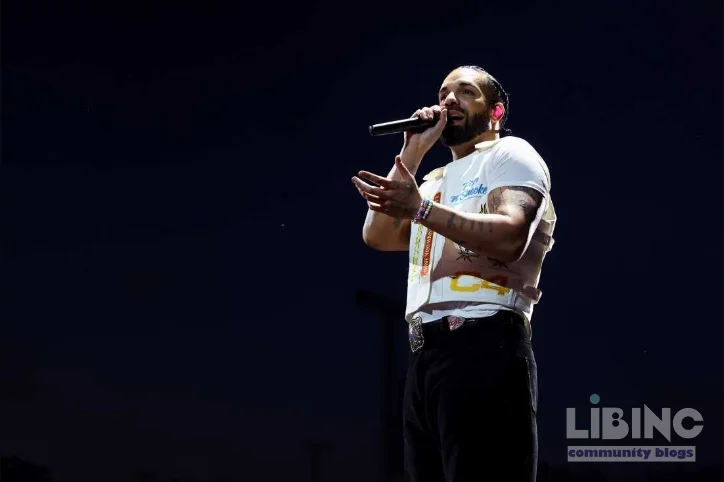
Drake 2025 triple-album strategy: dissecting Iceman, Maid of Honour, and Habibti
Table of contents
- Analytics-driven view
- Contrast across the three records
- Cause-and-effect dynamics of the release
- Expert reconstruction and outlook
Drake’s 2025 comeback unfolds not as a single project but as a strategic reconfiguration of his entire ecosystem. After a prolonged quiet period and a high-profile feud that stretched from verses to courtrooms, he returns with three distinct albums—Iceman, Maid of Honour, and Habibti. The core question is not merely whether the music lands on some chart, but how the release reshapes the streaming economy around an artist who defined the era’s rhythms. The framework for understanding this move centers on the phrase: Drake 2025 triple-album strategy. The choice frames a larger debate about control, attention, and the ability to steer a culture in a market that rewards volume as much as vision.
The stakes extend beyond numbers. They touch the narrative arc of a career built on omnipresence and a controversial willingness to challenge label power, critics, and rivals alike. If Not Like Us marked a peak of streaming-induced momentum, the subsequent reply—three concurrent projects—tests whether density can compensate for any erosion of myth. This piece dissects the rollout through four analytical lenses, revealing how the triple-album approach operates as both a creative tactic and a market instrument.
In a media environment that prizes engagement above all, Drake’s plan is to flood feeds while preserving a recognizable brand voice. The underlying bet is simple: sustained visibility across genres and formats will create a durable arc for his music, even as he contends with a shifting relationship to traditional awards, critical consensus, and label dynamics. That wager—to dominate playlists while maintaining sonic consistency—forms the backbone of the Drake 2025 triple-album strategy. The analysis that follows asks not just what Drake released, but why this configuration matters for the artist’s future and the broader industry.
Lead with data, but think in terms of influence. The triple release leverages the playlist economy, social chatter, and streaming algorithms to maximize reach across audiences who consume differently from week to week. If the plan succeeds, Drake redefines the cadence of a modern rap career: multiple albums in a single window, cross-genre reach, and a recalibrated power dynamic with his label and collaborators. If not, the same strategy could illuminate the risks of dilution and fatigue in a landscape that already feels saturated with content. The question is whether this is a tactical reboot or a long-term recalibration of his cultural capital—the Drake 2025 triple-album strategy in a single sentence.
Analytics-driven view
The core of Drake’s triple release is a data-backed assertion: more content, more touchpoints, more chances to surface in algorithmic playlists. This section breaks down how the three records work together as a cohesive, albeit diverse, portfolio rather than a mere three-song bundle with a common artist.
- Playlist placement as a primary objective: a broad sonic spread increases chances of appearing on multiple genre and mood playlists, driving cross-genre streams and boosting overall engagement.
- Streaming metrics as the new currency: daily streams, unique listeners, and completion rates become the primary signals of success, outperforming traditional radio or award metrics in many markets.
- Fan-data signals and engagement loops: multipart releases incentivize fans to stay plugged in, share discoveries, and participate in micro-moments across platforms, creating a self-reinforcing cycle of attention.
From a technical lens, the plan exploits the inherent advantages of a three-pronged portfolio: one project anchors a specific set of sonic goals (Iceman as rap; a denser, somber tone), while the other two open broader audience channels (Maid of Honour as world pop; Habibti as melodic R&B). This multi-genre approach is designed to maximize cross-pollination across playlists, streaming platforms, and geography, leveraging the data-driven logic that has defined Drake’s career since the streaming era’s earliest days. The approach also reveals a tactical use of time: staggered singles and strategic mid-album moves can keep the conversation alive over a longer horizon, maintaining a sustained drumbeat in the feeds rather than a short spike from a single release. This is precisely how the playlist economy translates into real-world visibility and revenue, especially for an artist whose fanbase expects constant cadence and depth of catalog.
Yet the analytics also expose limits. A strategy built on volume risks diluting the perceived impact of any individual project, especially if critical reception is uneven. The 2024 beef with Kendrick Lamar underscored how rival narratives can puncture even the most robust data signals if the music fails to connect emotionally or lyrically. The triple-album framework attempts to mitigate that risk by delivering distinct emotional textures and lyrical threads—yet it also requires careful curatorial discipline to avoid fatigue and ensure each release retains a clear throughline that fans can internalize and discuss. The balance of breadth and focus becomes the real test of Drake 2025 triple-album strategy, not merely the sum of streams.
Contrast across the three records
In this block, the three albums operate as a spectrum, each moving within a different corner of the Drake universe while remaining unmistakably Drake. The intention is not to flood the market with three indistinguishable projects, but to cover the spectrum of what a modern pop-leaning artist can be in a streaming-driven economy.
- Iceman signals a return to somber, procedural rap with a cold, digital edge that invites close listening and lyrical unpacking.
- Maid of Honour ventures into world-pop textures, blending vibe-driven dancehall, club energy, and baile funk to capture the global playlist audience.
- Habibti channels melodic R&B with a hypnotic, monochrome mood, designed to hold long-form listening sessions and deep playlist immersion.
The sonic triad mirrors the broader tensions in Drake’s career: the demand for introspection vs. the appetite for high-energy bangers; the pull of genre boundaries vs. the lure of cross-genre reach. The contrast is not merely a stylistic exercise; it is an intentional architecture to maintain visibility across a shifting landscape where audiences discover, sample, and repeat with ever-shorter attention cycles. The contrast also intensifies the branding challenge: can three distinct identities still be read as a single, coherent artist arc? The answer hinges on whether the releases can anchor a narrative—one that fans and casual listeners can parse and rally behind, even as they switch between moods and tempos. In this environment, the three records together may push Drake toward a durable omnipresence, or toward a fragmentation that weakens a singular cultural footprint. The outcome will reveal how well a star can manage a multi-identity strategy in the streaming era, where attention is the most valuable currency and ambiguity can be costly.
Beyond sonic differences, the releases also reflect strategy in public perception. The public spat with Kendrick Lamar created a cultural backdrop: a context where the crowd-drawn drama often eclipses the music itself. Drake’s response—verses saturated with references to betrayal, power, and survival—reads as both a competitive counterpunch and a reminder of his operating hypothesis: control the conversation by feeding the algorithm and the conversation with vivid, sometimes combative storytelling. This approach, grounded in real-time audience reactions, shows that the triple-album strategy is as much about narrative management as it is about sonics. If the content lands with emotional clarity across the three records, the contrast will read as a deliberate ecosystem rather than a scattershot release schedule.
Cause-and-effect dynamics of the release
The Drake 2025 triple-album strategy creates a cascade of industry effects, from contract negotiations to fan behavior and beyond. The move amplifies the leverage dynamics that have long defined Drake’s career: data, reach, and the ability to funnel attention through a multi-project cadence.
- Label and legal implications: the release cadence intensifies scrutiny of Drake’s relationship with Universal Music Group and the structure of ownership around catalog and future revenue streams.
- Industry signaling: other artists and labels may reinterpret “multi-project” releases as a viable framework for sustaining attention in a market where fatigue can erode a single project’s impact.
- Fan engagement and perception: a sustained flood of content encourages constant participation, but also tests listener endurance and the willingness to invest in a sprawling discography.
The strategy’s success depends on translating raw streaming numbers into lasting cultural capital. In a market where bots and payola talk linger in the memory of industry observers, Drake’s ability to demonstrate authentic engagement—through cohesive storytelling, high-quality production, and credible performances—will be pivotal. The narrative around the UMG dispute and the broader question of control over distribution remains a pressure point. If the triple-album rollout sustains interest and avoids brand dilution, it could recalibrate the industry’s expectations for how a marquee artist negotiates power with labels, platforms, and collaborators. The long-run effect would be a redefined baseline for what constitutes a dominant career in an era where data outruns traditional prestige signals.
From a causal perspective, the release does not simply add tracks to a catalog; it reshapes the logic of how audiences allocate attention across a portfolio. The interplay with Kendrick Lamar’s trajectory—where a rival’s classic status and a Pulitzer Prize intersect with Drake’s streaming-first approach—also influences how fans interpret ongoing feuds, triumphs, and the idea of legacy in hip-hop. If Drake can thread a through-line that satisfies both the purist rap audience and the crossover listeners drawn to Maid of Honour and Habibti, the triple-album framework may emerge as a durable model for late-stage catalog power. The risk, of course, is a diffusion of identity that erodes the singular aura that once made Drake’s every release an event. The question becomes: can a coherent narrative survive within three distinct sonic ecosystems, or will the strategy demand a new, more flexible brand architecture?
Expert reconstruction and outlook
Experts reconstruct Drake’s move as a deliberate adjustment to a streaming era where omnipresence is both a strategy and a constraint. The triple-album approach is not merely about quantity; it is about creating a resilient listening itinerary that can withstand shifts in consumer behavior, platform algorithms, and the label ecosystem.
- Autonomy versus control: if the trend toward independent workflows continues, Drake’s model could foreshadow a shift toward greater artist autonomy within or beyond major labels, altering power dynamics in the industry.
- Strategic sequencing: the three-album sequence may become a template for other mega-artists seeking to stabilize attention across genres, markets, and moods, using a staggered release cadence to maximize playlist discovery and fan re-engagement.
- Risk and resilience: the approach hinges on maintaining sonic coherence across disparate projects and avoiding fatigue among listeners who expect immediate, repeatable value from blockbuster releases.
- Long-tail implications: the catalog created by Iceman, Maid of Honour, and Habibti could drive licensing, sync placements, and cross-media presence for years, offering a different revenue model than a single landmark album.
In sum, the Drake 2025 triple-album strategy reads as a calculated, data-informed recalibration of a career forged in the streaming era’s densest throes. It is a blueprint for how a star can expand reach while wrestling with the costs of scrutiny, expectations, and the ever-changing algorithms that govern what counts as “success.” If the approach succeeds, it signals a pivot toward multi-project viability as a sustainable mode for mainstream hip-hop artistry; if it falters, it may reveal the limits of volume-driven storytelling in an age where fans demand not just quantity but purposeful, cohesive experience. The future of Drake’s career—indeed of the era’s star power—rests on whether these three records can be read as a single, stable arc or as a complex mosaic that redefines the boundaries of influence in the streaming age.
Ultimately, the question is not whether Drake is finished, but how he will prove the ongoing relevance of a figure whose strength has always been the ability to adapt. The three albums are more than a product release; they are a data point in a broader narrative about control, taste, and the economics of attention. The Drake 2025 triple-album strategy thus becomes a test case for the entire music industry: can a mega-artist leverage multi-project depth to sustain a defining presence in an ever-shifting digital landscape?
Practical rollout blueprint
The most critical gap is a concrete, end-to-end sequence that turns three distinct records into a cohesive, cadence-driven campaign, with clear actions, timelines, and cross-platform alignment.
| Stage | Focus | Key Actions | Timeframe |
|---|---|---|---|
| Phase 1 | Iceman anchor | Pre-save, lyric breakdowns | Weeks 1–4 |
| Phase 2 | Cross-push with Maid of Honour | Single rollout, playlist pitches | Weeks 5–10 |
| Phase 3 | Habibti consolidation | Cross-genre features, visuals | Weeks 11–20 |
Beyond cadence, align creative assets, social copy, and playlist pitches in a shared brief. This keeps branding coherent across Iceman, Maid of Honour, and Habibti while optimizing for different playlists and audiences. For example, a somber Iceman visual kit can be repurposed into reflective clips for late-night lounge playlists, while Maid of Honour assets emphasize global dancefloor energy for world-pop curators. The key is a reusable asset library paired with a release calendar that feeds the algorithm and fans alike.
- Sequenced singles unlock steady playlist exposure and prevent fatigue by spreading attention across weeks.
- Playlist engineering targets multiple genres: R&B for Habibti, world pop for Maid of Honour, rap-focused playlists for Iceman.
- Cross-pollination use remixes and short-form clips to bridge records without diluting identity.
In practice, a mid-cycle data check benchmarks the plan. If Iceman underperforms on core rap playlists, pivot by accelerating Maid of Honour cross-promo or adjusting Habibti's tempo to re-anchor listening sessions. The approach rewards disciplined pacing, clear KPIs, and rapid iteration rather than a single blockbuster drop.
Frequently asked questions
What is the core rationale behind Drake's 2025 triple-album rollout?
Bringing three distinct records into a single strategic window creates continuous touchpoints with fans, playlists, and platforms. The approach leverages the playlist economy and audience segmentation to maximize coverage across genres and regions. By aligning Iceman, Maid of Honour, and Habibti under a shared cadence, the artist sustains attention beyond a single release cycle. The result is a durable presence that can outlast the fatigue often seen with high-volume drops. This is not just about volume; it is about orchestrating a multi-identity arc that remains cohesive in branding and storytelling.
Analytically, the plan aims to push different signals into the algorithm—rap momentum from Iceman, global dance-leaning streams from Maid of Honour, and long-form listening from Habibti—creating a composite growth curve rather than isolated spikes. The risk is dilution if the through-line is weak; the reward is a broader, more resilient catalog presence across time.
Which sequencing steps maximize playlist discovery across three records?
Structured sequencing matters. Start with Iceman to anchor expectations, then release Maid of Honour to expand to world-pop and dance playlists, followed by Habibti to deepen long-form engagement. Use staggered single drops, targeted playlist pitches, and remix prompts to keep editors and fans engaged over weeks. Cross-promote assets (clips, performances, and behind-the-scenes) that can be repurposed across platforms. The goal is to maintain a continuous conversation while preserving distinct moods and sonic identities for each album.
How should artists coordinate with labels and playlists to protect catalog ownership?
Clear governance is essential. Draft a shared release calendar, define ownership of master rights, and ensure licensing terms support long-tail revenue across all three projects. Establish pre-approval workflows for playlist placements and usage rights on user-generated content. Strong internal alignment reduces friction with the label and accelerates decision-making. The practical outcome is a scalable framework where multi-release campaigns can evolve without eroding catalog control.
What metrics indicate success beyond raw streaming numbers?
Beyond streams, track unique listeners, completion rates, and playlist dwell time to gauge genuine engagement. Monitor cross-genre lift, social mentions, and user-generated content across platforms. Evaluate catalog value through licensing inquiries, sync placements, and live performance demand. A healthy balance of quality signals and volume signals indicates durability rather than short-term hype. A successful campaign shows sustained interest, not just spikes in chart positions.
How can fans stay engaged across a multi-release window?
Maintain a narrative thread across records with recurring motifs, visuals, and storytelling. Implement micro-interactions—exclusive snippets, fan challenges, and early-access previews—to reward ongoing participation. Coordinate with streaming platforms for curated playlists, live streams, and Q&A sessions that bridge gaps between drops. The aim is to convert momentary attention into long-term loyalty by giving fans reasons to return, discuss, and share across the entire six- to twelve-month window.







Add a comment
To comment, you need to register and authorize
Comments