

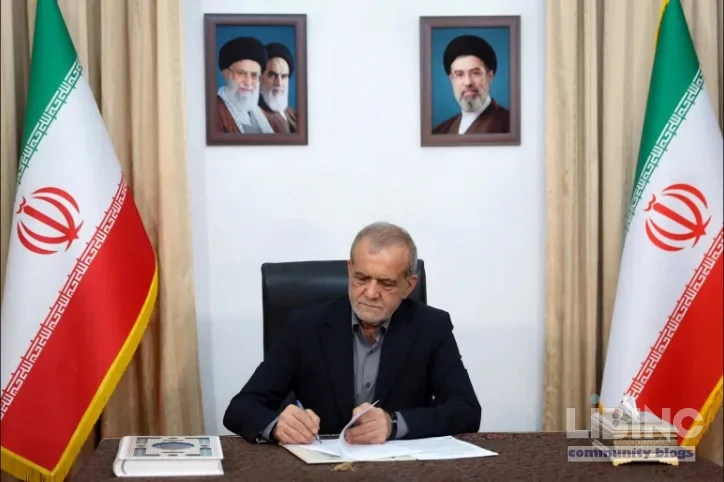
The Military-Bonyad Complex and Iran’s MoU Dilemma: How Internal Power Struggles Shape Iran’s Engagement with the US
Table of contents
- 1. Analytics through the military-bonyad complex
- 2. Through contrast: two wings of the ruling bloc
- 3. Cause and effect: from external shocks to internal fracture
- 4. Expert reconstruction: scenarios for the regime’s trajectory
Over the past days, the United States and allied operations against Iran have escalated, intensifying a crisis that jeopardizes what was framed as a path to a negotiated settlement. The memorandum of understanding (MoU) announced as a framework for talks now sits under intensified scrutiny as strikes deliver casualties and provoke political ripples inside Tehran. The central question is not merely whether the MoU can survive; it is who in the Islamic Republic can claim credit or accept blame for the outcome. The regime’s base already senses a disconnect between the rhetoric of restraint and the hard realities of escalation, a gap that is being managed through a carefully choreographed division of responsibility. In this context the figure of Masoud Pezeshkian, the president, becomes a lightning rod. The Supreme Leader’s public hedging—an acknowledgment of a different view on the deal—combined with the conspicuous omission of Mohammad Bagher Ghalibaf’s name from the public narrative, signals a deliberate internal bargaining that transcends the immediate diplomacy. The MoU thus becomes a litmus test for power inside the country’s most influential networks, and the broader health of Iran’s political economy.
Why this matters goes beyond the slogans of sovereignty or national pride. The MoU sits inside a wider architecture—what I call the military-bonyad complex—that fuses the IRGC, state security apparatus, and sprawling revolutionary foundations into a single, solvent-driven machine. This network, sustained by asset transfers and shielded by the Guardian Council, commands a large share of Iran’s economy and policy levers, and it operates with a degree of insulation from civilian oversight. The MoU offered a potential opening for controlled engagement with the outside world, but it also exposed the fault lines that have long divided the ruling elite: a technocratic-economic wing aligned with figures like Ghalibaf, and an ideological-maximalist wing anchored by the Paydari Front. The balance between these camps shapes not only foreign policy choices but the very mechanics of rule inside Iran. The presidency, in this frame, becomes a circuit breaker—designed to absorb shocks if the deal falters, and largely bypassed if the deal succeeds. The implication is that the MoU has become less a diplomatic instrument than a test of intra-elite resilience and the distribution of power in post-war Iran.
Analytics through the military-bonyad complex
Analytically, the MoU is less a straightforward diplomatic outcome than a stress test for a deeply entrenched political economy. The military-bonyad complex operates with a logic of monopolistic control: it channels state resources through a network that blends security prerogatives, economic rents, and ideological legitimacy. The MoU’s core economic pillar—a proposed private Reconstruction and Development Fund worth roughly $300 billion—was framed in Tehran as a means to stabilize the domestic economy while offering a pathway to careful integration with global markets. For the technocratic wing led by Ghalibaf, the fund was a tool to restore aggregate demand, attract investment, and gradually wean the economy off full autarky without surrendering sovereignty to external actors. The Paydari faction, by contrast, treated foreign capital as a potential instrument of penetration, a threat to regime sovereignty, and an invitation for Western influence to overwrite domestic priorities. This division did not appear as a clash of personalities alone; it mapped a structural contest over how Iran should negotiate modernization, economic normalization, and political risk.
Why does this internal calculus matter for readers focusing on foreign policy? Because the MoU’s fate is inseparable from the domestic architecture that will sustain or derail any agreed path. The supreme leader’s role here is double-edged: he can sanction a deal as a strategic compromise while ensuring that accountability for its outcomes remains distributed among potential scapegoats. The current narrative—Pezeshkian blamed for failure, Ghalibaf shielded by proximity to Khamenei—shows how the regime engineers blame and credit in ways that preserve core power while deferring decisive political reckoning. In other words, the MoU becomes a mechanism that preserves the status quo of the complex by assigning the risk of failure to a figure with weaker independent power, even if that figure lacks the political capital to drive major changes. The practical upshot: the MoU’s survival or collapse will likely hinge not on technical negotiations but on the trajectory of this power contest within the ruling bloc.
From an information-architecture standpoint, the MoU exposed a critical feature of Iran’s political economy: governance that blends formal institutions with informal influence networks. Resource flows—via the IRGC’s construction arms, the bonyad-led foundations, and the Guardian Council’s legislative shaping—remain insulated from robust civilian oversight. Even as the external theater intensifies, the internal theater remains the primary arena in which the MoU is negotiated, interpreted, and contested. The logic of winners and losers within the military-bonyad complex now determines not only the fate of a single agreement but the direction of Iran’s future economic strategy, security posture, and political legitimacy. The strategic implication for observers outside Iran is clear: any credible forecast must weigh how the two wings of the ruling bloc translate external pressure into internal reform or persistent stagnation. The MoU’s health, in other words, is a litmus test for whether the complex can reallocate power without triggering a broader destabilization of the regime’s core foundations.
Through contrast: two wings of the ruling bloc
The contrast between Ghalibaf’s technocratic-economic cohort and the Paydari Front captures the core tension that a signed MoU could have either contained or amplified. Ghalibaf’s career—head of the IRGC-linked Khatam al-Anbiya construction conglomerate, mayor of Tehran, speaker of parliament, and soon-to-be special representative for China—reads like a compact institutional biography of the complex’s strategic logic: a pathway to modernize, accumulate, and legitimize the regime’s authority through controlled integration with the global order. The Paydari Front’s calculus is doctrinal and strategic: any step that legitimizes Western presence or investment is tantamount to conceding sovereignty. Its members interpret global engagement as a tipping point that could erode the regime’s insulation from civilian and external scrutiny. The 300bn fund sits at the center of their dispute; for Ghalibaf, the fund would anchor stability and permit calibrated integration with capital while preserving sovereignty. For Paydari, the fund would become an instrument of external leverage, enabling international actors to influence where reconstruction funds go and what social policies accompany them. Theneither side is purely rational; both anchor their claims in a broader logic of regime survival and the distribution of patronage and rents across the complex.
In practice, the internal leverage that each wing enjoys depends on access to the presidency, the Supreme Leader’s circle, and the Guardian Council. Ghalibaf’s proximity to Khamenei and his control over important security and economic levers give him a critical advantage: a credible track record of delivering tangible governance results and the ability to wrap those results in a narrative of national resilience. Paydari’s leverage rests on mobilizing ideological discipline and associational networks that distrust external engagement as a strategic threat. The MoU was a surface-level compromise; underneath, its survival depended on who could translate a fragile balance into durable policy outcomes. The current faltering of ceasefire terms—coupled with the regime’s need to show tangible cost-benefit arithmetic to its base—pushes the bloc toward a more explicit reckoning: who gets to claim the credit for any eventual stabilization, and who bears the political costs if the effort collapses?
Crucially, the two wings are not monolithic. The military-bonyad complex has internal fault lines that become visible as the regime negotiates with a volatile external environment. The Paydari faction’s position on foreign investment as potential sovereignty risk contrasts with a broader strategic interest in preventing a vacuum that could invite greater external influence. On the other hand, Ghalibaf’s camp has reason to seek a cautious but real stabilization, so long as it can be framed as a national recovery rather than a concession. The net effect is that the MoU’s fate will reveal where the real power rests: in the operational control of economic levers and security institutions, or in the ideological legitimacy that sands off the rough edges of governance. The lesson for analysts is that power in Iran is not centralized in a single office; it is distributed across a network whose coherence depends on shared incentives and mutually understood boundaries. The MoU, in this sense, is less a treaty and more a negotiation of endurance between competing factions within the same regime.
Cause and effect: from external shocks to internal fracture
External shocks—the strikes, the casualties, and the looming uncertainty around the MoU’s terms—act as accelerants in a system already prone to factional fracture. The most visible consequence is a spike in public anger that the regime seeks to channel away from its core adversaries and toward a domestic scapegoat. Masoud Pezeshkian’s public position—being cast as the signatory who accepted responsibility—serves two political purposes: it preserves the internal balance by avoiding direct blame on the most powerful network architect (Ghalibaf) and it reassures the regime’s ideological base that the leadership remains accountable and disciplined. Yet this blame-shifting does not solve the structural problem. It postpones a reckoning about strategy itself: what is Iran prepared to concede to achieve stability, and at what cost to its domestic legitimacy and its future autonomy from external actors?
The MoU’s fragility also illuminates a deeper structural tension within the Iranian leadership. The military-bonyad complex—while incredibly powerful—does not operate as a single, unified organism. Its heads are appointed by the Supreme Leader, but their ability to translate strategic intent into national policy depends on the broader political space the regime can muster. The current arrangement—where two distinct lanes of policy preference compete for space under a single umbrella—creates a dynamic where the presidency acts as a circuit breaker rather than a policymaker in its own right. When external conditions improve, the presidency may be bypassed; when external conditions deteriorate, the presidency becomes a pressure valve for the risk that the complex cannot absorb through its existing channels. The result is a governance pattern that is resilient in some respects, but structurally fragile in others, because it guards against the consequences of internal confrontation while permitting them to simmer just beneath the surface.
What happens next hinges on how the regime calibrates its signal to the base and its signal to the outside world. If the MoU survives, the credit will flow to the wing capable of translating a negotiated compromise into concrete gains for the population: a stabilization of prices, a moderation of sanctions impacts, and a framework for economic recovery that does not immediately pit private capital against public interest. If the MoU collapses, the blame game will intensify and the internal fault lines will harden. The payoff for the Paydari Front might be a renewed posture of confrontation that consolidates its ideological base, but at the cost of greater external vulnerability and a higher risk of escalation. The technocratic wing would face a more difficult path: it would need to demonstrate that a measured engagement with capital can deliver tangible social dividends without ceding sovereignty to outside actors. Either outcome compounds the regime’s difficulty in reconciling its dual imperatives—economic recovery and ideological rigidity—inside a single governance framework shaped by the military-bonyad complex.
Expert reconstruction: scenarios for the regime’s trajectory
Forecasting Iran’s path requires a careful reconstruction of what is politically feasible within the ruling bloc, given external pressures and domestic expectations. The following scenarios are not mutually exclusive; they describe plausible trajectories conditioned by the balance of power within the military-bonyad complex and the regime’s tolerance for risk.
- Controlled stabilization under selective openness. The MoU survives in a redefined form that emphasizes economic reform without a wholesale integration into Western capital markets. The fund becomes a tool for targeted reconstruction, with strong oversight by trusted bonyad-led entities and an explicit prohibition on external actors influencing sovereignty. The Paydari Front retreads its claims by arguing that the terms are not merely market access but a question of political control over strategic sectors.
- Reassertion of ideological rigidity with limited economic reform. Paydari consolidates influence, rejects expansion of private capital under international terms, and pursues a strategy of slower economic reform that preserves ideological constraints. The regime signals strength through symbolic resistance to outside pressure, risking higher sanctions and slower growth, but preserving internal legitimacy among its core base.
- Internal realignment with a technocratic tilt. If the internal balance shifts toward pragmatic governance, Ghalibaf’s wing could push for a more technocratic mode of rule, leveraging the economy’s vulnerability to attract at least partial international engagement for the sake of stability. The risk here is alienating the ideological base, which could open space for new challengers within the ruling bloc.
- Gradual reform with external constraints. A compromise emerges that allows limited foreign investment under strict conditions, with enhanced protections for sovereignty and robust domestic oversight. This would require a credible enforcement mechanism and a credible reform package to satisfy both wings of the complex, while keeping public expectations in check.
Irrespective of the path chosen, the central dynamic remains the same: the MoU crystallized broader tensions inside Iran’s ruling bloc, and its fate will reveal where power ultimately resides. The presidency is unlikely to be the sole arbiter of the regime’s future; instead, it will be the arena where the complex negotiates between competing imperatives—economic survival, ideological continuity, and external legitimacy. The coming months will test not only Iran’s diplomacy but the durability of the military-bonyad complex itself, as it navigates the dual demands of delivering for the population and preserving its own monopoly over resources and coercive power.
Key takeaways
- The MoU serves as a structural probe of Iran's ruling bloc, not just a diplomatic instrument.
- The two wings—technocratic-economic and ideological-maximalist—frame the MoU’s terms and its political sell-by date.
- The presidency functions as a circuit breaker in a system designed to absorb rather than resolve fundamental incompatibilities.
- A successful path forward will require more than a treaty; it will demand a reallocation of power that can persist under sanctions and external scrutiny.
The regime’s trajectory will remain contingent on how effectively the military-bonyad complex can translate these internal dynamics into policy that preserves both its economic rents and its ideological legitimacy, even as foreign events continue to redraw the map of regional risk and opportunity.
In the end, the question is not simply whether the MoU endures but whether Iran’s political economy can absorb the costs of compromise without dissolving the institutional coalitions that sustain it. The strategic logic of the complex—its capacity to shield itself from civilian oversight while expanding its economic footprint—will determine both the MoU’s fate and the direction of Iran’s long-term engagement with the United States, its regional rivals, and the global economy.
Note: The views expressed reflect the author’s analysis and do not necessarily represent Al Jazeera’s editorial policy.
Closing the governance gap: practical pathways for the MoU
The most pressing gap in the existing narrative is not the text of the MoU itself but how its promises would be translated into accountable policy within Iran’s ruling bloc. A credible path forward requires concrete governance mechanisms, transparent budgeting, and independent oversight that stay within sovereignty while delivering measurable social and economic gains. By outlining practical steps—oversight councils, public dashboards, and clearly defined funding rules—the analysis moves from abstract diplomacy to policy architecture that can endure sanctions pressure and domestic scrutiny. For readers tracking economic reform, sanctions resilience, or the balance of power, this shift matters because it shows how choices at the top become tangible outcomes on the street.
| Wing | Focus | Key Tools |
|---|---|---|
| Ghalibaf faction | Technocratic governance and economic modernization | Khatam al-Anbiya network, Tehran governance, fund schemas |
| Paydari front | Ideological rigidity and sovereignty protection | Mobilization networks, resistance framing, public messaging |
The practical mechanism to ensure a sustainable and credible path is not only a MoU text but a governance charter. Proposals include a joint oversight council with bonyad representatives, independent auditors for the Reconstruction and Development Fund, and quarterly public dashboards showing project allocations, price trends, and milestones on sanctions relief. Such steps translate theory into measurable gains for inflation, employment, and social services—keywords like economic reform, transparent budgeting, and sanctions resilience appear in policy discussions.
Implementation pathways could include a sovereignty-safe reform charter, strict governance, and public reporting. Practical steps: (1) set quarterly KPI reviews with independent auditors; (2) restrict external influence on capital flows; (3) publish inflation, employment, and social-service metrics alongside progress on project completion. These become a framework for accountability that can be defended to domestic audiences while inviting credible engagement with international partners.
- Draft a sovereignty-respecting reform charter with clear limits on external influence.
- Establish independent oversight and public dashboards for the Reconstruction and Development Fund.
Ultimately, turning the MoU into stable policy requires governance culture that balances economic rents with transparent accountability, enabling resilience under sanctions and regional risk.
What is the military-bonyad complex and why does it matter for Iran's MoU?
In plain terms, the military-bonyad complex describes a tightly interconnected system that blends the IRGC's security role with vast state-funded foundations and the Guardian Council, forming a single economic and political engine. This nexus shapes which policy ideas gain traction, who bears the political risk for compromises, and how resources are channeled or shielded from civilian oversight. The MoU sits inside this structure, acting as a stress test for where real power lies and how plans for reform are translated into practical action rather than rhetoric.
Analytically, the core issue is that decisions about engagement, aid, and investment are filtered through networks that can preserve the status quo even when formal channels suggest change. Understanding this helps explain why a signed agreement might still fail if the underlying power balance does not shift enough to support credible reforms and oversight.
How does the MoU reveal intra-regime dynamics between Ghalibaf and the Paydari Front?
The MoU becomes a proxy battleground where technocratic pragmatism (Ghalibaf) clashes with ideological sovereignty (Paydari). The first emphasizes stabilizing the economy via targeted openness and trusted institutions; the second fears external leverage and seeks to maintain strict control over strategic sectors. The outcomes depend on who can translate promises into tangible gains while maintaining base legitimacy and avoiding a widening rift that external powers could exploit.
In practice, the balance reflects not only personal loyalties but the willingness to accept reform steps that preserve control over rents, security, and key assets.
What governance mechanisms could accompany a MoU to ensure accountability?
The most credible options combine technical independence with political legitimacy: (1) an oversight council including bonyad and independent auditors; (2) public dashboards tracking fund allocations, inflation, employment, and project milestones; (3) a charter that limits external influence on strategic sectors; (4) quarterly reviews tied to sanctions milestones. These measures help translate diplomacy into verifiable outcomes and reduce misinformation about progress.
Analytically, such mechanisms can create a feedback loop that aligns elite incentives with social resilience, reducing the risk of blame games during shocks.
What are the potential economic impacts of the Reconstruction and Development Fund?
The fund is designed to stabilize demand and attract investment while protecting sovereignty. If governed with transparency, it could support infrastructure, housing, and basic services, mitigating sanctions’ negative effects. The upside includes job creation and price stabilization; the downside risks include capital flight, political capture, or delayed disbursement if oversight fails. The balance hinges on credible governance and credible timelines that reassure both domestic audiences and international partners.
From a policy perspective, the key is not the size alone but the governance that ensures funds reach intended projects and deliver measurable public benefits.
How could external sanctions influence Iran's internal bargaining after a MoU?
Sanctions act as a pressure valve that increases the cost of inaction and motivates compromises with visible concessions deemed tolerable by the base. They also heighten the risk that external actors demand tighter oversight or political concessions in exchange for relief. The internal bargaining will then hinge on who can demonstrate resilience—both economically and politically—while maintaining legitimacy with their core supporters.
Analytically, sanctions reshape the risk calculus, pushing toward transparent governance as a way to preserve legitimacy under pressure.
What scenario paths could emerge from the current balance of power?
Possible paths include controlled stabilization with selective openness, a reassertion of ideological rigidity, an internal realignment toward technocracy, or a gradual reform amid external constraints. Each path requires different governance configurations, timelines, and external signals to be credible and resilient. The common thread is that the MoU’s fate will reveal not just negotiation outcomes but the deeper reallocation of power within Iran's political economy.
In sum, the path forward depends on whether the ruling bloc can translate agreements into accountable action that endures under regional risk.



Add a comment
To comment, you need to register and authorize
Comments