

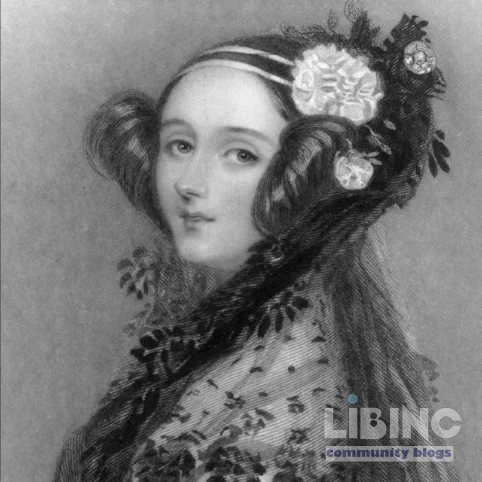
Ada Lovelace: Reframing the Birth of Computer Programming and Its Legacy
Ada Lovelace's life unfolds at the intersection of mathematics, literature, and social constraint. Born Augusta Ada Byron in 1815, she grew up as the only legitimate child of Lord Byron and Lady Byron, navigating a world that expected women to defer to tradition. Yet her mother demanded rigorous study, steering Ada toward mathematics to curb her father's temperament and to cultivate disciplined thinking. This combination of discipline and curiosity produced a mind capable of translating and expanding complex ideas. Her engagement with Charles Babbage's devices—differences engine and analytical engine—led to notes that, decades later, would be recognized as a proto-programming manifesto. This piece examines Ada Lovelace through four analytical lenses to reveal how her contributions foreshadow modern computation and why her legacy endures despite delayed recognition.
Table of Contents
- Through analytics
- Through contrast
- Through cause-and-effect relationships
- Through expert reconstruction
Through analytics
Ada's notes, born from a synthesis of arithmetic rigor and verbal interpretation, reveal a shift in how the machine is imagined. The difference engine is the technical scaffold, but her engagement with the analytical engine moves computation from a finite calculator to a potential universal processor. She treats the machine as a tool for symbol manipulation, not merely numbers, which is a crucial distinction for how we understand algorithmic thinking today.
In translating Menabrea's description, she expands on the idea that the engine could process letters and symbols alongside digits, a hallmark of symbolic computation that foreshadows text processing in programming languages and compilers for the analytical engine.
She describes the machine's storage and sequence execution, outlining that instructions could be arranged, stored, and retraced in a repeatable fashion. This is a proto-architecture for how programs order operations, a direct analogue to modern control flow concepts.
Her discussion includes the notion of loops—the engine's ability to repeat instructions—an idea at the core of programming concepts and automation, highlighting that the real power of such machines lies in algorithmic structure rather than single calculations.
Beyond arithmetic, Ada imagines domain transformation: the possibility that the engine might compose music, handle language rules, or manipulate symbolic data, demonstrating an early intuition of universality in computation and the potential breadth of the machine's applicability.
The culmination of these observations places Ada among the early computing pioneers, linking her to both the analytical engine's design and a broader trajectory of algorithmic thinking within the history of computing, even as contemporaries debated the novelty of such ideas.
From a methodological standpoint, her notes argue for a general-purpose device capable of instruction and data interchange, suggesting an architecture where the same mechanism performs varied tasks depending on the programmed sequence. This is not merely a clever observation but a foundational claim about how computation could be organized across domains.
From the vantage of computational theory, the emphasis on symbol manipulation, storage of instructions, and repeatable flows marks a decisive shift—from hardware as a factory of calculations to hardware as a platform for algorithmic processes. Ada's work thus transcends the hardware boundary and enters the realm of abstract computation, a transition that would determine the trajectory of computer science for the next century.
Methodologically, the notes illuminate a pattern of reasoning not widely visible in other contemporaries: the simultaneous interrogation of hardware feasibility and theoretical reach. This dual lens—engineering and abstraction—peels back the surface of her contribution to reveal a disciplined, forward-facing conception of computation that remains legible to modern practitioners.
From the perspective of historical influence, the analytics-laden frame that Ada crafts helps explain why she is frequently described as a pioneer in programming concepts long before the term existed, a reminder that the seeds of software engineering take root when thinkers treat computation as a programmable, symbolic enterprise.
Through contrast
Ada's work contrasts sharply with Babbage's own emphasis on mechanical feasibility. Where he built machines with precise gears and polished drafts, she provided the interpretive bridge—publishing and clarifying in prose what his devices promised in diagrams. The result is a distinctive blend: technical insight embedded in accessible exposition, a quality rarely associated with computational hardware at the time.
In the broader landscape of computing history, her notes stand as a counterpoint to a purely instrumental view of the engine, revealing an understanding of algorithmic capability that transcends the machine's physical form.
Socially, Ada faced gendered constraints that limited recognition of intellectual achievement. Yet her position within aristocratic networks allowed access to scientific discussion that few others could sustain, enabling a more sophisticated engagement with ideas than many male contemporaries had access to in private salons and laboratories.
The combination of social capital and intellectual ambition positions her as an early computing pioneer in a way that challenges conventional narratives about who produces foundational ideas and how they circulate in scientific culture.
Her relationship with the public mind—a reputation that would only fully crystallize in the mid-20th century—contrasts with the immediate albeit modest academic attention paid to Babbage's machines. The result is a delayed but enduring reevaluation of authorship in the history of computation.
Through cause-and-effect relationships
The sequence from translation to publication created a durable conduit for Ada's ideas. She did more than translate Menabrea; she annotated, expanded, and clarified, producing a document that framed the analytical engine as a general-purpose instrument for instruction, not a niche calculator.
These notes—when reintroduced in the mid-20th century—became a touchstone for computing history, reshaping narratives around the origin of programming and providing a canonical link between early hardware concepts and later software practice.
Why did the notes remain obscure during her lifetime? The context mattered: a field dominated by male mathematicians, a technological ambition that outpaced available hardware, and a cultural emphasis on practical over theoretical outcomes. The convergence of these factors muted immediate recognition but not long-term significance.
The Bowden reissue in 1953 and subsequent scholarly work transformed her into a central figure in the story of computing, underscoring how archival recovery can alter the arc of historical narratives and validate early theoretical insights.
The posthumous honors—names, languages, and commemorations—emerge from causally linked cycles: renewed interest in the history of computing, institutional recognition of women in science, and the institutional memory of software and programming language development.
The Ada programming language, named in her honor in 1980, illustrates a direct cause-effect link between historical remembrance and practical impact, showing how memory can shape contemporary technology choices and educational pipelines.
Through expert reconstruction
Historians reconstruct Ada's reasoning as a sequence of plausible steps, not a verbatim transcript of her thoughts. The reconstruction begins with her exposure to Babbage's designs, proceeds through careful translation, and culminates in a framework for algorithmic thinking that transcends the machines Madge described.
Experts emphasize algorithmic thinking as the backbone of her notes—an abstract capability that would become the language of software engineering and systems design in later centuries, connecting her work to a broader computing lore.
Given gaps in direct evidence, historians rely on cross-checks with her education, mentorship, and contemporaries to infer what patterns of reasoning she likely employed when considering the engine's capabilities and potential applications.
These reconstructions acknowledge limits while still offering a coherent account: the ability to encode instructions, the concept of looping, and the view that the machine could operate on symbols and rules rather than purely numerical data—core templates for modern programming language design.
Expert perspectives converge on one point: Ada's contribution is not a single invention but a method of thinking about machines as vehicles for processing information, a viewpoint that predates and informs the discipline of computer science.
In this sense, the expert reconstruction validates the claim that Ada Lovelace helped inaugurate a mode of inquiry—combining mathematical rigor with narrative clarity—that remains central to how we conceive software and computation today.
Her story, finally, is a case study in intellectual courage and historical revision. Ada Lovelace's notes did not merely describe a machine; they outlined a way of thinking about computation that would endure as technology evolved. By examining her work through analytics, contrast, cause-and-effect, and expert reconstruction, we apprehend a more precise portrait of the first programmer and a more nuanced legacy for the field she helped instantiate.
Closing the loop: Ada's quiet legacy
Ada's work can be linked to modern programming by tracing how symbol handling, storage, and flow logic in her notes map to today’s software design. To connect history with practice, consider three concrete scenarios that reveal the staying power of her ideas: text processing, rule-based transformation, and small loops that automate repetition. This bridging clarifies why her voice remains central to our understanding of algorithmic thinking and symbolic computation.
| Idea | Modern parallel |
|---|---|
| Symbolic data | Text processing and data representation |
| Storage of instructions | Program flow and memory models |
| Looping | Repeatable control flow in software |
| General-purpose device | Flexible computation across domains |
| Symbolic rules | Rule-based processing in engines |
In text processing, Ada’s approach mirrors how compilers interpret rules to transform language; in simple terms, a sequence of symbolic steps becomes action. In routine automation, a loop becomes a reusable pattern rather than a one-off operation, a core idea in modern software engineering.
Key insight: Programs are sequences of symbolic operations; changing the sequence changes the outcome, which is the essence of software design.
Consider a practical scenario: a text checker scans for repeated phrases by moving through words as symbols; a small loop counts word frequencies; both echo Ada’s looping and symbol-/data interchange concepts. This helps translate historical ideas into hands-on tasks that students and professionals perform routinely.
| Timeline | Milestone |
|---|---|
| 1815 | Ada Lovelace born |
| 1843 | Notes published with Menabrea translation |
| 1953 | Bowden reissue renews interest |
| 1980 | Ada programming language named |
Through these lenses, Ada’s work is not a static artifact but a living template for thinking about computation as a symbolic, programmable activity that spans domains—from language to music to data rules.
FAQ
How did Ada Lovelace conceptualize the analytical engine's capabilities?
Ada's direct answer is that the analytical engine should be viewed as a general-purpose device capable of symbolic manipulation, not merely a calculator; she argued that treating data as symbols and instructions as interchangeable enables the machine to perform a wide range of tasks, from language processing to music composition, provided the sequence of steps is correctly designed. This reframing moves computation from arithmetic to abstract procedure, laying the groundwork for software concepts and algorithmic thinking. Her emphasis on universality foreshadows modern programming language design.
What is the role of symbol manipulation in Ada's notes?
Ada presents symbol manipulation as the engine's core power, describing how letters and rules can be treated as data and instructions alike. In plain terms, the machine can transform inputs by following defined symbolic rules, which is the essence of compilers and interpreters today. This focus underpins the idea that software operates on representations, not just numbers, enabling flexible problem-solving across contexts.
Why did Ada's work gain recognition only later?
Ada's ideas emerged in a context dominated by male scientists and a focus on hardware practicality. The mid-20th century resurgence of interest in the history of computing, along with institutional efforts to highlight women in science, created a sustained narrative that elevated her contributions. The reissues and scholarly investigations bridged the gap between a marginal note and a foundational concept in software.
How do Ada's ideas echo in modern programming languages?
Today’s languages emphasize symbolic data, instruction flow, and reusable patterns—concepts Ada anticipated. Her insistence on treating programs as sequences of symbolic operations translates into compiler design, language semantics, and even domain-specific languages. Practically, it explains why loops, storage of instructions, and abstract data handling remain central to software development.
What sources support our current understanding of Ada Lovelace's contributions?
Scholarly editions of her notes, historical analyses of Babbage's machines, and archival reissues—such as Bowden’s edition—together reconstruct the reasoning that underpins her claims. These sources emphasize algorithmic thinking and symbolic computation as core themes, guiding how educators present her work to new generations of computer scientists and historians.
How can educators use Ada's example to teach computation?
Educators can frame Ada as a bridge between hardware concepts and software thinking, using her ideas to illustrate symbol manipulation, general-purpose computation, and the power of sequences. By presenting historical notes alongside simple, modern analogies—text transformation tasks, loop-based automation, and symbol-driven rules—teachers can illuminate core programming ideas without overwhelming students with jargon.





Add a comment
To comment, you need to register and authorize
Comments