

Cure for Paranoia and the Tiny Desk Contest On The Road: A Deep Dive into Live-Performance Momentum
Table of Contents
- Analytical view: Cure for Paranoia and the Tiny Desk Contest On The Road
- Contrast: Tour dynamics across venues and audiences
- Cause-and-effect relationships: Production choices, media coverage, and community context
- Expert reconstruction: Photographers' perspectives on capturing Cure for Paranoia's energy
- Tour highlights across stops: Neumos, Howard Theatre, and beyond
Cure for Paranoia, a Dallas-based hip-hop collective, emerged as a defining moment in NPR’s Tiny Desk Contest On The Road tour. The run stitched together twenty standout entrants, each invited to translate original songs into intimate, liveTiny Desk performances across venues from Los Angeles to Washington, D.C. The journey highlighted a critical dynamic: independent artists can leverage public media platforms to reach national audiences without sacrificing local authenticity. The lens of the photographers accompanying the tour captures more than stage lighting; it reveals how a hometown sound travels city to city, how venues shape reception, and how audiences respond when a live performance breaks through a crowded field. This piece examines why Cure for Paranoia became a focal point and what that implies for the broader ecosystem around the Tiny Desk format and independent hip-hop in 2026.
Analytical view: Cure for Paranoia and the Tiny Desk Contest On The Road
The decision to crown Cure for Paranoia as the winner of this year’s Tiny Desk Contest was described by judges as a no-brainer, signaling a convergence between an authentic homegrown voice and the scalable reach of NPR’s platform. Importantly, the win did not rest on a single track or a momentary buzz; it reflected consistency across writing, delivery, and the ability to translate studio ideas into a performance that feels both intimate and expansive. In analytical terms, Cure for Paranoia built a performance identity that aligns with the core values of the Tiny Desk aesthetic: clarity of live phrasing, an economy of arrangement, and a crowd-anchored energy that travels well beyond the venue walls.
From the outset, this moment underscores a structural shift in how indie artists build momentum. The Tiny Desk On The Road tour is not merely a traveling showcase; it is a data-rich iteration of public media exposure that tests a group’s ability to maintain sonic coherence under varied acoustics, lighting designs, and audience compositions. Cure for Paranoia leveraged strengths typical of successful acts in this framework: a defined lyrical voice, a distinctive production signature, and a performance cadence that invites both listening and watching. The result is a performance package that travels well—from a packed Seattle room to the Howard Theatre in Washington, D.C.—without losing the essence of the group's sonic DNA.
Analytically, the tour functions as a living lab for how live music and media partnerships amplify a collective’s reach. The Cure for Paranoia phenomenon demonstrates that a well-curated tour narrative—rooted in community, authenticity, and technical polish—becomes as important as the music itself. The winning outcome is not random; it follows a recognizable pattern in which a strong local origin story pairs with scalable, repeatable live moments. When audiences recognize themselves in a performance, the translation to a national feed becomes less about novelty and more about a durable connection that can cross regional tastes while preserving the artist’s core identity.
Why does this matter for future Tiny Desk contestants and the broader independent scene? Because Cure for Paranoia’s ascent illustrates a pathway: cultivate a distinctive live voice, align with a media partner that values nuance over spectacle, and communicate a story that resonates with both fans and curators. The result is not just a winning set; it is a blueprint for sustainable visibility in a media ecology still dominated by streaming metrics, live-gig nostalgia, and the persistent tension between authenticity and mass appeal.
Why the win lands with particular authority
The judges highlighted a convergence of factors: compositional clarity, stage presence, and the capacity to treat a Tiny Desk stage as both intimate room and public stage. Cure for Paranoia managed to preserve local texture while delivering a universality that can travel through radio, video, and live feeds. This combination matters because the Tiny Desk Contest operates at the intersection of local scenes and national distribution. A winner who embodies that balance signals that the program remains relevant to communities while still functioning as a discovery engine for a national audience.
In a broader sense, the Cure for Paranoia Tiny Desk Contest moment helps redefine what it means to succeed as an independent artist in 2026. The metric shifts away from viral peaks to durable audience engagement, cross-market appeal, and the ability to sustain a live show narrative across multiple venues. The result is a more resilient, ecosystem-friendly model for visibility within public media and the independent music landscape.
Contrast: Tour dynamics across venues and audiences
Across the tour stops, Cure for Paranoia faced a spectrum of venues, sound systems, and crowd densities. The Dallas origin of the group added a local pride dimension to the Washington, D.C. stop at The Howard Theatre and the Seattle engagement at Neumos. The contrast between a room’s architectural acoustics and the lighting palette reveals how production choices influence the perceived energy of a set. For photographers and audiences alike, this variation tests the group’s ability to maintain momentum while still letting individual songs breathe in different acoustic contexts.
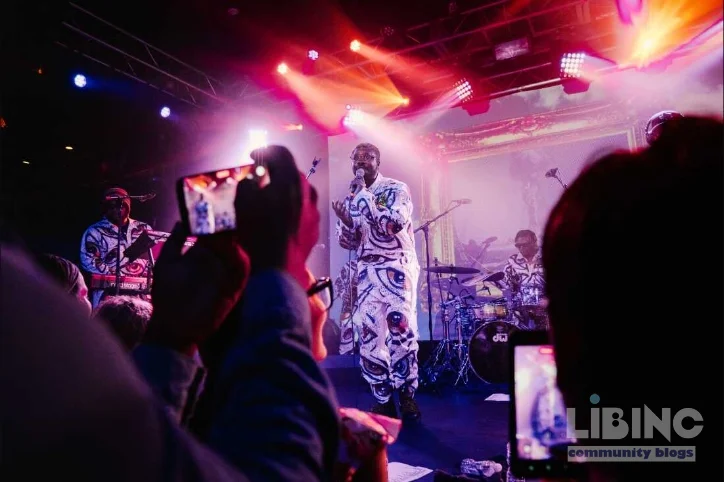
In Seattle, the Neumos stop featured a crowd that responded with a blend of enthusiasm and attentiveness, a combination that amplifies both rhythmic drive and lyrical clarity. The lighting design—bright enough to reveal micro-expressions, modest enough to avoid overpowering the voice—allowed the performance to feel both documentary and performative. In Washington, D.C., the Howard Theatre presented a closer, more intimate dynamic, with engineers and the crowd in near-choral proximity. This proximity fosters a halo effect around performers when the lighting hits the audience; the photographer can capture a shared radiant moment that communicates the energy of the room as a collective experience.
Photographic notes across the tour corroborate a consistent narrative arc: a sense of discovery, a moment of revelation, and a communal exhale as the set closes. A typical frame from Late Wife or DOGTAGS moments shows a secondary energy pattern—openers who spark a cascade of attention, then a marquee performance that consolidates the room’s momentum. For Cure for Paranoia, the arc travels with the audience’s attention rather than against it, enabling a freer exchange of intensity and release across venues.

Another key contrast point lies in the way venues influence audience interaction. The Howard Theatre’s proximity created opportunities for momentary flourishes—glances, breath, and mid-song pauses—that photographers describe as adding depth to the narrative. These pauses became visual anchors in the documentation of a tour that trades on spontaneity as much as precision. The contrast is not merely about aesthetics; it reveals how venue ecology conditions crowd response and, by extension, the storytelling potential of a Tiny Desk performance.

Cause-and-effect relationships: Production choices, media coverage, and community context
The production vector—encompassing lighting, sound engineering, and camera angles—exerts a measurable influence on how a Tiny Desk moment travels. The harm of overproducing a studio-like feel is the risk of erasing live spontaneity; the cure is to maintain a balance where the stage remains a dynamic conversation among performer, audience, and technicians. Cure for Paranoia managed this balance by retaining raw vocal textures and live-drama cues while ensuring the mix translated well to broadcast formats and social videos. The effect is a performance that reads as authentic in person and legible in recording, a combination that expands the song’s reach across platforms without sacrificing its lifeblood.
Media coverage during the tour reinforced the idea that public-media partnerships can accelerate discovery for independent artists. NPR’s On The Road framework, with its cross-station collaboration, functions as a distributed amplification system. It takes a single city’s energy and threads it into a national mosaic through curated photography, interview snippets, and broadcast-quality performances. For Cure for Paranoia, the outcome is a more robust live-booking trajectory post-tour, as radio spins, streaming playlists, and festival bookings align around the same core identity.
Community context matters. Cure for Paranoia’s narrative aligns with a broader audience that seeks representative voices within hip-hop’s evolving landscape. A Dallas-based crew achieving recognition through a programming model anchored in public media underscores a regional-to-national pathway that can be replicated by other city-based acts with strong local networks. The effect, if pursued consistently, is a rebalanced ecosystem where regional authenticity scales through the reach and curation of public-facing platforms while preserving the integrity of the art form.

From a production standpoint, the continuous thread across tour stops is the ability to translate a distinct sonic identity into a performative blueprint. The risk is that every venue demands a new micro-approach, but the reward is a flexible framework that keeps the core sound recognizable while accommodating venue-specific acoustics. The best outcome, observed in several shoots, is a set that remains legible in tight, intimate spaces and expansive enough to justify camera moves and lighting shifts that add texture rather than noise. This dual demand—consistency and adaptability—appears to be the genus-level trait that sets Cure for Paranoia apart within the On The Road cohort.
Expert reconstruction: Photographers' perspectives on capturing Cure for Paranoia's energy
Photographers across the tour framed Cure for Paranoia as a study in controlled performance momentum. One observer highlighted the moment when stage lights created a halo effect around the crowd, elevating the sense of communal energy. Others noted the group’s dynamic breath, a cadence that makes the audience lean in and the camera stay engaged. The expert reconstruction emerges from a consistent pattern: the most compelling images are not just about the performer's movement but about the interaction of lighting, audience, and space. These elements together render a moment that feels both candid and purposeful.
In many frames, Cure for Paranoia’s chemistry is the focal point. The lead voice anchors the room, while the rhythm section threads a pulse that the photographer captures through strategic framing—often with the band members slightly off-center, letting the crowd’s reaction become part of the composition. The effect is a story that readers can follow visually: a launch, a rising arc, and a closing beat that leaves the room with a shared memory. Photographers also point to the importance of capturing the physicality of performers—gesture, breath, and micro-expression—as a way to convey emotion beyond the sonic.
Looking ahead, these perspectives suggest a path for future coverage of live ensembles in similar televised or streamed formats. The key takeaway is not simply to photograph a performance but to document how the live mechanics of sound, light, and space interact with a crowd’s energy to create a narrative that endures beyond the venue. The Cure for Paranoia case study demonstrates how a well-documented, photogenic moment can become a touchstone for what a Tiny Desk performance can represent in the broader cultural conversation about independent hip-hop and public media’s role in its amplification.

Tour highlights across stops: Neumos, Howard Theatre, and beyond
Across the stops in Seattle, Denver, Washington, D.C., and elsewhere, Cure for Paranoia delivered a suite of moments that photographers and critics now reference when discussing the On The Road tour’s impact. In Seattle, the room’s acoustics and lighting converged to produce a clarity that favors lyrical precision and rhythmic force. The image of the ensemble stepping forward as a coherent unit captures the sense of a collective moving through a shared performance memory. In Washington, the choir-like audience response and the halo lighting created frames that feel almost cinematic, elevating a live set to a moment of communal resonance. These recurring visual motifs—tight framing, halo lighting, and crowd relief—underline how the tour built a visual language that aligns with a sonic identity.
Readerly, the narrative that emerges from the photos and accompanying captions is that Cure for Paranoia’s strength lies in consistency rather than novelty. The tour provided a stage to prove a concept: that a compelling live show, recorded and broadcast through NPR’s ecosystem, can expand a local scene into a national conversation. The synergy between the music, the photography, and the public-media framework proves that the path from independent group to nationally recognized act involves a triangulation of craft, audience, and media infrastructure.

In sum, the Cure for Paranoia Tiny Desk Contest moment reframes how independent hip-hop can scale within public media orchestration. The on-the-road model validates a pathway from regional art to national visibility, not through a single viral hit but through a sustained narrative, strong live performance, and thoughtful visual documentation. For artists, managers, and media partners, the takeaway is clear: invest in a distinctive live voice, curate a tour that travels well, and align with platforms that can translate intimate rooms into national stories without erasing the authenticity at the core of the music.
As the tour continues to inspire photographers, fans, and fellow artists, Cure for Paranoia’s Tiny Desk Contest journey offers a blueprint for how independent acts can translate local energy into enduring cultural momentum within a public-media framework.
Sustaining momentum after a Tiny Desk tour: a practical playbook
Indie acts can turn a strong Tiny Desk performance into ongoing visibility by treating the tour as a repeatable system rather than a one-off moment. The core: a durable live voice, a concise narrative, and disciplined content repurposing across NPR clips, social videos, and club bookings. The following playbook translates Cure for Paranoia's dynamics into actionable steps for any city-based act aiming to grow in 2026.
| Venue | Acoustics | Lighting | Audience Density | Momentum Consistency |
|---|---|---|---|---|
| Neumos, Seattle | Clarity with rhythmic bite | Bright, balanced | High | Strong, scalable |
| Howard Theatre, DC | Intimate, crowd proximity | Warm glow, punchy voices | High | Very consistent |
| Denver, DOGTAGS stop | Varied room acoustics | Flexible lighting | Medium | Emerging momentum |
| Los Angeles, The Bootleg | Open vibe, warmer mids | Cinematic, nuanced | Medium-High | Potentially high |
| New York, Village Underground | Bright, detailed capture | Dynamic, crowd-facing | High | Strong crossover reach |
With this framework, teams can plan a tour narrative that travels well. The next steps focus on practical steps, content repurposing, and cross-platform alignment to sustain engagement beyond the final encore.
Replicating the approach: a step-by-step plan
- Define the durable live voice — fix a clear cadence, diction, and stage language that travels from Seattle to DC.
- Story beats for each stop — capture a city-specific moment and tie it to a universal theme in the music.
- Content repurposing pipeline — cut 60–90s clips for social, dust off a full performance for distribution, publish a photo gallery with captions.
- Platform choreography — schedule NPR clips, YouTube premieres, and festival pitches in a single quarterly plan.
- Measurement loop — track engagement, clip views, saves, and tour-driven bookings to refine the next run.
These steps provide a practical blueprint for indie hip-hop acts seeking durable visibility through public media partnerships and a nationwide narrative that respects local authenticity.
How did Cure for Paranoia leverage the Tiny Desk On The Road to build momentum?
The On The Road tour provided a structured, public-media framework that amplified a distinct local voice into a national conversation. By maintaining sonic clarity, emotional specificity, and a coherent live identity across varied venues, the act translated intimate performances into scalable content—driving radio spins, streaming attention, and festival interest. This approach demonstrates that momentum comes from consistent storytelling and cross-platform packaging, not a single viral moment. It also highlights the value of a well-curated media partner in accelerating discovery for independent artists.
What production choices helped preserve live energy across venues?
The key choices balance raw vocal textures with broadcast-friendly mixes and authentic lighting. Specific tactics include keeping a dynamic but not overpowering stage presence, preserving crowd ambience in the mix, and avoiding studio-like perfection that erases spontaneity. These decisions help the energy read authentic in person and on screen, ensuring the moment travels well to NPR clips and social videos while retaining the group’s core sound.
How can indie hip-hop artists replicate this approach in their own markets?
Start with a durable live voice—lyrics, cadence, and stage connect that locals recognize and outsiders can learn. Build a tour narrative that links the local origin story to a universal theme in your music. Create a content pipeline that produces short clips, complete performances, and photography packages for distribution. Align with a public-media partner or local radio to expand reach, and implement a simple metric set (views, saves, bookings) to iterate for future runs.
What role do photographers’ perspectives play in documenting a Tiny Desk moment?
Photographers capture the energy transfer between performer, space, and audience; their framing emphasizes micro-moments—the breath, eye contact, and hand gestures—that convey emotion beyond the sound. A cohesive photography narrative helps viewers feel the momentum of the live room and creates durable visuals that support cross-platform storytelling and media coverage.
What are the long-term benefits of public media partnerships for independent artists?
Public media partnerships expand reach beyond local scenes while preserving authenticity. They enable repeatable exposure cycles, allowing artists to build a durable audience, book more shows, and secure festival opportunities. The Partners’ ecosystem helps create a sustainable progression from local impact to national visibility, leveraging broadcast quality performances and curated photography to sustain momentum over time.
How should venue selection influence audience engagement strategies?
Choose venues that offer consistent acoustics and intimate sightlines while still supporting dynamic lighting and camera moves. Use the room to shape storytelling cues—moments of breath, crowd response, and visual rhythm—so that each stop contributes to a broader arc. The aim is to preserve core energy while adapting presentation to space, enabling a cohesive national narrative without erasing local texture.




Add a comment
To comment, you need to register and authorize
Comments