

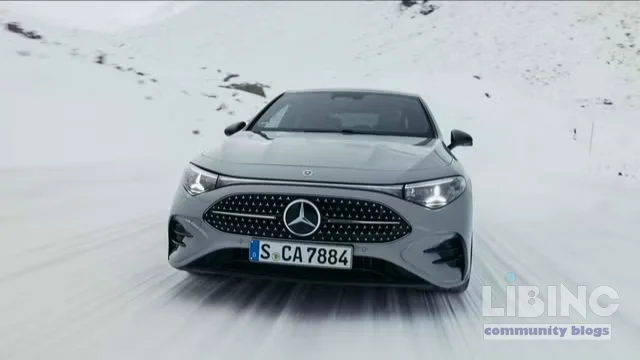
Mercedes-Benz CLA220 Hybrid: Balancing a 48-Volt Mild-Hybrid with the All-Electric CLA-Class
The 2027 Mercedes-Benz CLA class arrives with a deliberate two track strategy. In the United States, two of the three powertrains are fully electric, yet Mercedes engineers hedge their bets with the CLA220, a 48-volt hybrid that carries a surprisingly large 1.3 kWh battery for a non plug in. The result is a car that tries to balance the serene EV experience with familiar gasoline performance. The chassis remains lively, but the hybrid powertrain does not always cooperate with the dream. The CLA220 is the first Benz to wear the new hybrid system featuring a Miller cycle 1.5 liter turbo, an eight-speed dual-clutch automatic, and an integrated electric motor inside the transmission. This setup produces a combined 208 horsepower and 280 pound-feet of torque, with the electric motor contributing up to 30 horsepower and 148 pound-feet on its own.
The battery capacity should allow for some measure of engine-off driving, so long as the motive force required stays below the e-motor threshold. Unlike typical hybrids that barely flirt with electric-only operation, the CLA220 can stretch EV operation in city conditions, enabling notional silence in stop-and-go traffic for a while longer. Mercedes claims that its 30-hp e-motor is enough to putter around in Comfort mode, but the car often demands a more robust push from the gas engine to feel lively. In practice, the handoff between the electric motor and the gasoline four is imperfect, with a touch of hesitation and a lack of refinement that you would expect from a premium compact that aims to be both efficient and engaging.
From a performance standpoint, the CLA220 wears its hybrid badge with reasonable confidence. The all wheel drive option adds grip, and the front-drive variant returns competitive figures for a modern 1.5-liter hybrid. Officially, Mercedes cites a 0–60 mph time in the low 7-second range for the front-wheel-drive configuration, with independent testing hinting at somewhat quicker times as software and calibration mature. The combination of the Miller-cycle efficiency gains and the electric boost translates into a strong peak torque delivery, yet the granular feel of the torque split remains inconsistent, especially in Comfort mode where the e-motor tries to do most of the early progress before the engine joins the party. This is the core reason the CLA220 hybrid can feel perceptibly more dull in everyday driving than its fully electric sibling in certain scenarios.
On the highway, the CLA220 hybrid remains a willing partner. Its powertrain is tuned for efficiency first, with the engine timing and the electric assist coordinating to maximize miles per gallon rather than neck-snapping acceleration. The eight-speed dual-clutch transmission operates with a crisp step when you push beyond a gentle cruise, but the presence of an integrated e-motor within the transmission introduces a unique dynamic to shifts that some drivers may not find perfectly seamless at low speeds. The hybrid architecture also contributes to weight, and the car pays a price in chassis balance when the system shifts between electric and gasoline power at inopportune moments. The result is a chassis that remains poised, but the propulsion experience does not always feel as fluid as the best examples in the segment.
From an efficiency standpoint, the CLA220 hybrid presents a meaningful improvement over a conventional gasoline CLA in urban cycles, aided by the 48-volt electrical architecture and regenerative braking. The EPA estimates fall in the high 30s mpg in combined driving, with the city portion benefiting from the ability to glide on electric torque. However, the real world numbers depend on how aggressively you demand power and how often you allow the internal combustion engine to supplement the electric motor. The 1.3-kWh battery is a telling detail here: it supports short electric runs, but it does not replace the gasoline engine for sustained high-speed driving. The net effect is a car that can feel more efficient than a purely gas-powered sedan on mixed routes, yet less quietly electric than the dedicated EV in Mercedes lineup.
In short, the CLA220 hybrid embodies the complexity of Mercedes strategy in the current market: offer a practical, premium hybrid that hedges against the inevitability of full electrification while preserving the brand's interior tech and ride quality. The e-motor adds a layer of performance when asked for, but it rarely steals the show. The result is a product that makes sense for buyers who want a refined, well-equipped compact with a touch of electric capability, rather than a pure electric performance machine. The question is whether the hybrid's measured advantages will persuade buyers who might otherwise opt for the all-electric variant, given the price gap and the expectation of a quiet, single-powertrain experience. The CLA220 hybrid earns consideration, but it demands patience and a willingness to accept a few rough edges in return for a broader powertrain menu.
Table of contents
- Analytics: hybrid architecture and performance
- Contrast: CLA220 hybrid vs EV CLA and gasoline variants
- Causes and effects: how the system behaves in real life
- Expert reconstruction: what Mercedes could do next
Analytics: hybrid architecture, powertrain synergy, and real world performance
The CLA220 hybrid represents Mercedes latest attempt to fuse a 48-volt mild-hybrid with a compact four cylinder engine in a way that's palatable for daily drivers and efficient enough to matter at the pump. The core hardware is straightforward on paper but delivers a nuanced driving experience in practice. A Miller-cycle 1.5-liter turbo acts as the gasoline heartbeat, optimized for efficiency through a reduced pumping loss and faster combustion stability. The electric motor, rated at up to 30 horsepower and 148 lb-ft of torque, lives within the transmission and can supplement the gasoline engine when demand rises. The battery, a 1.3-kWh lithium-ion pack, provides limited electric range but is crucial for engine-off operation in light load scenarios.
Why this matters comes down to architecture choices and the resulting driving character. A 48-volt system reduces parasitic drag on the crank, enabling the e-motor to participate earlier in acceleration cycles and to smooth out the torque curve. Yet the integration is not a technical silver bullet. The e-motor's limited peak output means the gasoline engine must still carry the heaviest lifting for sustained, high-load acceleration. The eight-speed dual-clutch automatic keeps revs reasonably low, contributing to fuel efficiency, but it can exhibit a distinct hesitancy when the e-motor transitions in or out of the drive cycle. In effect, the CLA220 hybrid benefits from reduced fuel consumption and smoother idle operation, but the drive becomes a balancing act between electric assist and gas power rather than a pure, seamless electric experience.
Concrete numbers help frame the reality. The combined output sits at 208 horsepower and 280 lb-ft of torque on the CLA220 hybrid. The additional electrical torque is not merely a convenience; it dampens torque dip by contributing early during throttle input. The result is a vehicle that can feel sprightly at modest throttle, especially in Sport mode, where the e-motor acts as a torque amplifier rather than the primary mover. The tradeoff, however, is a smoother but occasionally noticeable handoff when you demand quick acceleration from a standstill or during a late kickdown. While the electric assist can lighten the gasoline engine's burden in everyday driving, you will still hear the engine protest a bit as it re-engages to deliver higher power, particularly at higher revs.
From the standpoint of ride and handling, the CLA220 hybrid shares the overall chassis philosophy of the CLA class: a bias toward sporty balance without sacrificing refinement. The lack of active suspension and the older generation feel in certain trim plastics do not vanish, but the chassis tunes and steering feedback remain sharp enough for confident cornering. The result is a car that communicates with the driver in a compact, nimble package, even as the hybrid system introduces additional mass and a slightly more complex powertrain dynamic. The net effect is that you can enjoy a compliant daily ride while still seeking a sporty tempo on back roads, with the hybrid system providing just enough torque to keep you engaged without overwhelming the engine's character.
The energy management strategy deserves its own note. The e-motor's torque delivery is strongest in city driving where the vehicle can exploit electric torque at lower throttle demands. In that context, the car can operate quietly and efficiently for longer bursts. Yet the same energy management strategy shows its limits at highway speeds where the motor's contribution wanes in comparison to the gas engine's sustained torque. This is not a flaw so much as a design choice: Mercedes prioritizes efficient blends over blunt electric performance. For buyers who crave instant electric torque, the CLA220 hybrid does not replace a dedicated EV; for those who want a more efficient daily driver with a dual powertrain, it offers a balanced compromise that still rewards smooth, refined driving in most routine scenarios.
Contrast: CLA220 hybrid versus EV CLA and gasoline variants
Take a moment to place the CLA220 hybrid against its two primary siblings in the CLA lineup. First, the all electric CLA version offers a near silence, uninterrupted torque, and a distinctly different driving persona. In pure EV mode, the electric motor propels the car with immediate torque, and the absence of an internal combustion engine makes the ride feel smoother and more esports-through-the-city than the hybrid. The hybrid lacks the electric-only range and the raw quiet approach of the EV, which means the comfort of the electric experience is limited to short city hops rather than long steady-state cruising. Yet the electric CLA's higher upfront price and charging requirements can deter buyers who want a comfortable, efficient sedan without the necessity of a charging routine at every trip length.
On the other side sits the gasoline CLA variant powered purely by the internal combustion engine. In that comparison, the CLA220 hybrid is a bridge between efficient gasoline driving and a partial electric boost. The hybrid's average fuel economy improves on the pure gas model, particularly in urban environments where the 48-volt system helps decouple some parasitic losses and allows the engine to shut off more readily in light-load conditions. The drawback is that the hybrid's powertrain feels more complex and occasionally less refined than a well-tuned pure gasoline engine, especially in the low-speed range where the e-motor's presence creates a more noticeable interplay as it engages and disengages. For buyers who value a simple, traditional engine experience, the hybrid may feel overengineered; for those seeking efficiency without sacrificing brand presence, it becomes a rational compromise.
Interior and technology further differentiate the CLA220 hybrid from its siblings. The cabin inherits the Superscreen setup seen on Mercedes higher in the lineup, with a driver display, a central touchscreen, and a passenger touchscreen wrapping around the cockpit. The software experience, MB OS, remains dense but surprisingly accessible after a brief acclimation period. In practice, the hybrid does not change the interior's fundamental feel; it preserves the compact, driver-focused ergonomics while layering in the hybrid powertrain controls and energy management indicators. The result is a cabin that feels modern and connected, though the reliability of some control interfaces may depend on software updates and usage patterns over time.
In terms of practicality, payload and rear seat practicality remain consistent with the CLA class. The CLA220 hybrid offers generous trunk space for the category, and the rear seats accommodate adults reasonably well on short to mid-range trips. The panoramic glass roof—standard on many trims—enlivens the interior with light, but the extended glass can magnify cabin temperature in direct sun, requiring climate control to work harder in hot climates. This is an area where the hybrid choice aligns with the rest of the model line: you trade a little extra weight for the comfort of a modern, tech-laden interior and a chassis tuned for balanced handling rather than pure performance isolation.
Causes and effects: how the system behaves in real life
Several design decisions behind the CLA220 hybrid explain its real world behavior. The 48-volt mild-hybrid system reduces parasitic losses and enables a more capacious e-motor package than typical 12V mild hybrids. The integration of the electric motor inside the transmission reduces packaging complexity and allows for a compact drivetrain, but it also constrains how power is managed. The clutch in the driveline, which decouples the gasoline engine from the rest of the drivetrain at certain conditions, is a critical element. In practice, it can produce a perceptible shift in driving feel, especially during routine city driving where the system must decide whether to rely on electric torque or engine torque. The consequence is a calibration problem: the car feels less refined at low speeds as torque transitions choreograph a smoother handoff that never fully settles into a single torque curve.
The 1.3-kWh battery is central to the CLA220 hybrid experience. It is larger than many non plug-in hybrids, offering meaningful electric operation during light loads and traffic. Yet it also anchors weight in a way that influences steering feel and overall ride dynamics. The chassis remains composed, but the heavier configuration adds a degree of inertia that an agile back road should not ignore. The upside is clear: more electric operation in daily commutes translates to reduced fuel consumption and a more placid stop-and-go experience. The downside is a hybrid that sacrifices a bit of the immediacy and quietness you might expect from a modern EV in exchange for a broader mechanical range and a more familiar, accessible hybrid experience.
Another root cause of the hybrid’s quirks lies in software and human-machine interface choices. Mercedes redesigned the column shifter so that upshifts and downshifts require nudging the stalk, while the starter is embedded within the stalk and doubles to engage Park. In practice, this setup caused some accidental Park engagement and occasional engine shutoffs when drivers returned the car to Park. While this is a minor annoyance for some owners, it highlights how a premium brand must balance contemporary design language with predictable user interactions. A cleaner, more intuitive control layout would reduce friction and help the hybrid feel more premium in daily use, reinforcing the sense that the CLA220 hybrid is truly an evolution rather than a compromise.
In the end, the CLA220 hybrid demonstrates how a 48-volt system can improve efficiency without fully redefining a car’s character. The torque curve is more favorable than a standard gasoline CLA, and the car can glide on electric power for modest trips. Yet the unresolved handoffs and the heavier weight remind us that this is a transitional technology rather than a definitive solution. The net effect is a car that appeals to buyers who want Mercedes style and efficiency in a compact package, but who are prepared to tolerate some rough edges in the hybrid’s integration until software, calibration, and perhaps a more robust high voltage system catch up with the performance expectations set by the brand’s electric lineup.
Expert reconstruction: what Mercedes could do next
To elevate the CLA220 hybrid into a more compelling, polished package, Mercedes could pursue several targeted improvements. The central aim is to harmonize the torque delivery between the e-motor and the internal combustion engine, reduce perceptible shift events, and improve the overall perception of refinement without eroding efficiency gains. A tighter integration strategy could involve recalibrating the e-motor’s torque profile to deliver smoother, more natural torque fill during the transition from electric to gasoline operation. Additionally, the powertrain calibration could shift toward a more eager response in Comfort mode so that a light throttle input yields an immediate, clean acceleration without the engine revs hanging unnecessarily high.
Software upgrades within MB OS can play a decisive role here. A more intuitive energy management algorithm could learn individual driving patterns and adjust the e-motor’s involvement accordingly, minimizing the abrupt throttle response that currently irritates some drivers. The user interface could also display a more straightforward energy map that helps drivers understand when the e-motor actually contributes and how the hybrid system is balancing power. The column shifter and Park integration deserve a dedicated redesign, removing the requirement to activate Park via the starter switch, and offering paddles for more precise manual control or simply a conventional gear selector with a clearer upshift/downshift feedback. These changes would make the CLA220 hybrid feel more premium because the control logic would mirror the expectations of a high-end compact sedan.
From a mechanical perspective, pursuing a lighter drivetrain or more efficient packaging could help. The 1.3-kWh battery is already compact for a non plug-in configuration, but any reductions in mass would help ride and handling while preserving energy recovery benefits. Mercedes could explore integrating a more efficient cooling strategy for the hybrid battery to allow more aggressive operation without thermal constraints. A targeted upgrade to the transmission calibration could also improve the feel of shifts, especially during aggressive throttle inputs. Taken together, these refinements would push the CLA220 hybrid closer to the premium feel of its electric sibling while maintaining the practical, price-conscious appeal that makes hybrids attractive for daily use.
In the longer term, the CLA220 hybrid could become a more compelling alternative if Mercedes expands the electric-only range in urban cycles, or if the hybrid system can operate more robustly in electric mode under mid-range loads. That would require a combination of software optimization, hardware tuning, and perhaps an even larger battery while preserving the car's packaging efficiency. Such changes would elevate the CLA220 hybrid from a transitional product to a genuinely persuasive choice for customers who want a premium compact with a real sense of electric capability without sacrificing the convenience and familiarity of internal combustion when needed.
The CLA220 hybrid occupies a carefully defined niche: it blends Mercedes style, technology, and efficiency in a compact, family-friendly sedan. It achieves this balance by leaning on the 48-volt hybrid system, but its success will depend on how well Mercedes can refine the integration in the coming years. If the automaker can address the handoff roughness, reduce the perceived complexity of the powertrain, and deliver a more intuitive user experience, the CLA220 hybrid could become a more decisive choice for buyers who want a premium hybrid with a respectable price tag and a strong set of standard features. The potential exists; the execution, however, remains a work in progress that will benefit from continued software and engineering refinements as the market evolves toward broader electrification.
Conclusion: The CLA220 hybrid is a thoughtful, practical experiment in merging a 48-volt hybrid system with a premium compact space. It offers meaningful efficiency gains and a refined interior while exposing the frictions inherent in a midrange hybrid that aims to satisfy both efficiency-minded and performance-oriented drivers. In the current product cycle, it represents a credible step forward for Mercedes hybrid strategy, even as it invites a few refinements that could elevate the experience from good to very good in the near future.
Keywords are integrated throughout the analysis to support search visibility and relevance for terms such as CLA220 hybrid, Mercedes-Benz CLA220, 48-volt hybrid, Miller-cycle engine, 1.5-liter turbo, 8-speed dual-clutch, MB OS, Superscreen, CLA-class hybrid, and EV comparison.
Short description summary: A detailed assessment of the CLA220 hybrid as Mercedes adopts a dual strategy for the CLA-class, balancing a 48-volt mild-hybrid with the all-electric CLA variant, highlighting architecture, performance, and opportunities for refinement.
Practical efficiency maximization in daily use
In real-world driving the CLA220 hybrid earns the most when drivers favor city-cycle electric torque and smooth throttle inputs. The following guidelines translate the technology into everyday benefits.
City commutes: light throttle inputs let the 30-hp e-motor handle initial progress for brief windows, with regenerative braking returning energy on every slowdown. Use Comfort or Eco to favor electric assist, and let the engine slip in gradually as speed climbs.
| Scenario | Energy behavior | Tip |
|---|---|---|
| City stop-and-go | Electric torque dominates at light load | Keep throttle light; coast with pedal off to maximize regen |
| Highway cruising | Gas engine contributes most; e-motor assists as needed | Anticipate mid-throttle inputs rather than sudden bursts |
| Hills and load | Torque pairing from both sources improves response | Sport mode when required; otherwise recover energy gradually |
The energy map inside MB OS, along with the 1.3-kWh pack, supports brief electric runs but does not transform the CLA220 into a pure EV. With practice, drivers can shave consumption by up to several mpg in urban cycles simply by embracing electric torque at modest throttle and avoiding aggressive high-load bursts.
- 100% internal combustion at high loads
- 30 hp e-motor assist within the transmission
- 1.3 kWh battery enables light electric operation
Mid-trip, read energy flow in the cluster: green indicators show electric torque, while blue or amber hints signal gasoline involvement. Reading this map helps a driver keep the car in its most efficient state, turning a premium compact into a thoughtful, economical daily driver.
In summary, the CLA220 hybrid rewards deliberate, efficient driving. Use Eco/Comfort for urban phases, Sport when you want a quicker response, and rely on the e-motor for light-load acceleration. The result is a balanced, premium sedan that drinks less fuel without surrendering Mercedes refinement.
What is the CLA220 hybrid’s approach to energy use in city driving?
The system favors electric torque at light loads, allowing short quiet runs in urban traffic. This translates to better stop-and-go efficiency and smoother idling, especially in Comfort or Eco mode. In practice, you’ll notice less gasoline engine activity during light throttle, with regenerative braking reclaiming energy each time you lift off the pedal.
In city conditions, the hybrid’s strength is the ability to glide on electric torque for brief periods, reducing pump work and improving overall efficiency without needing a plug-in recharge. Drivers who practice light, progressive inputs can maximize this benefit on typical commutes.
How should I use driving modes to optimize efficiency?
Eco and Comfort modes are the primary tools for efficiency, as they favor smoother torque delivery and longer electric-assisted operation. Sport mode can deliver extra response when needed but tends to draw more energy from the battery and engine, reducing overall efficiency. Understanding when to switch modes—Eco for city, Sport for overtakes or hills—helps balance performance with economy.
How does the CLA220 hybrid feel compared with the EV CLA and the gasoline CLA?
The CLA220 hybrid offers a refined, premium feel with a noticeable but controlled electric boost. It isn’t as quiet as the all-electric CLA, nor as peppy as a pure gasoline model at high speeds. The key trade-off is better city efficiency and a smoother power curve in exchange for occasional hesitations during e-gasoline handoffs.
What are the common handoff quirks between the e-motor and gasoline engine?
Handoffs can feel hesitant, especially at low speeds or during quick throttle demands. The integration inside the transmission can cause a perceptible delay as torque shifts between electric and gasoline power. Calibration updates and mode choices can mitigate this, but the experience remains less seamless than a dedicated EV.
Is there meaningful electric-only range in daily use?
The 1.3-kWh pack supports short electric runs in light-load situations but is not a plug-in design. Expect limited electric-only range for city hops at best; sustained high-speed or highway electric running is not the primary goal of this setup.
What future improvements could make the CLA220 hybrid more compelling?
Fewer handoff glitches, a more intuitive energy-map display, and a recalibrated e-motor torque profile could yield smoother transitions. A lighter, better-thermally managed battery and faster software updates would also enhance refinement and deliver a more premium feel from the hybrid system.





Add a comment
To comment, you need to register and authorize
Comments