

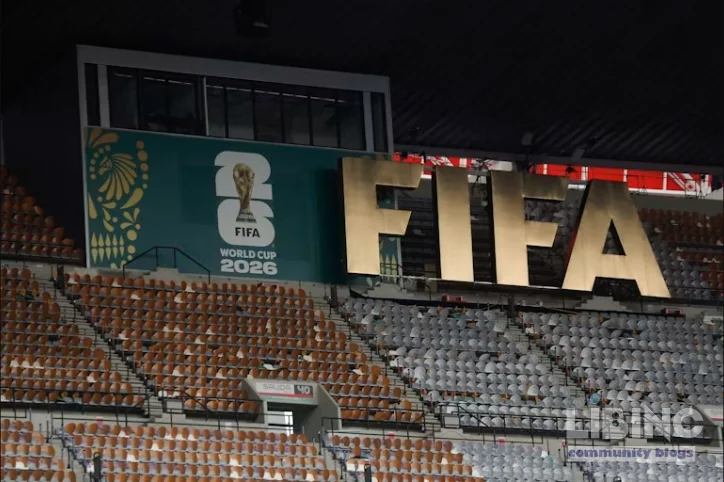
FIFA World Cup ticket pricing: An analytical examination of fairness, monopoly power, and reform
In sport, fairness matters. Yet for the world’s biggest tournament, money matters too. The 2026 FIFA World Cup hosts promised final tickets would cap around US$1,550, but the reality diverged drastically. By April 2026, the cheapest standard final ticket was US$5,785; the most expensive seats reached US$10,990 and were reported to triple. With two days to kickoff, roughly 180,000 tickets remained unsold, and critics in New York and New Jersey opened investigations into price inflation and fan confusion. Fans faced hours-long online queues with unclear price expectations, while prices rose for 90 of 104 matches. The Oasis ticket scandal memory loomed, as did the broader question of dynamic pricing, which FIFA denies by calling it variable pricing. In a market with no meaningful competition, the pricing engine held sway, yielding revenue primarily to FIFA and its resale channel. This article analyzes the pricing architecture, contrasts promises with outcomes, traces causal dynamics, and sketches expert pathways for reform.
Analytics: Pricing architecture and fan response
The pricing framework for the World Cup operates on a dual axis: the primary price set by the event’s organizer and a sanctioned secondary market that captures a portion of resale flows. In theory, this should allow for price discovery through demand signals; in practice, it concentrates power in a single actor and limits competitive discipline. FIFA controls the initial price ladder and, through its resale channel, collects revenue across both sales stages. The result is a system where the same seat can move in price, not through competitive bidding, but through the operator’s cyclic adjustment of allocations and blocks. This architecture helps explain why some seats that were affordable in theory become unaffordable in practice as demand signals compound across channels.
Why does the pricing path drift upward? Several mechanisms interact in a monopolistic market with a globally inelastic fan base:
- Primary price setting establishes a baseline that is difficult to undercut once demand becomes clear in the allocation window.
- The official resale channel extracts a predictable margin on secondary transactions, effectively calibrating demand to the fear of missing out rather than to marginal cost recovery.
- Block bookings and restricted allocations create scarcity on paper, even in markets that might otherwise be price-sensitive, pushing some enthusiasts toward higher-cost options or the secondary market.
- Transparency gaps allow price perception to diverge from the actual price path, fostering frustration among fans who cannot anticipate total costs before entering queues.
From an economist’s lens, the structure resembles a platform monopoly that controls both supply and the most visible resale mechanism. The work of Nobel laureate Jean Tirole illuminates the risk: when a single firm operates on a broad front of a market, competitive discipline dissolves and extraction becomes the default strategy. In the World Cup setting, FIFA effectively sets the primary price, operates the main resale route, and captures revenue across the cycle, with regulators offering limited countervailing power. This setup helps explain both the observed price escalations and the substantial share of unsold inventory at kickoff time.
Consumer psychology follows from the architecture. Fans encounter unclear price paths, long queues, and a sense that value is eroding as more seats remain unsold while others escalate in cost. The experience resembles other dynamic pricing episodes—where prices respond to demand signals but without transparent disclosure, customers feel misled rather than empowered. In such environments, loyalty can turn brittle, and even motivated supporters may disengage or abstain from future participation when the cost of entry becomes opaque or prohibitive.
Pricing mechanics and market power
The 30 percent taken by FIFA on resale transactions is a focal point of revenue, but it is also a signal of how the architecture might dampen alternatives that could discipline price. With the primary supply and official resale under one roof, the spectrum of competition narrows to non-market forces: regulatory oversight, governance reforms, and consumer advocacy. In other words, the price path is driven by the platform’s optimization problem rather than by rivalry among multiple suppliers. This is an essential distinction when evaluating whether price increases reflect genuine scarcity or the strategic extraction of consumer surplus in a quasi-monopolistic market.
Contrast: Promises vs. reality
When bidding for the hosting rights, the tri-national bid partners explicitly framed accessibility as a design principle. The frontier price cap for a final ticket served as a clear signal that the event should remain within reach of a broad audience. Yet the later trajectory of prices tells a different story. By April 2026, the cheapest final ticket had surged to thousands of dollars, while the most expensive seats exceeded ten thousand dollars, with reports of prices tripling in a short window. The discrepancy between promise and performance is not merely an accounting quirk; it reshapes expectations about who gets to participate and at what cost.
Impactful contrasts include:
- Promised cap versus observed price tiers that compress affordability for a broad fan base.
- Publicly stated commitments about accessibility contrasted with high-end tickets dominating the allocation mix.
- The tension between a single-organizer pricing model and the need for price visibility and predictability.
In parallel, cross-market comparisons reveal a spectrum of price experiences. For Euro 2028, governing bodies capped prices with a different philosophy: nearly half the tickets under £60, signaling a preference for broad accessibility in a more competitive market where UEFA plays a distinct regulatory role. Meanwhile, the 2026 World Cup introduced a USD 60 supporter-entry tier designed to absorb criticism by carving out a modest slice of seats in each match, including the final. While framed as a concession, this tier affected only a small portion of the total allocation and did not alter the fundamental price ladder faced by most fans. The net effect is a widening gap between public perception of fairness and the lived experience of ticket costs.
Consumer outcomes and the queue experience
The queue dynamic became a proxy for value discovery in a system with opaque pricing. Fans waited hours, often without clarity about the total price they would ultimately pay. This lack of price transparency is a serious consumer-rights concern because it converts shopping into a game of chance rather than a transparent market exercise. Regulators in other jurisdictions responded by requiring price ranges to be disclosed upfront in similar contexts; FIFA’s choice to label pricing as variable rather than dynamic effectively positions the organization outside that regulatory precedent. The consequence is a perception of unfairness that persists even when prices might be justified by demand signals.
Cause and effect: How pricing shapes outcomes
To connect price to outcome, we must map causal links from pricing architecture to fan behavior, stadium attendance, and revenue sustainability. The 2026 World Cup provides a natural case study in how market power, pricing transparency, and allocation design translate into real-world consequences.
The core causal chain can be summarized as follows:
- Monopoly power in primary and resale channels sets the baseline price trajectory and reduces competitive pressure to moderate prices.
- Opacity about how prices are determined creates perceived unfairness, which erodes fan loyalty and dampens long-run demand.
- Scarcity engineering through block allocations increases the salience of premium seats, concentrating value capture among a small share of tickets.
- Revenue extraction through the resale ecosystem reinforces a cycle where higher posted prices attract higher maximums, even if many fans cannot participate.
In a market with zero direct competition, the conventional dynamic pricing logic—charging more when demand is high to allocate scarce resource efficiently—loses its corrective function. Instead, price moves reflect the operator’s monetization calculus, with little external discipline and limited price transparency. The result is a paradox: revenue grows on paper, yet unsold inventory indicates misalignment between price, demand, and the stadium's physical capacity.
The outcome costs go beyond individual fans. If loyalty fractures, the long-run development impacts—brand value, host-country tourism, and global engagement—can be compromised. Critics argue that the pricing architecture, by prioritizing revenue extraction over inclusive access, undermines the tournament’s broader development goals and weakens the sport’s fairness narrative.
Evidence from the field: observables and counterfactuals
Several concrete observations support the causal story:
- Price escalations across the majority of matches, with 90 of 104 matches seeing higher prices relative to baseline expectations.
- High-profile examples of affordable Euro 2024 benchmarks in contrast to World Cup pricing—evidence that the same format can yield divergent experiences under different governance and competitive dynamics.
- Interventions such as the USD 60 supporter-entrytier are isolated, small-scale fixes that fail to address the core pricing architecture and fan trust concerns.
While price theory would predict capacity-constrained events to monetize demand, the World Cup case reveals that the absence of competitive escalation boundaries blunts the price-discovery function and elevates the risk of public backlash when prices appear detached from the fans’ perceived value.
Expert reconstruction: Reforms and alternatives
What would a more balanced design look like? Expert reconstructions converge on a set of reforms aimed at restoring price transparency, broadening access, and reintroducing credible competition—either through regulatory guardrails, market-design changes, or governance reforms that heighten consumer leverage without sacrificing scale and development goals.
Key reform categories include:
- Enhancing price transparency: publish price ranges and factors that determine price movements before fans join queues. Publish an expected total price per category, with clear caps on maximum spend per match and per tournament, to reduce information asymmetry.
- Calibrating allocation to broaden access: soften scarcity signals by increasing the share of low- to mid-priced seats, and by designing multi-tier bundles that preserve access without inflating the base price.
- Rethinking the resale channel: introduce transparent, competitive resale mechanisms with capped commissions and standardized service levels, potentially inviting third-party platforms under strict disclosure rules to reintroduce competition in the secondary market.
- Dynamic vs variable pricing: align terminology with policy intent and ensure predictable behavior. If dynamic pricing remains, couple it with automatic price floors, advance disclosure, and consumer-friendly warranties on total costs.
- Revenue transparency and accountability: publish annual reporting on ticketing revenue sources, price bands, and the share captured by primary and secondary markets to restore trust and enable informed debate.
- Safeguards for fan segments: preserve targeted discounts and subsidies for students, seniors, and underrepresented communities, ensuring that affordability remains an explicit objective rather than a byproduct of market forces.
Operationally, reforms would need to balance commercial viability with the tournament’s developmental mandate. Achieving that balance requires a shared governance framework that includes national associations, organizers, consumer groups, and regulators. The goal is not to eliminate revenue or to abolish scarcity, but to align pricing with transparent rules, predictable costs, and broader access that reflects the sport’s sense of fair play.
Pathways to implementation
Practical routes to implement these reforms include:
- Codifying minimum transparency standards across all ticket channels, including pre-queue disclosures and total-price visibility.
- Setting explicit caps on price growth above baseline benchmarks, with periodic reviews in response to inflation and market conditions.
- Introducing an open, competitive framework for resale—ideally with price-discovery mechanisms that reflect real demand rather than monopolistic markups.
- Expanding affordable access programs beyond a token tier to ensure that a meaningful share of proceedings remains accessible to broader fan segments.
- Monitoring and evaluating the impact of reforms through independent audits and fan sentiment research to sustain a credible fairness narrative.
These reforms would not only protect consumers but could also stabilize attendance and long-run demand by reducing the sense that ticketing is a unilateral revenue engine. In turn, that credibility could translate into stronger fan loyalty, steadier sponsorship pipelines, and sustainable development outcomes for football across nations.
What happens next: calibrated expectations
Fans, regulators, and football’s governing bodies face a shared test: can pricing architecture evolve toward greater transparency and inclusivity without sacrificing the revenue streams that sustain development programs around the world? The World Cup’s 2026 experience shows the risks of a pricing regime that operates with limited external discipline. The question now is whether reforms can realign incentives so that the event’s financial viability and its fairness narrative reinforce each other rather than collide. The path forward depends on political will, institutional design, and a willingness to experiment with market mechanisms that preserve the sport’s global reach while restoring trust among the fans who fill the stands and screens year after year.
In the end, the price that fans pay is not just a number; it’s a signal about who gets to participate in a shared global moment. If the signal is loud and clear—transparently set, fairly administered, and broadly affordable—the World Cup can sustain its aspirational promise: a tournament that belongs to more than a privileged few.
Enhancing price transparency and predictable costs
The most urgent gap is upfront visibility of total costs across channels. Fans face a moving price ladder where initial quotes can mislead once fees and resale margins are added. A simple remedy is to publish per-match price bands and a bundle calculator that shows the expected total before queues begin. For instance, a family of four selecting four matches would see a ceiling per match and a tournament cap, with a clear breakdown of base price, resale margin, and fees. This clarity cuts surprise charges and improves decision quality.
| Category | Base Price | Resale Margin | Estimated Total | Notes |
|---|---|---|---|---|
| Tier A | $350 | 15% | $402 | Fees included |
| Tier B | $600 | 22% | $750 | Resale active |
| Tier C | $1,000 | 28% | $1,270 | Limited blocks |
| Finals Block | $2,000 | 25% | $2,500 | High demand |
| Fees & Surcharges | $0 | — | Varies | Checkout at price |
In addition, a pre-queue estimator could lock in total costs at entry, balancing revenue flexibility with price predictability and reducing post-queue regret.
Another practical example: show finals bundles with base tickets, fees, and resale commission, capped at a modest margin above baseline to enable quick cross-category comparison and budgeting across multiple matches.
| Policy Element | Effect on Access | Effect on Perceived Fairness | Operational Note |
|---|---|---|---|
| Public price ranges | ↑ Access | ↑ Trust | Needed in queues |
| Caps on growth | ↓ Volatility | ↑ Predictability | Review yearly |
| Open resale with limits | ↑ Competition | ↑ Transparency | Governance required |
Frequently asked questions
Why did ticket prices rise sharply for the 2026 World Cup final?
Transparent, upfront disclosure of total costs significantly improves fan participation by reducing price anxiety and enabling informed decisions about which matches to attend, bundles to buy, and how to budget across the tournament; when fans see a clear ceiling, a breakdown of base price, resale margins, and fees, and an estimated total before they enter queues, they can compare options across tiers with confidence, avoid unforeseen surcharges at checkout, and align plans with budgets, which strengthens loyalty, reduces drop-offs after price spikes, and sustains engagement across multiple matches. In practice, price transparency supports predictable demand and fairer allocation over time.
What role does the official resale channel play in pricing?
Prices in the resale channel influence overall affordability because listed prices reflect both demand and the platform margin; a transparent resale framework—clear commission caps, standardized disclosures, and predictable rules—helps maintain fair access and reduces the risk of price spikes during peak demand. When resale operates under clear guidelines, fans can judge true costs before committing, and the secondary market becomes a disciplined part of the price ecosystem rather than a hidden multiplier.
What reforms could improve price transparency?
Adopt explicit price bands for every match, publish expected totals per bundle, and require upfront disclosure of all fees; enable a pre-purchase calculator; regulate resale commissions with caps and clear disclosures; ensure multi-tier bundles preserve access without inflating base prices; and mandate independent audits of ticketing revenues. These reforms create stable expectations, facilitate cross-category comparisons, and restore trust without sacrificing the tournament’s scale and development goals.
How can price caps balance access and revenue?
Caps should be designed to restrain excessive growth while preserving incentives for organizers to fund development programs. Practical designs include maximum total spend per match, transparent cap rules that adjust with inflation, and separate affordable tiers that guarantee meaningful access. When caps are visible and predictable, fans can plan early, and the organizer sustains revenue streams through volume, bundles, and targeted price bands rather than relying on a few high-end seats alone.
What are the long-term implications for fan loyalty?
Transparent pricing strengthens trust and drives consistent participation by reducing cost anxiety and last-minute surprises. Loyal fans are more likely to attend multiple matches, engage in renewals, and support sponsorship programs; conversely, opaque pricing can trigger disengagement and shift attention to alternative events. Over time, clarity and fairness act as a social contract that reinforces the sport’s global appeal and sponsorship resilience.
How should regulators approach pricing for global events?
Regulators should insist on baseline transparency, enforce clear resale disclosures, and empower consumer voices in governance. A practical approach combines mandatory price-band disclosure, caps on price growth, standardized resale margins, and independent oversight. This framework balances economic viability with fan rights and helps ensure the event delivers broad accessibility while sustaining development outcomes for football communities worldwide.





Add a comment
To comment, you need to register and authorize
Comments