

Music Technology and Computation at MIT: A New Paradigm for Cross-Disciplinary Innovation in an AI-Driven Musical Future
Table of Contents
- Lead
- Through Analytics
- Through Contrast
- Through Cause-and-Effect Relationships
- Through Expert Reconstruction
- Looking Ahead
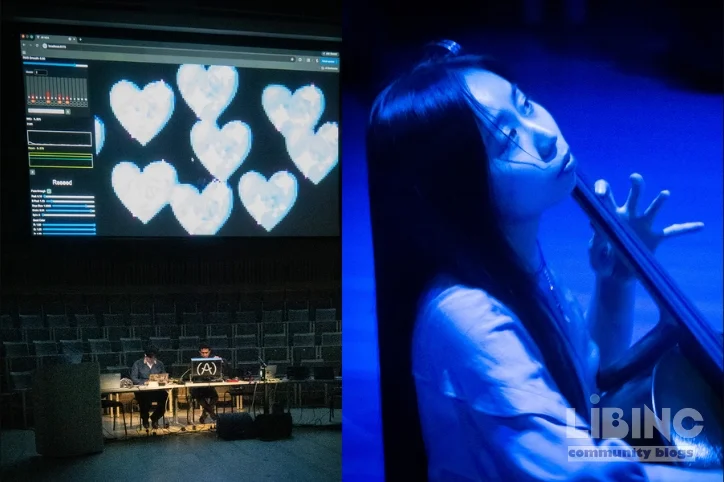
Music Technology and Computation (MTC) at MIT emerged in fall 2024 as a bold, cross-institution collaboration between SHASS’s Music and Theater Arts Section and MIT’s School of Engineering. The inaugural Music Technology Research Showcase on May 13 filled the Edward and Joyce Linde Music Building, signaling a maturation of a program designed to fuse performance with computation. The standing-room-only event highlighted a cohort that blends MIT undergraduates, PhD students, and faculty in a shared project space where artful engineering translates into new musical experiences. The showcase demonstrated that a five-member incoming class can catalyze tangible advances across disciplines within a single year, foreshadowing a broader, more capable research ecosystem at MIT.
The program’s core challenge is simple in intent but complex in execution: cultivate a space where music, computation, and human expression co-evolve. This requires not only technical prowess but also a willingness to confront how AI, neurotech, and generative systems reshape what counts as performance, collaboration, and even authorship. The stakes are high: MIT aims to lead the world in both music technology theory and practical application, shaping how we imagine expressive possibility in an AI-driven era. Yet the path forward depends on overcoming a professional cultural divide between engineers, who prize reproducibility and precision, and artists, who pursue ambiguity and discovery.
Through Analytics
What the showcase reveals about program maturity
The MIT Music Technology and Computation program presents a new model for how academic depth and creative performance can inform one another. The 90-minute Research Showcase didn’t merely display projects; it embodied a data-informed culture where live art is inseparable from real-time interpretation of computational systems. This alignment of performance with measurement and modeling signals a deliberate shift from silos to a collaborative research culture, one that treats every performance as a testbed for algorithms, sensors, and immersive interfaces.
This cross-disciplinary collaboration across SHASS and SoE yields AI-driven music, live visualization, and audience-facing demonstrations that are more than novelty. It anchors music technology in human-centered design, ensuring that the tech serves expression rather than dictating it. The event also demonstrates that such a curriculum can attract technically accomplished students who seek a broader context for their work and who can translate specialized skills into socially meaningful outcomes.
Key demonstrations and their implications
- Real-time visualization of an AI co-improvising agent on piano — a direct study in human–machine collaboration, translating predictive models into audible action and inviting performers to respond to non-deterministic outputs.
- Sound-art installation based on noisy network communication — explores perception, resilience, and interpretation when data noise becomes aesthetic material, underscoring the edge between information theory and creative practice.
- Hip-hop dance circle generating music from movement — a compelling case of embodied computation where choreography informs generative sound, challenging the separation between movement and music creation.
- EEG-based decoding of imagined tunes — a striking example of neurotechnology translating brain activity into performable music, with ramifications for accessibility and performance disabled audiences both in practice and pedagogy.
The cohort’s work, including the following projects, illustrates a breadth of inquiry where theory, algorithm design, and live performance converge, creating a visible trajectory for how music technology research can mature into scalable, interdisciplinary practice.
- Rachel Loh, Visualizing the Internal State of Music Models for Live Human–AI Improvisation
- Noble Harasha, Modeling Subjectivity and Collective Sensory Perception as Noisy, Analog Communication in Feedback-Driven Networks
- Z Chen, Generative Music as a Catalyst for Social Choreography
- Nithya Shikarpur, The Moving Drone: A Live Improvisation in Hindustani Music with the Human Voice, Generative Models, and Loops
- Mariano Salcedo, Neural Cellular Automata for Interactive Music Visualization
- Claire Southard, Neural Decoding of Imagined Music
- Stephen Brade, Suwan Kim, Valerie Chen, Whale, Cello (there?): A Musical Dialog between Cello and a Real-time Diffusion Model Trained on Whale Songs
The show’s structured synthesis of talk and performance exemplifies how data-informed inquiry can guide creative risk-taking. It also demonstrates the power of a shared space—the Edward and Joyce Linde Music Building—to enable rapid prototyping, studio work, and cross-pollination between theory and practice, all essential for a program designed to operate at the interface of disciplines.
The presence of five inaugural enrollees who previously studied at MIT underlines the program’s appeal to students already embedded in MIT’s ecosystem. Their path from undergraduates to master’s candidates reflects a deliberate strategy to cultivate continuity and depth, enabling them to leverage existing strengths while expanding into new terrains of computational music, perception, and human collaboration.
Through Contrast
A comparison with conventional, single-discipline tracks
The MIT MTC program diverges from traditional music technology offerings by embedding computation inside the center of both pedagogy and practice. Whereas typical programs often emphasize either software development or acoustics, MIT’s approach couples engineering rigor with artistic exploration, producing graduates who can navigate and shape both algorithmic design and musical performance. This co-design philosophy fosters a culture where students are encouraged to test ideas in real studio settings, in ensembles, and within collaborative research labs.
By design, the curriculum invites participation from across MIT’s schools, blurring boundaries between theory and craft. This interdisciplinary collaboration yields a more holistic preparation for careers that demand both technical mastery and humane-centered understanding of music’s social implications. It also positions MIT to compare favorably with peer institutions seeking similar bridges between arts and computing, but with a distinct emphasis on performance-facing research and public-facing demonstrations.
Contrast with other MIT and university initiatives
The program’s momentum in 2024–25 contrasts with earlier attempts at cross-disciplinary music research that did not couple a formal master’s pathway with a robust, shared facility network. The Linde Music Building’s 2025 opening provided dedicated classrooms, studios, rehearsal spaces, and a music technology lab, making collaboration more tangible and scalable than ad hoc collaborations tied to individual labs. The collaboration with MIT Schwarzman College of Computing signals that computation is not add-on tooling but a foundational discipline guiding musical inquiry.
In this context, the inclusion of joint faculty from MTA and EECS—Mark Rau, Paris Smaragdis, and Anna Huang—creates a persistent cross-pollination that outpaces many stand-alone programs. Their shared appointments ensure that research questions drive pedagogy and that coursework remains responsive to advancing technologies, from neural networks to motion capture and generative models.
Through Cause-and-Effect Relationships
How the launch reshapes MIT’s research ecosystem
The formation of MIT’s Music Technology and Computation program did not merely add a degree track. It produced a causal chain: an environment that rewards cross-disciplinary inquiry, which in turn attracts a diverse cohort of students and faculty, which then yields performance-based research outputs with real-world resonance. The program’s framing around artful engineering provides a scaffold for projects that can scale from studio experiments to lab-scale demonstrations and beyond.
The Linde project space—opening in 2025—materializes this chain by providing dedicated classrooms and studios that anchor ongoing collaboration. The facility supports not only performance and recording but also computational labs where researchers can prototype interfaces, test real-time processing, and iterate with musicians. As a result, students gain access to a more integrated research pipeline that encourages iterative development and rapid feedback between creator, machine, and audience.
The program’s trajectory also shapes hiring and admissions. Egozy notes that ten master’s students joined the 2026–27 cohort from more than 100 applicants, illustrating a widening pipeline beyond MIT undergraduates. Expanding the applicant pool to graduates from other schools will bring broader perspectives, accelerating the program’s capacity to test, refine, and implement novel music-technological paradigms.
Through Expert Reconstruction
voices shaping the path forward
SHASS Dean and philosophy professor Agustín Rayo framed the program as MIT’s bid to lead in theory and application, stressing the goal of shaping expression in an AI-enabled era while highlighting cross-disciplinary collaboration as core to the mission. Rayo connected the program’s ambitions to the broader MIT identity, noting the Linde Building’s role in enabling new classrooms and labs, and recognizing the Schwarzman College of Computing’s support as essential scaffolding for the graduate path.
Paula Hammond, Dean of SoE, reminded the audience that music and engineering share roots in precise structure and rhythm. She underlined that MIT’s music program represents a gem where top technologists and top musicians co-create, illustrating a culture that makes interdisciplinary work not only possible but natural. Hammond emphasized co-design—partners in studios, testing concepts weekly—where technology grows through creative practice rather than the other way around.
Eran Egozy, the MTC director, described the showcase as a harmonious hybrid of concert and symposium, highlighting the speed with which this cohort advanced in a single year. He framed admissions decisions as evidence that concentrated effort can yield substantial growth, especially when the program leverages shared resources across MTA and EECS rather than preserving silos. Egozy also stressed that the next class will broaden the talent pool by welcoming students from a wider set of backgrounds and institutions.
Anna Huang, SM ’08, a leader in collaborative human–AI music-making, gave the keynote “In Search of Resonance in Human-AI Interaction.” Her talk centered the musician’s experience in AI-enabled systems, advocating co-design with real performers in studio settings. Huang’s emphasis on cultural inclusivity and global musics reinforces the program’s aim to broaden what counts as music technology expertise.
Looking Ahead
MIT’s Music Technology and Computation program is positioned to evolve along multiple trajectories. The 2026–27 cohort’s expanded profile, the anticipated growth of cross-disciplinary labs, and the ongoing partnership between SHASS and SoE suggest a durable ecosystem that can translate classroom learning into public-facing art and applied research. The integration of new studies in movement, sound, and AI—such as the forthcoming course Tuning Attention: Creative Practices in Movement, Sound, and AI—will further deepen the curriculum’s collaborative potential while expanding methodological diversity.
For researchers and practitioners outside MIT, the program offers a scalable model for bridging disciplines to address AI-driven questions in music, perception, and performance. Its emphasis on humane-centered technology, ethical considerations, and accessibility points toward a future where technology augments human capabilities without erasing the human voice at the center of musical expression.
Closing the Practical Gap: From Studio to Public Practice
To translate MIT's cross‑disciplinary momentum into durable impact, this expansion proposes a concrete framework that pairs demonstrations with open, usable artifacts for performers and educators, anchored by reproducible workflows and clear evaluation criteria.
| Project | Medium | Real-time | Data Sources | Collaborators | Impact |
|---|---|---|---|---|---|
| AI Co-Improviser | Piano + AI | Live | Audio, Sensor | MTA + EECS | New improvisational language |
| Noisy Network Sound Art | Installation | Ambient | Network traces | Artists, Engineers | Perception of data as sound |
| Movement-Driven Music | Choreography + Sound | Real-time | Motion data | Dancers, Musicians | Embodied computation |
| Imagined Tunes EEG | Neurotech | Interactive | Brain signals | Neuroscience & Music | Accessible performance tech |
These outputs demonstrate how cross-disciplinary teams convert studio experiments into public demonstrations and usable tools for educators, performers, and researchers alike.
Practical scenarios include a student pairing a motion‑capture rig with a generative accompaniment for a contemporary dance piece, or a clinician using EEG‑driven soundscapes in an inclusive concert format to explore accessibility in live performance. Such cases illustrate how measurable outcomes—latency targets, user satisfaction, and reproducible pipelines—translate research into durable, real‑world impact.
In this way, the program moves from isolated experiments to shareable practices that educators can adopt, studios can iteratively refine, and audiences can experience as part of ongoing public engagement.
What is MIT's Music Technology and Computation program designed to do?
MIT's Music Technology and Computation program is designed to fuse creative practice with computational methods, enabling students to co-design with performers, engineers, and audiences to produce performances, tools, and research outputs that are technically rigorous, ethically grounded, and broadly accessible; the aim extends beyond building dazzling systems to cultivating sustainable collaborative workflows, rigorous evaluation, and societal impact, so innovations in AI, perception, and generative music translate into classrooms, concert venues, museums, and community programs; the program accomplishes this through integrated studios, shared labs, and regular demonstrations that connect theory with making and public engagement that invite feedback from performers, educators, and researchers across disciplines.
Analytical takeaway: The emphasis on practice-based research ensures that algorithmic concepts are anchored in human experience, making the work legible, teachable, and replicable.
How does cross-disciplinary collaboration manifest in the curriculum?
In plain terms, the curriculum blends design thinking, signal processing, and performance studies with hands‑on studio work and frequent showcases; students collaborate across departments, participate in joint labs, and engage with real performances that require rapid prototyping, iteration, and reflective critique; the structure supports learning through making, with project milestones that align technical milestones with artistic discoveries, ensuring that courses adapt to evolving tools and performer needs; this approach yields graduates proficient in both algorithmic creation and stagecraft, ready for diverse career paths.
Analytical takeaway: Cross‑disciplinary practice is not an add‑on but a core design principle that shapes pedagogy, assessment, and outputs.
What is the role of the Linde Music Building in these efforts?
The Linde Building provides dedicated studios, classrooms, and performance spaces that enable rapid prototyping and close collaboration between SHASS and SoE, turning theory into live demonstrations; its design supports week‑to‑week co‑creation, with spaces configured to host performances, tests, and talks in a single footprint, reducing friction and accelerating learning cycles; such infrastructure underpins a culture of co‑design where researchers and performers iterate in real time, translating ideas into public experiences that can be documented and shared.
Analytical takeaway: Physical spaces matter; a shared, well‑equipped environment bridges gaps between disciplines and speeds the translation from concept to practice.
How does the program address accessibility and inclusion?
Accessibility is embedded in curriculum choices, project design, and the emphasis on humane technology; the program prioritizes tools and interfaces that accommodate diverse abilities, integrates inclusive performance practices, and invites mentors and collaborators from varied cultural backgrounds and disciplines; the aim is to ensure that AI‑driven music technologies enhance expressive reach without imposing barriers, enabling a broader spectrum of performers and audiences to participate meaningfully.
Analytical takeaway: Inclusion is treated as a design constraint that informs product, pedagogy, and policy considerations, not as an afterthought.
What kinds of projects have emerged from the showcase and what do they signify?
The showcase features projects that merge live performance with AI, neuroscience, and movement data; they demonstrate both artistic risk and technical feasibility, revealing a trajectory from concept to reproducible, shareable formats; these efforts signal a shift toward performance‑facing research that can scale, be audited, and be taught as models for other institutions seeking cross‑disciplinary impact in music technology.
Analytical takeaway: Public demonstrations are essential for validating ideas, attracting collaborators, and informing curriculum development.
What career paths do graduates typically pursue?
Graduates commonly pursue roles in research labs, university faculty, industry R&D, music technology startups, and applied performance contexts; the program’s emphasis on human‑centered design, ethical AI use, and public engagement supports pathways in product development, user research, and creative leadership; alumni networks and interdisciplinary collaborations further expand opportunities in venues, education, and digital media industries.
Analytical takeaway: A broad skill set aligned with real‑world venues increases versatility and employability across sectors.




Add a comment
To comment, you need to register and authorize
Comments
The article hints at a dual goal: cultivate technical mastery while foregrounding human expression. That invites curricular design questions: should assessment privilege process over product, or should it honor public performance alongside algorithmic sophistication? Could studio cultures be organized as living labs where students repeatedly cycle between design, performance, reflection, and critique, with regular feedback from actual musicians and audience members? The careful attention to human-centered design is encouraging, yet one may push further to consider accessibility from the start. How would a program train students to make AI driven music that's usable by performers with varying levels of technical comfort, including those with disabilities? Likewise, what role should ethics play in shaping what kinds of data sets are used to train models, and how we handle sensitive material or representations of particular communities in sound?
Additionally, the program's emphasis on cross-institution collaboration offers a template for other fields seeking to bridge technical and artistic inquiry. Yet it also raises practical questions about sustaining such ecosystems: how do budgets, space, and personnel evolve as projects scale from a handful of students to a thriving, multi lab environment? What governance structures best support sustained collaboration across departments that maintain distinctive cultures? Finally, the prospect of AI and neurotech reshaping performance invites ongoing dialogue about what counts as a music performance, who is seen as a performer, and how audiences participate in shaping the meaning of a piece. This is less a problem to be solved and more a terrain for ongoing conversation where students, faculty, performers, audiences, and communities contribute to a shared sense of possibility.