


Al Jazeera’s Inception and the Quest for Independent News: A Critical Analysis under Hamad bin Khalifa
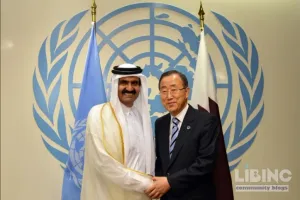
Al Jazeera stands out not merely as a channel but as a deliberate redefinition of media ownership, editorial autonomy, and public accountability within a volatile region. The project emerged under the aegis of Hamad bin Khalifa Al Thani, whose intent was to advance Qatar by creating an outlet that could report with professional candor while preserving a shield of national interest. This piece examines the inception through four analytical lenses: a precise understanding of leadership choices, a contrast with contemporaneous Arab media models, an examination of cause-and-effect dynamics, and an expert reconstruction of the narratives that shaped its trajectory. The result is a historically grounded account that explains why Al Jazeera mattered then and why it continues to influence global broadcasting practices. A compact visual accompanies this analysis to illustrate the channel's aspirational reach and technical ambition.
- Analytics: The inception dynamics and strategy
- Contrast: Al Jazeera amidst Arab media models
- Cause and effect: Editorial independence under pressure
- Expert reconstruction: Inside stories and scholarly views
Analytics: The inception dynamics and strategy
The decision to launch Al Jazeera did not arise from a market analysis alone but from a strategic conviction about how media could contribute to national progress while challenging entrenched narratives. The emirate sought a portal capable of translating field realities into image and word, yet shielded from immediate political manipulation. This fragility, paired with a belief in professional journalism, generated a design for a newsroom that would emulate international standards while staying tethered to local responsibilities. The early phase—constructing the building near Qatar Television, assembling a capable newsroom, and recruiting journalists—was less a rollout than a declaration: the country would steward a platform that values independence as a social asset rather than a transactional tool.
- Leadership clarity: The emir’s personal engagement with progress, not micromanagement of content
- Operational autonomy: A governance framework that kept editors and reporters insulated from day-to-day political pressure
- Platform design: A newsroom built for speed and accuracy, with a commitment to both on-ground reporting and rigorous editorial control
- Strategic branding: A slogan that signaled tolerance for diverse viewpoints and a readiness to entertain challenging subjects
The channel opened with moderate broadcast hours and a trial phase that tested not only technical capabilities but the willingness of audiences to embrace a voice that was unfamiliar in the Arab media landscape. The early success was not a triumph of marketing alone but a proof that a newsroom guided by professional norms could resonate with audiences seeking clearer, more nuanced stories. The commitment to following professional rules, even when faced with external pressure, created a posture of resilience: a protective umbrella around journalists that preserved the integrity of the channel’s reporting mission. This is why the inception is best understood not as a single act but as a sustained project of institutional design and cultural courage.
Contrast: Al Jazeera amidst Arab media models
To gauge Al Jazeera’s significance, it helps to compare it with contemporaneous regional outlets. The contrast reveals a pivot away from a conventional model—where state channels often served as official mouthpieces—toward a structurally independent, globally minded news operation. The channel’s approach—emphasizing free journalism and professional editorial ethics—emerged as a counter-narrative to the prevailing regional media ecology, which frequently prioritized state line or controlled discourse. This divergence was not merely a stylistic choice; it altered how audiences perceived authority, credibility, and the possibility of robust public discourse in the Arab world and beyond.
- Editorial independence vs. political stewardship: Al Jazeera framed reporting as a public service with professional accountability, not a state-curated product
- Audience reach and digital expansion: The network pursued multi-platform presence, prefiguring current discussions about media convergence and platform diversification
- Coverage scope: A willingness to highlight marginalized voices and controversial topics, which earlier outlets tended to avoid
- Global reception: A mix of admiration for candor and criticism from actors wary of unfiltered reporting
Viewed through this lens, Al Jazeera’s early days resemble a startup in an arena saturated with incumbents. The risk was not only financial but reputational: could a state-backed project sustain independent reporting over time? The answer was built into the channel’s governance and its insistence on professional norms. The result was a media institution capable of enduring pressure and continuing to innovate in the rapidly changing media ecosystem, a trait that distinguishes it from many regional peers that remained anchored to traditional forms of state communication.
Cause and effect: Editorial independence under pressure
The question of cause and effect in Al Jazeera’s story centers on how leadership choices, geopolitical realities, and market dynamics interacted to shape editorial independence. The emir’s decision to fund and protect a channel designed for free journalism produced an ecosystem where journalists could pursue stories that might challenge both regional norms and international expectations. One effect was the channel’s enduring capacity to attract talent and investment, since editors could present a credible product that met international journalistic standards. A second effect was the channel’s exposure to external pressure—ranging from political pressure to competitive headwinds—yet the leadership continuously reinforced the principle that professional rules trump expediency. This tension between freedom and pressure underlined many of Al Jazeera’s most consequential reporting decisions and editorial stances.
- Geopolitical leverage: The network leveraged the emirate’s resources to build a globally credible newsroom, enabling investigative reporting that might otherwise be constrained
- Editorial resilience: A tradition of not yielding to interference when reporting meets sensitive topics
- Reputational capital: A rising trust among audiences that the channel would present diverse perspectives and verified information
- Technological acceleration: Early adoption of satellite broadcasting and later digital platforms expanded reach and complexity of coverage
In this light, the network’s evolution was not a linear arc but a pattern of adaptive responses. It learned to navigate the complexities of global newsrooms while preserving a distinctive character rooted in its founding vision. The outcome was a media institution capable of influencing how news is produced, distributed, and consumed across borders, a shift that has permanently altered the calculus of media power in the region and beyond.
Expert reconstruction: Inside stories and scholarly views
Expert voices, drawn from insiders and scholars, offer a complementary reconstruction of Al Jazeera’s inception. The collective memory underscores several core themes. First, the founder’s posture toward criticism was one of constructive openness rather than punitive suppression. He visited the channel, monitored progress, and provided guidance without dictating editorial choices. This approach helped cultivate a newsroom culture that valued professional rules as a universal currency, not a local convenience. Second, Sheikh Tamim bin Hamad Al Thani's tenure as emir continued the tradition of safeguarding editorial autonomy while balancing national interests, suggesting a strategic continuity across leadership transitions that reinforced the channel’s credibility. Third, the broader media environment—both Arab and international—evolved in response to Al Jazeera’s presence. Its growing prominence coincided with shifts in audience expectations, the rise of the digital era, and new forms of media competition that demanded agility and transparency from news outlets.
- Insider perspectives: Journalists emphasize professional norms, newsroom autonomy, and a noninterfering leadership style
- Scholarly interpretations: Analysts highlight Al Jazeera as a case study in state-supported media that operates with international standards of journalism
- Soft power implications: The channel contributed to Qatar’s global influence through credible, timely reporting rather than propaganda
- Future trajectory: Observers anticipate ongoing adaptation to digital platforms, audience participation, and global partnerships
As we close this reconstruction, the enduring question remains: what lessons from Al Jazeera’s inception apply to contemporary media projects facing similar pressures? The answer lies in a disciplined fusion of editorial integrity, organizational resilience, and a willingness to engage audiences in the global conversation. The story of Al Jazeera’s birth is not merely about a channel’s early triumphs; it is about the enduring possibility of a public sphere that transcends borders, empowers truth-telling, and redefines the terms of media authority for future generations.
Note: A version of this piece was first published on Al Jazeera Arabic.
Impact measurement and resilience in editorial practice
A persistent gap in the narrative is empirical evidence of impact: how editorial independence translates into audience trust, cross-border reach, and real-world conversations. The following compact framework closes that gap with practical indicators and concrete scenarios.
| Year | Autonomy indicator | Notes |
|---|---|---|
| 1996 | Founding autonomy pledge | Editorial independence emphasis |
| 2000 | Governance audit | Editors protected from micromanagement |
| 2010 | Digital expansion alignment | Platform diversification |
| 2020 | Transparency reforms | Public accountability measures |
| 2024 | Global newsroom integration | Cross-border reporting |
Key indicators snapshot
Editorial autonomy, governance credibility, and cross-platform reach consolidate over time.
- Editorial governance: strong editor protection
- Audience reach: multi-platform expansion
- Transparency: governance signals
Practical scenarios show how these metrics apply in real work: a regional investigation that triggers debate, a digital-exclusive report that widens the global audience, and a transparency audit that boosts trust.
| Stage | What it shows |
|---|---|
| Idea to report | Verification and source diversity |
| Editorial review | Checks and balances |
| Publication | Multi-platform reach |
| Post-publication | Corrections and updates |
By applying these measures, the early ethos of independence anchored accountability and remains a compass for future practice.
Impact snapshot
- Reach: global audience
- Trust: elevated credibility
- Transparency: governance signals
What motivated Al Jazeera's inception under Hamad bin Khalifa?
In brief, the emir sought to modernize Qatar's storytelling by creating a newsroom that could report with international standards while safeguarding national interests. This foundation aimed to elevate credibility, encourage critical discourse, and project a global voice for a small state with ambitious diplomatic aims.
How did leadership handle editorial independence?
Leadership prioritized protection of editors from routine political meddling and established governance that valued professional norms. They encouraged critique from within and from external actors, recognizing that accountable standards build resilience and longer-run legitimacy.
How does Al Jazeera compare with Arab media models?
Al Jazeera contrasted with traditional state channels by embedding editorial ethics, verification culture, and cross-border storytelling. This shift expanded audience trust and opened space for diverse viewpoints that regional peers had rarely showcased.
What challenges has it faced maintaining independence?
Key challenges include political pressure, balancing national interests with international expectations, and sustaining funding for journalistic risk-taking. Resilience came from clear governance, transparent processes, and a culture that rewarded accuracy over expediency.
How has digital expansion affected reach and credibility?
Digital growth broadened global reach and real-time engagement, but required stronger verification, audience transparency, and consistent editorial standards to maintain credibility across platforms.
What lessons can modern media projects learn?
Prioritize editorial autonomy, establish robust governance, engage audiences across platforms, and maintain accountability mechanisms to sustain trust and legitimacy through changing tech and geopolitics.






Add a comment
To comment, you need to register and authorize
Comments