

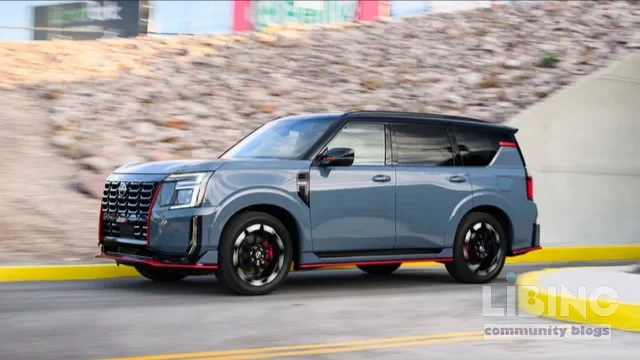
Nissan Armada NISMO: An Analytical Deep-Dive into Performance, Design, and Market Position
Table of Contents
- Analytical assessment: Can the Armada NISMO deliver on performance goals without betraying its size?
- Contrast: Armada NISMO against non-NISMO Armadas in design and dynamics
- Cause and effect: engineering tweaks and their downstream outcomes
- Expert reconstruction: Where Armada NISMO sits in Nissan's strategy and the segment
Is it possible to graft a performance badge onto a hulking SUV without diluting either side? The Nissan Armada NISMO tests the limits of what a purpose-built badge can mean in the real world: a seven-seat family hauler that can also serve as a trackable daily driver. Nissan pitches the NISMO as more than a cosmetic upgrade, pairing a horsepower bump and chassis tweaks with a graphic identity designed to signal intent without sacrificing payload. The stakes go beyond bragging rights; buyers gain or lose depending on how well the upgrades translate to on-road reality across daily commutes and weekend trips. The hidden conflict lies in whether these changes justify the price premium and the potential trade-offs in ride comfort, fuel economy, and reliability. This article unpacks the Armada NISMO through four lenses: analytical assessment, contrast with its non-NISMO siblings, cause-and-effect of the engineering tweaks, and expert reconstruction of its market role.
Analytical assessment: Can the Armada NISMO deliver on performance goals without betraying its size?
The Armada NISMO anchors its performance claim on a refined powertrain rather than a dramatic turbo boost. The twin-turbocharged 3.5-liter V-6 remains the base platform, but engineers add 35 horsepower to reach 460 hp at 5,600 rpm and 516 lb-ft of torque at 3,600 rpm. The upgrade comes from tweaks to software calibration and valve clearances, a proven path for modest, reliable gains in modern turbo engines. Nissan requires premium fuel to unlock the full 460 horsepower, while non-NISMO Armadas remain usable on regular octane. This distinction matters because performance is only as compelling as its accessibility in everyday ownership. The power bump is real, but its value hinges on fuel availability and running costs that the average family SUV buyer will weigh against every trip to the pump.
Weight remains a defining constraint. With a claimed curb weight around 6,102 pounds in four-wheel drive configuration, the Armada NISMO carries a heft that tempers acceleration. The extra mass blunts the raw, pedal-to-floor sprint that a 460 hp number might imply on a lighter chassis. The real-world effect is a closer alignment with performance intent than with outright sprint capability; the driver feels urgency, not an outright rush, when climbing to highway speeds. In other words, the horsepower figure matters, but the real story is how quickly and confidently the SUV transitions from idle to motion given its mass and aero profile.
- 9-speed automatic transmission
- All-wheel drive as standard
- NISMO-exclusive 22-inch forged alloy wheels
- 275/50R-22 Bridgestone Alenza Sport all-season tires
- Front LED illumination and front fascia tweaks specific to NISMO
Chassis refinement centers on steering and suspension. Nissan tunes the electric power steering for quicker, more direct responses and stiffens the adaptive air suspension to sharpen turn-in and control over mid- to high-speed corners. The result is a more confident stance on smooth roads and a more decisive feel in dynamic maneuvers, even if the overall ride remains comfortably cushioned by the air suspension’s soft modes during daily driving. Whether these tweaks translate to measurable grip gains or just a heightened sense of agility depends on the pavement and pace, but the intent is clear: make a large, heavy SUV feel smaller and more composed when attacked through corners.
Inside the Armada NISMO, the driver experiences a refined but unmistakable performance focus. Red accents dominate the cabin, a 12 o’clock stripe marks the steering wheel, and seating surfaces wear bold color blocks that signal intent. Adjustable side bolsters and aluminum pedals nod to sportier ergonomics without sacrificing daily comfort or cargo versatility. The interior retains the Armada’s premium kit—climate, infotainment, and seating comfort—while layering in accents that visually align with a performance narrative. The trade-off, if any, is perceptual: the NISMO breathes sportiness into the family-hauler identity without forcing a reduction in practicality.
Contrast: Armada NISMO against non-NISMO Armadas in design and dynamics
The Armada NISMO’s exterior signals a deliberate pivot from chrome-laden styling to a monochrome, high-contrast aesthetic. Gloss black across fascias, a circumferential red stripe, and NISMO-specific details—front grille, side steps, and a longer rear spoiler—create a personality that leans toward playful aggression rather than solemn authority. The visual strategy markets a performance story before the first mile is logged, and the hardware reinforces that impression with features like red-painted brake calipers and standard fender flares. In short, the Armada NISMO wears its badge openly and links its looks to a tuned chassis rather than a showroom-only upgrade.
Power and tempo diverge when you compare Armada NISMO with non-NISMO Armadas. The 460 hp figure matters, but throttle response and midrange urgency matter more in real driving. The NISMO’s mapping and valve timing tweaks drive quicker boost onset, which translates to faster responses off idle and through midrange, especially when punching into bends from cruising speeds. The torque figure remains the same as the base torque curve, so peak thrust isn’t drastically different at peak rpm; the difference is in the upshifts and downshifts, which feel more immediate due to exhaust tuning and possibly revised intake dynamics. In daily use, the NISMO can feel livelier before the engine hits its torque plateau, while still offering the quiet, premium atmosphere expected in a big family SUV.
There are shared DNA traits across Armada trims that the NISMO keeps intact to preserve practicality. The nine-speed automatic remains the backbone of drivability; the all-wheel-drive system delivers grip in varied conditions; and the cabin remains comfortable with a generous seating layout and cargo flexibility. The cargo volume numbers—97 ft3 behind the front row, 56 ft3 behind the second row, and 20 ft3 behind the third—underscore the continuity of utility even as the package’s character shifts toward sportier identity. Pricewise, the Armada NISMO sits at base levels around $81,720, while the Platinum Reserve offers a comparable feature set with premium finishes; the price delta is not dramatic, reinforcing the NISMO as a value proposition embedded within the Armada ladder rather than a separate luxury halo.
From the outside, the NISMO’s unique geometry and styling cues distinguish it as more than a cosmetic rebrand. Inside, the enhancements emphasize driver-centric cues—steering wheel stripe, bolstered front seats, and sport-inspired pedals—yet the creature comforts and premium materials remain aligned with the Armada’s flagship trim. The balance between aggressive looks and everyday practicality remains the Armada NISMO’s most persuasive argument for buyers who want both presence and practicality in a single package.
Cause and effect: engineering tweaks and their downstream outcomes
Engineering choices in the Armada NISMO create a chain of effects that extend beyond horsepower. The increased output is achieved by software recalibration and valve-clearance adjustments, a strategy that preserves reliability while extracting extra horsepower. The kicker is fuel—premium octane unlocks the full 460 horsepower—so users must anticipate higher running costs or refueling considerations on longer trips. The immediacy of power delivery improves, but the headline number should not blind buyers to the fact that the real-world advantage rises with altitude, fuel quality, and drivetrain config.
Steering and suspension work together to translate the power into measurable on-road behavior. The EPS calibration yields a more direct steering feel, reducing steering lag and giving a sense of precision through corners. The adaptive air suspension’s retuned stiffness improves body control at speed while preserving ride comfort in normal drive modes. The likely outcome is a more planted, confident vehicle on fast, smooth surfaces; however, on rough pavement, the extra unsprung mass from the 22-inch wheels and the firmer tuning can produce a slightly busier ride. The NISMO path thus delivers a more engaging highway dynamic at the expense of some nuance in rough urban surfaces, a trade-off the market will weigh according to its priorities for comfort and performance.
- Enhances throttle responsiveness and midrange acceleration through software/valve-timing tweaks
- Maintains 8,500-pound towing capacity while adding performance-oriented chassis tuning
- Aero and underbody details remain conservative, so downforce gains, if any, are incremental
Real-world testing against major rivals in this class depends on factors like load, terrain, and temperature. The Armada NISMO has shown that it can feel brisk for a vehicle of its mass, reducing the perceived gap between it and lighter performance SUVs when driven aggressively. Nevertheless, objective metrics such as cornering grip and quarter-mile times will require controlled testing in diverse conditions to establish a definitive picture of how much the NISMO improvements translate into tangible performance gains versus the base Armada family. The available data points—0–60 times hovering in the mid-5-second range in some tests and the 1/4-mile in the low 14s—paint a consistent message: the NISMO is a step toward sportier dynamics without becoming a dedicated performance machine.
Beyond powertrain and chassis, the NISMO’s design choices influence perception and use-case. The larger wheel footprint improves stance and grip but adds unsprung weight that can alter ride quality and tire wear over time. The black-on-red aesthetic communicates intent, yet it also requires owners to maintain a certain lifestyle alignment to keep the look purposeful. In aggregate, the NISMO’s engineering decisions create a causal chain: more responsive steering and stiffer suspension foster a more engaged driving experience, which in turn affects driver expectations, daily usability, and long-term ownership costs.
Expert reconstruction: Where Armada NISMO sits in Nissan's strategy and the segment
Nissan’s use of the NISMO badge on a full-size SUV signals a deliberate expansion of the subbrand beyond its traditional sports car and performance-limited platforms. The Armada NISMO serves as a halo variant that communicates capability and ambition without sacrificing the family-oriented values that underpin the Armada lineup. This move leverages the credibility of the NISMO name to elevate the Armada’s perceived performance potential, aligning brand storytelling with a vehicle that remains practical for seven-passenger occupancy and towing needs. The question for Nissan is whether this strategy delivers tangible business benefits—brand lift, higher ASP (average selling price), and stronger resale trajectories—without eroding the Armada’s core appeal to families who prioritize space and comfort over outright speed.
In a market where large SUVs command substantial loyalty, the Armada NISMO occupies a nuanced niche. It targets customers who want a commanding presence, sharper dynamics, and a hint of exclusivity in a vehicle that still seats three rows and tows a respectable amount. The price position—roughly in the high-$80k to low-$90k range when fully equipped—keeps it within reach of premium trims while avoiding the steep premiums that come with high-performance crossovers. The relative proximity in price to the Platinum Reserve, with only a modest delta, suggests Nissan is betting that buyers will value distinct styling and driving character enough to choose NISMO at a small premium rather than stepping up to a more radical performance alternative elsewhere in the segment.
From a future-facing perspective, the Armada NISMO could become a blueprint for how Nissan scales performance branding across its SUV lineup. A successful execution may invite additional NISMO variants in three-row and two-row formats, enabling a broader audience to experience a sport-infused Nissan identity without resorting to expensive, purpose-built performance machines. The risk, of course, lies in oversaturating the market with badge-driven variants that offer marginal real-world gains. The decisive test is real-world reliability, long-term maintenance costs, and a continued ability to balance performance perception with everyday practicality. If Nissan can maintain that equilibrium, the Armada NISMO may well prove to be a meaningful, if modest, strategic win.
In the end, the Armada NISMO delivers a disciplined recalibration rather than a radical rewrite of the Armada formula. It demonstrates that a big, family-oriented SUV can host a performance badge without surrendering cargo space, seating, or everyday usability. The core challenge for Nissan will be to translate the NISMO upgrade into durable value—through predictable maintenance, strong warranty coverage, and a compelling ownership experience—that resonates with buyers who want sportiness without sacrificing family functionality. If the execution remains consistent across model years, the Armada NISMO could mature into a recognizable template for how performance branding can coexist with practicality in the most demanding corners of the SUV market.
Conclusion: The Armada NISMO marks a deliberate, measured recalibration of the big SUV’s identity. It trades a portion of ride comfort for sharper steering, a more planted stance, and a stronger visual statement, all while preserving the space, capacity, and towing that define the Armada lineage. Whether the price premium pays off in real-world satisfaction will depend on how buyers balance the badge with daily life—and whether Nissan can sustain the reliability of a performance-inspired package in the long run.
Closing the ownership and value gap
Horsepower grabs attention, but the real decision for a seven-seat SUV buyer hinges on total cost of ownership, predictable reliability, and everyday practicality. The Armada NISMO introduces a performance tilt, yet fuel costs, premium-fuel requirements, maintenance reserves, and long-term depreciation shape its true value. A practical check is to quantify annual fuel spend for your typical miles and compare that with the base Armada across the same driving scenarios. This lens helps separate badge appeal from actionable ownership economics, guiding you toward a choice that matches both a dynamic drive and the family-focused duties the Armada covers weekly.
How to evaluate the option for your daily life
- Practicality and payload
- Can the third row handle every-week passengers without compromise?
- Is cargo space preserved with seats in use?
- Financial planning
- Estimate yearly fuel and maintenance costs
- Factor insurance and potential depreciation
- Ownership experience
- Gauge ride comfort on varied road surfaces
- Check ease of daily interactions (controls, tech, ergonomics)
How does the Armada NISMO balance performance with family practicality?
The Armada NISMO adds power and chassis tuning while preserving seating, cargo space, and towing. In real-world use, the torque and steering tweaks respond quickly on highways and during cornering, yet the large SUV remains comfortable with ample room for passengers and gear. This balance matters because many buyers want both driver engagement and everyday versatility. The practical outcome is a more engaging drive in light-to-moderate loads, without the need to compromise on seven-passenger utility.
Analytically, the trade-off centers on ride harshness and fuel consumption under load. With full payload or rough pavement, the firmer setup can feel less forgiving, so the NISMO targets buyers who prioritize dynamic response over pure comfort in all conditions.
What changes in handling and ride quality does NISMO bring?
The NISMO tunes the electric power steering for quicker responses and retunes the adaptive air suspension for improved body control. In daily driving, that translates to more confident turn-in and stable high-speed refinement. On rough pavement, the 22-inch wheels and firmer setup can be perceptible, increasing bounce slightly but maintaining road quietness in comfort mode. The net effect is a more engaged feel without turning the Armada into a harsh performer.
From a performance perspective, the real-world gains depend on road quality and load. The vehicle remains a large SUV first, so the improvements are most noticeable when cruising with a modest payload and smooth surfaces.
Is the Armada NISMO reliable for long-term ownership?
Reliability hinges on Nissan’s warranty framework and the durability of the updated calibration. Powertrain enhancements are designed to work within existing engineering margins, given premium fuel use and proper maintenance. Long-term ownership benefits hinge on consistent service intervals, availability of parts, and coverage that protects against higher-than-average wear on driven components like brakes and tires due to larger wheels.
Analytically, the NISMO strategy relies on aligning the badge with a solid ownership experience; if service costs stay predictable, resale remains competitive because the model isn’t simply a cosmetic upgrade.
How does Armada NISMO compare to rivals in the segment?
Against other full-size SUVs with performance variants, the Armada NISMO offers a rare combination of three-row practicality and a branded performance character. While sedans or two-row performance models may outpace it on a track, the Armada NISMO appeals to buyers who want everyday usability with a hint of sport. It competes on the basis of power, handling confidence, and distinctive styling rather than track-focused metrics alone.
In consumer terms, the NISMO’s edge lies in its balance of capability and space—an important ROI factor for families who tow, travel, and entertain regularly.





Add a comment
To comment, you need to register and authorize
Comments