

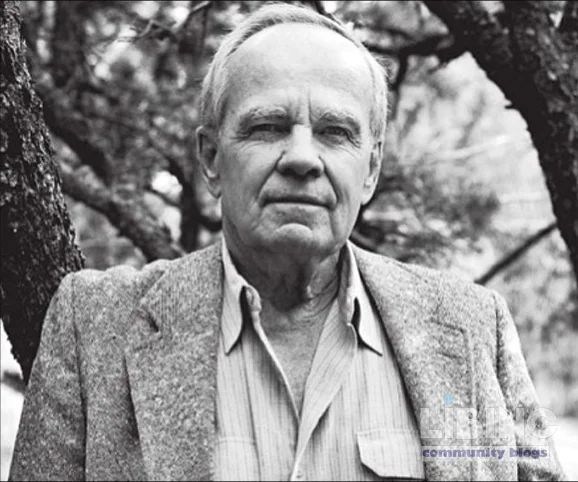
Cormac McCarthy's life reads like a map etched with stark landscapes, stubborn solitude, and a relentless commitment to craft. This piece examines how biography braided with imagination produced some of the most influential fiction of late 20th and early 21st century American letters. The central problem is not merely cataloging dates and titles but understanding how his austerity of language, his violence-tinged moral universe, and his chosen reclusiveness refracted into lasting literary power. The stakes are tangible: a reader who misreads McCarthy risks flattening a deliberately severe vision into mere grimness, thereby missing the philosophical questions underneath. The hidden conflict lies in the tension between a life lived largely out of sight and a body of work that has repeatedly forced itself into public conversation. The direction of analysis here is to illuminate that tension through four interconnected analytical frames.
- Analytical perspective on Cormac McCarthy’s life and work
- Contrast with contemporaries and literary movements
- Cause-and-effect in his career and themes
- Expert reconstruction of his legacy
Block 1 — Analytics: The life, craft, and persistence of Cormac McCarthy
Why his biography matters extends beyond the chronology of titles. McCarthy's renaming from Charles to Cormac, reportedly in homage to a historic Irish line, signals a deliberate redefining of self that mirrors the authorial project: a renunciation of sentimental naming conventions in favor of a stark, mythic voice. This is not mere trivia; it points to a core strategy of the work—the inflation of the symbolic over the anecdotal, while not abandoning the ground of ordinary experience. His Catholic upbringing in Knoxville and his experiences across a belt of places—Providence, Knoxville, Alaska, Ireland, Ibiza, Rockford, Louisville, El Paso, Tesuque—occur as more than backdrops. They function as laboratories where narrative forms are tested against geographical and moral extremes.
The early decision to pursue liberal arts, followed by four years in the U.S. Air Force, laid two compulsory rails for his future: discipline and exposure to disparate rhythms of life. The 1950s and 1960s saw him balancing menial work as an auto mechanic with the intense inner life of a writer—an arrangement that seeded the workmanlike yet austere prose he would later refine. The Orchard Keeper (1965) marks the first commercial entry of a long apprenticeship where character, landscape, and violence are set in a crucible that refuses easy sentiment. The traveling fellowship from the American Academy of Arts and Letters, followed by a stint in Europe and a long stay on Ibiza, provided McCarthy with a sense of comparative literature: how other traditions wrestle with language, time, and memory while he kept his own formal compass tightly aimed at precision and severity.
The transatlantic sojourns also fed a crucial methodological habit: deep immersion for research even when fiction remains elliptical. This habit is evident in Blood Meridian, where the narrative voice adopts a documentary-like intensity while withholding moral judgments, demanding readers to infer the ethical weight of atrocity. The biographical arc from poverty to a MacArthur Fellowship and then to the Knopf era reveals a professional trajectory that prizes autonomy over acceleration. He learned to do more with less, to trust implication more than exposition, and to place structure above rumor. The result is a canon where a single sentence can compress continental histories into a compact, almost surgical, observation.
The personal life narrative—marriages, separations, fatherhood, and later remarriage—appears in the crucible of work as a counterpoint to the public myth of reclusiveness. He married Lee Holleman in 1961, had a son Cullen, and faced poverty that shaped a pragmatic realism in his early career. The dissolutions and relocations, including a move to El Paso and a later residence in Tesuque, underscore a persistent theme: identity is not a fixed passport but a set of evolving expressions under pressure. The novelist's health of purpose—his ability to translate hardship into art—provides a model for understanding how experience becomes language that can outlast the life in which it was formed.
Where does this leave us in terms of craft? McCarthy’s production method—writing largely by hand and often avoiding the interview circuit—feeds a perception of the writer as a craftsman who values process over publicity. He moves through genres and across settings with the same economy of means found in his sentences. The Orchard Keeper, Outer Dark, Suttree, Blood Meridian, No Country for Old Men, and The Road show a progression from local color and apprenticeship to monumental moral fables that test the boundaries of genre—from Southern Gothic melancholy to mythic epic and post-apocalyptic realism. The throughline across these works is not merely violence or landscape; it is a persistent, exacting inquiry into what humans owe to one another when law collapses and survival becomes the currency of choice. The synthesis is not triumphalist but austere, a form of literature that asks whether language can illuminate more than it terrifies or absolves. This is the analytic core of McCarthy’s career: method over mood, precision over ornament, and moral seriousness over easy consolation.
Biographical milestones that shaped themes
- Renaming and identity: a symbolic move toward mythic, universal frames.
- Geographical mobility: landscapes as moral testing grounds.
- Military service and work experience: discipline and craft under pressure.
- European exposure and ibizan retreat: cross-cultural inputs without diluting native voice.
- Professional turning points: Guggenheim Fellowship, MacArthur Fellowship, Knopf collaboration.
The result is a literary logic in which setting and action are inseparable from inquiry into fate, justice, and civilization. Readers encounter a method that refuses to romanticize violence and instead probes its origins and consequences, often through stark, nearly script-like prose that leaves space for interpretation. This is where analysis must begin: not with a catalog of works, but with the enduring principle that McCarthy’s life practices and his narrative choices are mutually constitutive, producing an art form that asks more questions than it provides answers.
Block 2 — Contrast: McCarthy vs contemporaries and literary movements
The second analytic lens compares McCarthy to his contemporaries and to broader movements in American literature. Where some of his peers embraced intricate psychological interiority, McCarthy often favors externalized, landscape-driven arcs. This contrast is not a rejection of interiority but a rejection of introspective excess. He intensifies perception through sparse, almost minimalist diction that requires readers to participate in meaning-making in a way that verbose styles often circumvent. The result is a prose that resembles architectural blank spaces—you sense the form and weight even where the walls are unspoken.
In terms of genre, his work defies neat categorization. Blood Meridian reads like a historical epic with a Western veneer, yet it resists conventional heroism and moral closure. The Border Trilogy—All the Pretty Horses, The Crossing, Cities of the Plain—redistributes the Western idiom into a meditation on luck, choice, and moral ambiguity, contrasting with the melodrama of classic frontier fiction. The Road, a post-apocalyptic father-son odyssey, collapses genre into a bleak, intimate allegory about preservation and mercy when civilization decays. McCarthy’s refusal to label his work as simply “Western” or “poetic realism” is not a mere stylistic shrug; it reflects a deliberate stance about what fiction can and should interrogate in the modern world.
There is also a historical contrast to consider. The midcentury American novel often wrestled with social norms, mechanized progress, and the aftershocks of war. McCarthy’s late-20th-century reimagining of the frontier and moral history returns to older forms of myth-making but infuses them with existential gravity. The result is a body of work that conversation-sharpened readers treat as a litmus test for literary seriousness: how does a text confront violence without sensationalism? How does it render survival as a moral problem rather than a survival story? In this sense, his fiction is not merely an artifact of its time but a test case for the capacity of American fiction to wrestle with the most urgent questions of civilization. The contrast underlines a simple claim: McCarthy’s signature move is not to inflame with language but to render language as a solvent that reveals what words can and cannot bind together in moral discourse.
LSI reference in this section includes the scope of Blood Meridian as a historical epic, the moral ambiguity in The Border Trilogy, and the pared-down realism in The Road. These reference points function as comparative rails while still reinforcing the central claim that McCarthy’s method is distinct from his peers’ conventional routes to narrative closure. The juxtaposition clarifies why readers and critics repeatedly return to his work to reassess what contemporary fiction can treat as legitimate subject matter and how it can address it with uncompromising form.
Comparative anchors
- Blood Meridian: a historical-epic frame that foregrounds violence as a systemic force.
- The Border Trilogy: a revised frontier myth focusing on moral choice and locality.
- The Road: a granular, intimate exploration of civilization under collapse.
- Contemporary peers: how other late-century novelists handle interiority and trauma.
McCarthy’s contrasts reveal a deliberate editorial choice: to place ethical inquiry at the center of narrative design, rather than to foreground plot-driven sensationalism. His prose becomes a tool for narrowing the field of interpretation, forcing readers to negotiate ambiguity rather than expect tidy resolutions. This internal tension—between the austerity of form and the complexity of moral questions—defines his place within American literature and invites ongoing critical comparison with writers who either expand or elide that space between fact and meaning.
Block 3 — Cause-and-effect: How life events shaped themes and outputs
The causal chain linking McCarthy’s life to his major works is not linear, but the pattern is revealing. His early life in Catholic communities and his exposure to rural spaces produce a recurring theme: landscapes as stakes, not merely scenery. The cause-and-effect logic starts with a practical need—poverty and the necessity to sustain a writer’s life. The consequence is an ascetic, workmanlike discipline that prioritizes economy of language and the precision of description over ornate rhetoric. This approach generates not only a distinctive voice but also a consistent framework for analyzing human conflict—where violence, law, and moral accountability interact in ways that resist simple judgment.
Consider the travel-and-research arc that accompanies Outer Dark and Blood Meridian. McCarthy’s willingness to traverse borders—literal and intellectual—reflects a method: to observe extremes, to test hypotheses about civilization, and to produce fiction that records how societies justify or condemn violence. His lifestyle choices—marriages, relocations, and periods of poverty followed by critical recognition—function as experiments in writerly endurance. Each relocation moment—Rockford, Louisville, El Paso, Tesuque—corresponds to a shift in thematic focus, from the intimate, claustrophobic settings of a Tennessee dairy barn to the expansive, almost planetary canvas of Blood Meridian and the stark, intimate apocalypse of The Road. The cause is experience; the effect is a narrative strategy that makes moral philosophy inseparable from the texture of language.
No country for old men and the post-9/11 literary climate provided a further causal pivot. The Road, published in 2006, arrives after decades of public obscurity and private rigor, delivering a winning combination: a novel that is both a survival tale and an ethical laboratory. Its receipt of the Pulitzer Prize and its subsequent film adaptation amplify the argument that McCarthy’s approach—minimalist prose that amplifies moral consequence—arrives at the right time to redefine public expectations of serious fiction. The cause, then, is not simply the presence of catastrophic events, but the way language is used to carry responsibility through catastrophe. The effect is a redefinition of popular and critical discourse about what constitutes meaningful literature in the modern era.
If we map causality in McCarthy’s career, a consistent thread appears: a reluctance toward conventional publication cycles paired with a hunger for artistic authority. His move from Random House to Alfred A. Knopf, under editor Gary Fisketjon, marks not merely a publishing shift but a structural one that values riskier, more ambitious projects. The reception of Outer Dark, and later the reception of No Country for Old Men and The Road, demonstrates that his reputation grows most where risk accompanies artistry. The long arc from early, modest receptions to later honor (Pulitzer, James Tait Black Memorial Prize) signals a critical truth: McCarthy’s work rewards patient reading, and its influence accrues as generations of readers and writers encounter it over time. The causal effect is thus a literature that becomes more consequential as it ages, with reverberations in film, theater, and academic discourse.
Block 4 — Expert reconstruction: Synthesis of influence and legacy
From the perspective of literary expertise, the most compelling reconstruction of McCarthy’s impact hinges on three pillars: formal innovation, thematic seriousness, and cultural reach. Formally, his prose—dense, declarative, and almost cinematic in its pacing—reframes how readers experience time and consequence. Thematically, he treats violence not as spectacle but as ethical reckoning, asking what moral weight our choices carry in a world where law dissolves. Culturally, his works have entered a shared vocabulary of American mythmaking: the myth of the frontier reframed as a meditation on risk, survival, and responsibility, and the myth of civilization as a fragile construct that must constantly justify its decisions under pressure.
Experts also see McCarthy’s influence in his cross-media adaptation footprint. No Country for Old Men and The Road have transcended the page to shape film and cinema discourse, while his screenwriting and the PBS adaptation The Gardener’s Son illustrate a writer who can translate his own concerns across formats without diluting core concerns. Critics note his strategic use of silence, the way he uses dialogue sparingly yet with precise force, and the way landscape becomes character with moral agency. These traits have seeded a generation of contemporary writers who value restraint, ethical complexity, and a willingness to let the narrative carry the weight of questions rather than the author’s expository authority.
Another axis in expert reconstruction concerns the author’s public persona and privacy. McCarthy’s famously reclusive stance, his reluctance to discuss his craft in interviews, and his preference for a life away from metropolitan literary circles are not simply personal quirks. They are a deliberate design intended to keep the attention on the work rather than the author. This approach has become a model for a subset of writers who view literature as a serious, almost sacred, enterprise, a field in which the public sphere might dilute the integrity of the craft. The consequence is a legacy that invites ongoing, careful interpretation rather than definitive, one-note readings. McCarthy’s work remains a touchstone for debates about the relationship between art and life, about the moral responsibilities of writers, and about the role of mystique in literary authority.
Finally, the synthesis points to a broader claim: McCarthy’s fiction has reshaped the terms of American literary realism by insisting that truth can be severe, that language can be a tool for moral examination rather than entertainment, and that the frontier myth has to be reimagined in terms of ethical precariousness rather than romantic conquest. Critics and readers alike still debate the exact boundaries of his influence, but the consensus rests on the idea that a single body of work—built across decades, places, and personal peregrinations—can alter how future generations conceive of narrative possibility, the ethics of violence, and the responsibilities of storytelling. This is McCarthy’s lasting legacy: not merely the stories themselves, but the standards by which they are read and debated, long after the final page is turned.
Expert portraits
- Formal innovation: prose that compresses time and moral consequence in spare syntax.
- Thematic seriousness: violence as ethical inquiry rather than spectacle.
- Cross-media influence: successful adaptations and a model for writers engaging multiple forms.
- Privacy as craft: a deliberate boundary that focuses attention on the text itself.
The final reading is that McCarthy’s artistic strategy—consistency in form, audacity in theme, and discipline in public presence—produced a literary climate where severity could be both aesthetically rigorous and profoundly consequential. The results endure because readers, critics, and scholars keep returning to his books to measure new realities against old certainties. In that ongoing conversation, Cormac McCarthy remains not only a chronicler of landscapes but a pivotal architect of contemporary American literature, whose influence persists as a benchmark for seriousness, restraint, and moral courage in fiction.
In the end, McCarthy’s legacy is inseparable from the method by which he wrote: a handwritten, meticulously crafted, and relentlessly austere form that demanded engagement, discomfort, and ultimately, responsibility from readers. His work endures because it does not spare its audience from hard questions; instead, it invites readers to stay with the questions long enough to discover the stubborn, illuminating truths that language can still carry into the dark.
John Francis McCarthy—Cormac McCarthy’s son from his later marriage—was not a central public figure in the same way as his father, but the family continuity reinforces the idea that literary intensity can coexist with private life. With his death in 2023 at the age of 89, the public record of McCarthy’s life closes a chapter, yet the open-ended questions his novels pose ensure that his work remains a persistent, living field of inquiry for generations to come.
Constructions of his career suggest a paradox: the more reclusive the writer, the more expansive the legacy. The beauty of McCarthy’s artistry lies in its capacity to withstand multiple readings and to reveal new dimensions under changing cultural pressures. The body of work continues to illuminate the most stubborn issues about human nature, civilization, and the capacities of language to bear witness to both suffering and resilience. In that sense, his influence extends far beyond the confines of a single era or a single genre. It is a lasting invitation to read deeply, think rigorously, and remain undeterred by ambiguity.
Ultimately, the analytic, contrastive, causative, and expert-reconstruction frames converge on a single conclusion: Cormac McCarthy is not simply a writer of austere Westerns or grim postapocalyptic fables. He is a compiler of moral questions, a stylist who compels readers to inhabit the ethical weight of each sentence, and a cultural force who redefined what serious American fiction could be. His life and his books continue to demand a reader’s deliberate attention, and that demand is the core reason his name remains essential in any conversation about the possibilities—and responsibilities—of literary art.
New Focus: The Craft of Language as Moral Inquiry
One critical dimension remains underemphasized in assessments of McCarthy's craft: how his economy of language acts as a moral instrument. The tight syntax functions like a camera shutter, exposing what is essential while withholding judgment, inviting readers to dwell in silence as much as in speech.
In concrete terms, this mechanism reveals itself in sentence rhythm, the sparing use of dialogue, and the careful placement of white space that slows time to heighten ethical scrutiny. Read across Blood Meridian and The Road, you feel a shift: catalog-like cadences give way to clipped, breath-held lines that compress action and consequence. The result is a prose that trains readers to infer motive, risk, and responsibility from what is unsaid; it trains attention on how civilization maintains or relinquishes restraint under pressure.
| Work | Year | Form | Core Theme |
|---|---|---|---|
| The Orchard Keeper | 1965 | Fiction | Rural ethics, memory |
| Blood Meridian | 1985 | Epic/Western | Violence as systemic force |
| The Road | 2006 | Post-apocalyptic | Survival and mercy |
| No Country for Old Men | 2005 | Crime novel | Chance vs. law |
To crystallize how this craft operates, consider four works in brief: The Orchard Keeper grounds the moral problem in texture and place; Blood Meridian tests the violence of history at scale; The Road compresses moral choice into everyday acts; No Country for Old Men probes the collision of random fortune with legal systems. The table above maps these contrasts to guide readers in recognizing how form channels inquiry into civilization and violence.
Sentence-length distribution across key works
These cues illustrate how craft sustains inquiry: language shapes perception, not decoration; violence becomes a question, and civilization appears as a fragile pact renewed with each sentence.
How does McCarthy's prose achieve moral weight through economy of language?
McCarthy's prose attains moral weight through a deliberate economy that withholds ornament, fixes attention on action and consequence, and obliges readers to infer motive, risk, and responsibility from what is unsaid; across Blood Meridian's epic scope and The Road's tense minimalism, the constraint on language becomes a tool that deepens ethical perception by guiding inference rather than exposition. This sparseness is not emptiness but an invitation to moral reasoning, returning readers to the hard questions his plots pose about violence, justice, and survival. The effect is a direct, disciplined line from page to conscience.
What life experiences most consistently appear in the thematic fabric of his novels?
Life experiences in McCarthy's fiction are not mere biographical facts but a disciplined method that binds form to question; the key resonances are a nomadic mobility across landscapes, parental and relational accountability, and hard-won endurance through poverty and isolation, all of which endow craft with moral seriousness and a traveler’s sensibility. This combination renders experience not as spectacle but as a tutor for language’s responsibilities.
How has Blood Meridian influenced contemporary fiction's handling of violence and myth?
Blood Meridian reshaped literary treatments of violence by presenting atrocity within a mythic, historical frame that refuses clear moral verdicts; its documentary tone paired with epic scale trained readers to see violence as a systemic condition rather than spectacle, a model many later novels emulated to explore power, colonization, and human cruelty without sensationalism. The effect is ongoing in the way novels question whether narrative form itself can bear witness responsibly.
Why is The Road considered a turning point in his career?
The Road reframes McCarthy's concerns from vast historical inquiry to intimate ethical drama, focusing on father-child mercy, survival, and the fragile persistence of civilization; this shift broadened the audience and critics alike, redefining serious fiction for a post-9/11 world while preserving the author's core commitment to restraint, language as moral instrument, and moral clarity under pressure. The result is a more accessible but no less rigorous exploration of ethical consequence.
How does McCarthy's privacy and reclusiveness affect critical reception and reader interpretation?
His public privacy concentrates interpretive attention on the text itself—encouraging deeper textual engagement and preventing biographical trivia from dominating discussion; this boundary fosters a durable interpretive ecosystem where readers, scholars, and critics debate meaning, ethics, and form as intrinsic to the work, not as reflections of the author. The outcome is a culture of sustained dialogue rather than a single authoritative reading.
In what ways have McCarthy's works shaped cross-media adaptations and public discourse?
Adaptations into film, television, and stage have extended McCarthy's ethical inquiries beyond the page, preserving restrained dialogue and landscape-driven moral agency while translating his questions into visual storytelling; this cross-media presence broadens the discourse about violence, civilization, and responsibility in contemporary culture. The adaptation conversations keep the works vital as living, evolving conversations rather than static relics.



Add a comment
To comment, you need to register and authorize
Comments