

- Block 1 — Analytics: mapping the underlying dynamics of Conclave
- Block 2 — Contrast: a measured portrayal versus sensationalism
- Block 3 — Cause and effect: how information cascades shape the papal selection
- Block 4 — Expert reconstruction: production, performance, and future implications
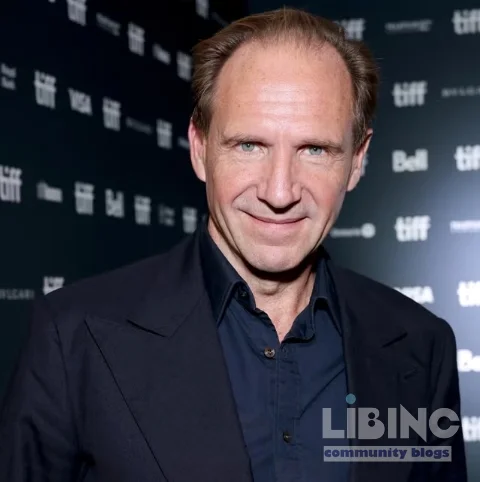
Conclave arrives in theaters as a high stakes Vatican thriller anchored by Ralph Fiennes’s piercing portrayal of a cardinal guiding the secretive papal conclave. The film, adapted from Robert Harris’s 2016 novel, frames the pope-selection as a crucible where doctrine, politics, and personal ambition collide. The opening weekend positioned it among the top five at the U.S. box office, signaling a public appetite for intelligent thrillers that treat real world institutions with nuance. Fiennes has long thrived in morally shaded roles, and in Conclave he leans into a figure who observes the church from within and from the outside. The result is not a smear, but a careful examination of incentives that bend a once in a century decision.
Block 1: Analytics
At its core, Conclave investigates how a papal conclave operates when high stakes information travels through corridors of Vatican power. The movie anchors its tension in the friction between faith, politics, and the ambitions that attend any modern religious institution. The cardinal under scrutiny faces pressure from rival cliques, civil servants, and the media, highlighting how the Vatican’s inner sanctum behaves like a large bureaucracy when confronted with uncertainty. These dynamics propel the narrative beyond a simple melodrama and into a study of how religious institutions manage legitimacy under crisis. The analysis here treats Conclave as a case study in organizational behavior under extreme scrutiny, where ritual, precedent, and reputational risk interact in real time.
Ralph Fiennes’s portrayal sits atop a strong supporting lineup that includes Stanley Tucci and John Lithgow, lending gravity to a script that refuses easy answers. Tucci’s veteran observer and Lithgow’s provocateur add texture to the Vatican’s political chessboard, making the film feel like a chamber drama rather than a pure thriller. The performances anchor the plot in human psychology, not mere plot contrivance, and they push the audience to weigh what loyalty means in a system built on hierarchy and tradition. In this sense, Conclave uses casting as analytic apparatus, testing how far a character can be trusted when information is scarce and motives are contested.
Fiennes’s background as a performer who moves between Shakespearean reserve and screen intensity informs his cardinal’s calculations. The script treats the Catholic Church not as a monolith but as a layered institution with competing factions, agendas, and sensitivities—precisely the complexity that drew Fiennes to the project. The result is a depiction that respects the gravity of the Vatican’s decision making while exposing the fragility of human judgment under pressure. This is not a documentary of church history but a rigorous exploration of decision making under moral heat within a religious institution that remains publicly scrutinized and privately opaque.
From a production standpoint, Conclave harnesses a clear analytic lens: the film foregrounds information flow, incentive structures, and risk management within a hierarchical system. The Vatican is rendered as a living organism with factions and negotiating teams rather than as a single static backdrop. This analytic framing makes the narrative legible to viewers who approach the film as a study in power and process, not just a tense drama. It also opens a path to compare Harris’s source material with its cinematic renderings, highlighting what the adaptation preserves and what it reinterprets for the screen.
Block 2: Contrast
Unlike many thrillers that taunt the Church with sensational accusations, Conclave emphasizes ambiguity and restraint. The film asks whether the right choice for the pope is a triumph of conscience, or a compromise born of political exposure and institutional inertia. The balance matters because the narrative lingers on uncertainty rather than delivering a tidy verdict, a choice that many viewers will find more convincing than a moral blaze of certainty. This is a deliberate move away from sensationalism toward a measured inquiry into leadership under pressure.
That balance is reinforced by the depiction of ritual and secrecy as artifacts of governance rather than as moral contamination. The papal conclave sequence is treated as a procedural theatre in which timing, alignment, and interpretation of signals decide outcomes rather than any single anathema or revelation. In this light, the film offers a nuanced contrast to high concept thrillers that treat religious institutions as mere plot devices, instead insisting that the Vatican’s rituals carry genuine interpretive weight for characters and audiences alike.
Ralph Fiennes’s performance sustains the film’s measured tone by avoiding caricature while leaning into the character’s pragmatic ruthlessness. The cardinal moves in a world where virtue and strategy must coexist, and the portrayal benefits from restraint rather than exaggerated moral polarization. That approach sets Conclave apart from contemporaries that would cast the church as either omniscient villain or purely virtuous institution. The result is a drama whose conflict arises from competing loyalties, not from a binary good versus evil dichotomy.
Supporting voices in the ensemble contribute to this contrast by presenting multiple angles on the same crisis. Tucci and Lithgow offer opposing temperaments—one wary and calculating, the other outspoken and provocative—creating a dynamic where truth is often a plurality rather than a singular plumb line. This ensemble tension improves the film’s realism and makes the Vatican’s politics feel tangible, not theatrical. In short, Conclave uses contrast to reveal the gray area at the heart of any major institutional decision.
Block 3: Cause and Effect
Viewed through cause and effect, Conclave demonstrates how a single leak or misread signal can cascade into a premature or risky decision about the pope. The narrative’s dotted threads—an ambiguous confession, a strategic leak, a misinterpreted motive—illustrate how information asymmetry governs outcomes in high stakes environments. The film’s pace accelerates precisely when a small misstep could set off a chain reaction that alters the papal succession and, by extension, the Catholic Church’s public posture.
The film’s pacing mirrors the real world stakes of a papal election clock, where timing and discipline constrain missteps. Every decision point becomes a test of whether a given choice will preserve legitimacy or invite scandal. In this sense Conclave doubles as a warning about governance under moral and media pressure, reminding viewers that leadership decisions carry consequences for institutional credibility and for the people who rely on the church for guidance and stability.
By foregrounding procedural detail—the cardinals’ debates, the oversight of security protocols, and the relentless media scrutiny—the picture shades public perception of the Catholic Church and the papal succession. The fidelity to process matters because the audience reads risk through the same prisms as the participants: reputation, doctrinal coherence, and the political optics of who occupies the Holy See. Harris’s novel was designed to explore these causal dynamics; the film preserves that spine while translating it into a tactile cinematic experience that resonates with contemporary concerns about transparency and accountability within religious institutions.
From Harris’s source material to the screen adaptation, the integrity of the narrative rests on the plausibility of its political theater. The film’s portrayal of backroom negotiations, strategic misdirection, and ethical boundaries invites viewers to weigh not only the moral weight of any potential decision but also the procedural legitimacy that such decisions require. The cause-and-effect logic embedded in Conclave thus becomes a vehicle for broader reflection on how modern institutions govern themselves when confronted with existential moments.
Historical context matters, even in a fictional setting. While Conclave crafts its own roster of players, it sits within a long tradition of Vatican politics that readers and viewers have observed in political thrillers about the papacy and the Catholic Church. That lineage gives the film a sense of credibility; it also serves as a reminder that the real world sometimes mirrors fiction in its complexity and its unresolved tensions. The result is a thriller that feels timely without pandering to contemporary polemics.
Block 4: Expert Reconstruction
From a production standpoint, Conclave succeeds where many prestige thrillers fail: it builds a tactile world—the corridors of the Vatican, the glow of the conclave chamber, the wardrobe of clerics—as a character in its own right. The attention to atmosphere supports a narrative about power as much as about plot, and it helps to keep the political calculus visible even when the dialogue becomes dense or elliptical. This is a film that trusts its audience to track subtle cues and interpret the stakes without heavy-handed exposition.
Ralph Fiennes’s performance draws on years of Shakespearean training and screen craft to render a cardinal whose reasoning is rigorous yet compromised by the institution’s demands. His capacity to inhabit a role that is at once calculating and morally ambiguous enables the film to focus on the psychology of decision making rather than on sensationalized revelations. The result is a portrayal that invites critical engagement rather than passive consumption, which is precisely what distinguishes a smart thriller from a conventional one.
Director and screenwriter maintain a steady, restrained tone that respects the source material while making deliberate choices about pacing and emphasis. The adaptation preserves the novel’s investigative spine and translates it into cinematic rhythms that reward attentive viewing. This balance between fidelity and invention is essential to Conclave, ensuring that the narrative remains credible while offering fresh interpretive angles for audiences familiar with the Harris canon and newcomers alike.
The adaptation also marks Ralph Fiennes’s growing involvement behind the camera and in the development process, a trajectory that aligns with his past directing efforts such as Coriolanus and The Invisible Woman. The Beacon, his upcoming project, signals a continued interest in morally sophisticated stories that interrogate power structures. In Conclave, this inclination translates into a film that treats leadership as a craft shaped by context, relationships, and imperfect human judgment rather than by heroic certainties alone.
Lighting, production design, and costume signal a Vatican that feels both timeless and bruised by modern scrutiny, a setting where the stakes are as much reputational as doctrinal. The attention to detail helps bridge the film’s fictional elements with a plausible atmosphere around the papal election. It is this synthesis of craft and concept that elevates Conclave beyond a single night of suspense into a considered meditation on governance, belief, and the human horizon of religious power.
Expert readers will note the film’s handling of the pope selection as a political process, a mirror of real world Vatican governance and the dynamics of how leadership emerges under pressure. The narrative does not pretend to solve the ethical puzzles it raises, but it does offer a plausible and provocative framework for thinking about how institutions navigate crisis without sacrificing legitimacy. Conclave thus positions itself as a distinguished entry in the canon of Vatican politics thrillers that respect complexity while delivering cinematic tension.
In sum, Conclave provides a rigorous, observant look at a moment when history asks for a decisive move that will reverberate across continents and faith communities. The film is not simply about who becomes pope; it is about how a modern religious institution negotiates legitimacy, authority, and reform under global scrutiny. For audiences seeking a thriller with intellectual teeth and moral texture, Conclave offers a compelling, thought provoking path through the labyrinth of Vatican power and human fallibility.
Ralph Fiennes’s Conclave thus stands as a robust, mature entry in the landscape of contemporary thrillers. It demonstrates how a film can fuse political thriller instincts with a nuanced exploration of faith, authority, and responsibility. In doing so, it invites repeated viewings and sustained discussion about what leadership means when a tradition weighs its future against the pressure of a changing world.
As October 2024 fades into memory, Conclave remains a reference point for how cinema can interrogate sacred institutions without surrendering to easy conclusions. Its blend of architectural atmosphere, thoughtful performances, and a disciplined narrative approach offers a model for future projects that aim to illuminate the shadows where power and belief intersect. The film’s success on its opening weekend only confirms a demand for this kind of intelligent, reflective thrill.
In the final analysis, Conclave confirms that a well crafted Vatican thriller can operate on multiple planes: it entertains, it analyzes, and it challenges the audience to consider how far any institution should go to preserve credibility and moral authority. The result is a feature that rewards careful attention and rewards viewers who come looking for more than suspense. It is, in the end, a film about leadership, responsibility, and the imperfect humanity that binds us all to the choices we make in moments that matter.
Note on context and attribution: the material herein draws on publicly reported information regarding Conclave, its release, and Ralph Fiennes’s career trajectory as described in recent interviews and press materials. The analysis remains focused on narrative and thematic interpretation rather than speculative biography.
Conclave offers more than a tense thriller about a sacred institution; it presents a case study in how power, belief, and human frailty intersect at a moment when history asks for a decision that will reverberate beyond Rome.
Expanded Insights: Leadership and Information in Conclave
In practice, the film leaves a gap around how information flows shape choices day to day in high‑stakes environments. The following notes turn that into actionable understanding for leaders, analysts, and students of governance by mapping concrete scenarios, signals, and responses that mirror Vatican dynamics while remaining accessible to general audiences.
| Stage | Action | Risk | Signal | Outcome |
|---|---|---|---|---|
| Leaks | Confirm and contextualize | Loss of control | Anonymous tip | Stabilized narrative |
| Debates | Clarify doctrine vs. politics | Fragmentation | Public statements | Aligned positions |
| Media framing | Provide transparent communications | Misinterpretation | Editorial cues | Credibility preserved |
| Conclave timing | Respect ritual windows | Haste | Clock signals | Legitimacy maintained |
| Post‑conclave | Publish rationale | Ongoing critique | Final communique | Institutional memory |
These explicit steps map the film’s tension onto real‑world practices in complex organizations, where leadership must balance candor with unity, manage internal coalitions, and anticipate public interpretation. Practical scenes from the movie—a quiet debrief after a leak, a calibrated briefing to cardinals, a guarded interview with the press—mirror real cases in ministries, corporations, and NGOs, showing that governance under pressure is less about dramatic revelations and more about disciplined information handling and timely, principled choices.
Beyond the Vatican, leaders can apply these patterns to high‑risk initiatives by focusing on three levers: (1) signal integrity—ensure that what is said publicly aligns with internal assessments; (2) decision cadence—establish clear windows for input, review, and final judgment; (3) memory and accountability—document the reasoning behind decisions to preserve legitimacy for the long term. In practice, this translates to regular cross‑functional briefings, a transparent but careful approach to external communications, and a documented decision log that traces how each signal was evaluated.
In short, the film becomes a compact case study in information governance: it demonstrates how a modern institution negotiates legitimacy, reform, and renewal under global scrutiny, with leadership that weighs candor against unity and aims to preserve core values while adapting to new realities.
Why is Conclave considered a measured Vatican thriller?
Conclave achieves its measured tone by treating Vatican politics as a living system rather than a sensational backdrop, weaving patient character studies with procedural fidelity and restrained revelations to illuminate how legitimacy, tradition, personal ambition, and moral doubt interact under pressure. It shows how information travels through the corridors of power, how analysts read signals, and how even a small leak can widen the scope of a decision, forcing leaders to balance candor with unity, while audiences are invited to weigh competing loyalties without a simple good-versus-evil frame. The film’s restraint invites thoughtful engagement rather than sensationalism.
Analysts gain a lens to examine real-world governance where timing, transparency, and reputation intersect with faith, culture, and politics. The dialogue remains precise, and the pacing rewards viewers who track subtle cues, rather than relying on public spectacle.
How does Conclave depict information flow and leaks?
Conclave portrays information flow as a structured, high‑stakes system where signals originate from multiple corners of a vast organization, are filtered by intermediaries, and then interpreted by decision makers. A single leak becomes a test of verification, alignment, and speed of response, while the media cycle magnifies every choice. This depiction helps viewers understand how organizations balance openness with protection of sensitive inputs, and how misinterpretation can shift outcomes even when facts are sound.
From a managerial vantage point, the film illustrates the need for cross‑functional communication plans, crisis playbooks, and a trusted chain of custody for information that could mobilize or derail a decision.
What leadership lessons about handling crisis and accountability does the film offer?
The film suggests that strong leadership in crisis blends conservatism with timely action, ensuring that each step preserves legitimacy while advancing reform. A leader must articulate a clear rationale, anticipate stakeholder reactions, and maintain credibility through consistent, verifiable messaging. Accountability emerges not only from outcomes but from the transparency of the decision process and the willingness to revisit and revise positions when new information arrives.
In practice, this means documenting assumptions, inviting diverse inputs, and communicating decisions with both clarity and humility to sustain trust during upheaval.
What role do supporting actors play in the film’s realism?
Supporting performers help texture the political chessboard, offering alternative temperaments that reflect real world governance: cautious calculation, public advocacy, and behind‑the‑scenes diplomacy. Their interactions ground the central conflict in human relationships, reducing the risk of a single‑note villain or hero and underscoring the complexity of institutional life under pressure.
Their presence reinforces the film’s claim that leadership matters most when it manages competing loyalties with empathy and discipline.
How faithful is the adaptation to the Harris novel?
The adaptation preserves the novel’s investigative spine and its focus on process, while translating inner monologues into visual cues and measured dialogue. Some subplots shift to fit cinematic pacing, but the essential rhythm—debate, delay, and decisive moment under scrutiny—remains faithful, offering a credible bridge between literary exploration and screen tension.
Fans of the book will recognize core themes of integrity, ambition, and reform expressed through a cinematic lens that respects the source material’s intellectual weight.
What real-world implications does Conclave suggest for governance in religious institutions?
The film implies that large institutions benefit from disciplined information governance, transparent rationale, and a culture that values accountability as much as tradition. It argues that legitimacy in moments of crisis depends on how credibly a group can justify its decisions and demonstrate learning from missteps, thereby strengthening trust with followers and the public at large.
Practically, this translates into formal decision logs, regular external communications that explain the framing of tough choices, and a governance mindset that seeks reform without sacrificing core beliefs.




Add a comment
To comment, you need to register and authorize
Comments