

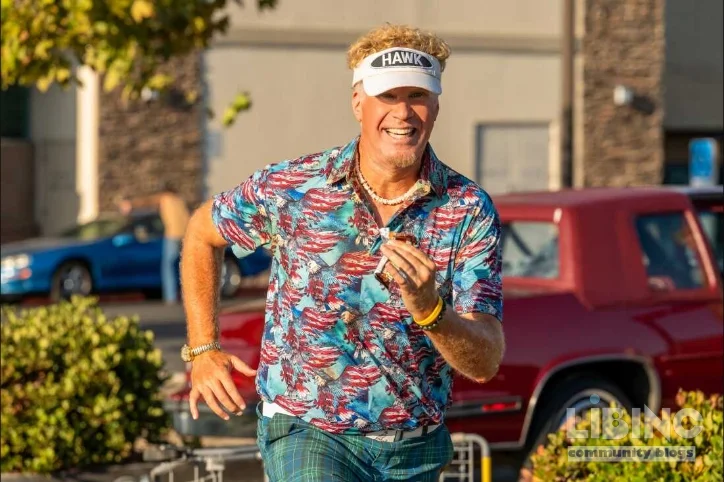
The Hawk: A Deep, Structured Analysis of Will Ferrell’s Netflix Golf Comeback
The Hawk lands on Netflix as a late-stage entry in streaming’s current golf-comedy moment, challenging Will Ferrell’s long-standing habit of buoyant irreverence with a marathon-length arc that tests endurance as much as it tests Lonnie Hawkins’s swing. Lonnie, once the globe’s top golfer, watches his career stall after a pivotal choke at the U.S. Open. The show leans into Ferrell’s hallmark exuberance—big energy, bold gags, and a contagious sense of mischief—yet dresses those traits in a longer-form format that invites pauses, detours, and meta-textual humor. The question isn’t merely whether Lonnie can win the Open; it’s whether Ferrell’s buoyant silliness can sustain a cohesive, bingeable narrative across multiple episodes. This piece asks what The Hawk is really doing, and how effectively it does it.
Table of contents
The Hawk through analytics
From a structural lens, The Hawk treats the Open as a long-form quest rather than a single, decisive triumph. The Netflix series format lets the show stretch its premise—Lonnie’s descent, his unlikely alliance with a free-spirited caddy, and the road back to the tour—into a tapestry of locker-room confessions, mockumentary-style riffs, and fantasy sequences. This elasticity creates a textural richness not typically found in a film-length golf comedy. Yet elasticity can undercut momentum if the central arc lacks a throughline robust enough to justify the runtime. The Hawk uses its 30-minute quarters—paired with occasional longer blocks—to manage tempo and tonal shifts, but the onus is on narrative discipline to avoid meandering.
In quantitative terms, the show balances character beats, gags, and golf-set pieces with a calculus familiar to streaming audiences: keep the jokes varied, the set pieces surprising, and the emotional stakes clear. The late-epoch appeal of a Netflix comedy hinges on how quickly episodes deliver payoff while still deepening Lonnie’s character. The Hawk stacks a few core levers—Ferrell’s crowd-pleasing bravado, Sam’s streetwise pragmatism, and a chorus of antagonists who love to loathe Lonnie—against a backdrop of recurring riffs about fame, masculinity, and the sport’s entrenched hierarchy. The result is a surface-level gaiety that occasionally verges on profundity, a hallmark of shows engineered by seasoned improvisers who know when to pull back and let a joke breathe.
To parse its composition, one can rely on four analytic pillars: tempo, tonal balance, ensemble energy, and narrative payoff. The tempo creates a cadence between farce and sincerity; the tonal balance maintains Ferrell’s innocence while acknowledging the pricklier textures of performance culture. The ensemble energy sustains the mosaic of characters who orbit Lonnie, preventing him from becoming a one-man carnival. Finally, narrative payoff assesses whether the swift, often luminous set-pieces accumulate into a credible arc. In aggregate, The Hawk builds its legitimacy through these axes, even as it stretches them across a longer-than-typical runtime. The result is a show that rewards repeat viewing for its craft as much as for its jokes.
From a production standpoint, the series leans into studio aesthetics but also experiments with on-location pragmatism. The golfing sequences blend practical effects with imaginative staging, allowing Lonnie’s bravado to collide with real-world consequences. This approach reflects a broader trend in Netflix’s comedy programming: preserve the high-energy, big-mesture humor that Ferrell can deliver while embedding it in the slower pulse of streaming narrative architecture. The Hawk’s success, then, depends less on novelty of setup and more on the reliability of its engine—the chemistry among cast, the sharpness of punchlines, and the precision of timing. If those hold, the extended format becomes a feature, not a liability, for a performer who must pace humor across episodes as if they were rounds on a course.
In service of these analytic aims, the show yields a compact, actionable takeaway: The Hawk can justify its length if it maintains an audacious sense of play while steadily deepening Lonnie’s motivations. It is a delicate balance, one that a game field and a tournament calendar metaphor are designed to test. The Netflix audience, accustomed to serialized arcs and genre play, will tolerate the detours so long as the core question—can Lonnie reclaim his seat at the table—receives consistent, character-driven responses. When the script nails Lonnie’s vulnerabilities alongside his bravado, the longer format earns its keep and reinforces Ferrell’s stature as a performer who can anchor both silliness and heart in equal measure.
Key considerations in this analytic frame
- Performance tempo and joke density across episodes
- Tonal elasticity: buoyant farce vs. grounded sentimentality
- Character network: supporting players as narrative ballast
- Long-form payoff: does the ascent justify the stretched runtime?
The Hawk in contrast
Viewed against Ferrell’s most famous filmography and against rival streaming golf comedies, The Hawk occupies a curious middle ground. It shares with Happy Gilmore Sandler’s irreverent swagger a willingness to blend slapstick with sport spectacle, but it keeps its jokes lighter on misanthropy and heavier on communal enthusiasm. The contrast exposes a deliberate tonal turn: the show relishes Lonnie’s bluster while softening the edges that could alienate a broader audience. For fans of Ferrell’s SNL-era sensibility, this is a familiar face with a less punitive center, a choice that can widen appeal but risks dilution of the sharper satirical bite that once defined him.
The show’s pacing also sets it apart. Whereas many classic Ferrell comedies compress setup and payoff into fast, jewel-like sequences, The Hawk extends the setup to multi-episode arcs. This speed variance matters: a slower tempo can magnify character-based humor and let running gags breathe, but it can also challenge the appetite of viewers who expect tight, snackable bursts. The result is a hybrid that borrows the pathos of a comedy-drama and the crowd-pleasing mechanics of a sport-film spoof, all housed within a Netflix packaging strategy that prizes bingeability and demographic reach. Such fusion is rare enough to be notable, yet it may not satisfy purists chasing the cynical edge of certain earlier Ferrell peaks.
To sharpen this contrast, one can isolate four comparisons: The Hawk’s protagonist vs. Ferrell’s most iconic roles; Lonnie’s arc vs. Sandler’s Happy Gilmore-tinged resilience; the series’ ensemble energy vs. the tight, single-narrative focus of a film; and the Netflix-era comedy ethos vs. theatrical comedy’s tempo. The results reveal a deliberate, calculated art direction: Ferrell leans into a “good-natured chaos” that serves as a connective tissue for a broader streaming audience, even as it weakens some of the sharper satirical edges that defined his early career. The humor remains infectious, but its social bite is more subdued, reflecting a shift in the market’s appetite for warmth over bite.
In practical terms, this contrast translates to a balancing act: The Hawk must be funny enough to justify its own length, but also emotionally precise enough to matter in a streaming landscape saturated with reboots and reimaginings. The show’s insiders—Lonnie, Sam, and the cast—help anchor a tone that can ride the edge of ridiculousness without tumbling into mean-spiritedness. The result is a comedy that feels contemporary in its sensibilities while retaining a classic Ferrell vitality. For viewers seeking a carefree, high-spirited golf farce, The Hawk delivers; for those chasing uncompromising satire, it may feel politely benevolent, albeit endearing and technically polished.
The Hawk: cause and effect
The central causal chain in The Hawk is surprisingly transparent: Lonnie’s past glory creates pressure; the Open’s shadow pulls him toward a comeback; the improbable alliance with Sam provides both the means and the moral counterweight; and the public spectacle compounds the stakes, inviting both adoration and scrutiny. Each step triggers a counterreaction that reshapes Lonnie’s choices, often pushing him toward a more vulnerable, less cartoonishly arrogant self. The show leverages this dynamic to convert a vaunted ego into a narrative engine—an engine that must keep turning to sustain the longer form.
The mechanics of Lonnie’s inane golf method—dialogue with his imaginary ball, overconfident drives, and the ritualistic jingle about “baby back ribs”—function as both punchlines and narrative signposts. They mark Lonnie’s unfiltered approach to the sport and to life, offering a recurring motif that explains why his methods fail and sometimes work. The causal logic is not just about outcomes on the course but about the social consequences of Lonnie’s persona. When his bravado wins a round, the social payoff comes as warmth and laughter; when it backfires, the show pivots toward confession and reconciliation, nudging viewers toward empathy even as they cheer the spectacle.
The wellness-influencer angle—Lance’s counterpart in the family dynamic—acts as a critical pivot. Her composure in a world of chaos crystallizes the show’s broader commentary on fame and audience manipulation. Her steadiness acts as a counterweight to Lonnie’s volatility, illustrating how the narrative uses contrast to generate meaning. This cause-and-effect loop—ego, challenge, support, consequence—underpins Lonnie’s growth and keeps The Hawk’s arcs tethered to a coherent emotional core, even amid a parade of gags and surreal set pieces.
From a business perspective, the extended format creates a long arc that can reward patient viewers while testing the franchise’s ability to sustain novelty. The Hawk’s internal logic favors cumulative payoff over episodic shock, a choice that aligns with streaming trends prioritizing character investment across multiple installments. If Lonnie’s personal evolution tracks with his public performance, the series can convert initial laughs into durable engagement. Conversely, if the emotional stakes lag behind the jokes, momentum may wane, and the show risks losing the audience’s long-term commitment. The balance is delicate, but when it tips toward sincerity, the cause-effect architecture yields a surprisingly persuasive arc for a golf comedy on Netflix.
The Hawk: expert reconstruction
From an expert standpoint, The Hawk excels in four craft domains: performance, staging, musicality, and comedy-architecture. Ferrell anchors the whole enterprise with his trademark generosity and outsized physicality, but the show’s success rests on how deftly the other elements harmonize with his energy. The caddy dynamic, the ex-wife tension, and the rival golfer’s smug posture create a chorus that keeps the spectacle lively while also exposing Lonnie’s vulnerability. The production design keeps the world tactile—gleaming greens, crowd noise, and a palpable sense of competition—without surrendering to the over-saturation that sometimes plagues long-form comedies on streaming platforms.
Staging choices, including the imaginative sequences around Lonnie’s conversations with his golf ball and the tower of donuts gag, demonstrate a conscious effort to fuse physical comedy with theatrical invention. These moments are not merely distractions; they are formal devices that extend Ferrell’s comedic vocabulary into a broader, more cinematic language. The musical interludes and fantasy insertions perform a dual function: they provide levity and foreground Lonnie’s inner life, offering viewers a lens through which to interpret the character’s bravado as a mask, not a definition. In this sense, The Hawk uses its soundtrack, visual rhythm, and stunt choreography to manufacture a sense of spectacle that complements the jokes rather than overshadowing them.
The ensemble’s energy functions as both engine and safety valve. Molly Shannon’s character, Jimmy Tatro’s lineage of professional golf, and Luke Wilson’s pompous nemesis create a chorus that reflects and refracts Lonnie’s arc. Their interplay prevents Lonnie from becoming a mere prop in a Ferrell showcase and instead positions him as a conductor within a larger comedic ecosystem. Expertly balanced, the cast’s chemistry ensures that tonal shifts land with clarity, ensuring that laughter and sentiment land with similar force. When the final round approaches, the show’s craft elements—timing, framing, and musical cues—converge to deliver a clean, if emotionally tempered, resolution that feels earned rather than manufactured.
In sum, The Hawk demonstrates that a high-spirited golf comedy can weather an ambitious runtime while maintaining a distinctive voice. Ferrell’s instinct for maintaining innocence amid exuberance remains a potent asset, and the surrounding craft choices ensure that the humor lands with technical precision. If the series continues, its future will hinge on sustaining this delicate balance: preserving the goofy joy that defines Ferrell’s best work while deepening Lonnie’s humanity enough to justify the journey across multiple episodes. The result is a Netflix comedy that feels contemporary, technically savvy, and unexpectedly affectionate toward its own silliness.
Conclusion-like synthesis: The Hawk demonstrates that Ferrell’s brand of exuberant goofiness can sustain a serialized golf epic on Netflix when paired with precise craft and a sympathetic ensemble. The show’s ability to blend buoyant humor with genuine character stakes makes its extended runtime feel purposeful rather than indulgent, and this balance is what gives Lonnie Hawkins a real chance at reclaiming his place in the conversation about modern streaming comedies.
Closing reflection on The Hawk
In the end, The Hawk stands as a bold experiment in translating Will Ferrell’s riotous stage presence into a streaming-scale narrative. Its success rests on how well it preserves the core of Ferrell’s appeal—an almost childlike delight in silliness—while weaving a credible trajectory for Lonnie that resonates beyond punchlines. The result is a series that can entertain ardent Ferrell fans and curious newcomers alike, provided the pacing remains disciplined and the emotional core stays visible amid the spectacle. If The Hawk can continue to tune its musicality, sharpen its character work, and maintain the energy of Ferrell’s best moments, it will have earned a lasting place in the contemporary catalog of golf comedies on Netflix.
Final thought: The Hawk’s charm lies not in the perfection of its gags, but in the genuine warmth it projects toward its flawed hero. In a streaming world hungry for novelty, that warmth can be the differentiator that keeps viewers coming back for another round.
Closing the practical angle on pacing and payoff
In addition to humor craft, a clear pacing framework helps Netflix viewers stay engaged. This section flags a practical miss in the earlier analysis: sustaining energy across a longer arc while deepening Lonnie’s humanity. Concrete patterns with short examples show a path to reliable engagement.
Illustrative data snapshot: Episode pacing plan
| Phase | Action | On-screen cue |
|---|---|---|
| Opening | Re-establish Lonnie's pride and insecurity | Quiet confession after a bold drive |
| Mid-episode | New obstacle; Sam's plan emerges | Unexpected setback challenges ego |
| Climax | Bold choice tests craft and heart | Heartfelt win or costly misstep |
| Resolution | Locker-room seed for next chapter | Call-back to earlier joke |
This pattern shows how the show can land a satisfying payoff while planting seeds for future episodes, supporting audience retention on streaming by delivering fresh beats with a familiar rhythm.
Key practice: Recurrent motifs with emotional beat
These motifs tether humor to Lonnie's inner life, strengthening audience attachment and encouraging weekly discussion.
Episode pacing blueprint
- Opening anchor
- Recap Lonnie’s arc and set a new objective
- Introduce a quirky obstacle
- Mid-episode pivot
- Sam's plan collides with ego
- Mid-show joke reframes stakes
- Closing beat
- Reveal emotional core and plant the next hook
Applied together, these steps offer a disciplined path to sustain energy across episodes while keeping humor and heart in balance.
What is The Hawk's central premise and Lonnie Hawkins' arc?
Lonnie Hawkins is a former world golf icon seeking a comeback at the Open, with a supportive crew and rival pressures that stretch across multiple episodes. The long-form arc blends Ferrell's exuberant humor with a believable growth path for Lonnie, so viewers stay engaged as pride, craft, and relationships evolve. The structure uses recurring motifs and payoff seeds to build momentum over time. The friendly ensemble and persistent aspirations keep the journey relatable and entertaining beyond a single victory.
As the story unfolds, Lonnie learns to balance bravado with humility, enabling gradual transformation instead of a single peak moment.
How does The Hawk balance long-form storytelling with Ferrell's humor?
The Hawk threads long-form storytelling with Ferrell's signature exuberance by distributing quiet character beats, recurring gags, and a patient build toward Lonnie's growth across episodes, rather than packing a single finale into a short runtime. It relies on Sam as a practical counterweight and on the cast to keep energy high without fatigue, ensuring jokes land with emotional credibility. The rhythm creates a flow where buoyant humor and heartfelt insight reinforce each other, allowing the series to feel fresh while staying recognizably Ferrell.
The approach includes careful spacing of punchlines, a few running gags anchored to Lonnie's methods, and frequent moments of vulnerability that invite empathy even as the laughs roll.
What makes the show stand out among Netflix golf comedies?
The Hawk stands out through its blend of big-energy comedy with a measured long-form arc, a diverse cast that keeps the world lively, and a focus on Lonnie's internal journey as much as the Open. This balance lets viewers enjoy the sport’s spectacle while feeling connected to Lonnie's humanity. The result is a show with contemporary tone and classic warmth, delivered with affectionate chaos that still respects character stakes.
Fans value the texture added by the ensemble, which prevents Lonnie from becoming a single-note figure.
What narrative techniques support bingeability?
Selective cliffhangers, episode-end payoffs, and callbacks to running gags create a sustainable rhythm for weekly or binge viewing. The Hawk alternates rapid-fire gags with quieter truths, allowing audiences to breathe between rounds and return with anticipation for the next swing.
How do supporting characters influence Lonnie's journey?
The caddy, family tensions, and rival golfers provide counterpoints that reveal different facets of Lonnie’s character, making his triumphs and missteps feel earned. Each relationship pushes Lonnie to reassess goals, temper bravado, and grow beyond a caricature of a fearless champion. Their presence keeps the drama communal and the humor well rounded.
What could be improved in future seasons?
Future seasons could deepen Lonnie’s backstory and tighten mid-arc momentum by clarifying stakes and ensuring each installment advances the transformation arc. Expanding the world with varied venues and rivalries would enrich the texture while preserving Ferrell's playful energy, helping sustain longer-form payoff across seasons.




Add a comment
To comment, you need to register and authorize
Comments