

Para Sport Integration in the Commonwealth Games: How Glasgow 2026 Reframes Disability Participation
Disability sport is no longer a sidelined story at the Commonwealth Games. The integration of para events onto the same stage as the general competition places disability sport in the mainstream narrative. Yet participation gaps persist, and barriers remain stubbornly real for many disabled people who want to engage in sport. Glasgow 2026 promises to push those barriers further, with the largest integrated event in the Games' history and more than 450 para athletes. The real test, however, is whether momentum translates into lasting access, funding, and cultural change beyond the medal podium. This analysis weighs the measurable gains against the friction that still limits inclusion and asks what must change to turn visibility into durable participation.
Table of Contents
- Analytics perspective on para sport integration
- Contrasts that shape inclusion outcomes
- Causes and effects: barriers and accelerators
- Expert reconstruction for a more inclusive future
Analytics perspective
The quantitative lens shows clear progress where para sport integration has taken root. Participation metrics across nations, medal counts for para athletes, and the breadth of events illuminate a trend toward parity, yet they also reveal how quickly numbers can outpace implementation. Disability inclusion in sport demands more than tallying medals; it requires reliable access, sustained funding, and long-term pathways from grassroots to elite competition. In that sense, the Commonwealth Games model offers a laboratory for measuring both success and the depth of systemic barriers. The inclusion of 47 medal events across six sports at Glasgow 2026, with more than 450 para athletes, signals ambition, but it also concentrates scrutiny on the quality of opportunities behind those numbers. This is where data must accompany policy and practice to avoid perfuming a shallow progress narrative with real access improvements.
The historical arc matters for interpretation. The British Empire Games in 1930 laid the groundwork for multi-sport competition, but it was over the decades that disability sport moved from exhibition status to integrated competition. By 2002 in Manchester, para athletes were fully integrated into their teams and medals started counting toward national tallies. Those moments are not just milestones; they are evidence of a cultural shift that reframes what elite sport looks like when disability participation is treated as a standard rather than an exception. When the data are read alongside policy shifts, it becomes clear that the integration functioned as both a platform and a pressure mechanism—pushing federations, broadcasters, and sponsors to recalibrate expectations and resources around disability sport.
The media ecosystem surrounding disability sport has also transformed, though not uniformly. A partnership between the International Olympic Committee and the International Paralympic Committee expanded coverage and visibility for Paralympic competition, and the Commonwealth Games accelerated a similar effect by embedding para sport in the same schedule and venue matrix as the able-bodied program. This co-presence matters because visibility matters; it alters public perception, attracts sponsorship, and influences young athletes with disabilities to pursue sport. However, visibility without equitable access and opportunity risks becoming mere optics rather than a vehicle for durable change. The Glasgow 2026 frame intensifies the issue: it tests whether media momentum and integrated competition can catalyze systemic improvements in sport ecosystems for disabled athletes.
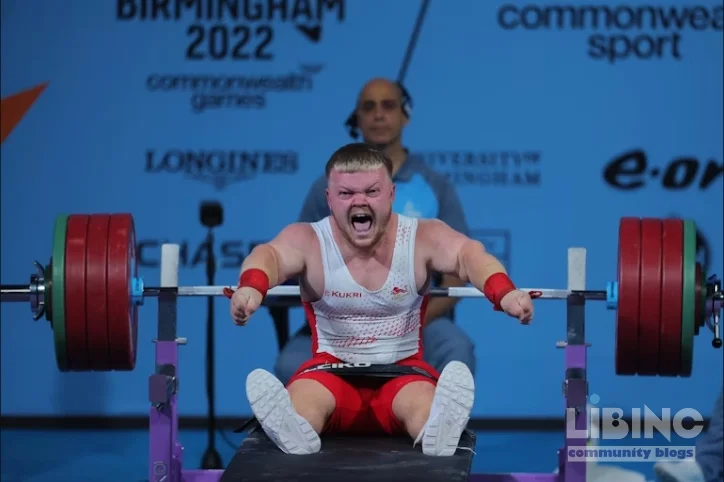
The scale of Glasgow 2026—the largest integrated Commonwealth Games to date—creates a unique opportunity for learning. The fact that the first medal of the Games will be awarded in para powerlifting underscores the momentum of the para program, but it also raises questions about access to training, coaching, and competition pipelines that nourish success at the elite level. If the event operates as a true ecosystem rather than a one-off spectacle, the analytics will show rising participation rates in clubs, schools, and local communities that persist beyond the Games. Conversely, if the model remains heavily event-driven with limited follow-through, the data will reveal a spike in interest without durable habits—precisely the risk that plagues many inclusion initiatives. In this sense, success hinges on converting the heat of the moment into long-term behavioral and structural change, a transition many systems struggle to manage.
Beyond national performance, the diversity of participation is a crucial analytic signal. In Scotland and the wider UK, disability inclusion in sport must contend with underlying social dynamics, accessibility infrastructure, and socioeconomic factors that influence who steps onto a field or into a gym. The data landscape remains fragmented, with persistent gaps in participation rates, transport availability, and program reach. The UN Convention on the Rights of Persons with Disabilities (CRPD) and national law provide a rights-based scaffold for measuring progress, but accountability requires harmonized datasets and transparent reporting. This is where analytics becomes a governance tool: it must translate numbers into targeted actions—where venues are accessible, where transport is arranged, and where affordable programs exist for families and individuals alike.
From a policy perspective, the challenge is to align elite performance with community-level access. The informal knowledge within clubs and schools often outpaces formal data collection, creating a misalignment between what is measured at the national team level and what is needed to broaden participation. The Glasgow 2026 framework can close that gap if it embeds a data-informed lifecycle for para athletes—from early identification and adaptive coaching to inclusive club infrastructure and affordable competition pathways. When implemented well, analytics can demonstrate a virtuous cycle: more pathways feed more athletes, which yields stronger teams, which in turn motivates more communities to invest in inclusive sport ecosystems. The potential is substantial, but it requires deliberate alignment of measurement, funding, and practice across levels of sport.
In sum, analytics confirms progress while exposing the fragility of inclusion without sustained investment. The parity signal is strong, yet participation gaps—shaped by geography, economics, and culture—persist. That observation foregrounds the need for a systematic approach to disability inclusion in sport that goes beyond the scoreboard. The central question is whether Glasgow 2026 will prove to be a turning point in which data-driven strategies translate into enduring access and ongoing participation for disabled people, not only during the Games but in the years that follow. The answer will depend on the rigor with which stakeholders translate insights into scalable solutions that endure after the medals are awarded.
To operationalize these insights, organizers must treat disability inclusion as a programmatic fixture rather than a one-time enhancement. The question becomes not only whether the numbers improve, but whether the lived experiences of disabled athletes and fans improve in tangible ways. The next sections examine contrasts, causes, and practical reconstructions that can help move from rhetoric to realization, keeping the focus on para sport integration as a lasting feature of the Commonwealth Games.
Contrasts that shape inclusion outcomes
Contrasts across eras illuminate how far inclusion has progressed and where it remains uneven. The pre-integration era focused on capability at the margins; the modern model treats disability sport as a full partner in the broader sporting ecosystem. The shift is not mere semantics—it's a reallocation of resources, decision-making power, and public attention. Yet contrasts also reveal persistent asymmetries in funding allocation, coaching access, and facility readiness that can undermine the inclusive promise of integration. When analysts compare medal counts, participation lanes, and audience reach, a clearer pattern emerges: visibility grows faster than sustained inclusion, especially at the grassroots level.
A central contrast lies in the perceived risk environment. Traditional sports clubs often interpret disability participation as requiring high levels of adaptation and risk management, which can limit inclusion through cautious gatekeeping. The counter-narrative is that proper planning and staff training reduce risk and expand opportunity, creating a more welcoming climate for disabled athletes and their supporters. In this sense, risk perception translates into practical access barriers: inaccessible venues, lack of transport, and limited availability of personal assistance. Solving these issues requires a proactive design mindset rather than reactive accommodations. The contrast, then, is not only between eras but between assumptions about what is possible and what is feasible with the right supports in place.
The public-facing dimension also diverges sharply. The early era framed disability sport as supplementary to the main program; the contemporary model asserts parity and seeks to normalize disability sport as part of the mainstream narrative. This reframing has implications for sponsorship, media rights, and audience development strategies. The consequence is a more diverse ecosystem of actors who see value in enabling broader participation: local authorities, school systems, community groups, and private sponsors. However, parity in rhetoric must be paired with parity in practice—resourcing, training, and accessibility must be aligned with the elevated expectations set by integrated competition. Without that alignment, the contrast becomes a hollow badge rather than a meaningful transformation of sport culture.
Another contrast concerns data quality and accountability. As inclusion moves from idea to implementation, the availability of robust, harmonized data becomes a prerequisite for progress. Where data exists, it informs targeted interventions—improved transport routes, more accessible facilities, and better coaching pipelines. Where data is missing, planners improvise with ad hoc solutions that may not scale. The shift toward integrated governance models aims to bridge this gap, but it hinges on a shared commitment to transparency and inter-organizational collaboration. In short, the contrast is a measure of governance as much as a measure of culture. Without governance that matches the ambition of integration, the gains risk being short-lived.
From a cultural perspective, the contrast is especially instructive in how young people perceive sport. When disability sport is presented as part of the mainstream, disabled youth see a path to role models, careers, and meaningful participation. Conversely, if the narrative remains pipeline-deprived or tokenistic, the impulse to participate wanes. This distinction affects long-term outcomes, including retention in sport and progression into coaching and administration. The Glasgow 2026 framework must therefore include explicit, well-resourced youth pathways that connect schools, clubs, and elite programs, ensuring that the benefits of integration reach the youngest participants. In a world where representation shapes aspiration, the contrast between exclusion and inclusion in youth sport may be the most consequential measure of success.
Financial contrasts deserve particular attention. Public funding and private sponsorship frequently prioritize immediate visibility over sustainable programmatic investment. Yet inclusive sport requires continuous funding streams for training, equipment, venue modifications, and supporter services. The finance question is not merely about whether funding exists, but about how it is structured: are grants predicated on outcomes in participation and inclusion, or do they reward short-term medal counts? A financing model that ties success to durable access will produce longer-lasting gains and a broader base of participants. Glasgow 2026 thus becomes a testing ground for inclusive funding design—one that other multi-sport events will watch closely for lessons about sustainability and impact beyond the podium.
Finally, the contrast in stakeholder involvement reveals divergent capabilities and expectations. When athletes, families, coaches, and community organizations participate in decision-making, programs tend to reflect lived experience and front-line realities. Exclusionary processes, by contrast, reproduce barriers through top-down decisions that underinvest in local capacity. Embedding co-creation mechanisms—where disabled athletes contribute to policy, program design, and venue planning—helps ensure that insights translate into practical improvements. The Glaswegian model must therefore institutionalize participatory governance to convert inclusive rhetoric into real-world change, a transformation that remains incomplete without broad-based stakeholder ownership.
Causes and effects: barriers and accelerators
Understanding why barriers persist requires tracing a chain from perceptions to participation. Ableism—whether implicit or explicit—shapes how clubs assess risk, recruit participants, and allocate resources. When staff and volunteers view disability through a deficit lens, modifications appear as exceptions rather than standard practice. The result is a cycle where disabled people encounter unnecessary obstacles, reinforcing disengagement and reduced transfer of sport into daily life. Overcoming this cycle demands both cultural and structural change: a shift in attitudes paired with deliberate changes to physical and logistical infrastructure to support active participation. This is where the right combination of policy, training, and environment matters most for disability inclusion in sport.
Policy frameworks provide essential guardrails, but they are only as effective as their implementation. The UK’s Equality Act, with its emphasis on reasonable adjustments and the public sector equality duty, creates a statutory baseline for accessibility and non-discrimination. Yet enforcement and practical application across communities vary, especially in rural or economically challenged areas where facilities are scarce. The CRPD article framework reinforces those duties, articulating a right to participation in cultural life, recreation, leisure, and sport. The gap between rights and everyday access often narrows when local authorities commit to proactive planning and inclusive design. In practice, this means accessible transport, inclusive facility design, affordable programs, and consistent staff training that foregrounds disability inclusion in sport as a standard, not an exception.
Infrastructure is a persistent lever in shaping participation. Without accessible venues, well-timed transport, and affordable entry costs, many disabled people face insurmountable barriers to physical activity. The data from Scotland, showing a significant portion of disabled people avoiding activity, underscores the urgency. Yet infrastructure investments have outsized effects when they are targeted and thoughtful: barrier-free routes to training centers, adaptable equipment, and flexible scheduling that accommodates personal assistants and carers. The impact is twofold: it increases the number of people who can participate and it improves the quality of experience for those who already engage. When facilities are truly accessible, sport becomes less a privilege of mobility and more a right of participation.
Another driver is the social and cultural environment surrounding sport. Perceptions of risk, eligibility, and competitiveness influence who tries out a program and who sticks with it. Coaches and families often constrain participation to protect resources or to avoid unsettling stakeholders, creating a self-reinforcing barrier for those who could benefit most. Conversely, when coaching staff receive specialized training in adaptive methods and inclusive practices, participation rates rise, and the quality of engagement improves. The consequence is a more vibrant ecosystem where disabled athletes can train with non-disabled peers or within clearly defined inclusive pathways. This alignment between culture and practice is essential for turning inclusion from a policy commitment into everyday behavior in sport.
Access to supports such as personal assistants, transportation, and affordable equipment is a practical gating factor. Even when participants have interest and ability, the absence of practical supports can derail participation. The cost dimension is especially salient for families with limited resources, where even modest fees and travel costs become prohibitive. Public funding and third-sector partnerships can bridge these gaps, but only when they recognize inclusion as a core objective rather than a side benefit. A coherent funding strategy—one that harmonizes grants, subsidies, and service reimbursements—can transform interest into sustained participation. In short, the enablement of participation hinges on reducing both financial and logistical frictions that keep disabled people from exercising their rights to sport.
Finally, the data and measurement ecosystem shapes our understanding of progress. Fragmented data on opportunities, attendance, and outcomes undermines the ability to diagnose problems accurately and to test solutions. When data is scarce or poorly aligned with policy goals, interventions may appear effective when they are not; or they may fail to scale when they are. The remedy lies in standardized data collection, interoperable systems, and clear performance indicators tied to rights-based outcomes. A robust monitoring framework can reveal where barriers persist and where accelerators are succeeding, enabling continuous improvement across programs, venues, and communities. The result is a feedback loop that translates rights into measurable gains in access and participation for disability-inclusive sport.
Expert reconstruction for a more inclusive future
Experts converge on a practical blueprint that translates integrated competition into durable inclusion. The first pillar is governance: establish a cross-sector coordinating body that includes disabled athletes, coaches, club managers, local authorities, transport providers, and broadcasters. This coalition would oversee a unified data platform, shared accessibility standards for venues, and a common funding framework designed to sustain both elite performance and community participation. The governance model must embed disability inclusion in decision-making processes from the outset, not as a peripheral consideration added at the end. The Glasgow 2026 experience should be treated as a test case for how to deploy and sustain such governance across future multi-sport events, making inclusion a predictable, trackable, and accountable part of event planning.
Second, design for inclusion at scale. Programs must weave accessibility into every aspect of event delivery—from venue layout and transport logistics to seating, signage, and digital interfaces. This requires training for staff and volunteers on disability etiquette, communication needs, and safety protocols, all of which reduce friction for participants and spectators with disabilities. Equally important is the expansion of inclusive coaching and talent development pipelines that start in schools and community clubs and converge with national teams. A true model of para sport integration creates a seamless ladder from local participation to elite competition, not a divergent track that ends at the first barrier. The result is a sport system that values every rung of the ladder and recognizes every participant as a potential contributor to national success.
Third, align funding with impact, not optics. A blended finance approach—combining public grants, private sponsorship, and performance-linked support—should reward both medal outcomes and, more critically, sustained accessibility. Funding should cover facility adaptations, transport subsidies, personal assistance, and coaching for adaptive techniques. Crucially, it must incentivize program continuity after major events, ensuring that participants have ongoing opportunities to train, compete, and progress. A funding model grounded in disability inclusion in sport as a core objective builds durable capacity in communities and strengthens national sport ecosystems long after the applause fades.
Fourth, advance data sovereignty and transparency. A centralized data framework that respects privacy while enabling cross-sector insights can help identify who remains excluded and why. Regular reporting on access metrics, participation rates, and program outcomes should inform policy revisions and resource reallocation. This data-centric approach provides a credible narrative for stakeholders who demand accountability and progress, and it offers a practical mechanism for adjusting strategies in real time. With robust data governance, inclusion moves from a stated goal to an observable, measurable philosophy embedded in everyday practice across clubs, schools, and venues.
Fifth, foster a culture of advocacy and youth leadership. Young disabled athletes and their allies should have spaces in governance discussions, mentorship programs, and public-facing roles that amplify lived experience. This involvement signals a durable commitment to inclusion and helps normalize disability participation as part of the standard sporting culture. By elevating youth voices, the movement gains legitimacy, relevance, and resilience, ensuring that inclusive sport remains a living practice rather than a commemorative milestone. Glasgow 2026 can be a catalyst for a broader cultural shift if these leadership pathways are genuinely cultivated and sustained.
In this synthesis, the path to substantive inclusion is not a single reform but an interconnected architecture of governance, design, funding, data, and culture. The Commonwealth Games' integrated para sports provide a powerful case study in how to combine visibility with systemic enablement. If the lessons from Glasgow 2026 translate into long-term practice, disability inclusion in sport will no longer depend on the timing of a major event but will be a consistent feature of every club, school, and community program. The crucial question remains: will policymakers and sport organizations commit to the hard work required to convert the momentum of integration into enduring opportunity for every aspiring athlete, no matter their ability?
Ultimately, the Glasgow 2026 moment should reframe what counts as success in sport. It is no longer sufficient to celebrate record participation or a string of medals if those achievements do not translate into wider access and sustained engagement for disabled people in daily sport. The most meaningful outcomes will be seen in the hours of training added to weekly routines, the miles traveled with accessible transport, the coaches trained in adaptive methods, and the clubs redesigned to welcome all abilities. When disabled children, youth, and adults see inclusion reflected across venues, programs, and governance, sport becomes a universal language—one that invites everyone to participate, contribute, and compete. This is the test Glasgow 2026 must meet, and the longer-term benchmark for disability inclusion in sport that the Commonwealth Games can set for the world.
In closing, the road from visibility to enduring access is navigated through concrete choices: consistent funding, accessible infrastructure, inclusive coaching, and accountable governance. The data, stories, and experiences from Glasgow 2026 can prove that para sport integration in the Commonwealth Games is not merely ceremonial but transformative. If that transformation endures, it will be measured not only in medals but in the everyday lives of disabled athletes and their communities—participating, progressing, and thriving within a truly inclusive sporting culture.
Key to that progress is embedding disability inclusion in sport as a standard operating principle across all levels of the system. With the right commitment, Glasgow 2026 can become a blueprint for future events, demonstrating how integrated competition and inclusive practice reinforce each other to widen participation and change perceptions. The ambition is clear: a future in which para sport integration in the Commonwealth Games remains a constant feature, a durable driver of participation, and a testament to sport’s power to include every member of society.
Closing the gap with a practical lifecycle
To convert visibility into durable participation, the next step is a concrete lifecycle that links grassroots access to elite performance with clear ownership and funding commitments. This approach embeds data governance, inclusive coaching, and accessible infrastructure into everyday sport ecosystems, not sporadic event-specific changes. The lifecycle comprises five stages, each with defined milestones, responsible partners, and funding triggers: 1) early identification and adaptive coaching, 2) inclusive club and venue design, 3) scalable talent pipelines, 4) data-driven program adjustments, 5) post-games sustainability and community ownership.
- Early identification and adaptive coaching — schools, clubs, and federations collaborate to spot potential athletes early, with coaching that adapts to diverse abilities.
- Inclusive club and venue design — venues and schedules accommodate personal assistants, carers, and transport needs from the outset.
- Scalable talent pipelines — pathways from school programs to national teams, with mentoring and volunteer coaching networks.
- Data-driven program adjustments — a shared, privacy-respecting data platform tracks participation, drop-off points, and impact metrics.
- Post-games sustainability — funding models ensure ongoing access, equipment, and coaching after major events.
Lifecycle milestones snapshot
| Milestone | Owner | Timeframe | Impact |
|---|---|---|---|
| Adaptive coaching rollout | National Federations | Year 1–2 | Higher participation |
| Venue accessibility audit | Local authorities | Year 0–1 | Better access |
| Transport subsidies pilot | Transit partners | Year 1–3 | Reduced barriers |
| Data governance framework | Civic tech partners | Year 0–2 | Transparency |
Practical scenarios illustrate the impact: Scenario A—a Glasgow primary school runs an adaptive PE unit linking to a local para club, with transport arranged by families and a volunteer coaching network. Scenario B—a rural community uses a shared facility and subsidized equipment to enable weekly para sport sessions, increasing attendance within a year.
Roadmap milestones
| Year | Action | Expected outcome |
|---|---|---|
| Year 1 | Inclusive coaching rollout | Wider skill uptake |
| Year 2–3 | Data platform adoption | Actionable insights |
| Year 3–4 | Sustainability funding | Continuous access |
In sum, the lifecycle makes inclusion a predictable programmatic priority rather than a one-off event. That shift requires governance, design, funding, data, and culture to work in harmony, turning Glasgow 2026 into a durable model for disability-friendly sport.
What does Glasgow 2026 reveal about para sport integration within the Commonwealth Games?
Glasgow 2026 demonstrates a sustained integration by staging a large cohort of para events on the same schedule and venues as the able-bodied competition, with more than 450 para athletes across six sports and 47 medal events. This arrangement elevates visibility while testing the durability of access, training pipelines, and financing beyond the Games. It signals a cultural shift toward parity, yet success will be measured by ongoing participation, community access, and the ability to translate media momentum into sustained systemic improvements for disabled athletes. The example sets a blueprint for how shared platforms can drive broader inclusion.
Analytically, the integration requires robust governance, scalable pathways, and permanent resources, not merely event-level fixes. When resources follow participation and outcomes, the model moves from optics to lasting impact, encouraging federations, broadcasters, and local authorities to align around inclusion as a core value. This is a crucial test for whether visibility translates into durable access, training, and community engagement after the medals are awarded.
What practical steps close the gap between visibility and lasting participation?
Committing to a five-stage lifecycle—early identification and adaptive coaching, inclusive venue design, scalable talent pipelines, data-driven program adjustments, and post-games sustainability—creates a repeatable system. The first sentence of this approach emphasizes concrete ownership: federations, local authorities, clubs, and transport partners each take specific responsibilities with time-bound milestones. Practically, this means joint transport plans, universal accessibility audits, shared data platforms, and funding models that persist beyond the Games. Such coordination yields predictable access, stronger coaching expertise, and a resilient culture of inclusion across communities.
From a strategic lens, building youth pathways, reinforcing inclusive coaching, and ensuring consistent funding are essential. The result is not only higher participation rates but richer experiences for families and athletes, reduced drop-off, and a clearer ladder from school programs to elite teams. The intention is a living ecosystem rather than a one-off spectacle.
How should funding be structured to support long-term inclusion?
Funding should blend public grants, private sponsorship, and performance-linked support that rewards both outcomes and sustained access. A durable model allocates funds for facility adaptations, transport subsidies, personal assistance, and coaching for adaptive methods, with dedicated streams to maintain programs after major events. By tying financing to ongoing participation and community impact rather than short-term medal tallies, the system builds capacity at clubs and schools, enabling continuous growth and diversification of athletes across regions.
Analytically, this requires transparent metrics and regular stewardship reviews to ensure funds translate into real access, not decorative improvements. The interplay between funding and governance matters most when decisions are made in light of data about participation trends and barriers faced by families in different communities.
What role do data and transparency play in measuring progress?
Data governance is central to diagnosing gaps, tracking participation, and guiding resource allocation. A centralized, privacy-respecting data platform can reveal who remains excluded, where transport is lacking, and which programs deliver durable engagement. Regular reporting to stakeholders supports accountability and policy refinement, ensuring that improvements are scalable and replicable. The transparency framework turns anecdotes into evidence and helps align federation actions with the rights-based goals embedded in CRPD and national law.
In practice, the emphasis must be on interoperable datasets, standardized indicators, and clear governance roles so that progress can be monitored and refined over time.
How can schools and clubs connect to elite pathways?
Effective connections require formalized partnerships between schools, local clubs, and national teams. Structured talent pipelines, coaching credentialing for adaptive methods, and shared eligibility criteria create smooth transitions from grassroots to elite levels. Local programs should be co-designed with disabled athletes and families to ensure relevance and accessibility, while transport and equipment subsidies remove practical barriers. The result is a measurable increase in participation and a clear, supported route toward national teams for capable athletes.
Long-term, stronger connections foster a more diverse talent pool and sustainable performance ecosystems.
What milestones should Glasgow 2026 set for the future of para sport inclusion?
Milestones should include establishing a cross-sector governance body, launching a unified data platform, completing venue accessibility audits in partner cities, implementing transport subsidy pilots, and sustaining inclusive coaching networks post-Games. Each milestone should have accountable owners, budget lines, and public reporting cycles. The overarching aim is to convert the momentum of Glasgow 2026 into a durable, scalable model that expands access, participation, and leadership opportunities for disabled athletes well into the next decade.
With such milestones in place, the event can serve as a lasting catalyst for systemic change rather than a one-time celebration of inclusion.





Add a comment
To comment, you need to register and authorize
Comments
Governance is the crucial hinge. If the event is a learning platform, who ensures that insights become actionable across regions and seasons? A cross sector forum that involves disabled athletes, coaches, local authorities, transport partners, broadcasters, and funders could oversee a shared data platform, common accessibility standards, and a funding framework aimed at both elite performance and broad participation. Crucially, incentives must reward long term continuity of participation, quality of experience, and improvements in local clubs, not only medals on a single weekend.
This arrangement raises questions for discussion: how should performance rewards be calibrated so that elite success helps broaden access at the club and school level? which indicators truly capture progress toward a rights based model of inclusion rather than a prestigious scoreboard? and what practical steps ensure that the voices of disabled families shape data design and policy from the start? A thoughtful approach treats analytics as a live conversation among federations, communities, and funders, prompting concrete actions such as training new adaptive coaches, upgrading a venue, or expanding transport options on regular days as well as event days.